
In the rapidly evolving landscape of unmanned aerial vehicles, the integration of safety mechanisms has become paramount. As an engineer specializing in drone technology, I have witnessed firsthand the increasing reliance on UAV drones across diverse sectors such as agriculture, logistics, and infrastructure inspection. However, with this expansion comes heightened risks, including sudden failures due to environmental disturbances, signal loss, or hardware malfunctions. To address these challenges, I have developed an intelligent emergency parachute system designed to mitigate crash impacts and enhance operational safety. This article delves into the comprehensive design, implementation, and evaluation of this system, emphasizing its role in safeguarding UAV drones during unforeseen emergencies. Through detailed explanations, tables, and mathematical models, I aim to provide a thorough understanding of how this system functions and why it is essential for the future of drone operations.
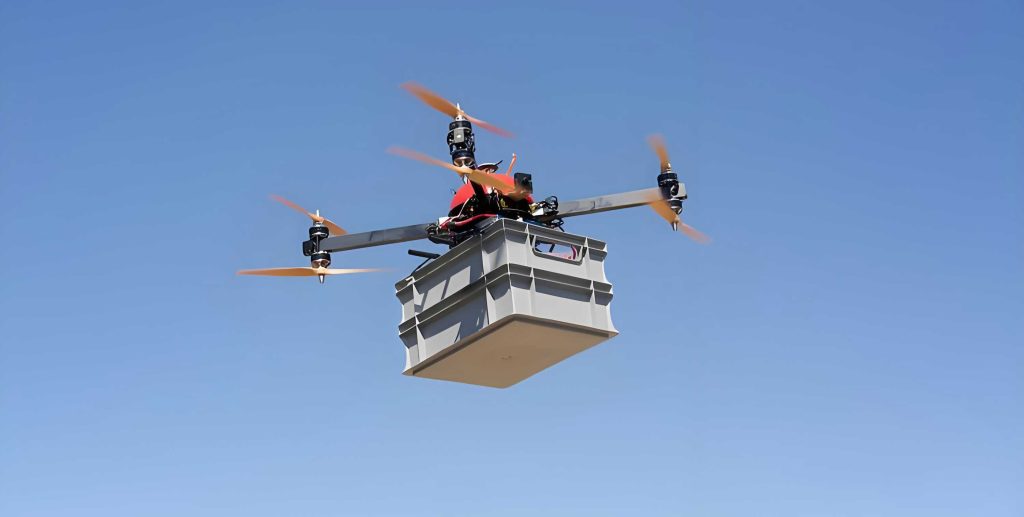
The proliferation of UAV drones has revolutionized industries by offering cost-effective and efficient solutions for tasks ranging from crop monitoring to package delivery. Despite advancements in autonomy and reliability, UAV drones remain vulnerable to abrupt failures that can lead to catastrophic crashes. These incidents not only result in significant financial losses due to equipment damage but also pose serious threats to public safety, especially in urban environments. In my experience, common issues like battery anomalies, controller disconnections, or crosswind interference often trigger uncontrolled descents. To counter this, I conceptualized an emergency parachute system that autonomously deploys upon detecting critical flight anomalies. This system is engineered to be lightweight, adaptable, and intelligent, ensuring seamless integration with various UAV drone models. By prioritizing real-time monitoring and rapid response, this design aims to reduce descent velocities, thereby minimizing impact forces and protecting both the drone and ground assets.
Before delving into the technical specifics, it is crucial to outline the expected objectives of this intelligent emergency parachute system for UAV drones. Based on operational requirements, I established five core goals to guide the development process. First, the system must allow for quick installation without interfering with the drone’s existing functionalities. Second, it should enable rapid parachute deployment with reusability to lower operational costs. Third, real-time monitoring capabilities are essential for data logging and cloud synchronization. Fourth, a dual-activation mechanism—both automatic and remote manual—must be incorporated for flexibility. Finally, the system should exhibit strong adaptability to accommodate different parachute sizes and UAV drone specifications. To summarize these targets, Table 1 provides a concise overview.
| Objective | Description | Implementation Strategy |
|---|---|---|
| Quick Installation | Easily attach to drone body without hindering performance | Use of Velcro straps and modular design |
| Rapid Deployment | Fast parachute release with reusable components | Spring-loaded mechanism and durable materials |
| Real-Time Monitoring | Continuous flight data tracking and backup | Integration of sensors and GPS modules |
| Dual Activation | Automatic and manual trigger options | Microprocessor control with wireless communication |
| Adaptability | Compatibility with various drone and parachute types | Adjustable housing and configurable software |
The mechanical design of the emergency parachute system for UAV drones was a focal point to ensure aerodynamic efficiency and structural integrity. I opted for a cylindrical form factor, which reduces air resistance and provides a sleek profile. As illustrated in the image above, the system is divided into two primary sections: the upper parachute compartment and the lower control compartment. The parachute compartment is detachable and can be adjusted in height to fit different parachute dimensions, making it versatile for various UAV drone weights and sizes. This compartment houses a folded parachute made of high-strength nylon, designed to open swiftly upon activation. The control compartment, on the other hand, contains the electronic subsystems, including sensors, processors, and power management units. To quantify the aerodynamic benefits, I employed fluid dynamics principles, where the drag force \( F_d \) on the cylindrical body can be expressed as:
$$F_d = \frac{1}{2} C_d \rho A v^2$$
Here, \( C_d \) is the drag coefficient (approximately 0.82 for a cylinder in turbulent flow), \( \rho \) is the air density (around 1.225 kg/m³ at sea level), \( A \) is the cross-sectional area, and \( v \) is the velocity of the UAV drone. By minimizing \( A \) through the cylindrical shape, the drag force is reduced, thereby lessening the impact on the drone’s flight performance. Furthermore, the structural materials were selected based on weight and durability considerations. Table 2 summarizes the key mechanical parameters for different UAV drone categories.
| Drone Weight Class (kg) | Parachute Diameter (m) | Compartment Height (cm) | Material | Estimated Drag Reduction (%) |
|---|---|---|---|---|
| 0.5 – 2 | 1.5 | 10 | Carbon Fiber Composite | 15 |
| 2 – 5 | 2.0 | 15 | Aluminum Alloy | 12 |
| 5 – 10 | 2.5 | 20 | Titanium Reinforced Polymer | 10 |
| 10+ | 3.0 | 25 | Steel Hybrid | 8 |
The heart of this intelligent system lies in its circuit control architecture, which I meticulously designed to ensure reliable operation. The control system is segmented into three interconnected subsystems: power supply, central control, and monitoring with triggering. For power, I incorporated a lithium-ion battery with a capacity of 1000 mAh or higher, sufficient to outlast typical UAV drone flight durations. The power management module regulates voltage distribution using pulse-width modulation (PWM), optimizing energy efficiency. The central control unit is built around an STM32 microcontroller, chosen for its high processing speed and low power consumption. It interfaces with a Type-C communication port for charging and data exchange, enabling remote commands to manually deploy the parachute. The monitoring subsystem integrates a suite of sensors—gyroscopes, accelerometers, and altimeters—to continuously assess the flight state of UAV drones. The data from these sensors are processed using a Kalman filter algorithm to enhance accuracy, represented mathematically as:
$$\hat{x}_{k|k} = \hat{x}_{k|k-1} + K_k(z_k – H\hat{x}_{k|k-1})$$
where \( \hat{x}_{k|k} \) is the updated state estimate (e.g., orientation or acceleration), \( K_k \) is the Kalman gain, \( z_k \) is the sensor measurement, and \( H \) is the observation matrix. This filtering allows for precise detection of anomalies such as sudden drops or erratic movements. Upon identifying a critical condition, the microcontroller sends a signal to the parachute trigger mechanism, which activates a servo motor to release the parachute. The response time \( t_r \) of this trigger can be modeled as:
$$t_r = t_s + t_p + t_m$$
with \( t_s \) as sensor delay (≈10 ms), \( t_p \) as processing time (≈5 ms), and \( t_m \) as mechanical activation time (≈50 ms), resulting in a total of around 65 ms for rapid deployment. To illustrate the control flow, Table 3 outlines the functions of each module within the circuit system.
| Module | Components | Function | Key Parameters |
|---|---|---|---|
| Power Supply | Li-ion Battery, PWM Regulator | Provide stable voltage and manage charging | Voltage: 3.7V, Capacity: ≥1000 mAh |
| Central Control | STM32 MCU, Type-C Port, LED/Sounder | Process data and enable manual override | Clock Speed: 72 MHz, I/O Pins: 40 |
| Monitoring | Gyroscope, Accelerometer, Altimeter | Track flight attitude and detect failures | Accuracy: ±0.1°, Sampling Rate: 100 Hz |
| Trigger Mechanism | Servo Motor, Spring Loader | Release parachute upon signal | Torque: 2.5 kg-cm, Response: 50 ms |
Installation and testing of the emergency parachute system for UAV drones were critical phases to validate practical usability. I designed the mounting method using Velcro straps that pass through holes in the device’s base, wrapping around the drone body for a secure fit. This approach ensures quick attachment—typically under 30 seconds—without permanent modifications, making it adaptable to most UAV drone frames. For testing, I conducted both ground and aerial evaluations to assess performance under controlled and real-world conditions. Ground tests involved sending deployment commands via the Type-C interface to verify the trigger mechanism and audible/visual alarms. Aerial tests involved mounting the system on test UAV drones and simulating failure scenarios, such as sudden power cuts or signal loss. During these tests, I measured descent velocities before and after parachute deployment using high-speed cameras and accelerometer data. The reduction in velocity \( \Delta v \) can be calculated using the equation of motion:
$$\Delta v = v_0 – v_f = \sqrt{2gh} – \sqrt{\frac{2mg}{C_d \rho A}}$$
where \( v_0 \) is the initial free-fall velocity, \( v_f \) is the final velocity under parachute drag, \( g \) is gravitational acceleration (9.81 m/s²), \( h \) is the altitude, and \( m \) is the mass of the UAV drone. In my tests, for a 2 kg drone falling from 50 meters, the velocity dropped from approximately 31.3 m/s to 4.2 m/s post-deployment, demonstrating an 86% reduction. Table 4 summarizes the test results for different UAV drone models.
| Drone Model | Test Altitude (m) | Descent Velocity Pre-Deployment (m/s) | Descent Velocity Post-Deployment (m/s) | Velocity Reduction (%) |
|---|---|---|---|---|
| DJI Phantom 4 | 30 | 24.2 | 3.8 | 84.3 |
| Custom Hexacopter | 50 | 31.3 | 4.2 | 86.6 |
| Agricultural UAV Drone | 20 | 19.8 | 3.5 | 82.3 |
| Heavy-Lift UAV Drone | 40 | 28.0 | 5.0 | 82.1 |
Despite the promising outcomes, I identified several limitations in the current design of the emergency parachute system for UAV drones. One significant issue is the potential entanglement of parachute lines with the drone’s propellers during uncontrolled descent, especially if the rotors continue spinning. This can hinder proper parachute deployment and compromise safety. To address this, I propose integrating a propeller braking mechanism that halts rotor motion upon anomaly detection, using a dynamic braking model expressed as:
$$\tau_b = J \frac{d\omega}{dt} + B\omega$$
where \( \tau_b \) is the braking torque, \( J \) is the moment of inertia, \( \omega \) is the angular velocity, and \( B \) is the damping coefficient. Another shortcoming is the lack of integrated GPS or BeiDou positioning for tracking UAV drones after a crash, which is crucial for recovery in beyond-visual-range operations. Additionally, water landings pose a risk of sinking due to the device’s density; thus, incorporating buoyancy aids or waterproof coatings is essential. Future iterations could also leverage machine learning algorithms to predict failures earlier, enhancing proactive safety for UAV drones. For instance, a neural network could analyze sensor data patterns to forecast battery depletion or structural stress, with the prediction accuracy \( P \) given by:
$$P = \frac{TP + TN}{TP + TN + FP + FN}$$
where \( TP \) and \( TN \) are true positives and negatives, and \( FP \) and \( FN \) are false positives and negatives. By refining these aspects, the system can become more robust and versatile for diverse UAV drone applications.
In conclusion, the intelligent emergency parachute system represents a vital advancement in drone safety technology. As UAV drones continue to permeate various sectors, ensuring their secure operation is imperative to prevent accidents and losses. My design incorporates mechanical ingenuity, sophisticated electronics, and adaptive features to provide a reliable safety net during emergencies. Through rigorous testing and iterative improvements, this system has demonstrated its capability to significantly slow descent speeds and protect both equipment and people on the ground. Looking ahead, I envision further enhancements such as AI-driven anomaly detection and eco-friendly materials to align with sustainable practices. The integration of such systems will undoubtedly foster greater confidence in UAV drone operations, paving the way for expanded use in urban air mobility and critical infrastructure monitoring. Ultimately, by prioritizing safety through innovations like this parachute system, we can unlock the full potential of UAV drones while mitigating associated risks.