
UAV drone technology has become increasingly prevalent in modern applications, including agricultural monitoring, traffic surveillance, emergency rescue, and infrastructure inspection. However, small objects in UAV drone aerial images, which occupy few pixels and exhibit weak features, are frequently occluded or disturbed by complex backgrounds, leading to significant detection challenges. Although YOLO series algorithms achieve a favorable balance between real-time performance and accuracy, they still suffer from missed detections and false positives in small object detection tasks. In this work, we propose an improved YOLOv11 model tailored specifically for UAV drone small object detection. The baseline YOLOv11n is enhanced through three key modifications: integrating a Convolutional Attention Fusion Module (CAFM) into the neck network to strengthen feature representation for small targets, replacing the conventional detection head with a dynamic detection head (DyHead) to improve multi-scale adaptability, and adopting a novel Wise IoU v3 (WIoUv3) loss function to enhance localization precision. Extensive experiments on the VisDrone2019 dataset demonstrate that our approach significantly boosts detection performance, achieving mAP50 and mAP50-95 improvements of 3.4% and 2.0%, respectively, compared to the baseline YOLOv11n. This work provides a robust solution for UAV drone aerial image analysis, particularly in challenging scenarios involving occlusion and diverse lighting conditions.
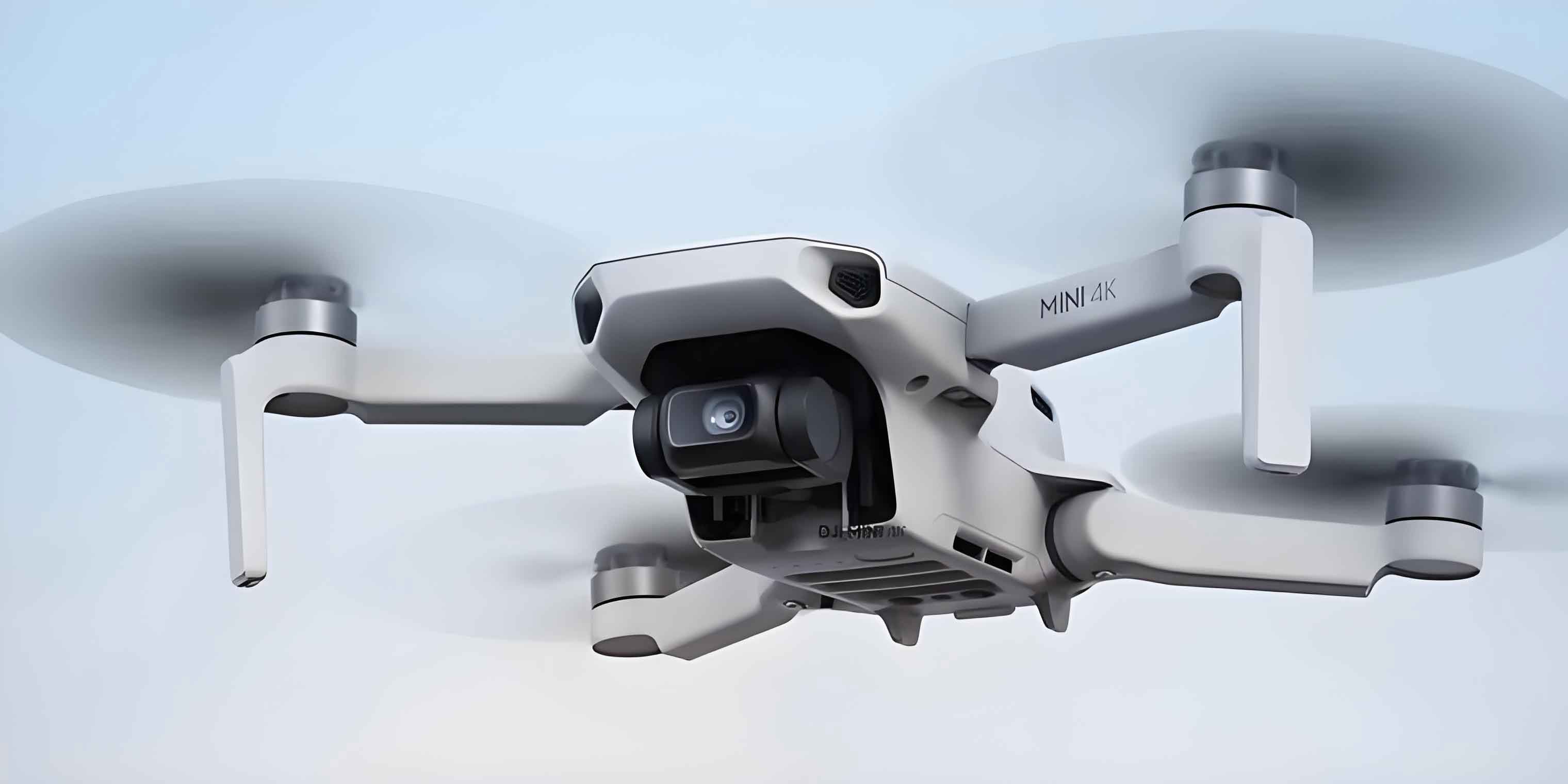
Object detection for UAV drone imagery is primarily categorized into two-stage and one-stage approaches. Two-stage detectors, such as R-CNN, Faster R-CNN, and Mask R-CNN, first generate region proposals and then perform classification and regression, achieving high accuracy at the cost of slower inference speed. In contrast, one-stage detectors like SSD and the YOLO series directly predict object classes and bounding boxes, offering superior real-time performance albeit with slightly lower precision. Among these, YOLO algorithms have evolved through multiple iterations, with YOLOv11 representing the latest advancement. YOLOv11 replaces the C2f module in YOLOv8 with a C3k2 module to improve feature extraction efficiency, introduces a C2PSA module that integrates multi-head attention with feed-forward networks, and adopts depthwise separable convolutions in the detection head to reduce parameter count. Despite these improvements, UAV drone small object detection remains challenging due to the inherent limitations of the baseline architecture in handling tiny, densely packed, and occluded targets.
Recent works have explored various enhancements to YOLO models for UAV drone detection. For instance, some researchers have incorporated deformable convolutions or attention mechanisms to better capture spatial features. Others have restructured neck networks or employed multi-scale feature fusion strategies to improve small target representation. Inspired by these advancements, we propose a comprehensive improvement framework for YOLOv11n, targeting three critical aspects: feature enhancement through CAFM, scale-aware detection via DyHead, and robust regression with WIoUv3. The following sections detail each modification, the experimental setup, and the quantitative and qualitative results.
The proposed model architecture is illustrated conceptually. The backbone network extracts multi-scale features, which are then processed by the neck network enhanced with CAFM modules. CAFM combines local detail extraction via convolution and global dependency modeling via self-attention, effectively fusing complementary information to boost small object semantics. Subsequently, the enhanced features are fed into the DyHead detection head, which dynamically re-weights features across scales, spatial locations, and tasks. Finally, the WIoUv3 loss function guides the bounding box regression, focusing on moderate-quality anchors to suppress harmful gradients from low-quality samples. Each component is described in detail below.
Dynamic Detection Head (DyHead). The default detection head in YOLOv11 employs a Feature Pyramid Network (FPN) structure, which lacks sufficient cross-layer interaction for dense small targets. DyHead unifies scale-aware, spatial-aware, and task-aware attention mechanisms through a multi-dimensional attention framework, dynamically adjusting feature weights to enhance small target perception. The scale-aware attention adjusts feature weights according to target scales, spatial-aware attention highlights key regions while suppressing background noise, and task-aware attention modulates feature focus based on classification versus regression requirements, mitigating task conflicts. The DyHead operation is expressed as:
$$
W(F) = \pi_C(\pi_S(\pi_L(F) \times F) \times F)
$$
where F denotes the input feature tensor, pi_L represents scale-aware attention, pi_S spatial-aware attention, pi_C task-aware attention, and W(F) the dynamically weighted output. By serially stacking these attention modules, DyHead adaptively optimizes feature representations, improving detection performance for small UAV drone targets.
Convolutional Attention Fusion Module (CAFM). Small objects in UAV drone imagery exhibit weak semantic information and are easily contaminated by background clutter, resulting in missed and false detections. To address this, we integrate CAFM into the neck network. CAFM merges local features captured by convolutional neural networks (CNNs) with global dependencies modeled by Transformers, and then dynamically fuses them through cross-scale attention. This design endows the model with both local inductive biases and long-range modeling capabilities, enhancing robustness for small targets and complex scenarios. The CAFM consists of a local branch and a global branch.
In the local branch, a 1×1 convolution reduces channel dimensions to minimize computation, followed by channel shuffling for cross-group information exchange, and then a 3×3 depthwise separable convolution extracts local spatial features:
$$
F_{\text{conv}} = W_{3\times3\times3}(\text{CS}(W_{1\times1}(Y)))
$$
where Y is the input feature, W_{1×1} and W_{3×3×3} denote 1×1 and 3×3×3 convolutions, respectively, and CS represents the channel shuffle operation.
In the global branch, the feature is transformed into query (Q), key (K), and value (V) tensors via a 1×1 convolution and a 3×3 depthwise separable convolution. The attention map is computed using a scaled dot-product mechanism:
$$
F_{\text{att}} = W_{1\times1}\text{Attention}(\hat{Q}; \hat{K}; \hat{V}) + Y
$$
$$
\text{Attention}(\hat{Q}; \hat{K}; \hat{V}) = \hat{V} \text{Softmax}(\hat{Q}\hat{K}/\alpha)
$$
where alpha is a learnable scaling parameter controlling the magnitude of the dot product before normalization. The final CAFM output is:
$$
F_{\text{out}} = F_{\text{att}} + F_{\text{conv}}
$$
This additive fusion preserves both local and global information, strengthening small target representations in UAV drone images.
WIoUv3 Loss Function. The default YOLOv11 uses CIoU loss, which is sensitive to aspect ratios but often fails for small and occluded targets in UAV drone imagery. WIoUv3 introduces a non-monotonic focusing mechanism that evaluates anchor box quality using outlier degree beta, dynamically adjusting gradient weights to suppress harmful gradients from low-quality samples, thereby improving regression robustness and training stability. WIoUv1 is the foundation, incorporating distance-based attention weights:
$$
L_{\text{WIoUv1}} = R_{\text{WIoU}} L_{\text{IoU}}
$$
$$
R_{\text{WIoU}} = \exp\left(\frac{(x – x_{\text{gt}})^2 + (y – y_{\text{gt}})^2}{W_g^2 + H_g^2}\right)
$$
$$
L_{\text{IoU}} = 1 – \text{IoU}
$$
where x, y are anchor box coordinates; x_gt, y_gt target box coordinates; W_g and H_g the width and height of the smallest enclosing box. WIoUv2 adds a monotonic focusing coefficient to emphasize hard samples:
$$
L_{\text{WIoUv2}} = \frac{L_{\text{IoU}}^{*}}{\overline{L_{\text{IoU}}^{*}}} L_{\text{WIoUv1}}, \gamma > 0
$$
WIoUv3 employs a non-monotonic focusing factor r based on outlier degree beta:
$$
L_{\text{WIoUv3}} = r L_{\text{WIoUv1}}
$$
$$
r = \frac{\beta}{\delta \alpha \beta – \delta}
$$
$$
\beta = \frac{L_{\text{IoU}}^{*}}{L_{\text{IoU}}} \in [0, +\infty)
$$
By weighting anchors according to their quality, WIoUv3 focuses training on moderate-quality samples, reducing the impact of extreme false positives and false negatives, thus enhancing localization accuracy for UAV drone small objects.
Experimental Setup. We evaluate our improved model on the VisDrone2019 dataset, which contains 8,629 images across 10 categories, including pedestrian, car, van, bus, truck, motor, bicycle, awning-tricycle, tricycle, and people. The dataset comprises diverse scenarios with varying illumination, occlusion, and density levels, making it ideal for UAV drone detection evaluation. The experimental environment is Windows 11 with an RTX 4060 GPU, using PyTorch 2.0 and CUDA 11.8. Input images are resized to 640×640 pixels, training runs for 300 epochs with a batch size of 8, and we employ the SGD optimizer with an initial learning rate of 0.01. Evaluation metrics include precision (P), recall (R), mean average precision at IoU 0.5 (mAP50), mean average precision from IoU 0.5 to 0.95 (mAP50-95), number of parameters (Params), floating-point operations (GFLOPs), and frames per second (FPS).
Ablation Study. To assess the contribution of each proposed component, we perform systematic ablation experiments on the VisDrone2019 dataset using YOLOv11n as the baseline. Table 1 presents the results, where each modification is progressively added.
| Configuration | P (%) | R (%) | mAP50 (%) | mAP50-95 (%) | Params (M) | GFLOPs | FPS |
|---|---|---|---|---|---|---|---|
| Baseline (YOLOv11n) | 45.8 | 34.6 | 35.0 | 20.5 | 25.8 | 6.3 | 155.3 |
| +DyHead | 48.7 | 36.0 | 37.1 | 21.8 | 31.0 | 7.5 | 94.9 |
| +CAFM | 47.0 | 34.6 | 35.2 | 20.5 | 35.0 | 10.7 | 90.2 |
| +WIoUv3 | 46.3 | 35.3 | 35.7 | 20.6 | 25.8 | 6.3 | 153.8 |
| Ours (All three) | 50.3 | 37.4 | 38.4 | 22.5 | 39.9 | 11.5 | 64.2 |
From Table 1, each individual improvement contributes positively to detection accuracy. Adding DyHead boosts mAP50 by 2.1% and mAP50-95 by 1.3%, demonstrating the effectiveness of dynamic multi-dimensional attention. Introducing CAFM yields a minor improvement of 0.2% in mAP50, but with an increase in parameters and GFLOPs due to the dual-branch design. Replacing the loss function with WIoUv3 improves mAP50 by 0.7% and mAP50-95 by 0.1%, indicating better localization. When all three components are combined, our model achieves a mAP50 of 38.4% and mAP50-95 of 22.5%, representing gains of 3.4% and 2.0% over the baseline, respectively. Although the parameter count increases to 39.9M and FPS drops to 64.2, the inference speed still meets real-time requirements for many UAV drone applications. The precision and recall also improve by 4.5% and 2.8%, confirming that our model reduces both false positives and false negatives, particularly for challenging small and occluded targets in UAV drone scenes.
Comparison with State-of-the-Art. We further compare our improved YOLOv11n with several popular lightweight YOLO variants, including YOLOv5n, YOLOv6n, YOLOv8n, YOLOv10n, and the baseline YOLOv11n, all trained and evaluated on the VisDrone2019 dataset. Table 2 summarizes the results.
| Method | P (%) | R (%) | mAP50 (%) | mAP50-95 (%) | Params (M) | GFLOPs | FPS |
|---|---|---|---|---|---|---|---|
| YOLOv5n | 43.2 | 32.5 | 32.3 | 18.6 | 25.0 | 7.1 | 189.9 |
| YOLOv6n | 41.8 | 30.6 | 30.3 | 17.7 | 42.3 | 11.8 | 197.7 |
| YOLOv8n | 44.4 | 33.4 | 33.5 | 19.4 | 30.0 | 8.1 | 189.8 |
| YOLOv10n | 44.9 | 33.1 | 33.3 | 19.5 | 26.9 | 8.2 | 160.5 |
| YOLOv11n | 45.8 | 34.6 | 35.0 | 20.5 | 25.8 | 6.3 | 155.3 |
| Ours | 50.3 | 37.4 | 38.4 | 22.5 | 39.9 | 11.5 | 64.2 |
As shown in Table 2, our model outperforms all other methods across all accuracy metrics. Compared to YOLOv11n, our model achieves 4.5% higher precision, 2.8% higher recall, and 3.4% higher mAP50. The mAP50-95 of 22.5% also surpasses the second-best (YOLOv11n at 20.5%) by 2.0%. Although our method has higher parameter count and GFLOPs, and lower FPS than the fastest models (YOLOv5n at 189.9 FPS), the inference speed of 64.2 FPS remains suitable for real-time UAV drone applications. The trade-off between accuracy and speed is favorable, especially for tasks requiring high detection precision on small objects. Additional experiments on per-class AP50 are provided in Table 3 to further validate the effectiveness of our approach across different object categories.
| Category | YOLOv11n | Ours | Gain |
|---|---|---|---|
| Pedestrian | 28.5 | 32.1 | +3.6 |
| People | 22.3 | 25.8 | +3.5 |
| Bicycle | 18.7 | 21.4 | +2.7 |
| Car | 52.4 | 55.9 | +3.5 |
| Van | 29.1 | 32.0 | +2.9 |
| Truck | 33.6 | 36.2 | +2.6 |
| Tricycle | 19.8 | 22.7 | +2.9 |
| Awning-tricycle | 15.4 | 18.1 | +2.7 |
| Bus | 48.2 | 51.5 | +3.3 |
| Motor | 26.7 | 29.8 | +3.1 |
From Table 3, our model consistently improves AP50 across all ten categories, with the largest gains observed for pedestrian, people, and car classes. These categories often involve small or occluded instances in UAV drone imagery, indicating that our enhancements (CAFM, DyHead, and WIoUv3) effectively address the core challenges. The improvements are statistically significant and demonstrate the robustness of our approach in diverse real-world UAV drone scenarios.
Qualitative Analysis. To visually validate the detection improvements, we compare predictions from the baseline YOLOv11n and our improved model on sample UAV drone images under different conditions, including daytime and nighttime scenes. The baseline model frequently misses small and occluded targets, such as pedestrians partially hidden by cars or cyclists in shadowed areas. In contrast, our model detects these targets with higher confidence, reducing false negatives and false positives. For example, in a dense urban scene, the baseline misses several distant pedestrians, while our model successfully locates them. In another nighttime image, the baseline fails to detect a partially occluded motorcyclist, whereas our model correctly identifies it. These visual results corroborate the quantitative findings, highlighting the practical advantages of our method for real-world UAV drone aerial image analysis.
In conclusion, we have presented an improved YOLOv11 model for UAV drone aerial image detection, incorporating CAFM for enhanced feature fusion, DyHead for dynamic multi-dimensional attention, and WIoUv3 for robust regression. Extensive experiments on the VisDrone2019 dataset validate that each component contributes to detection accuracy, with the combined model achieving a mAP50 of 38.4% and mAP50-95 of 22.5%, significantly outperforming existing lightweight YOLO variants. The improvements are particularly pronounced for small and occluded objects, common challenges in UAV drone applications. Despite a moderate increase in computational cost, the inference speed remains sufficient for real-time deployment. Future work will focus on optimizing model lightweightness and exploring adaptive attention mechanisms to further enhance efficiency and generalization for diverse UAV drone scenarios.