
As a researcher deeply invested in the safety and efficacy of Unmanned Aircraft Systems (UAS), I observe a critical inflection point. While mechanical failures have diminished, the ascendancy of Artificial Intelligence (AI) and the push for complex operations in the low-altitude economy have starkly elevated the importance of Human Factors (HF). The core premise that drones remove humans from the loop is a profound, and dangerous, misconception. In reality, UAS are intricate human-machine systems where the human operator, now displaced to a Ground Control Station (GCS), faces unprecedented cognitive and operational challenges. To unlock the true potential of drones for specialized tasks, we must move beyond viewing the human as an afterthought and instead place human-centric design at the forefront of system development. Based on a synthesis of literature and practical insights, three pivotal scientific problems emerge: the lack of a systematic HF standard framework, the need for efficient and trustworthy human-AI collaboration, and the absence of integrated human-systems engineering across the entire lifecycle.
The Unique Human Factors Landscape of Drone Operations
The fundamental shift from an in-cockpit pilot to a remote operator creates a distinct set of HF challenges. Contrary to simplifying the human role, this “human-on-the-ground, machine-in-the-air” paradigm often introduces complexities greater than those in manned aviation. The operator is severed from the sensory reality of the flight environment, leading to a form of sensory impoverishment. This separation is the root cause of several critical issues that demand dedicated design solutions.
| Challenge Category | Core Issue | Consequence for the Operator |
|---|---|---|
| Sensory & Perceptual Deprivation | Loss of direct visual, auditory, vestibular, and proprioceptive cues from the flight environment (e.g., turbulence, spatial orientation, engine sounds). | Degraded situation awareness (SA), increased difficulty in tasks like navigation, collision avoidance, and monitoring aircraft state, leading to higher cognitive workload. |
| Interface & Communication Constraints | Reliance on limited-bandwidth data links, causing latency, reduced video quality, and potential loss of link. GCS interfaces can be cluttered and non-intuitive. | Delayed feedback for control inputs, incomplete or distorted environmental picture, high monitoring demands, and increased stress during link degradation or handover procedures. |
| Automation Dependency & Role Change | The operator transitions from a direct controller to a supervisor of automation, managing rather than flying. Automation can be opaque and brittle. | Risk of “out-of-the-loop” performance degradation, loss of manual flying skills, misplaced trust (complacency or distrust), and difficulties in handling automation failures. |
| Atypical Operational Tempo | Long-endurance missions with periods of low activity (monitoring) punctuated by high-stress, high-demand critical events. | Vigilance decrement, fatigue, boredom, and skill atrophy, which can impair performance when rapid intervention is suddenly required. |
| Team & Multi-Agent Coordination | Managing “one-to-many” operations (multiple drones), collaborating with other GCS operators, and interfacing with Air Traffic Control (ATC) in integrated airspace. | Exponentially increased attentional and workload management demands, need for sophisticated shared SA and communication protocols within a distributed team. |
These challenges are not merely incremental; they represent a qualitative shift in the nature of human-system interaction. The design of the GCS, therefore, is not analogous to an office workstation or a traditional cockpit. It is a hybrid supervisory control interface for a dynamic, latency-affected, and sensor-mediated environment. Addressing these foundational challenges is prerequisite to tackling the specific HF problem areas.
Current Landscape of Human Factors Issues in UAS
The unique challenges manifest across several interconnected domains of HF. I categorize the current landscape into four primary areas where research and design efforts are most urgently needed.
1. Automation and Function Allocation Design
Automation is the cornerstone of UAS, yet its design is paradoxically one of the greatest sources of human error. The static allocation of functions—what the machine always does versus what the human always does—is insufficient. The core issue is the design of dynamic function allocation, which governs when and how control transitions between the human and the automation. Poor design leads to classic automation-induced problems: loss of SA, skill degradation, and trust miscalibration. The operator can become a passive monitor, ill-prepared to reclaim control during automation failures or edge-case scenarios not covered by the AI’s training data. The question is not merely one of level of automation (e.g., from AL-1 to AL-5), but of creating an adaptive partnership where authority shifts are seamless, predictable, and understood by the human. This requires models that consider real-time context, operator state, and mission phase to make allocation decisions. A simplistic model can be represented as a function of state and workload:
$$A(t) = f(S(t), W(t), T(h), C)$$
Where \(A(t)\) is the automation level at time \(t\), determined by the system state \(S\), operator workload \(W\), calibrated trust \(T\) in the automation, and the broader operational context \(C\).
2. Display, Control, and Interaction Design
The GCS interface is the operator’s window into the drone’s world. Current designs often fail to compensate for sensory deprivation, instead overwhelming the operator with raw data. Effective design must translate data into actionable awareness. This involves multimodal displays (e.g., auditory alerts, haptic cues) to offload visual channel, synthetic vision systems to augment poor video feeds, and ecological interface designs that present system constraints and relationships intuitively. Furthermore, control paradigms must evolve beyond traditional joysticks for “one-to-many” management, potentially incorporating touch, gesture, or voice commands for higher-level tasking. The goal is to create an interface that supports, rather than hinders, the development and maintenance of a comprehensive, accurate, and timely mental model of the mission state.
3. Staffing, Team Configuration, and Collaborative Work
The myth of the solitary drone operator is obsolete for complex missions. Operations now involve teams: a pilot, a sensor operator, a mission commander, and liaisons with ATC. The HF challenge lies in defining optimal crew configuration, facilitating seamless communication, and building shared SA across these distributed team members. For example, in “one-to-many” operations, the cognitive model shifts from direct control to fleet management, requiring new metrics for supervisory workload and new interface tools for attention guidance and task delegation. The collaboration extends beyond the immediate team to include ATC, where the lack of direct “see-and-avoid” capability by the drone operator creates novel procedural and communication demands for safe airspace integration.
4. Personnel Selection and Drone Training
Perhaps the most critical yet under-standardized area is drone training. The knowledge, skills, and abilities (KSAs) required for a proficient UAS operator differ significantly from those of a manned aircraft pilot. While stick-and-rudder skills are less emphasized, superior cognitive skills are paramount: spatial reasoning under sensory limitation, automation monitoring and management, multitasking, and resilience in dealing with data-link issues. Current drone training programs vary widely, often relying on ad-hoc methods. There is a pressing need for evidence-based drone training curricula that emphasize:
- Cognitive Skills Training: Drills for maintaining SA via limited sensors, practicing automation failure recovery, and managing high workload during simultaneous vehicle control.
- Simulator-Based Proficiency: High-fidelity simulations that replicate latency, link loss, and complex multi-agent scenarios are more critical for UAS than for manned aviation, as they closely mimic the real operational environment.
- Team Coordination Training: For multi-operator crews, training must build shared mental models and communication protocols.
- Standardized Certification Metrics: Moving beyond simple flight maneuvers to assessing decision-making, resource management, and SA in simulated mission environments.
A formalized approach to drone training is the keystone for human performance. Without it, even the best-designed system will be operated below its potential.
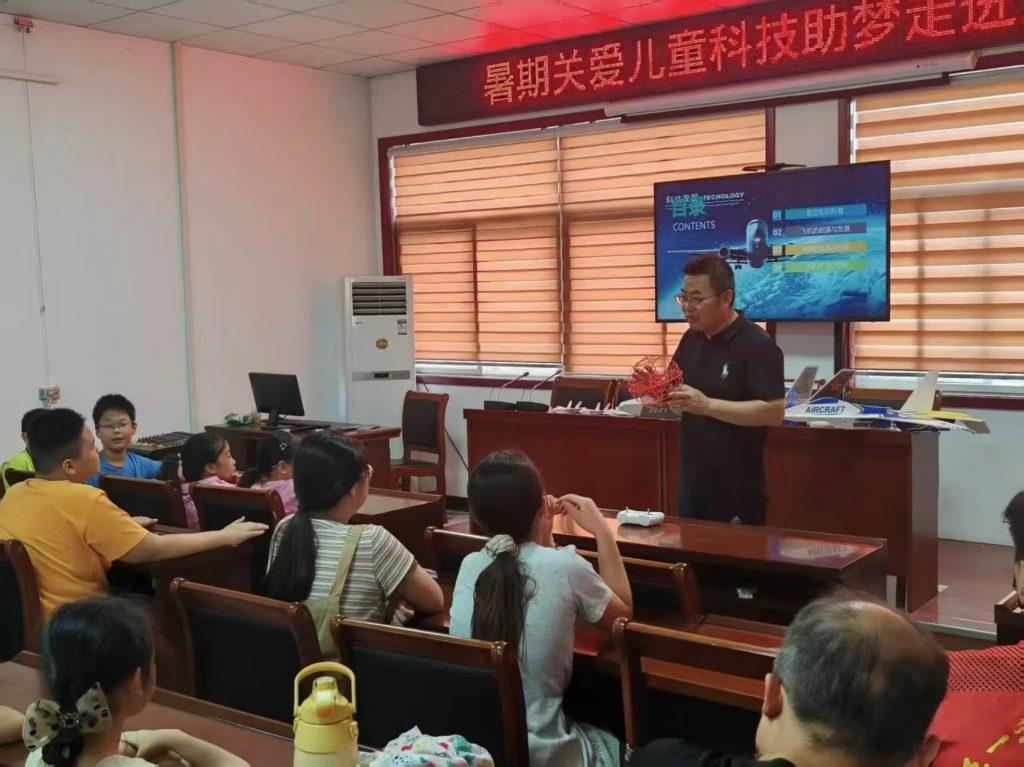
Key Technologies for Human-Centered Drone System Design
Addressing the scientific problems and current issues requires focused advancement in three key technological domains.
Technology 1: Architecting a Human Factors Standard Framework
The rapid commercialization of drones has outpaced the development of comprehensive HF standards. While bodies like ICAO, FAA (via ACs), and EASA provide high-level guidance, there is a lack of a detailed, hierarchical standard set specifically tailored to UAS GCS design and operations. A structured framework is needed, covering:
- Design Standards: For GCS workspace ergonomics, display symbology, control devices, and alarm design.
- Process Standards: For conducting human-in-the-loop evaluations, verifying SA support, and validating workload levels.
- Performance Standards: For defining minimum acceptable levels of human performance in detection, decision-making, and response tasks.
- Training & Certification Standards: For establishing core drone training competencies, simulator requirements, and proficiency check protocols.
Such a framework would provide a common benchmark for manufacturers, accelerate certification, and most importantly, bake safety and performance into the design process from the outset. The following table outlines a potential high-level structure for this framework.
| Pillar | Scope | Example Elements |
|---|---|---|
| GCS Hardware & Environment | Physical design of control stations, seating, displays, lighting, and acoustics. | Display luminance/contrast ratios under ambient light; control device force feedback characteristics; multi-station layout for team operations. |
| Software Interface & Interaction | Design of graphical user interfaces, information architecture, and dialog design. | Color and symbology conventions for threat levels; menu depth and navigation logic; data link status visualization. |
| Function Allocation & Automation | Principles for designing and indicating dynamic control transitions and AI support. | Requirements for mode awareness; protocols for control handover requests and acknowledgments; transparency requirements for AI reasoning. |
| Operational Procedures | Standardized procedures for communication, contingency management, and crew coordination. | Phraseology for UAS-ATC communication in shared airspace; lost-link procedure steps; checklists for abnormal conditions. |
| Personnel Competency | Defined KSAs, drone training syllabi, and certification benchmarks. | Minimum simulator hours for specific mission types; objective metrics for SA assessment in scenarios; recurrent drone training requirements. |
Technology 2: Engineering Efficient Human-AI Teaming
Moving beyond mere automation, the future lies in creating true collaborative partnerships between the operator and AI. This Human-AI Teaming (HAT) technology focuses on bidirectional understanding and adaptive collaboration. Key research thrusts include:
- Bidirectional Transparency: The AI must explain its state, intent, and confidence (“Explainable AI” or XAI) in a human-understandable way. Conversely, the system must infer the operator’s intent and cognitive state (e.g., via physiological sensors or interaction patterns) to provide appropriate support.
- Dynamic and Adaptive Function Allocation: Implementing the theoretical model \(A(t) = f(S, W, T, C)\) in real-time. The system could dynamically adjust its level of autonomy based on real-time assessment of operator workload \(W(t)\) and situational complexity \(S(t)\).
- Shared Mental Model Calibration: Designing interfaces that continuously align the human’s and the AI’s understanding of the mission goals, constraints, and priorities. This prevents surprises and builds calibrated trust.
- Mutual Learning: Developing systems where the AI learns from human interventions and corrections, while the human operator’s drone training is augmented by AI-driven coaching that highlights gaps in SA or decision patterns.
The goal is to create a team where the human focuses on high-level judgment, oversight, and ethical reasoning, while the AI handles precise execution, continuous monitoring, and data synthesis, with fluent dialogue between the two.
Technology 3: Model-Based Human-System Integration (HSI) Across the Lifecycle
HF considerations must be integrated from the earliest conceptual phase, not bolted on during testing. Model-Based Systems Engineering (MBSE) provides the formalism, and Human Readiness Levels (HRLs) provide the integration milestones. The key technology is the development and application of human performance models within the system model. This involves:
- Early-Stage (HRL 1-3): Using computational cognitive models (e.g., ACT-R, QN-MHP) to simulate operator task performance and predict workload hotspots or SA bottlenecks for different design concepts. Trade-off analyses can be conducted virtually.
- Mid-Stage (HRL 4-6): Integrating prototype interfaces with human-in-the-loop simulations. The focus shifts to empirical validation. Metrics like NASA-TLX for workload and SAGAT for SA are collected rigorously. The models are updated with real human data. This is where specific drone training protocols for the new interface can be developed and tested.
- Late-Stage (HRL 7-9): Using the refined models to predict performance in full-mission contexts, plan optimal crew sizes, and develop finalized drone training programs and procedures. The human performance model becomes a living part of the system’s digital twin.
The power of this approach is its proactive nature. It allows designers to ask “what-if” questions about human performance early, reducing the cost and risk of discovering HF flaws during late-stage testing or, worse, in actual operations.
Conclusion
The evolution of drone technology is at a crossroads. The path toward safe, efficient, and scalable operations in the low-altitude economy is fundamentally a human-centered challenge. I have outlined the unique perceptual and cognitive hurdles faced by remote operators, categorized the persistent issues in automation, interface, teamwork, and most critically, in drone training. To overcome these, a concerted effort is required in three technological directions: building a robust and detailed HF standard framework to guide consistent design; pioneering human-AI teaming principles that foster transparency and adaptive collaboration; and institutionalizing model-based human-system integration to embed HF from concept to deployment. The drone itself may be unmanned, but the system’s success is entirely dependent on the human it was designed for. Prioritizing these human factors design technologies is not an option; it is the essential prerequisite for the future of advanced drone operations.