
In recent years, the civilian UAV industry has witnessed rapid growth, with applications spanning logistics, agriculture, surveillance, and environmental monitoring. As demand for longer endurance, higher payloads, and extended range increases, large civilian UAVs have emerged as a focal point for innovation. In this study, I analyze the global patent landscape and technical hotspots in the field of civilian UAVs, focusing on key trends, technological developments, and strategic insights. The goal is to provide a comprehensive understanding of the patent dynamics that shape this evolving sector, with an emphasis on fostering innovation and guiding future research directions.
The analysis is based on patent data retrieved from global databases, using a structured search strategy to capture relevant technologies. The technical scope encompasses aspects such as flight control systems, airframe design, communication links, simulation, and applications specific to civilian UAVs. Patents related to small or micro UAVs were excluded unless they contained universally applicable technologies. The dataset includes 2,750 patent families worldwide, with 1,446 from China, up to January 31, 2021. This data forms the foundation for evaluating trends and hotspots in civilian UAV innovation.
To begin, I examine the overall development trends in civilian UAV patents. The number of patent applications has shown a significant upward trajectory since the early 2000s, reflecting the growing interest and investment in this field. Below is a table summarizing the annual patent application counts from 1990 to 2020, which highlights key growth phases.
| Year | Patent Applications | Cumulative Total |
|---|---|---|
| 1990-2000 | Low (e.g., <10 per year) | ~50 |
| 2001-2012 | Gradual increase (15-50 per year) | ~500 |
| 2013-2020 | Rapid growth (80-300+ per year) | ~2,200 |
This trend indicates that civilian UAV technology has transitioned from a nascent stage to a period of accelerated development. The surge in patents since 2013 aligns with advancements in drone commercialization, particularly in logistics and remote sensing. For instance, the integration of artificial intelligence and 5G communications has spurred new patent filings, as companies seek to protect innovations in autonomous flight and data transmission for civilian UAVs.
Next, I analyze the technology lifecycle of civilian UAV patents. By plotting the number of patent applications against the number of applicants over time, we can identify the maturity of this technological domain. The lifecycle curve reveals three distinct phases: an embryonic period (1990-2000), a growth phase (2001-2010), and a rapid expansion phase (2011-2020). During the rapid expansion, both patent counts and applicant diversity increased substantially, suggesting that civilian UAV innovation is becoming more competitive and collaborative. The average patents per applicant rose from 1.75 in the embryonic period to over 3.0 in later phases, indicating deeper technological engagement.
A critical aspect of this analysis is the geographical distribution of patent filings. The table below shows the top countries contributing to civilian UAV patents, highlighting China and the United States as dominant players.
| Country | Patent Applications | Percentage of Total |
|---|---|---|
| China | 1,446 | 52% |
| United States | 982 | 36% |
| France | 110 | 4% |
| South Korea | 55 | 2% |
| Germany | 28 | 1% |
| Others | 129 | 5% |
China’s leadership in civilian UAV patents can be attributed to strong government support and a booming e-commerce sector that drives demand for logistics drones. The United States follows closely, with innovations often centered around advanced avionics and flight control systems. This geographical concentration underscores the global race for supremacy in civilian UAV technology, with both nations leveraging patents to secure market advantages.
Turning to key patent applicants, I have identified the top entities worldwide. The list includes companies, universities, and research institutes, reflecting the interdisciplinary nature of civilian UAV development. Below is a table summarizing the top applicants and their patent counts.
| Applicant | Country | Patent Applications |
|---|---|---|
| Boeing | United States | 187 |
| Honeywell | United States | 185 |
| Bell Textron Inc. | United States | 155 |
| Beijing University of Aeronautics and Astronautics | China | 137 |
| Nanjing University of Aeronautics and Astronautics | China | 107 |
| Northwestern Polytechnical University | China | 103 |
| Other Chinese entities (e.g., AVIC, DJI) | China | ~500 |
From this, it is evident that U.S. companies like Boeing and Honeywell focus on integrated systems and components, while Chinese universities lead in fundamental research related to civilian UAVs. This dichotomy highlights different innovation strategies: the U.S. emphasizes commercial applications, whereas China invests in academic groundwork. Notably, the patent activity of these applicants has surged in recent years, with Bell Textron Inc., for example, filing 85 patents between 2016 and 2018 alone, primarily on tiltrotor technology for civilian UAVs.
To delve deeper into technical hotspots, I employ multiple analytical methods, including IPC classification, text clustering, and manual technology grouping. The IPC analysis reveals the most frequent technology classes associated with civilian UAV patents. The table below lists the top IPC codes and their patent counts.
| IPC Code | Description | Patent Applications |
|---|---|---|
| G05D1 | Control of position, course, altitude, or attitude of vehicles | 774 |
| B64C27 | Rotorcraft; Rotors peculiar thereto | 396 |
| G08G5 | Traffic control systems for aircraft | 350 |
| B64C39 | Other aircraft | 341 |
| B64C29 | Aircraft capable of vertical take-off or landing | 301 |
| G01C21 | Navigation | 291 |
| H04B7 | Radio transmission systems | 151 |
This distribution underscores that flight control (G05D1) is the most patented area, followed by rotorcraft design (B64C27) and air traffic management (G08G5). These categories align with the core challenges in civilian UAV operations, such as autonomous navigation and safe integration into airspace. For instance, flight control systems for civilian UAVs often involve complex algorithms for path planning and obstacle avoidance, which can be represented mathematically. Consider a basic path planning model for a civilian UAV:
$$ \min_{x(t)} \int_{t_0}^{t_f} \left( \| \dot{x}(t) \|^2 + \lambda \cdot d(x(t), O) \right) dt $$
where \( x(t) \) is the trajectory, \( \dot{x}(t) \) is the velocity, \( d(x(t), O) \) is the distance to obstacles \( O \), and \( \lambda \) is a weighting factor. Such models are frequently patented to optimize the performance of civilian UAVs in dynamic environments.
Text clustering of patent abstracts further refines the technical hotspots. Keywords like “waypoint,” “obstacle avoidance,” “deep learning,” “tiltrotor,” “landing gear,” “attitude control,” “autopilot,” “simulation,” “data link,” “communication system,” and “ground station” appear frequently. These clusters highlight six major domains: flight control systems, airframe design, propulsion systems, communication links, ground control, and safety management. Among these, flight control and airframe design are the most prolific, accounting for over 65% of patents. For example, tiltrotor technology, which enables vertical take-off and landing for civilian UAVs, is a key focus, with patents covering mechanisms like:
$$ \theta(t) = \theta_0 + \int \omega(t) dt $$
where \( \theta(t) \) is the tilt angle of rotors over time, and \( \omega(t) \) is the angular velocity. This formula models the dynamic adjustment of rotors during transition phases, crucial for efficient civilian UAV operations.
Manual technology grouping provides a detailed breakdown of patent distribution across sub-domains. The table below summarizes the patent counts for primary and secondary technical groups related to civilian UAVs.
| Primary Group | Secondary Group | Patent Applications |
|---|---|---|
| Path Planning & Control | 450 | |
| Take-off and Landing Control | 300 | |
| Attitude Control | 250 | |
| Obstacle Avoidance | 180 | |
| Tiltrotor Mechanisms | 200 | |
| Aerodynamic Layouts | 150 | |
| Other Composite Wings | 100 | |
| Satellite Communications | 80 | |
| Line-of-Sight Communications | 70 | |
| 5G Applications | 50 | |
| Surveying and Mapping | 120 | |
| Freight and Logistics | 76 | |
| Simulation | Flight Simulation | 90 |
From this, it is clear that path planning, tiltrotor design, and 5G communication are dominant sub-areas. The integration of 5G technology into civilian UAVs, for instance, enables high-speed data transmission for real-time control and monitoring, which is vital for applications like autonomous delivery. The data rate in such systems can be approximated by:
$$ R = B \log_2 \left(1 + \frac{P \cdot G}{N_0 B}\right) $$
where \( R \) is the rate, \( B \) is the bandwidth, \( P \) is the transmit power, \( G \) is the channel gain, and \( N_0 \) is the noise density. Patents in this area often focus on optimizing these parameters for low-altitude civilian UAV networks.
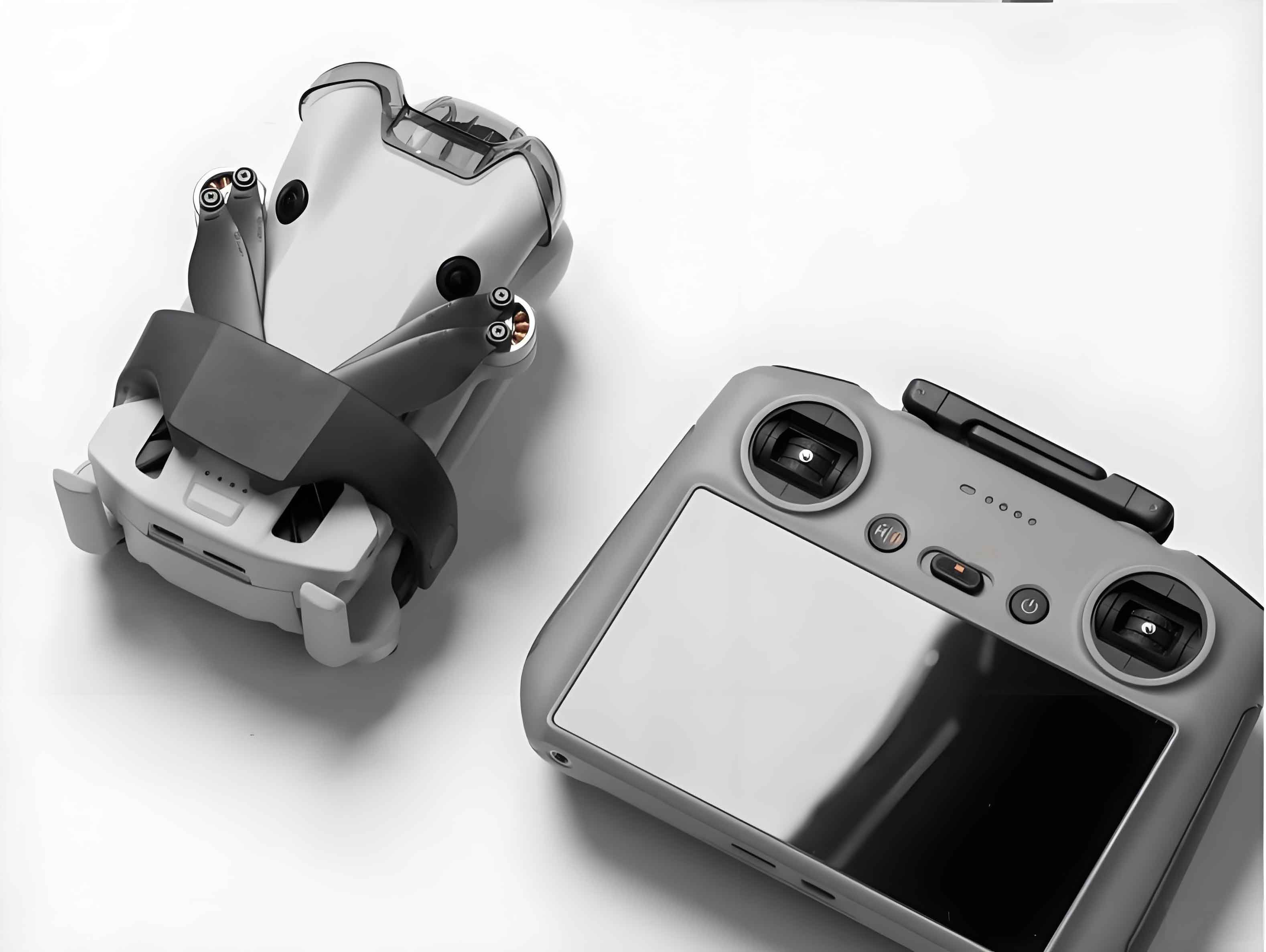
The image above illustrates a civilian UAV operating in a low-altitude environment, highlighting the importance of advanced communication and control systems. Such visual representations underscore the practical challenges addressed by patented technologies in the civilian UAV sector.
Furthermore, simulation technologies for civilian UAVs are gaining traction, with patents covering virtual testing environments for flight dynamics and safety validation. These simulations often rely on mathematical models, such as those for aerodynamics:
$$ F_l = \frac{1}{2} \rho v^2 S C_l $$
where \( F_l \) is the lift force, \( \rho \) is air density, \( v \) is velocity, \( S \) is wing area, and \( C_l \) is the lift coefficient. By patenting these models, companies protect innovations that reduce development costs and enhance the reliability of civilian UAVs.
In terms of application scenarios, freight functionality is a burgeoning hotspot, driven by logistics giants exploring civilian UAVs for long-haul transport. Patents in this domain cover cargo handling systems, route optimization for delivery, and integration with existing supply chains. For example, a patented algorithm for load distribution in a civilian UAV might involve:
$$ \max \sum_{i=1}^n w_i x_i \text{ subject to } \sum_{i=1}^n w_i x_i \leq W_{\text{max}} $$
where \( w_i \) is item weight, \( x_i \) is a binary variable for inclusion, and \( W_{\text{max}} \) is the maximum payload. Such innovations are critical for scaling civilian UAV operations in commercial logistics.
Based on this analysis, I draw several conclusions and offer recommendations. First, the civilian UAV patent landscape is in a rapid growth phase, with China and the U.S. leading in filings. This reflects global competition and the strategic importance of civilian UAV technology. Second, technical hotspots are concentrated in flight control, airframe design (especially tiltrotor mechanisms), and emerging areas like 5G communications and AI-driven simulation. These hotspots represent both current innovations and future growth vectors for civilian UAVs. Third, key applicants vary by region, with U.S. firms focusing on commercial systems and Chinese academia on foundational research, suggesting opportunities for cross-border collaboration.
To foster the development of civilian UAVs, I recommend the following strategies. Strengthen global patent portfolios by filing in multiple jurisdictions, particularly for core technologies like flight control and communication systems. This will protect intellectual property and mitigate infringement risks in the expanding civilian UAV market. Implement patent navigation projects to identify white spaces and guide R&D efforts, ensuring that innovations in civilian UAVs align with market needs and avoid redundancy. Promote interdisciplinary fusion by integrating AI, 5G, and IoT technologies into civilian UAV platforms, as evidenced by the growing patent activity in these areas. Encourage industry-academia partnerships to bridge the gap between research and commercialization, leveraging the strengths of universities and companies in advancing civilian UAV technology. Finally, advocate for regulatory frameworks that support safe and efficient integration of civilian UAVs into airspace, as patents related to air traffic management remain underdeveloped but crucial for widespread adoption.
In summary, this analysis provides a comprehensive view of the patent dynamics and technical priorities in the civilian UAV sector. By leveraging these insights, stakeholders can navigate the competitive landscape, invest in high-potential areas, and contribute to the sustainable growth of civilian UAV applications worldwide. The continued emphasis on innovation, as reflected in patent filings, will undoubtedly shape the future of civilian UAVs, making them more capable, reliable, and integral to modern society.