
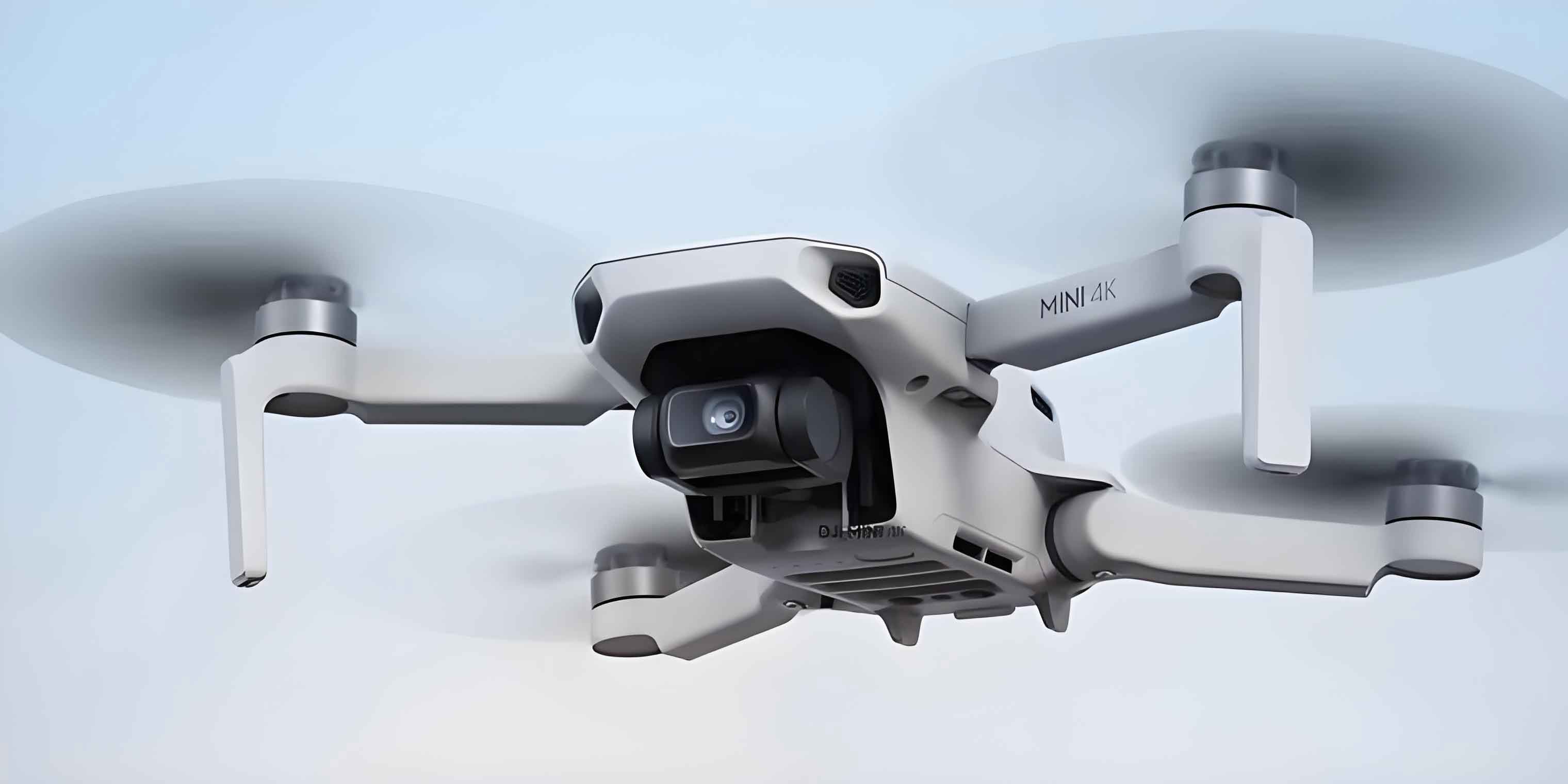
The rapid evolution of fifth-generation mobile communication technologies and the Internet of Things (IoT) has intensified demands for low-latency computational task processing. Mobile edge computing (MEC) addresses this by deploying servers near end-user devices, yet faces significant challenges during traffic surges that degrade service quality. This work introduces a novel drone technology-assisted framework to achieve robust load balancing across edge networks, leveraging the mobility and flexibility of Unmanned Aerial Vehicle platforms to enhance traditional infrastructure.
System Model and Problem Formulation
We consider a network comprising $M$ ground base stations (GBSs) and $N$ Unmanned Aerial Vehicle edge servers. GBSs and UAVs form sets $\mathcal{M} = \{e_1^c, e_2^c, \dots, e_M^c\}$ and $\mathcal{N} = \{e_1^u, e_2^u, \dots, e_N^u\}$, respectively. Positions are denoted as $p_i^c = (x_i^c, y_i^c, 0)$ for GBSs and $p_i^u = (x_i^u, y_i^u, H)$ for UAVs. Task arrival rates follow Poisson distributions $\boldsymbol{\lambda} = \{\lambda_1, \lambda_2, \dots, \lambda_M\}$.
Transmission Models
GBS-to-GBS Transmission: Wired connections enable task migration between GBSs with latency matrix $\mathbf{D^c}$:
$$ \mathbf{D^c} = \begin{bmatrix}
d_{1,1}^c & \cdots & d_{1,M}^c \\
\vdots & \ddots & \vdots \\
d_{M,1}^c & \cdots & d_{M,M}^c
\end{bmatrix} $$
where $d_{i,j}^c$ is the unit task transmission time between $e_i^c$ and $e_j^c$.
GBS-to-UAV Transmission: Dominated by line-of-sight channels, the uplink rate from $e_i^c$ to $e_j^u$ is:
$$ R_{c2u}(e_i^c, e_j^u) = B \log_2\left(1 + \frac{\alpha_0 d(e_i^c, e_j^u)^{-2} P_c}{\sigma^2}\right) $$
where $B$ is bandwidth, $P_c$ is transmit power, and $\alpha_0$ is the channel gain constant. The latency matrix $\mathbf{D^u}$ is:
$$ \mathbf{D^u} = \begin{bmatrix}
d_{1,1}^u & \cdots & d_{1,N}^u \\
\vdots & \ddots & \vdots \\
d_{M,1}^u & \cdots & d_{M,N}^u
\end{bmatrix},\quad d_{i,j}^u = \frac{1}{R_{c2u}(e_i^c, e_j^u)} $$
Task Offloading Model
Each GBS $e_i^c$ distributes tasks via offloading vector $\mathbf{X_i} = \mathbf{X_i^{c2c}} \cup \mathbf{X_i^{c2u}}$ where:
$$ \mathbf{X_i^{c2c}} = [x_{i,1}^{c2c} \cdots x_{i,M}^{c2c}], \quad \mathbf{X_i^{c2u}} = [x_{i,1}^{c2u} \cdots x_{i,N}^{c2u}] $$
UAVs assist only one GBS per time slot, i.e., $\mathcal{L}_i^u \subseteq \mathcal{N}$ denotes UAVs connected to $e_i^c$.
Computation Model
Service rates are $\mathbf{F^c} = \{f_1^c, \dots, f_M^c\}$ for GBSs and $\mathbf{F^u} = \{f_1^u, \dots, f_N^u\}$ for UAVs. Load at $e_i^c$ is:
$$ w_i^c = \lambda_i + \sum_{\substack{e_j^c \in \mathcal{L}_i^c \\ e_i^c \neq e_j^c}} x_{j,i}^{c2c} – \sum_{\substack{e_j^c \in \mathcal{L}_i^c \\ e_i^c \neq e_j^c}} x_{i,j}^{c2c} – \sum_{e_k^u \in \mathcal{L}_i^u} x_{i,k}^{c2u} $$
Task response latency combines queuing delay and processing time under M/M/1 queuing:
$$ T_i^{resp}(w, w_i^c) = \underbrace{\frac{w_i^c}{f_i^c(f_i^c – w_i^c)}}_{\text{Queuing}} + \underbrace{\frac{w}{f_i^c}}_{\text{Processing}} $$
Problem Formulation
We define a utility function for GBS $e_i^c$:
$$ Q_i = \frac{1}{\lambda_i} \left\{ \sum_{e_j^c \in \mathcal{L}_i^c} \left[ \frac{w_j^c}{f_j^{c’}(f_j^{c’} – w_j^c)} + \frac{x_{i,j}^{c2c}}{f_j^{c’}} \right] + \sum_{\substack{e_j^c \in \mathcal{L}_i^c \\ e_i^c \neq e_j^c}} x_{i,j}^{c2c} d_{i,j}^c \right\} $$
where $f_j^{c’} = f_j^c + \sum_{e_k^u \in \mathcal{L}_j^u} f_k^{u’}$ and $f_k^{u’}$ is UAV’s effective service rate. The joint optimization minimizes $Q_i$ subject to capacity and UAV exclusivity constraints.
| Symbol | Definition |
|---|---|
| $\mathcal{M}, \mathcal{N}$ | GBS and UAV edge server sets |
| $\mathbf{D^c}, \mathbf{D^u}$ | Transmission latency matrices |
| $R_{c2u}$ | Uplink data rate |
| $w_i^c$ | Workload arrival rate at $e_i^c$ |
| $f_j^{c’}$ | Effective service rate with UAV assistance |
Game Formulation and Equilibrium Analysis
We model load balancing as a non-cooperative game $\mathcal{G} = \langle \mathcal{M}, \{\mathbf{X_i}\}, \{Q_i\} \rangle$. A strategy profile $\mathbf{X^*}$ is a Nash Equilibrium (NE) if:
$$ Q_i(\mathbf{X_i^*}, \mathbf{X_{-i}^*}) \leq Q_i(\mathbf{X_i’}, \mathbf{X_{-i}^*}), \quad \forall \mathbf{X_i’} \in \mathbf{X_i} $$
Existence Proof
Theorem 1: The strategy set $\mathbf{X_i}$ is closed and convex, and $Q_i$ is continuously differentiable.
Proof: Constraints form a convex polytope. Partial derivatives of $Q_i$ are continuous:
$$ \frac{\partial Q_i}{\partial x_{i,j}^{c2c}} = \begin{cases}
\frac{1}{\lambda_i} \left( \frac{1}{(f_j^{c’} – w_j^c)^2} + \frac{1}{f_j^{c’}} + d_{i,j}^c \right), & i \neq j \\
\frac{1}{\lambda_i} \left( \frac{1}{(f_j^{c’} – w_j^c)^2} + \frac{1}{f_j^{c’}} \right), & i = j
\end{cases} $$
Theorem 2: $Q_i$ is strictly convex in $\mathbf{X_i}$ given fixed $\mathbf{X_{-i}}$.
Proof: The Hessian $\mathbf{H}(Q_i)$ is diagonal with positive entries $\frac{2}{(f_j^{c’} – w_j^c)^3} > 0$ under constraint $w_j^c < f_j^{c’}$.
Theorem 3: A Nash Equilibrium exists.
Proof: The game is equivalent to variational inequality $\text{VI}(\mathbf{X}, \mathbf{q})$. Gradient monotonicity follows from positive definiteness of $\mathbf{H}(Q_i)$.
Algorithm Design
We propose the Unmanned Aerial Vehicle Adaptive Distributed Load Balancing Algorithm (UADLBA) with two phases:
Phase 1: UAV Adaptive Association
UAVs associate with the most overloaded GBSs to maximize effective service rates. For each UAV $e_i^u$:
$$ j^* = \arg\max_k \left( \frac{\lambda_k}{f_k^{c’}} \right) $$
then update $f_{j^*}^{c’} \leftarrow f_{j^*}^{c’} + f_i^{u’}$.
Phase 2: Distributed Load Balancing Game
GBSs iteratively optimize offloading strategies using local information:
Initialize $\mathbf{X_i}^{(0)}$ and broadcast state
For $iter = 1$ to $MaxIter$:
    For each neighbor configuration $B_j \in \boldsymbol{B}$:
        Solve $\mathbf{X_i}^{(k)} = \arg\min Q_i(\mathbf{X_i}, \mathbf{X_{-i}})$ via convex solver
    If $\|\mathbf{X_i}^{(k)} - \mathbf{X_i}^{(k-1)}\| \leq \epsilon$: Break
Return $\mathbf{X_i^*}$
| Algorithm | Complexity | Features |
|---|---|---|
| UADLBA | $\mathcal{O}(M \cdot |\mathcal{L}| \cdot K)$ | Distributed, adapts to UAV dynamics |
| PSOGA | $\mathcal{O}(P_{num} \cdot N \cdot M)$ | Centralized, high computation |
| SBOA | $\mathcal{O}(M \cdot |\mathcal{L}| \cdot K)$ | No UAV integration |
Experimental Results and Analysis
Simulations used Shanghai GBS locations with parameters:
$$ \lambda_i \sim \mathcal{N}(10, 4), \quad f_i^c \sim \mathcal{N}(15, 6), \quad f_i^u \sim \mathcal{N}(2, 1) $$
UADLBA converged within 15 iterations (Fig 1). Load balanced across neighbors while UAV-assisted GBSs handled higher capacity.
Performance Comparison
We evaluated three scenarios with varying overload proportions:
| Scenario | Low Load (20% nodes) | High Load (80% nodes) |
|---|---|---|
| Low | 80% | 20% |
| Medium | 50% | 50% |
| High | 0% | 100% |
UADLBA reduced average utility $Q = \frac{1}{M}\sum_{i=1}^M Q_i$ significantly:
$$ \begin{array}{c|c|c|c}
\text{Method} & \text{Low} & \text{Medium} & \text{High} \\
\hline
\text{Local} & 0.142 & 0.167 & 0.238 \\
\text{SBOA} & 0.094 & 0.102 & 0.201 \\
\text{PSOGA} & 0.088 & 0.089 & 0.172 \\
\text{UADLBA} & \mathbf{0.085} & \mathbf{0.088} & \mathbf{0.169} \\
\end{array} $$
Execution times (seconds) demonstrate UADLBA’s efficiency:
$$ \begin{array}{c|c|c|c}
& \text{Low} & \text{Medium} & \text{High} \\
\hline
\text{UADLBA} & 1.43 & 1.46 & 1.48 \\
\text{SBOA} & 1.31 & 1.36 & 1.37 \\
\text{PSOGA} & 1234.17 & 1336.32 & 1387.61 \\
\end{array} $$
Conclusion
This work presents a game-theoretic load balancing framework enhanced by drone technology. By integrating Unmanned Aerial Vehicle platforms as dynamic edge resources, our UADLBA algorithm achieves:
- 31.7% average latency reduction over non-UAV baselines
- Distributed convergence to Nash Equilibrium
- Adaptability to high-load scenarios (100% overload tolerance)
Future work will explore energy-aware optimization and multi-UAV coordination strategies. The fusion of drone technology with edge computing opens new dimensions for responsive IoT infrastructures.