
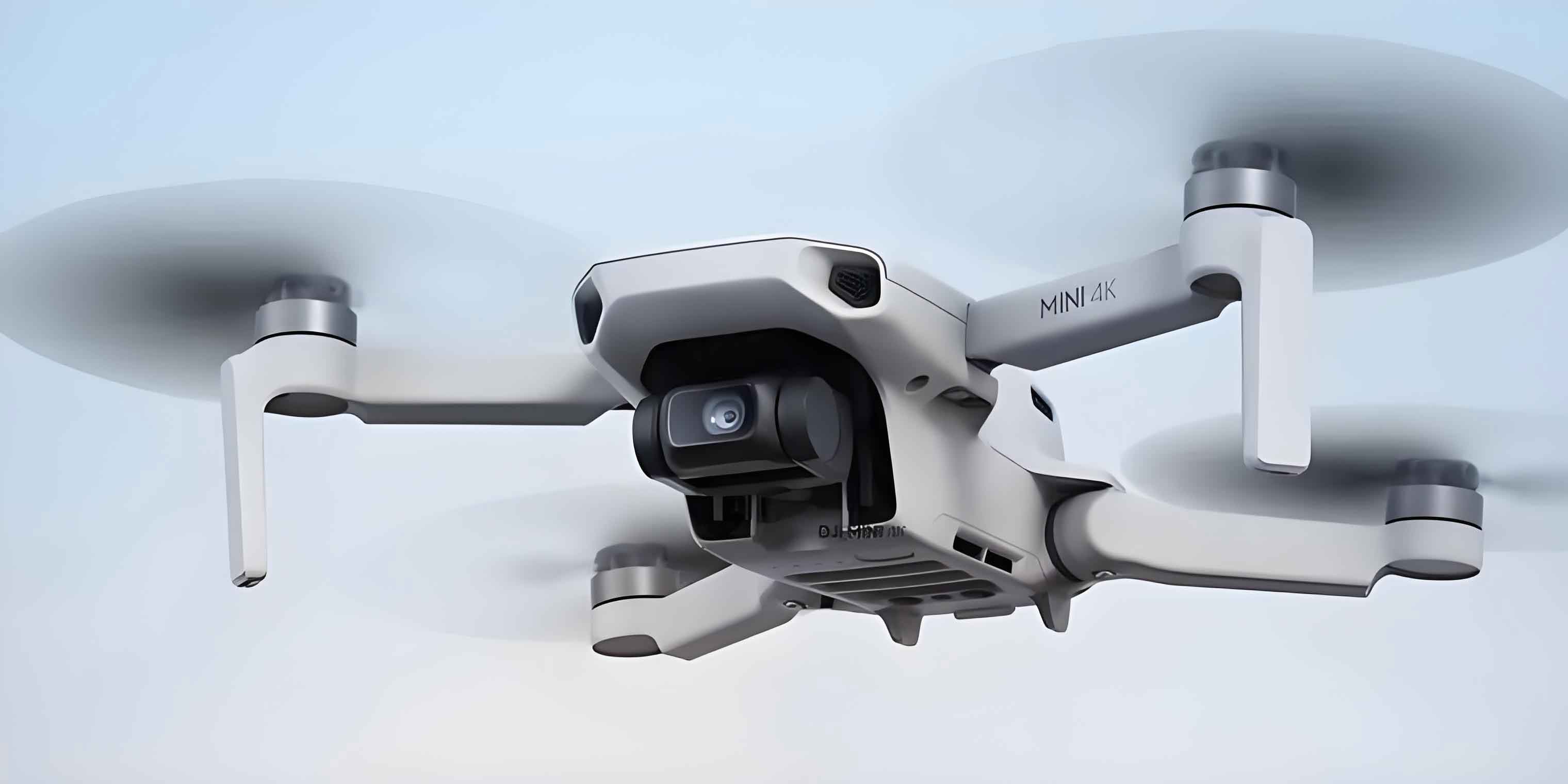
The proliferation of unmanned systems, particularly UAV drones, is a cornerstone of the burgeoning low-altitude economy. This economic paradigm leverages the airspace below 1000 meters for various aviation activities, driving integrated development across related sectors. The operational safety and efficiency of these systems in complex, dynamic low-altitude environments are paramount. This paper presents a comprehensive review of the frontier progress in the collaborative control of unmanned systems, focusing on the unique challenges and innovative solutions emerging in this critical domain.
The low-altitude environment presents a multi-faceted challenge for UAV drone operations. It is characterized by static obstacles like buildings, power lines, and vegetation, as well as dynamic disturbances including wind gusts, turbulence, and electromagnetic interference. Furthermore, the anticipated increase in traffic density necessitates robust strategies for conflict resolution and coordinated movement. Therefore, advancing high-precision, reliable, and intelligent collaborative control and anti-disturbance technologies is not merely an academic pursuit but an urgent industrial imperative to ensure safety and unlock the full potential of low-altitude applications.
1. Dynamic Disturbance and UAV Flight Coupling
The foundation for precise and robust collaborative control of UAV drone swarms lies in high-fidelity modeling of their coupled dynamics with environmental disturbances. This involves accurate system modeling, quantitative assessment of uncertainties, and the integration of this quantified information into control law design and optimization. The relationship is illustrated in the following framework:
Disturbance Sources -> Coupling Pathways -> UAV Drone Dynamics (Position/Attitude) -> State Perturbation
1.1 Modeling of Multi-UAV Dynamics and Disturbances
Accurate dynamic models are fundamental. For rotorcraft like quadrotors, recent advances focus on data-driven enhancements to physical models to improve accuracy and adaptability in complex flights. Models also address full omnidirectional motion and vibration suppression from flexible structures. For fixed-wing UAV drones, high-fidelity six-degree-of-freedom models incorporating real aerodynamics and actuator dynamics are crucial for designing robust controllers, especially for challenging flight regimes like stall or vertical take-off and landing transitions.
Modeling disturbances, particularly wind, is equally critical. Methods range from model-based approaches, like using acceleration feedback in H∞ control to counteract continuous and gusty wind, to data-driven strategies. The latter includes deep meta-learning for creating “neural” aerodynamic models that can quickly adapt to unseen wind conditions, providing a generalizable model for precise force prediction under strong wind interference for a fixed-wing UAV drone.
1.2 Quantification of Disturbance and Uncertainty
Modeling alone is insufficient; the intensity, uncertainty, and systemic impact of disturbances must be quantified to inform intelligent control decisions. Research has employed improved Bayesian networks to quantify and rank ground threat levels for UAV drones, accounting for information uncertainty. In communication and sensing, stochastic geometry theory is used to derive the distribution of interference from non-cooperative radars, quantifying the uncertainty in successful ranging probability. For integrated air-space-ground networks, schemes using UAV drone-mounted reconfigurable intelligent surfaces aim to align interference, quantifying the uncertainty in achieving this alignment to enhance system degrees of freedom.
1.3 Coupling Quantified Results with Flight Control
The ultimate goal of disturbance quantification is to transform abstract interference information into concrete states that can be integrated into the flight control loop. Different disturbances affect the system through specific coupling pathways: wind fields directly act on the center of mass and airfoils, altering aerodynamic forces and moments; electromagnetic interference can corrupt sensor signals or communication links; and internal noise acts as persistent excitation. Contemporary research tackles this by constructing disturbance observers to estimate uncertainties online and embedding them deeply into the control law for active compensation. For instance, a modified Linear Active Disturbance Rejection Control (LADRC) strategy for quadrotor UAV drones uses a Linear Extended State Observer (LESO) to estimate and compensate for total disturbances in real-time, enabling decoupling-free attitude control and significantly enhancing flight stability in complex environments.
A simplified attitude dynamics model for a quadrotor UAV drone with disturbance estimation can be represented as:
$$ \dot{\boldsymbol{\omega}} = \mathbf{J}^{-1} (\boldsymbol{\tau} – \boldsymbol{\omega} \times \mathbf{J}\boldsymbol{\omega} + \mathbf{d}_{ext}) $$
$$ \hat{\mathbf{d}} = \text{LESO}(\boldsymbol{\omega}, \boldsymbol{\tau}) $$
$$ \boldsymbol{\tau}_{cmd} = \mathbf{K}_p (\boldsymbol{\omega}_{des} – \boldsymbol{\omega}) – \hat{\mathbf{d}} $$
where $\boldsymbol{\omega}$ is the angular velocity, $\mathbf{J}$ is the inertia matrix, $\boldsymbol{\tau}$ is the control torque, $\mathbf{d}_{ext}$ is the external disturbance, $\hat{\mathbf{d}}$ is the estimated disturbance from the observer, and $\boldsymbol{\tau}_{cmd}$ is the compensated control command.
2. Multi-Constraint Safe Formation Decision and Path Planning
Formation control enables a group of UAV drones to maintain a specific spatial configuration through local perception and communication, embodying the principle that the whole is greater than the sum of its parts. In low-altitude scenarios, the system must perform formation reconfiguration and path re-planning by integrating real-time environmental perception with multiple constraints such as minimum safe distance, flight envelope limits, formation-keeping, communication connectivity, and interference thresholds.
2.1 Formation Planning Models Based on Disturbance Quantification
This approach translates uncertainty assessments into spatial configuration and path constraints. Decision-making for obstacle avoidance employs various methods, from traditional control to machine learning based on teaching experience libraries. A comparative analysis is shown in Table 1.
| Method Type | Core Idea | Advantages | Limitations & Typical Application |
|---|---|---|---|
| Traditional Optimization Control | Define cost function with constraints (collision, dynamics) and solve mathematically. | Provides theoretical optimal solution. | Computational complexity grows exponentially; typically limited to offline planning for small-scale problems. |
| Intelligent Optimization (e.g., Improved Ant Colony) | Use bio-inspired algorithms to search for satisfactory paths under complex spatio-temporal constraints. | Can find good solutions in reasonable time for medium-scale problems; suitable for quasi-online re-planning. | May get trapped in local optima; performance depends on parameter tuning. |
| Deep Reinforcement Learning (e.g., Improved DQN) | Agent learns optimal policy through interaction with a simulated environment (offline training). | Very fast (millisecond) online decision-making; scales well to large swarms. | Performance heavily reliant on the quality and coverage of the training environment; generalization to unseen scenarios can be challenging. |
2.2 UAV Environmental Perception and Path Planning
Reliable formation planning relies on precise environmental perception and self-localization. Key advances include the development of terrain-aware multimodal datasets for unstructured environments, and tightly-coupled SLAM algorithms that fuse heterogeneous sensors (LiDAR-IMU-Camera). These algorithms estimate continuous-time trajectories to handle asynchronous measurements, significantly improving pose estimation robustness in dynamic scenes. To combat performance degradation in visually degraded environments, frameworks like MASt3R-Fusion integrate feed-forward neural network point cloud regression with IMU/GNSS data for metric-scale, robust real-time localization and mapping, which is crucial for a UAV drone navigating GPS-denied urban canyons.
2.3 Safe Communication Topology and Control Architecture
Designing robust and secure communication and control architectures is vital for stable collaboration. The two prevalent methods are leader-follower and virtual structure strategies.
Leader-Follower: Suitable for small, fixed formations with a reliable leader. Research addresses challenges like input saturation, unknown leader input, and finite-time consensus with missing velocity information using adaptive controllers and event-triggered protocols.
Virtual Structure: The entire formation is treated as a rigid virtual body. Each UAV drone calculates its desired trajectory based on the virtual structure’s state and its predefined reference point within it, then tracks this trajectory. This method facilitates reconfigurable formations and integrated path planning/formation control. It has been effectively applied to heterogeneous systems like unmanned surface vehicle-UAV drone teams for inspection tasks, using asynchronous virtual guidance and robust controllers.
The fundamental consensus protocol for a leader-follower network can be expressed as:
$$ u_i = -\sum_{j \in N_i} a_{ij} (x_i – x_j) – b_i (x_i – x_0) $$
where $u_i$ is the control input for follower $i$, $a_{ij}$ are adjacency weights, $b_i$ is the pinning gain to the leader state $x_0$, and $N_i$ is the set of neighbors.
3. Multi-Constraint Collaborative Anti-Disturbance Security Control for Heterogeneous UAVs
The real challenge involves managing formation transitions while countering multiple disturbances, ensuring the safety and stability of the entire heterogeneous group. This requires solving system design problems under multiple constraints including platform coordination, dynamic formation adjustment, and composite disturbance suppression.
3.1 Precise Anti-Disturbance Collaborative Control for UAVs
Practical constraints like limited communication/resources and unpredictable disturbances demand distributed control protocols with inherent anti-disturbance capabilities. Recent studies focus on dynamic self-triggered mechanisms to eliminate continuous state monitoring, fuzzy control for disturbance robustness, and event-triggered distributed optimal control using reinforcement learning to conserve resources while handling input delays. For systems with dynamic switching topologies and uncertainties, neural adaptive robust containment tracking controllers have been developed. Security is also addressed, with switching observer-based dynamic event-triggered consensus protocols proposed for networks under Denial-of-Service attacks. For collaborative navigation under harsh conditions, dual event-triggered adaptive neuro-fuzzy inference systems combined with unscented Kalman filters help manage anomalous measurements and computational limits.
3.2 Compliant Formation Switching Control for Heterogeneous UAVs
The ability to dynamically and smoothly switch between formations is essential for mission adaptability. Research addresses the flip ambiguity problem in 3D distance-based formations by designing switched controllers that alternate between standard control and rigid-body maneuvers. To handle real-world complexities like time-varying delays, external disturbances, actuator faults, and random switching topologies, distributed control protocols based on semi-Markov switching models have been developed. Bio-inspired “predict-reflect” mechanisms have also been proposed, where a dual-threshold cooperative warning architecture assesses trajectory curvature and real-time stability risks to intelligently switch between low-energy and high-precision control modes for a single UAV drone, a concept extendable to formations.
3.3 Security Control Against Multi-Source Disturbances for Heterogeneous UAVs
To combat multiple coexisting disturbance sources, heterogeneous swarms require integrated estimation, optimization, and adaptive techniques. Frameworks like “non-smooth embedded distributed optimization control” decompose the design into virtual optimization signal generation and local tracking, simplifying control for high-order disturbed systems. Finite-time composite control frameworks combine disturbance observers with consensus algorithms to ensure convergence. For systems facing multiple disturbance types (e.g., harmonic and norm-bounded), compound strategies based on disturbance observers are key. There is also a move towards simplifying controller design, such as using transfer function implementations of Active Disturbance Rejection Control (ADRC) to achieve lower-order controllers with decoupled reference tracking and disturbance estimation dynamics.
4. Autonomous Collaboration and Robust Reinforcement Learning Control
While model-based methods can struggle with rapid response to novel disturbances or failures, machine learning, particularly Reinforcement Learning (RL), offers a paradigm for autonomous intelligent decision-making and continuous adaptation through environmental interaction.
4.1 Autonomous Collaborative Anti-Disturbance Learning Control
RL algorithms enable UAV drones to learn optimal collaborative policies in the presence of interference. For instance, in UAV-assisted networks under jamming, self-organizing anti-jamming RL methods have been proposed. These use multi-agent Markov Decision Processes (MDPs) to model the problem, with algorithms like Asynchronous Advantage Actor-Critic (A3C) optimizing UAV drone deployment, resource block allocation, and power control to improve quality of service. In electronic warfare scenarios, deep RL combined with digital twin technology trains UAV drone swarms in high-fidelity simulated environments to perform cooperative jamming against multi-function radars, using reward functions that balance signal-to-noise ratio and target track integrity.
The core RL objective is to maximize the expected cumulative reward:
$$ J(\theta) = \mathbb{E}_{\tau \sim \pi_\theta} \left[ \sum_{t=0}^{T} \gamma^t r(s_t, a_t) \right] $$
where $\pi_\theta$ is the policy parameterized by $\theta$, $\tau$ is a trajectory, $\gamma$ is the discount factor, and $r$ is the reward.
4.2 Autonomous Collaborative Incremental Learning Control
For long-term deployment, UAV drone systems need online, incremental learning capabilities to adapt to unforeseen changes like novel faults or disturbance patterns. Incremental policy-based RL allows a flight controller to continuously update its value network online, learning compensation strategies for specific faults. For communication anti-jamming, online learning algorithms allow a UAV drone to incrementally accumulate experience and adjust its transmission power and channel selection strategies against following jammers. Lightweight incremental update strategies, such as equipping Koopman operators with regulators for real-time model adaptation, are promising for embedded systems requiring fast recalibration to environmental shocks.
4.3 Robust Reinforcement Learning for Collaborative Anti-Disturbance Control
Beyond learning efficiency, the robustness of the RL policy against uncertainties and adversarial conditions is critical. Research has formulated secure formation control under false data injection attacks as a zero-sum game, using fixed-time convergent RL to approximate optimal distributed security policies online. Other work explores collective behavior evolution in hypergraphs using adaptive Q-learning with dynamic punishment, enabling agents to perform dynamic role-switching. The goal is to develop generalized defense agents capable of handling multiple heterogeneous attack strategies through multi-task and curriculum learning techniques.
5. Application of Unmanned System Collaborative Control Technology
The advancement of core technologies in perception, navigation, and control is enabling the deep deployment of low-altitude intelligent systems across numerous fields, reshaping traditional industries and economic paradigms.
5.1 Logistics Delivery
UAV drone swarms, managed by distributed decision-making and coordinated path planning, are revolutionizing logistics. They enable automated, high-concurrency task allocation and optimized routing from warehouses to dispersed customers in complex urban environments, dramatically increasing efficiency and system robustness. Practical implementations include:
- Orchard-to-Airport Transport: Heterogeneous UAV drone clusters have been deployed for rapid transit of perishable goods (e.g., plums), cutting a 2-hour mountain road journey to 7 minutes, enhancing logistics时效性 by 17 times using a proprietary airspace grid scheduling system.
- UAV-UGV Synergy: Integrated systems where a UAV drone delivers parcels to an unmanned ground vehicle (UGV) acting as a mobile hub for last-mile delivery, effectively addressing the challenge of scattered orders in remote areas.
- Urban Micro-Networks:协同 networks of UGVs and UAV drones within districts, where UAV drones handle medium-range transport between streets and UGVs manage short-range community relay, optimized by an AI scheduling engine to improve delivery时效性 by 40% and reduce labor costs.
5.2 Urban Governance and Emergency Response
Multi-UAV collaborative systems provide high-precision, real-time spatial data networks, greatly enhancing governance efficiency and emergency response capabilities.
- Smart City Management: Integrated UAV drone platforms with AI are used for automated monitoring, identifying illegal activities (e.g., unauthorized construction, illegal crop cultivation), and performing tasks like traffic accident scene assessment. Platforms can generate 3D models for liability determination, speeding up processing by 3 times.
- Disaster Response: UAV drones are indispensable for overcoming terrain limitations in emergencies. They are used for rapid aerial assessment of disaster zones (earthquakes, floods), search and rescue operations, and precise delivery of emergency supplies. Optimization models for truck-UAV协同 delivery consider both logistical cost and the psychological cost to affected populations.
- Firefighting: UAV drone swarms enable collaborative firefighting: scout UAV drones provide real-time thermal imagery and situational awareness, while others can deliver extinguishing agents or equipment to critical areas, forming a “patrol-from-air + ground-check + smart-control” 3D防火 network that improves forest fire response efficiency by 50%.
5.3 Military and Reconnaissance
协同作战 and swarm control are颠覆性 reshaping battlefield perception and engagement. Applications evolve rapidly, as seen in recent conflicts, demonstrating diversity and technical depth:
- Swarm Attacks: Low-cost UAV drone swarms are used for饱和 suppression of air defenses, radar deception, and direct attacks on high-value targets.
- Heterogeneous Manned-Unmanned Teaming (MUM-T): Large aircraft (e.g., transport planes, bombers) act as “motherships” or command posts, controlling formations of loyal wingman UAV drones for reconnaissance, electronic warfare, or strike missions, extending the reach and capability of the manned platform.
- AI-Enabled Autonomous Swarms: Development of swarms where only a few units require communication, with the rest relying on AI for autonomous协同, capable of operating in GPS-denied environments and exhibiting self-healing properties where lost units are automatically replaced.
The operational链 is closing into a full “detection-jamming-strike-assessment” loop, with future competition focusing on algorithmic resilience, communication anti-jamming, and cost-effectiveness.
6. Future Research Directions
Despite significant progress, substantial challenges remain. Future work must deepen foundational theories for complex environments, break through key technological bottlenecks in intelligent decision-making, and achieve scalable system integration.
6.1 Deepening of Collaborative Theory for Complex Dynamic Environments
Future research must build multi-level, integrated threat perception systems. Key breakthroughs are needed in the fusion of multi-source heterogeneous information (vision, LiDAR, mmWave radar) for real-time identification and classification of dynamic obstacles, turbulence, and electromagnetic interference. Building risk early-warning platforms based on digital twins will provide前瞻性 and robust safety assessments. Furthermore, real-time协同 optimization algorithms need advancement. Combining RL algorithms like Proximal Policy Optimization (PPO) with safety frameworks using control barrier functions or reachability analysis can ensure safe exploration and deployment. The mathematical description of swarm safe spaces and the development of protection control algorithms based on Lyapunov methods will be crucial to embed safety constraints directly into协同 control, ensuring collision-free formation keeping.
6.2 Expansion of Collaborative Control Theory for Heterogeneous Unmanned Systems
A unified theoretical framework for heterogeneous systems (e.g., fixed-wing UAVs, rotor UAVs, UGVs, USVs) is needed. Research should focus on abstract modeling to incorporate different platforms into a single control architecture, developing distributed协同 control algorithms that account for heterogeneous dynamics (e.g., via output regulation or adaptive control), and creating optimization models for task allocation that consider capability differences, priority, and resource consumption to enable efficient cross-domain missions like disaster response.
6.3 Exploration of Quantum Computing-Enabled Collaborative Optimization
Quantum computing offers potential breakthroughs for complex optimization problems in UAV drone协同 control. Quantum annealing algorithms could exponentially speed up global optimal path planning for large-scale swarms in complex environments. Quantum optimization algorithms could simultaneously solve multi-constraint resource allocation problems. Quantum machine learning might enable ultra-fast analysis of operational and environmental data. However, challenges like quantum hardware stability and the fusion of quantum and classical algorithms require extensive further research.
6.4 Large-Scale Application in Low-Altitude Intelligent Transportation
As Urban Air Mobility (UAM) develops, low-altitude transportation systems will become integral to future cities. Key issues include system integration and standardization (common protocols, interfaces), the adaptation of Air Traffic Management (ATM) for dense, low-altitude UAV drone operations using distributed sensing and conflict resolution algorithms, and the development of necessary physical infrastructure (vertiports, charging stations, communication nodes) to support safe and efficient large-scale networks for passenger and cargo transport.
6.5 Deepening Practical Application in Emergency Response
Applications in emergency response must deepen. This involves using heterogeneous unmanned systems (aerial, ground, surface) to build comprehensive perception networks for detailed situational awareness.协同 task execution between different platforms (e.g., UAVs for delivery, UGVs for search) needs refinement. Research must enhance system reliability and adaptability in extreme conditions (bad weather, strong interference). Finally, developing comprehensive emergency command and dispatch platforms for rapid task planning, asset allocation, and human-machine collaboration is essential to improve overall response effectiveness.
6.6 Innovative Application Expansion through Fusion with IoT and Other Technologies
Deep integration with technologies like the Internet of Things (IoT) and blockchain will unlock innovative applications. UAV drones can act as mobile IoT nodes for widespread monitoring and precise action (e.g., precision agriculture). Blockchain can address data security, trust management, and automated transaction settlement in协同 operations, using smart contracts to automatically execute payments upon verified task completion. Further exploration of融合 with 5G/6G, AI, and big data will create novel business models and accelerate low-altitude economic growth.
7. Conclusion
Collaborative control of unmanned systems in low-altitude environments is a core technology underpinning the development of the low-altitude economy. Its theoretical innovation and technological advancement are directly related to the efficient use of airspace resources, the construction of industrial ecosystems, and the implementation of national strategy. This review has systematically outlined the policy evolution and technical demands of the low-altitude economy, analyzed breakthroughs in intelligent methods, and demonstrated their practical value in fields like logistics, emergency response, and reconnaissance.
Currently, while significant progress has been made in improving robustness and dynamic optimization, challenges remain in uncertainty modeling for complex environments, the design of协同 mechanisms for heterogeneous systems, and the融合 application of new technologies like IoT. Looking forward, with the scaling of low-altitude transportation networks and the deep融合 of cross-domain technologies, collaborative control technology for unmanned systems must achieve further theoretical and technical breakthroughs. Strengthening its application efficacy in real-world complex scenarios is imperative to support the strategic transformation of the low-altitude economy from “pilot exploration” to “comprehensive全域 integration.”