
As an enthusiast and researcher in unmanned aerial systems, I have closely observed the rapid evolution of first person view (FPV) technology, particularly in military contexts. The integration of FPV drones into modern warfare represents a significant shift in tactical operations, offering unprecedented capabilities in reconnaissance, precision strikes, and adaptive combat. In this article, I will explore the development, technical aspects, and strategic implications of FPV drones, with a focus on China FPV innovations. The term “first person view” encapsulates the immersive control mechanism that allows operators to pilot drones as if they were onboard, enhancing situational awareness and operational precision. Throughout this discussion, I will emphasize how China FPV developments are shaping global military strategies, and I will use tables and formulas to summarize key data and relationships.
The concept of FPV drones originated from civilian hobbyist communities but has since been adopted for military purposes due to their agility, low cost, and real-time video feedback. A FPV drone typically consists of a compact airframe, high-resolution camera, transmission system, and control interface, all designed to provide a seamless first person view experience. In recent conflicts, such as those documented in various reports, FPV drones have demonstrated their utility in roles ranging from surveillance to direct attack missions. For instance, the China FPV models have been optimized for high-speed maneuvers and modular payloads, allowing for rapid deployment in diverse environments. The following table summarizes the core components of a typical FPV drone system:
| Component | Description | Function in First Person View |
|---|---|---|
| Camera Module | High-definition video sensor | Provides real-time visual feed to operator |
| Transmission System | Radio or digital data link | Ensures low-latency video and control signal exchange |
| Flight Controller | Microprocessor-based unit | Processes operator inputs for stable flight |
| Power Source | Lithium polymer battery | Supplies energy for extended operations |
| Payload | Modular attachments (e.g., explosives) | Enables mission-specific tasks like strikes |
In my analysis, the aerodynamic performance of FPV drones can be modeled using fundamental physics equations. For example, the thrust generated by a multi-rotor system is critical for achieving high speeds, which is a key advantage in evading enemy defenses. The thrust force $F_t$ can be expressed as:
$$F_t = k \cdot \rho \cdot n^2 \cdot d^4$$
where $k$ is a constant, $\rho$ is air density, $n$ is rotor speed, and $d$ is propeller diameter. This equation highlights how increasing rotor speed or propeller size enhances maneuverability, a feature emphasized in China FPV designs for suicide drone applications. Moreover, the range of a FPV drone depends on battery capacity and transmission efficiency, which can be optimized through advanced materials like carbon fiber, reducing weight and improving durability.
The military applications of FPV drones are vast, and I have categorized them based on mission profiles. Reconnaissance and surveillance are primary roles, where the first person view allows operators to gather intelligence in real-time without risking personnel. In strike missions, FPV drones can be equipped with explosive payloads, functioning as cost-effective alternatives to traditional missiles. For instance, in recent conflicts, these drones have been used to target armored vehicles and infrastructure, leveraging their low radar cross-section and high agility. The table below outlines common military use cases for FPV drones, including those observed in China FPV deployments:
| Application | Key Features | Advantages of First Person View |
|---|---|---|
| Reconnaissance | Stealthy low-altitude flight | Real-time terrain assessment and target identification |
| Precision Strike | Modular warhead integration | Enhanced accuracy through immersive operator control |
| Electronic Warfare | Jamming and deception capabilities | Quick response to threats via direct visual feedback |
| Search and Rescue | Thermal and optical sensors | Rapid location of personnel in hazardous zones |
From a technical perspective, the development of China FPV drones has focused on overcoming limitations such as jamming and short range. The signal integrity in first person view systems is paramount, and it can be analyzed using communication theory. For example, the signal-to-noise ratio (SNR) for video transmission is given by:
$$\text{SNR} = \frac{P_t G_t G_r}{k T B F}$$
where $P_t$ is transmitted power, $G_t$ and $G_r$ are antenna gains, $k$ is Boltzmann’s constant, $T$ is temperature, $B$ is bandwidth, and $F$ is noise figure. By improving SNR, China FPV manufacturers have enhanced anti-jamming capabilities, ensuring reliable operation in contested environments. Additionally, the integration of artificial intelligence for autonomous navigation reduces reliance on constant operator input, allowing FPV drones to perform complex tasks like obstacle avoidance. The energy efficiency of these systems is another critical factor; the flight time $t_f$ can be estimated as:
$$t_f = \frac{C_b \cdot V_b}{P_a}$$
where $C_b$ is battery capacity, $V_b$ is voltage, and $P_a$ is average power consumption. Optimizing this equation through better battery tech, such as lithium-ion advances, has extended the operational scope of FPV drones.
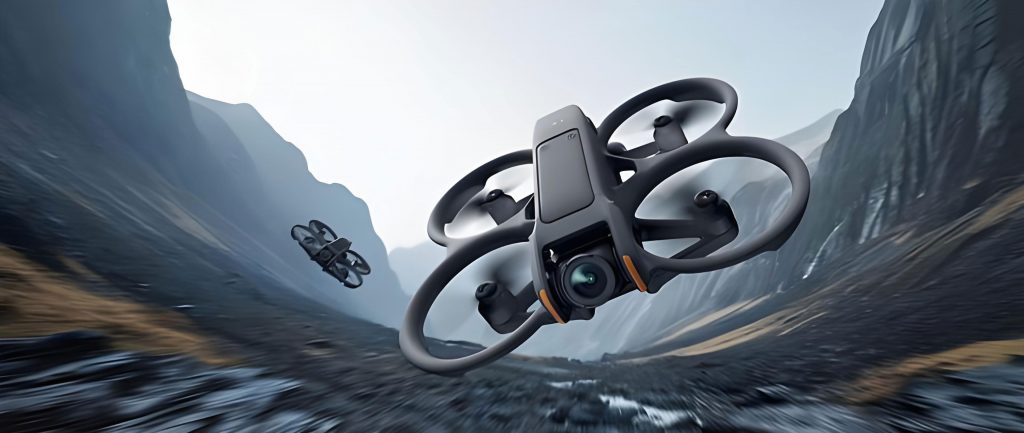
In my experience, the modular design of modern FPV drones, especially in China FPV variants, allows for rapid customization based on mission requirements. This approach aligns with the principles of swarm robotics, where multiple drones operate collaboratively. The coordination can be modeled using collective behavior algorithms, such as:
$$\vec{v}_i(t+1) = \vec{v}_i(t) + \sum_{j \neq i} \left[ a \cdot (\vec{p}_j – \vec{p}_i) + b \cdot (\vec{v}_j – \vec{v}_i) \right]$$
where $\vec{v}_i$ and $\vec{p}_i$ are the velocity and position of drone $i$, and $a$ and $b$ are alignment coefficients. This enables FPV drone swarms to execute synchronized attacks or distributed sensing, amplifying their impact on the battlefield. Furthermore, the use of lightweight composites and efficient motors has pushed the speed boundaries, with some China FPV models achieving velocities over 60 m/s, as derived from kinetic energy formulas like $KE = \frac{1}{2} m v^2$, where $m$ is mass and $v$ is velocity.
Looking ahead, the future of FPV drones in military contexts hinges on addressing vulnerabilities like electronic countermeasures and logistical support. I believe that advancements in quantum encryption and adaptive algorithms will bolster the resilience of first person view systems. For example, incorporating machine learning for predictive maintenance can reduce downtime, as modeled by reliability functions:
$$R(t) = e^{-\lambda t}$$
where $\lambda$ is the failure rate. By iterating on these technologies, China FPV developments are poised to lead in next-generation unmanned warfare, offering scalable solutions for global defense needs. The continuous emphasis on first person view immersion will remain central, as it empowers operators with unparalleled control and situational awareness, ultimately redefining modern combat paradigms.