
In the field of power transmission line maintenance, ensuring the integrity of strain clamps is critical for system reliability and safety. Traditional methods for inspecting the compression quality of strain clamps involve manual tower climbing, which poses significant risks such as falls, radiation exposure, and low efficiency. To address these challenges, I have developed an innovative approach that integrates first person view (FPV) drone technology with digital radiographic (DR) testing. This method leverages China FPV advancements to enable remote, safe, and efficient inspections. By utilizing a custom-designed payload system mounted on a multi-rotor FPV drone, I have successfully replaced manual operations with a machine-driven solution. In this article, I will detail the principles, design, and application of this technology, emphasizing the role of first person view in enhancing operational precision. Through extensive engineering applications, I have demonstrated that this approach can complete inspections for an entire tower in just 15 minutes, achieving substantial improvements in both safety and productivity. The integration of China FPV components has been pivotal in overcoming visual estimation errors in aerial environments, making this a transformative solution for the power industry.
Digital radiographic testing operates on the principle that X-rays attenuate as they pass through materials, with intensity reduction governed by the material’s attenuation coefficient and thickness. When a defect exists in an object, such as a strain clamp, the local variation in thickness or density causes differences in transmitted radiation intensity. This results in contrasting shades in the digital image, allowing for defect identification. The fundamental equation for radiation attenuation is given by the Beer-Lambert law: $$ I = I_0 e^{-\mu x} $$ where \( I \) is the transmitted intensity, \( I_0 \) is the initial intensity, \( \mu \) is the linear attenuation coefficient, and \( x \) is the material thickness. For strain clamps, which are critical components in transmission lines, defects like incomplete compression or misalignment can lead to failures if undetected. The DR system I employ consists of a pulsed X-ray machine and a digital imaging plate, which wirelessly transmits real-time images to a ground station. This eliminates the need for film processing and allows for immediate analysis, with a dynamic range far superior to conventional radiography. The use of first person view technology in drones enhances this by providing operators with a real-time perspective, crucial for accurate positioning in complex environments.
Strain clamps, particularly compression types, are subjected to high mechanical stresses and electrical currents, making their inspection vital. They are divided into regions: A (steel anchor anti-slip groove and aluminum tube compression zone), B (non-compression zone), and C (conductor and aluminum tube compression zone). Defects in these areas, such as missed compressions or loose strands, can be identified through DR testing. The technical guidelines for this process are based on industry standards, which specify parameters like energy levels and exposure times. In my approach, I have optimized these parameters for drone-based operations, ensuring that the imaging quality meets regulatory requirements. The FPV drone facilitates this by allowing precise placement of the DR system on the clamp, even in challenging configurations like vertical double-split conductors. The first person view feed enables operators to navigate tight spaces and avoid obstacles, reducing the risk of collisions and improving inspection accuracy.
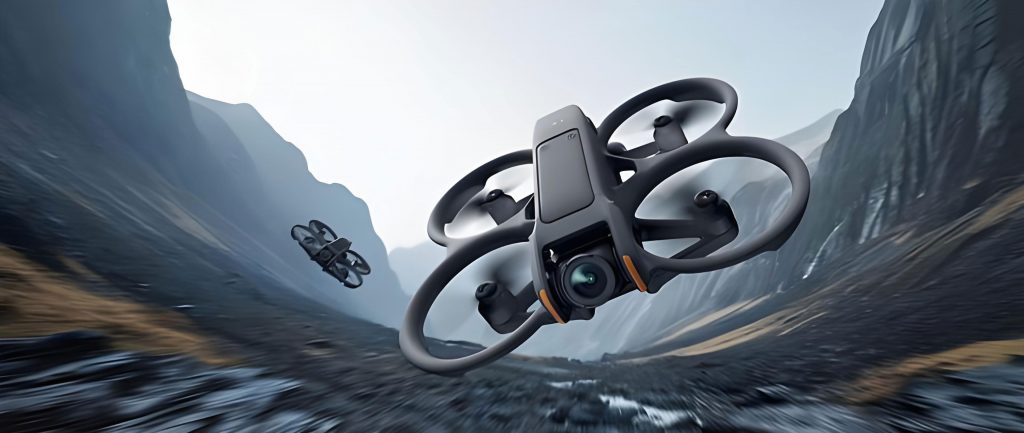
The development of the specialized payload for the FPV drone was guided by principles of simplicity, adaptability, and safety. Given the weight and size constraints of aerial operations, I designed a modular structure that minimizes mass while providing robust protection for sensitive components like the digital imaging plate. The payload assembly includes an open-frame main body, protective components for the imaging plate, movable hooks for attachment, and adjustable brackets for the X-ray machine. This design allows for quick reconfiguration to suit different tower types and conductor arrangements, such as single-split or double-split lines. The total mass of the payload is approximately 5.3 kg, which is compatible with high-capacity multi-rotor drones used in China FPV applications. The use of lightweight materials and an ergonomic layout ensures that the drone maintains stable flight and sufficient battery life during inspections. Key design considerations included avoiding entanglement with conductors or towers and enabling ground take-offs and landings without additional equipment. The first person view integration was critical here, as it provides the operator with a clear line of sight for hooking the payload onto the conductor, even in high-wind conditions or low-light environments.
For equipment selection, I evaluated several multi-rotor drones and DR systems to balance payload capacity, flight time, and image quality. After comparing models like the DJI T40 and TopGun TG26, I chose the TG26 for its favorable specifications, including a maximum take-off weight of 59.5 kg and a hover accuracy of ±10 cm with RTK positioning. This drone’s compatibility with China FPV accessories made it ideal for integrating first person view goggles and transmitters. The DR system comprises a pulsed X-ray machine, such as the XRS3 from Golden Engineering, which offers a peak voltage of 270 kV and weighs 5.4 kg, powered by batteries for remote operation. The digital imaging plate, a BOE 1417 model, has an effective imaging area of 443 mm × 365 mm and supports wireless transmission over distances up to 100 m. The synergy between these components and the FPV drone allows for seamless operation, where the operator can control both the flight and imaging processes from a safe distance. The first person view feed displays real-time video from a camera mounted on the drone, enabling precise maneuvers such as aligning the imaging plate with the strain clamp. This reduces the cognitive load on the operator and minimizes errors in positioning, which is especially important when dealing with high-voltage lines or confined spaces.
In terms of operational workflow, the FPV drone-based inspection begins with a pre-flight check of the equipment and environment. The operator uses the first person view goggles to pilot the drone to the target strain clamp, leveraging the real-time perspective to navigate around obstacles like insulators or other hardware. Once near the clamp, the drone hovers while the operator manipulates the payload to hook it onto the conductor. The design of the hooks ensures a secure attachment without damaging the conductor or clamp. After attachment, the DR system is activated remotely, with the X-ray machine and imaging plate synchronized to capture images. The entire process is monitored through the first person view feed, allowing for adjustments in real-time to optimize image quality. For example, if the clamp is on a vertical double-split conductor, the operator can tilt the payload using adjustable sliders to avoid shadowing from adjacent conductors. The images are transmitted to the ground station, where they can be analyzed immediately for defects like compression voids or strand discontinuities. This workflow exemplifies how first person view technology enhances efficiency and safety, as the operator remains on the ground, isolated from radiation and fall hazards.
Engineering applications of this method have been conducted on multiple 220 kV and 110 kV transmission lines, involving the inspection of 63 strain clamps. Among these, 15 clamps were found to have defects, such as missed compressions in anti-slip grooves or loose aluminum strands. In one case, a 1000 kV line required inspection of a ground wire clamp due to visible surface cracking. Using the FPV drone, I performed a segmented DR test to assess internal conditions, revealing no significant deformations in the steel anchor but confirming external aluminum loss. The ability to conduct these inspections under live-line conditions highlights the versatility of the approach, as the drone’s non-conductive materials and remote operation mitigate electrical risks. The first person view capability was instrumental in these scenarios, providing the spatial awareness needed to avoid contact with energized components. Data from these applications show that the average inspection time per tower is 15 minutes for single-split configurations, compared to 1–2 hours for manual methods. This efficiency gain is attributed to the rapid deployment and precise control enabled by the FPV drone system.
To quantitatively assess the performance of the FPV drone-based method, I compared it with traditional manual inspections using key metrics such as detection sensitivity, operational time, and risk factors. The sensitivity was evaluated using an aluminum wire-type image quality indicator (IQI), with wire diameters ranging from 0.20 mm (wire number 13) to 0.05 mm (wire number 19). Both vertical and oblique imaging techniques were tested on the same strain clamp, and the results showed that the FPV drone method achieved similar image quality, with all wires up to number 19 visible. This confirms that the oblique imaging approach, necessitated by the drone’s payload design, does not compromise defect detectability. The following table summarizes the comparison between manual and drone-based operations:
| Parameter | Manual Inspection | FPV Drone-Based Inspection |
|---|---|---|
| Imaging Technique | Vertical Projection | Oblique Projection |
| Sensitivity (IQI Wire Visibility) | Wire 19 Visible | Wire 19 Visible |
| Defect Detection Rate | High | High |
| Technical Skill Required | Climbing and Radiation Safety | Drone Piloting and First Person View Operation |
| Personnel Required | 5 (2 Climbers, 2 Assistants, 1 Radiographer) | 3 (2 Pilots, 1 Radiographer) |
| Time per Tower (Single-Split) | 1–2 Hours | 15 Minutes |
| Safety Risks | Fall Hazards, Radiation Exposure | Drone Crash Risks |
From this table, it is evident that the FPV drone method reduces personnel exposure and time while maintaining inspection quality. The first person view component is a key enabler, as it allows for accurate positioning without physical proximity to hazards. Additionally, the economic benefits include lower labor costs and minimized downtime, which are crucial for utility companies. The formula for operational efficiency can be expressed as: $$ E = \frac{N}{T} $$ where \( E \) is the efficiency (inspections per unit time), \( N \) is the number of clamps inspected, and \( T \) is the total time. For the drone method, \( E \) is significantly higher due to the reduced \( T \).
Despite its advantages, the FPV drone-based approach has limitations related to tower and conductor types. For instance, drum-type towers or closely spaced vertical double-split conductors (with intervals as small as 3 m) pose challenges for drone maneuverability. In such cases, the payload may not fit easily, or the first person view feed might not provide sufficient depth perception for safe operations. To address this, I am exploring design enhancements, such as motorized adjustments for the imaging plate to facilitate flipping and better alignment. Another direction involves hybrid systems combining drones with line-crawling robots, which could traverse conductors and overcome obstacles like vibration dampers or insulators. This would extend the method to multi-split configurations and other components, leveraging China FPV innovations for broader applications. The ongoing development in first person view technology, including improved video latency and resolution, will further refine this approach, making it adaptable to a wider range of grid infrastructures.
In conclusion, the integration of FPV drone technology with digital radiographic testing represents a significant advancement in the inspection of strain clamps for power transmission lines. By adopting a first person view perspective, operators can achieve precise, remote inspections that eliminate the risks associated with manual tower climbing. The custom payload design ensures compatibility with various tower and conductor types, while the use of China FPV components enhances operational reliability. Through practical applications, I have validated that this method not only improves safety by preventing falls and radiation exposure but also boosts efficiency, with inspections completed in a fraction of the time required by traditional methods. The continued evolution of FPV drones and DR systems promises even greater capabilities, such as autonomous navigation and AI-based defect recognition. As first person view technology becomes more accessible, its adoption in critical infrastructure maintenance will likely expand, setting new standards for safety and performance in the industry.