
The contemporary battlefield has undergone a radical transformation, with unmanned aerial vehicles (UAVs) emerging as a principal determinant of operational outcomes. From fire correction and battlefield reconnaissance to surveillance and precision strikes, the proliferation of military UAV capabilities is reshaping doctrines and tactics. The ability to field these systems at scale is no longer a mere technological advantage but a fundamental requirement for modern armed forces. However, possessing a vast fleet of unmanned platforms is insufficient without a correspondingly large, highly skilled cadre of operators. The human element—the military UAV operator—remains the critical nexus where technology meets tactical execution. This operator, defined as the personnel controlling the flight platform, data links, and onboard mission payloads from ground control stations, is pivotal to unlocking the full potential of unmanned systems. Consequently, developing a robust, scalable, systematic, and standardized training methodology for these operators is not just an administrative task but a strategic imperative for maintaining a competitive edge. This article, from my perspective as a researcher analyzing modern warfare trends, delves into the architecture of such training paradigms, synthesizing current practices, inherent requirements, and proposing a structured model for cultivating military UAV operator proficiency.
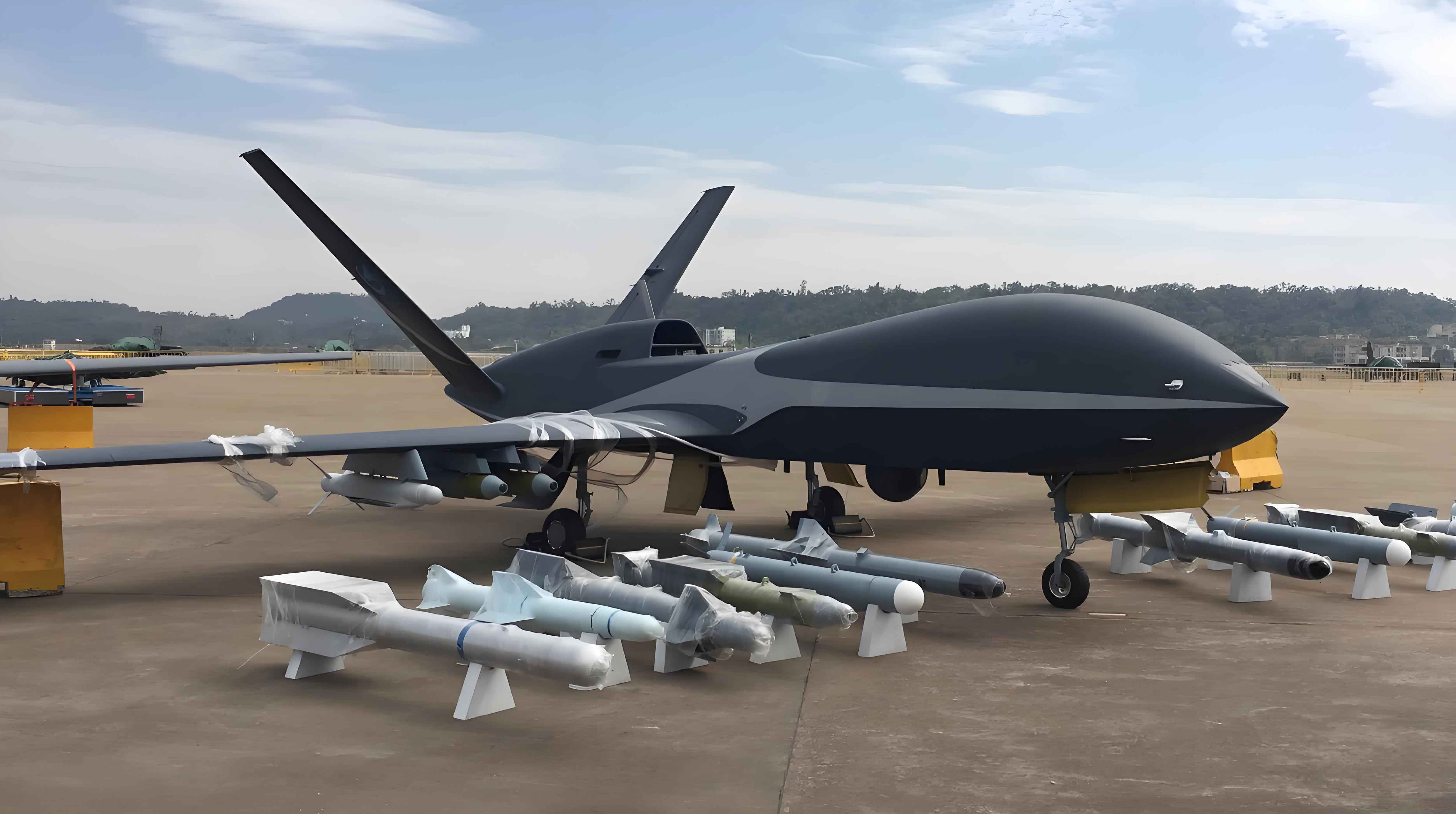
The United States military, with its extensive and prolonged operational employment of unmanned systems, offers a foundational case study in military UAV operator training evolution. Following the Kosovo War, a concerted effort was made to formalize training across services, leading to distinct yet interrelated programs.
U.S. Air Force: From Aviators to Direct Recruits
Initially, the U.S. Air Force (USAF) adhered to its “pilots control the Air Force” ethos, sourcing all military UAV pilots from experienced fighter, transport, and helicopter aviators and navigators. This approach, while ensuring a high baseline of aeronautical knowledge, proved unsustainable for meeting the exponentially growing demand. To address the “manning shortage” and control costs, the USAF broadened its recruitment pipeline. Today, candidates are drawn from: (1) rated pilots and navigators within active flying units; (2) graduates from military or civilian academies with prior flight experience; and (3) non-flying officers from combat support or logistics backgrounds. This tri-source model allows for a blend of experienced airmanship and fresh talent.
The training pipeline is meticulously phased, especially for those without prior flight experience, spanning approximately ten months:
| Phase | Duration | Core Content |
|---|---|---|
| 1. Basic Flight Fundamentals | 2 Months | Attitude control, aircraft handling, meteorology, take-off, and landing procedures on trainer aircraft. |
| 2. Simulator Training | 2 Months | UAV-specific handling qualities and mission execution under varied weather/scenario conditions. |
| 3. Platform Familiarization | 1 Month | Study of specific UAV parameters, command & control equipment; completion of ≥7 simulated sorties. |
| 4. Application & Joint Doctrine | 2 Months | Theory of UAV employment, crew roles/responsibilities, and principles of joint service interoperability. |
| 5. Live-Flight Training | 3 Months | Actual hands-on control of UAVs, consolidating all previous training into operational competence. |
Personnel with actual flight experience typically enter this pipeline at Phase 3, bypassing the initial basic flight instruction. The entire regimen underscores a graduated approach from theory to simulation to live operation, ensuring safety and competency.
U.S. Army: Volume Training for Tactical UAVs
The U.S. Army, possessing the largest inventory of tactical UAVs, employs a high-volume training model with distinct characteristics. Unlike the USAF, the Army does not mandate prior flight experience for its military UAV operators. Using the RQ-7 Shadow-200 as a representative example, a reconnaissance platoon is staffed with a scout-trained lieutenant as platoon leader, a senior non-commissioned officer (NCO) with extensive UAV experience as assistant, and other enlisted soldiers as operators. The training, conducted at a dedicated center, averages 24 weeks and is structured into three blocks:
- Ground Preparation (10-15 weeks): Foundational theory covering UAV doctrine, airframe/avionics, navigation, flight safety, and tactical employment principles.
- Simulator Training (4 weeks): Focused practice on basic UAV control and reconnaissance techniques across simulated environments, averaging 15-20 hours per trainee.
- Practical Flight & Radio Operation (5-6 weeks): Live flight operations, focusing on UAV control and the practical use of airborne data link systems.
This model efficiently produces around 200 qualified RQ-7 operators annually, emphasizing standardized, repeatable training for enlisted personnel.
U.S. Navy: Platform-Specific and Carrier-Centric Training
Naval military UAV operations introduce unique complexities, particularly for shipboard launch and recovery. The Navy tailors its training based on platform type: tactical UAV operators are often selected from naval aviators, while small UAV operators may come from non-aviator ranks. Following ground school, personnel proceed to naval flight schools for core theory. Training durations are specialized: 18 weeks for tactical UAV flight operators, 8 weeks for payload operators, and 6 weeks for maintenance technicians. A critical component is the 2-week command course for Mission Commanders, covering UAV systems theory, mission planning, and coordination with ship and shore commands. This phase mandates at least three live flight exercises, providing hands-on experience in planning, directing launch/recovery sequences (including catapult and deck operations), and handling emergencies like UAV recovery from the sea. This training highlights the integration of military UAV operations into the intricate ballet of carrier battle group activities.
Characteristics and Imperatives of Military UAV Training
Training for military UAV operators diverges significantly from civilian programs due to the heightened complexity, diversity, and stakes involved. The core imperatives can be formalized through the following analytical lens.
1. Multifaceted Mission Sets Demand Specialized Training. Modern military UAVs are force multipliers across the full spectrum of operations: ISR (Intelligence, Surveillance, Reconnaissance), strike, electronic warfare, communications relay, and logistics. Each mission type requires distinct cognitive and procedural skills from the operator. Therefore, a monolithic training course is ineffective. The training output must be a function of the specific mission profile. We can represent the required operator skill set $S_{op}$ as a vector sum of core platform skills and mission-specific skills:
$$
S_{op} = \alpha P + \sum_{i=1}^{n} \beta_i M_i
$$
Where:
- $P$ represents the Platform Control Proficiency (flight dynamics, navigation, systems management).
- $M_i$ represents the Mission-Specific Proficiency for the i-th mission type (e.g., $M_1$ for imagery analysis, $M_2$ for targeting, $M_3$ for EW payload management).
- $\alpha$ and $\beta_i$ are weighting coefficients reflecting the relative importance of each skill for a given operator role.
Training must be tailored to optimize for the relevant $M_i$ components.
2. Heterogeneous Platforms Necessitate Tiered Training Pathways. The physical and operational scale of military UAVs varies dramatically, from hand-launched micro-UAVs to global hawk large-scale systems. Control mechanisms, operational altitudes, endurance, and system complexity create a training continuum. We can define a platform complexity index $C_{plat}$ that influences training duration $T$ and depth $D$:
$$
T, D \propto C_{plat} = f(W, S_{av}, I_{sys})
$$
Where $W$ is max take-off weight, $S_{av}$ is avionics/systems sophistication, and $I_{sys}$ is integration complexity with C4ISR networks. As $C_{plat}$ increases, so does the required investment in training time and resources. A tiered model is essential, where progression from smaller to larger systems is governed by demonstrated competency thresholds.
3. Rapid Technological Evolution Drives Continuous Demand. The lifecycle of military UAV technology is accelerating. New sensors, AI-enabled autonomy, and swarming tactics constantly emerge. The training system $TS$ must therefore be adaptive and scalable, capable of producing qualified operators $N_{op}$ at a rate that meets or exceeds the fielding rate of new systems $R_{field}$ and accounts for attrition $A$:
$$
\frac{dN_{op}}{dt} \geq R_{field} + A
$$
This equation underscores the need for an institutionalized, high-capacity training pipeline rather than ad-hoc programs.
A Proposed Model for Systematic Military UAV Operator Training
To address these imperatives, I propose an integrated training model built on the pillars of Classification, Tiered/Phased Progression, and Systematization.
1. Classification-Based Training
The first step is recognizing the fundamental split in operator functions within a military UAV crew. Training must bifurcate accordingly:
| Operator Category | Primary Function | Core Training Focus |
|---|---|---|
| Flight Operator (Air Vehicle Operator) | Controls the UAV’s flight path: take-off, landing, navigation, and platform maneuvering via control station inputs. | Aeronautical knowledge, stick-and-rudder skills (physical/virtual), flight planning, emergency procedures. |
| Mission Operator | Manages the mission payload and supporting systems. | Specialized sensor/weapon theory, data link management, mission-specific tactics. |
| – Payload Operator | Operates sensors (EO/IR/SAR), weapons, or EW systems to execute the tactical task. | Imagery interpretation, targeting cycles, electronic attack procedures. |
| – Data Link Operator | Establishes & maintains the communication link between UAV and ground station; manages spectrum. | Radio frequency theory, data protocols, anti-jamming techniques, network management. |
2. Tiered, Phased, and Specialized Progression
Building on classification, a multi-dimensional training matrix is required.
A. Flight Operators: A Tiered & Phased Approach
The pathway for flight operators varies by the UAV class they are destined to control.
| UAV Class (Example) | Typical Weight | Training Pathway for New Recruits | Pathway for Qualified Small UAV Pilots |
|---|---|---|---|
| Micro / Mini UAV | < 10 kg | Short, intensive course (Basic Theory → Practical Flight → Certification). Focus on manual RC-style control. | |
| Small UAV | 10 – 150 kg | Phase I: Civilian Foundation (Basic Theory → Flight Practice → Civil Certification). Phase II: Military Conversion (Military Theory → Advanced/ Tactical Sim & Live Flight → Military Certification). |
Entry at Phase II. |
| Medium & Large UAV | > 150 kg | Extended Path: Foundation Course → Type-Specific Theory → Advanced Simulator & Live Flight → Certification. | Accelerated Path: Type-Specific Theory → Advanced Simulator & Live Flight → Certification. |
This model ensures safety and proficiency by using smaller platforms as building blocks and allowing experienced personnel to progress more rapidly to complex systems.
B. Mission Operators: Specialized & Phased Training
For mission operators, specialization is key after a common core. Their training follows a streamlined but deep phase model:
For Data Link Operators: Specialized Theory (RF Comms, Networking, Crypto) → Practical Simulator & Live Equipment Training → Certification.
For Payload Operators: Specialized Theory (e.g., Radar/EO Principles, EW, Targeting) → Practical Simulator & Live Payload Training → Certification.
Payload operator training can be further subdivided into streams such as Imagery Intelligence (IMINT), Signals Intelligence (SIGINT), Electronic Attack (EA), and Communications Relay, each with its own tailored curriculum.
3. Pillars of Standardized and Systematized Training
Implementing the above model at scale requires a robust institutional framework. The following elements are non-negotiable for a high-quality, sustainable military UAV operator training system:
| Pillar | Components & Objectives |
|---|---|
| Expert Instructor Cadre | Mix of experienced operators (for tactical realism) and academic instructors (for theoretical depth). Requires continuous instructor training on new systems and tactics. |
| Comprehensive Curriculum & Documentation | Hierarchical document suite: Doctrine & Regulations → Training Syllabi → Detailed Lesson Plans & Textbooks → Standardized Evaluation Checklists. Must be dynamically updated. |
| Dedicated Training Infrastructure | Equipment: Proportional fleet of trainer UAVs (from micro to large), high-fidelity simulators, task trainers for payloads. Facilities: Classrooms, simulation labs, secure live-flight training ranges, maintenance hangars. |
| Integrated Training Management System | Digital platform to track trainee progress, schedule resources, record simulator and flight hours, manage certifications, and analyze overall training effectiveness metrics ($\eta_{train}$). |
| Governance & Career Management Policies | Clear regulations for operator selection, career progression, proficiency maintenance (recurring training), and recognition to make the military UAV operator career field professionally attractive. |
The overall effectiveness of the training system $\eta_{system}$ can be conceptualized as a product of the efficacy of its core pillars:
$$
\eta_{system} = k \cdot (Q_{inst} \times C_{curr} \times A_{infra} \times E_{mgmt})
$$
Where $Q_{inst}$ is instructor quality, $C_{curr}$ is curriculum relevance, $A_{infra}$ is infrastructure adequacy, $E_{mgmt}$ is management system efficiency, and $k$ is a constant representing policy support. Maximizing $\eta_{system}$ requires sustained investment and attention across all variables.
Conclusion
The centrality of unmanned systems in modern and future conflict is unequivocal. As the capabilities of the military UAV expand, so too does the cognitive and procedural burden on its human operators. The side that can not only innovate technologically but also master the human dimension of unmanned warfare—by producing large numbers of highly competent, specialized operators through an efficient and adaptive training pipeline—will secure a decisive, enduring advantage. The proposed model, emphasizing classification, tiered/phased progression, and holistic systemization, provides a framework for building such a vital training enterprise. It moves beyond ad-hoc instruction towards a true institutional capability, ensuring that the force can keep pace with technological change and translate unmanned platform potential into consistent, dominant battlefield effects. The race for unmanned supremacy will be won as much in the training facilities and simulation centers as on the drawing boards of defense contractors.