
In recent years, the rapid advancement of unmanned aerial vehicle (UAV) technology has revolutionized modern warfare, particularly in counter-terrorism and precision strike operations. UAV drones offer unparalleled advantages in terms of mobility, rapid deployment, and real-time intelligence gathering, making them indispensable assets in military arsenals worldwide. As conflicts evolve towards greater informatization and the dawn of intelligent warfare, major military powers are heavily investing in the development of UAV-based smart strike systems. These systems are often hailed as disruptive technologies that can “change the rules of the game.” However, the effectiveness of UAV drones in combat heavily relies on the shooting accuracy of their mounted weapon systems. For instance, in certain operational scenarios, UAV drones equipped with rifles are required to achieve a first-shot hit probability of over 95% on a standard chest ring target at a distance of 100 meters. Such demanding requirements necessitate a thorough and systematic analysis of the factors affecting shooting accuracy. In this study, we delve into the intricacies of UAV-mounted weapon systems, examining their composition, working principles, and, most importantly, the sources of error that compromise precision. By quantifying and compensating for these errors, we aim to enhance the overall hit probability, ensuring that UAV drones can reliably deliver precise strikes in dynamic environments.
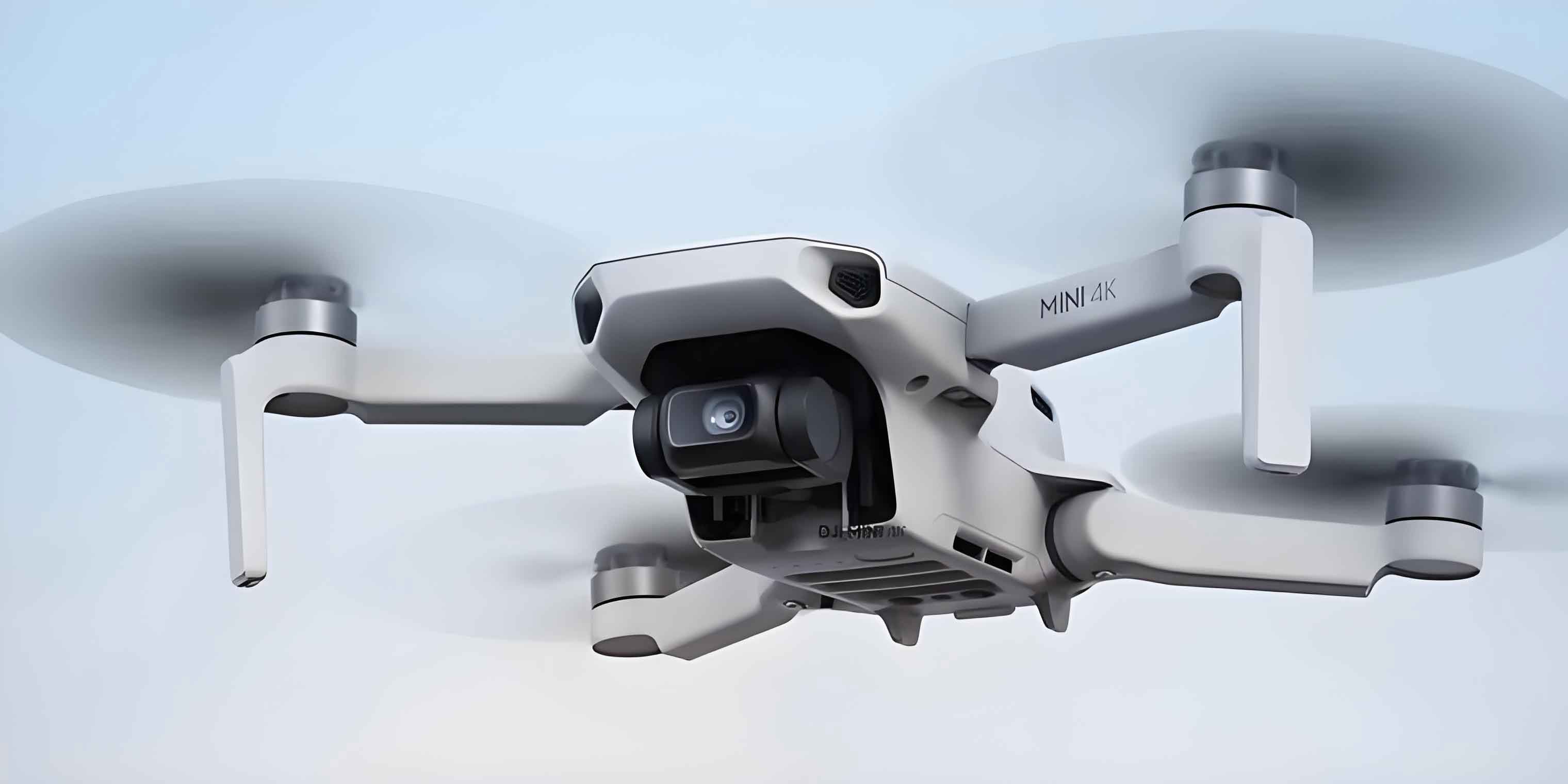
The core of a UAV-mounted weapon system lies in its integration of various subsystems that work in harmony to identify, track, and engage targets. Typically, these systems consist of a UAV flight platform, an electro-optical (EO) system, a servo control system, and an adapted weapon system. The UAV flight platform provides the necessary mobility and stability during flight, enabling operations in diverse terrains and conditions. The EO system, often equipped with cameras, laser rangefinders, and automatic target recognition algorithms, is responsible for detecting and locking onto potential threats. The servo control system precisely aligns the weapon’s barrel toward the target based on fire control calculations, while the adapted weapon system, such as a rifle or machine gun, delivers the kinetic impact. The workflow begins with the operator selecting and mounting the appropriate weapon module. After power-on self-tests and communication checks, the UAV drone takes off, either manually or via pre-programmed routes, to the operational area. The EO system scans the region, automatically identifying and labeling suspicious entities. Once a target is selected, the servo system locks onto it for continuous tracking. In strike mode, the system performs laser ranging, fire control solving, and then directs the weapon’s servos to the computed aiming angles. Finally, an electronic trigger mechanism activates the weapon, completing the engagement. This seamless process underscores the complexity of UAV drones, where every component must function with minimal error to achieve high accuracy.
To ensure that UAV drones meet stringent accuracy standards, it is crucial to analyze and mitigate the primary sources of error. We categorize these errors into three main types: system transfer error, calibration error between the EO aiming line and the weapon’s firing line, and ballistic error. Each of these error types contributes uniquely to the overall dispersion of projectiles, and addressing them requires a multifaceted approach involving mechanical design optimization, algorithmic compensation, and precise calibration procedures.
System transfer error refers to the cumulative misalignment that occurs from the EO system to the weapon unit due to the physical configuration of the UAV-mounted system. In early designs, UAV drones often employed separate vibration dampers for the EO system and the servo-controlled weapon. This arrangement introduced random errors during flight, as vibrations and movements could cause relative shifts between the aiming and firing axes. For example, when targeting a 50 cm × 50 cm chest ring at 100 meters, the angular error tolerance at the muzzle must be within approximately 2.5 milliradians to ensure a hit. However, the random errors from independent dampers can far exceed this threshold, significantly increasing the risk of misses. To overcome this, we propose a rigidly connected layout where the EO system and the weapon payload are fixed together, eliminating relative motion. In this configuration, the system transfer error is reduced to only the fixed gaps in the adapter components, which can be compensated through calibration. This design adjustment is critical for UAV drones, as it stabilizes the aiming-firing relationship, enhancing consistency across multiple shots.
Calibration error arises because the EO system’s line of sight is not perfectly aligned with the weapon’s barrel axis, especially when zeroing is performed at a specific distance. This misalignment, both in elevation and azimuth, leads to angular deviations that vary with the engagement range. For instance, if zeroing is done at 100 meters, the height difference L between the EO aiming line and the weapon firing line causes an angular error ψ that changes inversely with distance. The correction formulas for elevation and azimuth are derived as follows:
For elevation correction:
$$ \Delta \Psi = \Psi_1 – \Psi_2 \approx L \left( \frac{1}{100} – \frac{1}{D} \right) $$
where D is the actual shooting distance in meters, and Ψ1 and Ψ2 are the angular errors at 100 meters and distance D, respectively. When D > 100 m, ΔΨ is positive, requiring the weapon to depress by ΔΨ; when D < 100 m, ΔΨ is negative, requiring elevation; and at D = 100 m, no adjustment is needed. Similarly, for azimuth correction with a horizontal offset S:
$$ \Delta \Phi = S \left( \frac{1}{100} – \frac{1}{D} \right) $$
These corrections are essential for UAV drones to maintain accuracy across varying engagement distances, ensuring that the weapon’s aim is always true regardless of range.
Ballistic error pertains to the trajectory deviations of the projectile due to gravitational drop, aerodynamic drag, and other environmental factors. For UAV-mounted weapon systems, precise fire control solving is necessary to compute the required aiming angles. Using empirical data from a specific rifle’s firing table, we fit polynomial functions to model the relationship between shooting elevation angle y (in milliradians) and distance D (in meters), as well as the time of flight T (in seconds). The fitted equations are:
$$ y = 8.594 \times 10^{-6} D^2 + 0.005197 D – 0.6187 $$
and
$$ T = 8.842 \times 10^{-7} D^2 + 0.001133 D + 0.01407 $$
These models allow the fire control system to predict the necessary lead angles for accurate hits. However, since UAV drones often operate with non-zero roll angles γ, the computed angles in the earth-fixed coordinate system must be transformed into the UAV’s body frame. The transformation is given by:
$$ \begin{bmatrix} \psi_{act} \\ \beta_{act} \end{bmatrix} = \begin{bmatrix} \cos \gamma & \sin \gamma \\ -\sin \gamma & \cos \gamma \end{bmatrix} \begin{bmatrix} \psi \\ \beta \end{bmatrix} $$
where ψact and βact are the actual commanded pitch and yaw angles for the weapon servos, and ψ and β are the fire control solved angles. This transformation ensures that the weapon is aimed correctly relative to the UAV’s orientation, a critical consideration for dynamic platforms like UAV drones.
To quantify the impact of these errors, we conduct a comprehensive error budget analysis for a UAV-mounted rifle system engaging a stationary chest ring target at 100 meters. The rifle’s inherent dispersion, EO tracking accuracy, servo stability, aiming error, system transfer error, fire control solving error, and calibration error are all considered. The table below summarizes the error contributions before and after applying our proposed corrections:
| Error Source | Type | Value (3σ, milliradians) | Status (Before Correction) | Status (After Correction) |
|---|---|---|---|---|
| Rifle Dispersion | Random | 0.95 | Active | Active |
| EO Tracking Error | Random | 0.326 | Active | Active |
| Servo Stability Error | Random | 0.2 | Active | Active |
| Aiming Error | Fixed | 0.2 | Active | Active |
| System Transfer Error | Random | 3.0 | Active | Compensated |
| Fire Control Solving Error | Fixed | 0.08 | Active | Compensated |
| Calibration Error | Fixed | 0.47 | Active | Compensated |
As shown, the system transfer error, fire control solving error, and calibration error are significant contributors that can be mitigated through design and algorithmic improvements. For UAV drones, reducing these errors is paramount to achieving high hit probabilities.
We employ Monte Carlo impact simulation to evaluate the shooting accuracy under different error conditions. This stochastic method allows us to model the combined effects of random and fixed errors by generating thousands of simulated shot trajectories. For the uncorrected system, which includes all error sources from the table, the simulation yields a hit probability of only 42.45% on the chest ring target at 100 meters. The dispersion circles, measured as R50 (radius containing 50% of shots) and R100 (radius containing 100% of shots), are 31.01 cm and 80.79 cm, respectively. Such performance is unacceptable for precision-oriented UAV drones. After applying corrections for system transfer, fire control solving, and calibration errors, the simulation shows a dramatic improvement: the hit probability rises to 96.55%, with R50 and R100 reduced to 12.46 cm and 32.09 cm. This meets the requirement of over 95% first-shot hit probability, demonstrating the efficacy of our error compensation strategies for UAV drones.
To validate these findings in real-world conditions, we conduct live-fire flight tests using a physical prototype of the UAV-mounted weapon system. The system is integrated with a standard rifle loaded with 20 rounds. The UAV drone takes off and hovers at an altitude of 10 meters, positioned 100 meters horizontally from the target. After locking onto the chest ring target with the EO system, the operator remotely disengages the safety and initiates single-shot engagements. All 20 rounds are fired, resulting in 20 hits—a 100% first-shot hit rate. The dispersion measures are R50 = 11 cm and R100 = 25 cm, closely aligning with simulation predictions. Subsequently, the test is repeated at a distance of 50 meters, where 19 out of 20 rounds hit the target, yielding a 95% first-shot hit probability. The lone miss is attributed to ammunition-specific variations, highlighting that even with optimized systems, inherent ballistic uncertainties persist. These tests confirm that our error analysis and compensation methods significantly enhance the practical accuracy of UAV drones in field conditions.
In conclusion, the shooting accuracy of UAV-mounted weapon systems is influenced by a confluence of factors, including system transfer error, calibration misalignment, and ballistic deviations. Through meticulous design optimization—such as rigidly connecting the EO and weapon modules—along with algorithmic corrections for calibration and fire control solving, we can substantially reduce these errors. Our simulations and live-fire experiments consistently show that these measures elevate the hit probability of UAV drones to above 95% for typical engagement scenarios. This level of precision is crucial for the effective deployment of UAV drones in military operations, where every shot counts. Future work may explore adaptive learning algorithms to further compensate for dynamic environmental factors, such as wind and temperature, as well as integration with advanced sensing technologies for real-time error correction. As UAV drones continue to evolve, ensuring their shooting accuracy will remain a cornerstone of their operational success, paving the way for more reliable and decisive autonomous strike capabilities.