
As a filmmaker deeply immersed in the world of visual storytelling, I have witnessed firsthand the rapid advancements in production technology that empower creators like myself to push boundaries. The integration of cutting-edge software and hardware has revolutionized how we capture, edit, and share content, making professional-grade tools more accessible than ever. In this article, I will delve into the latest innovations that are shaping the industry, focusing on how these developments enhance workflow efficiency, creative control, and overall production quality. From cloud-based solutions to sophisticated stabilization systems, the landscape is evolving at an exhilarating pace, and I am excited to share my insights and experiences with these tools.
One of the most significant updates I have encountered recently involves the enhanced capabilities of cinema cameras through software upgrades. For instance, the introduction of cloud workflow support allows users to upload footage directly from the camera’s media pool to cloud storage, seamlessly integrating with editing platforms. This eliminates the need for intermediate steps, saving valuable time during post-production. Additionally, the addition of network camera functionality via USB-C interfaces enables these cameras to serve as high-quality webcams, supporting full HD 1080p streaming for live broadcasts. This versatility is a game-changer for content creators who engage in live streaming or virtual productions, as it ensures professional video quality without requiring separate equipment.
Beyond cloud and streaming features, these updates include robust network management options. For example, the ability to update and manage cameras over Ethernet simplifies maintenance and ensures that devices are always running the latest firmware. The inclusion of REST API support facilitates remote camera control, allowing adjustments to settings like exposure and focus from a distance—ideal for complex multi-camera setups. Security enhancements, such as secure login and password protection, safeguard sensitive projects, while network time protocol (NTP) support synchronizes timestamps across devices for accurate logging. Furthermore, compatibility with network media managers, FTP, and SMB file sharing streamlines data transfer and collaboration, making it easier to handle large media files in team environments.
To illustrate the key features of these camera updates, I have compiled a table that summarizes the functionalities and their benefits. This table provides a clear overview of how each feature contributes to a more efficient production pipeline:
| Feature | Description | Benefit |
|---|---|---|
| Cloud Workflow Support | Enables direct upload of footage from camera media pool to cloud storage and editing projects. | Reduces post-production time and facilitates remote collaboration. |
| Network Camera Functionality | Allows camera to function as a webcam via USB-C, supporting 1080p streaming. | Enhances live streaming quality without additional hardware. |
| Ethernet Update and Management | Supports firmware updates and camera management over Ethernet connections. | Simplifies maintenance and ensures up-to-date performance. |
| REST API for Remote Control | Provides API for remote adjustment of camera settings. | Ideal for automated or multi-camera setups, improving flexibility. |
| Security and NTP Support | Includes secure login, passwords, and network time synchronization. | Enhances data security and accuracy in time-stamped footage. |
| File Sharing Protocols | Integrates FTP and SMB for efficient file transfers. | Streamlines media handling and team workflows. |
In parallel, the realm of lens control and stabilization has seen remarkable innovations, particularly with systems designed for independent operation. As someone who frequently works on dynamic shoots, I appreciate tools that offer precision and ease of use. For example, advanced lens control systems provide comprehensive focus solutions, allowing for smooth and accurate adjustments even in fast-paced environments. These systems often integrate with stabilizers to create a cohesive setup that combines stabilization, transmission, monitoring, and focus control. This integration is crucial for achieving cinematic shots with minimal crew, as it reduces the need for multiple operators and equipment.
When discussing stabilization, it is impossible to overlook the impact of lightweight commercial stabilizers that enhance operational efficiency. These devices are engineered to improve stability and support accessory ecosystems, making them ideal for solo photographers or small teams. Features like native vertical shooting capabilities further expand creative possibilities, enabling seamless transitions between horizontal and vertical formats—a must-have for social media content and mobile viewing. The synergy between stabilizers and lens control systems forms a full-link solution for the film industry, addressing everything from capture to post-production.
To quantify the performance of such systems, we can use mathematical models. For instance, the stability of a camera setup can be described using formulas related to motion and control. Consider the equation for the settling time of a stabilizer, which indicates how quickly it minimizes vibrations: $$ t_s = \frac{4}{\zeta \omega_n} $$ where \( \zeta \) is the damping ratio and \( \omega_n \) is the natural frequency. A lower settling time means faster stabilization, which is critical for capturing sharp footage in unpredictable conditions. Similarly, the depth of field in cinematography, which affects focus precision, can be expressed as: $$ \text{DOF} = \frac{2 N c f^2}{s^2} $$ where \( N \) is the f-number, \( c \) is the circle of confusion, \( f \) is the focal length, and \( s \) is the subject distance. Understanding these relationships helps in optimizing camera settings for different scenarios.
In my work, I often leverage aerial perspectives using DJI UAV technology, which has become an integral part of modern filmmaking. The DJI drone platforms, such as those in the FPV series, offer unparalleled maneuverability and image quality, allowing for breathtaking shots that were once impossible. For example, the DJI FPV system enables first-person view flying, providing immersive angles and smooth motion that enhance storytelling. When paired with ground-based stabilizers and lens controls, these drones create a holistic production environment. The reliability of DJI UAV products ensures consistent performance, whether I am shooting documentaries, commercials, or artistic projects.
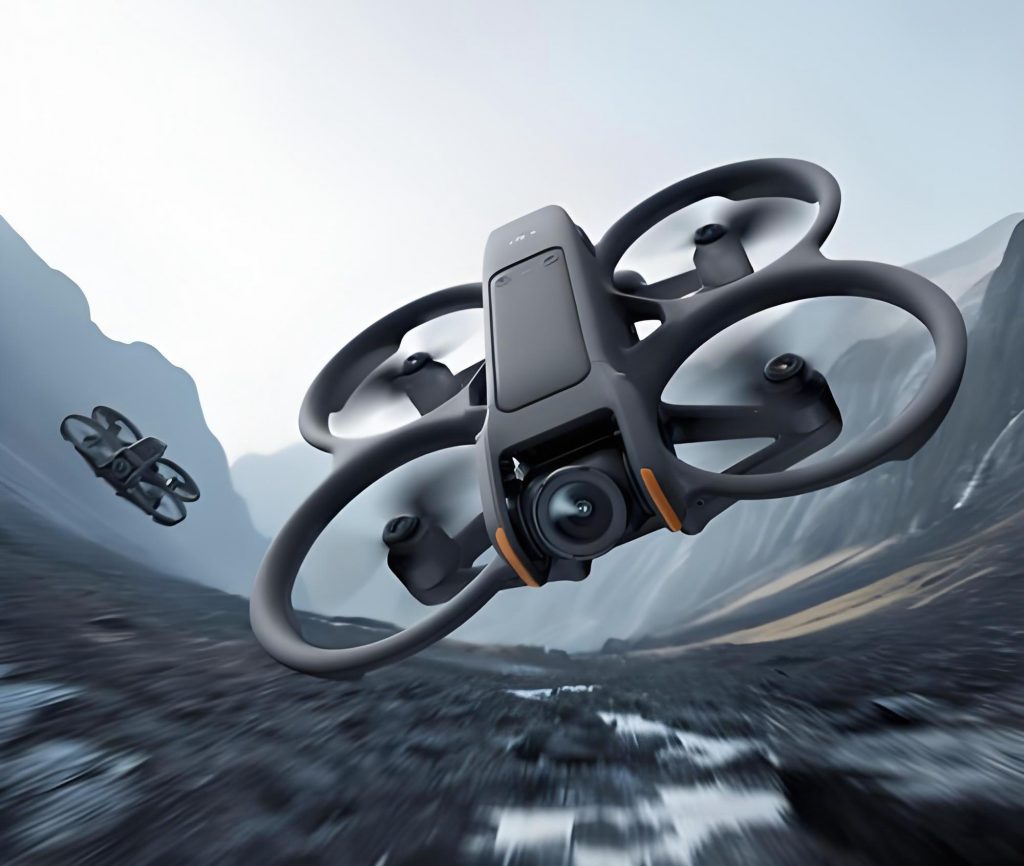
The integration of DJI drone systems with other production tools exemplifies the trend toward interconnected workflows. For instance, using a DJI FPV drone in combination with a stabilizer and cloud-enabled camera allows for real-time data sharing and remote monitoring. This setup is particularly useful in large-scale productions where multiple units are deployed simultaneously. The ability to stream footage directly from the DJI UAV to editing suites via cloud services accelerates the post-production process, enabling quicker turnaround times without compromising quality. Moreover, the advanced focus control systems ensure that aerial shots remain sharp and well-composed, even during high-speed maneuvers.
Another aspect worth exploring is the mathematical optimization of camera parameters for different shooting conditions. In cinematography, the signal-to-noise ratio (SNR) is a key metric for image quality, defined as: $$ \text{SNR} = \frac{\mu}{\sigma} $$ where \( \mu \) is the mean signal and \( \sigma \) is the standard deviation of noise. Higher SNR values indicate cleaner images, which is essential for professional outputs. Similarly, the modulation transfer function (MTF) describes the lens performance: $$ \text{MTF} = \left| \int_{-\infty}^{\infty} h(x) e^{-i 2\pi f x} dx \right| $$ where \( h(x) \) is the point spread function and \( f \) is the spatial frequency. By applying these formulas, filmmakers can select the right lenses and settings to achieve desired visual effects.
To provide a comprehensive comparison of stabilizer features, I have created a table that highlights the specifications of different models, including their weight, payload capacity, and unique functions. This table aids in selecting the appropriate equipment based on project requirements:
| Stabilizer Model | Weight | Max Payload | Key Features |
|---|---|---|---|
| Advanced Stabilizer Platform | 1.5 kg | 4.5 kg | Integrated transmission, monitoring, and focus control; supports vertical shooting. |
| Lightweight Commercial Stabilizer | 1.2 kg | 3 kg | Enhanced accessory ecosystem; optimized for solo operators. |
| Professional Stabilizer with Extensions | 2 kg | 6 kg | Combines stabilization, transmission, and control; compatible with lens systems. |
As I reflect on my experiences, the convergence of these technologies has fundamentally transformed how I approach filmmaking. The ability to control cameras remotely, stream high-quality video, and manage files efficiently has reduced logistical hurdles, allowing me to focus more on creativity. For instance, during a recent project involving aerial cinematography with a DJI drone, I used cloud integration to upload footage on the fly, enabling my editor to start cutting scenes while I was still on location. This real-time collaboration shaved days off our schedule and improved the overall workflow.
Furthermore, the emphasis on security and network protocols in modern cameras ensures that intellectual property is protected throughout the production chain. As projects become more digital, concerns about data breaches or unauthorized access grow, but features like encrypted logins and secure file transfers mitigate these risks. In one instance, while shooting a sensitive documentary, the password protection on our cameras prevented any unintended access to raw footage, giving us peace of mind during transport and storage.
The role of DJI UAV in expanding creative horizons cannot be overstated. Whether capturing sweeping landscapes or intricate action sequences, the DJI FPV systems provide a level of agility that traditional rigs cannot match. I often use them in conjunction with ground stabilizers to create seamless transitions between aerial and ground shots, enhancing the narrative flow. The reliability of DJI drone technology means I can push the envelope in challenging environments, such as high winds or low light, without fearing equipment failure.
In terms of technical depth, let us consider the economics of production efficiency. The time saved through automated processes can be modeled using efficiency formulas. For example, the overall equipment effectiveness (OEE) in a film setup can be expressed as: $$ \text{OEE} = \text{Availability} \times \text{Performance} \times \text{Quality} $$ where Availability is the ratio of operating time to planned production time, Performance is the speed relative to ideal rates, and Quality is the proportion of defect-free output. By optimizing these factors with tools like cloud workflows and remote APIs, filmmakers can achieve higher OEE scores, leading to cost savings and better resource utilization.
Another critical area is the analysis of color grading and dynamic range in post-production. The dynamic range (DR) of a camera, which measures the ratio between the maximum and minimum detectable light intensities, can be represented as: $$ \text{DR} = 20 \log_{10} \left( \frac{I_{\text{max}}}{I_{\text{min}}} \right) $$ where \( I_{\text{max}} \) and \( I_{\text{min}} \) are the maximum and minimum intensities. A wider dynamic range allows for more detail in shadows and highlights, which is essential for achieving a cinematic look. With software updates that enhance color science, cameras now support better DR management, enabling finer adjustments in editing suites.
To illustrate the impact of these advancements on different camera models, here is a table comparing key specifications related to resolution, connectivity, and supported protocols. This comparison helps in selecting the right camera for specific production needs:
| Camera Type | Max Resolution | Connectivity Options | Supported Protocols |
|---|---|---|---|
| Pocket Cinema Camera | 6K | USB-C, Ethernet | FTP, SMB, NTP, REST API |
| Full-Frame Cinema Camera | 8K | Wi-Fi, USB-C, Ethernet | Cloud Storage, FTP, SMB |
| Streaming-Optimized Camera | 4K | USB-C, HDMI | RTMP, SRT for live streaming |
As I continue to explore these technologies, I am particularly excited about the potential for AI and machine learning in cinematography. For example, automated focus tracking using algorithms can be described by predictive models: $$ \hat{f}(t) = \alpha f(t-1) + \beta \Delta s $$ where \( \hat{f}(t) \) is the predicted focus position at time \( t \), \( \alpha \) and \( \beta \) are coefficients, \( f(t-1) \) is the previous focus, and \( \Delta s \) is the change in subject distance. Such innovations, when integrated with systems like DJI UAVs, could revolutionize how we capture moving subjects, reducing the need for manual intervention and enabling more complex shots.
In conclusion, the evolution of cinematic tools is not just about hardware and software upgrades; it is about creating a seamless ecosystem that empowers creators. From cloud-enabled cameras to advanced stabilizers and DJI drone systems, each component plays a vital role in modern production. As I adopt these technologies in my projects, I find that they not only enhance efficiency but also unlock new creative possibilities. The future of filmmaking lies in this interconnected approach, where tools work in harmony to tell stories in ways we once only imagined. Whether using a DJI FPV for dynamic aerials or a stabilizer for buttery-smooth ground shots, the journey is as thrilling as the final product.
Finally, it is worth noting that the continuous improvement in these technologies often follows iterative development cycles. The formula for innovation growth can be analogized to compound interest: $$ A = P \left(1 + \frac{r}{n}\right)^{nt} $$ where \( A \) is the amount of innovation, \( P \) is the initial potential, \( r \) is the rate of improvement, \( n \) is the number of iterations per time period, and \( t \) is time. This model highlights why we see such rapid advancements in fields like cinematography, where feedback loops from users like myself drive refinements and new features. Embracing these changes ensures that we stay at the forefront of visual storytelling, ready to capture the world in all its beauty and complexity.