
In my exploration of modern defense technologies, I have observed a paradigm shift where electromagnetic big data mining and advanced anti-UAV systems converge to address increasingly complex aerial threats. This article delves into the software frameworks, analytical methodologies, and integrated platforms that define the next generation of counter-drone capabilities. The proliferation of unmanned aerial vehicles (UAVs) necessitates robust anti-UAV solutions, leveraging vast electromagnetic spectrum data for detection, tracking, and neutralization. I will elaborate on how data-driven approaches enhance situational awareness and response efficacy in anti-UAV operations, emphasizing the role of machine learning, signal processing, and cloud-edge computing architectures.
The foundation of effective anti-UAV systems lies in the ability to process and interpret electromagnetic big data. Electromagnetic spectrum data, collected from sensors like radar and signal intelligence (SIGINT) systems, contains patterns that can reveal UAV activities. My analysis indicates that software frameworks for electromagnetic big data mining typically involve multi-layered architectures, integrating data acquisition, storage, processing, and visualization. For instance, a cloud-edge collaborative framework enables real-time analytics at the edge for low-latency anti-UAV responses, while cloud resources handle large-scale historical data mining. This synergy is critical for anti-UAV applications, where timely interception is paramount. To illustrate, consider the following table summarizing key components of electromagnetic big data frameworks for anti-UAV purposes:
| Component | Function | Relevance to Anti-UAV |
|---|---|---|
| Data Acquisition Sensors | Collect RF signals, radar echoes, and spectral data | Detects UAV emissions and movements |
| Edge Computing Nodes | Process data locally for immediate analysis | Enables rapid threat identification in anti-UAV systems |
| Cloud Storage & Analytics | Store big data and run complex algorithms | Supports pattern learning for UAV behavior prediction |
| Machine Learning Models | Classify signals and predict UAV trajectories | Enhances accuracy in anti-UAV targeting |
| Visualization Tools | Display real-time spectrum and threat maps | Aids operators in anti-UAV decision-making |
From a mathematical perspective, electromagnetic big data mining often employs time-series analysis and clustering algorithms to uncover UAV patterns. For example, signal activity prediction can be modeled using autoregressive integrated moving average (ARIMA) approaches, which are essential for anticipating UAV appearances in anti-UAV scenarios. The general form of an ARIMA(p,d,q) model is expressed as:
$$ \phi(B)(1-B)^d y_t = \theta(B) \epsilon_t $$
where \( y_t \) represents the signal strength at time \( t \), \( B \) is the backshift operator, \( \phi \) and \( \theta \) are polynomial coefficients, and \( \epsilon_t \) is white noise. This formulation helps in forecasting electromagnetic emissions linked to UAVs, thereby improving anti-UAV preparedness. Additionally, association rule mining from spectrum data can identify correlations between UAV signals and environmental factors, supporting proactive anti-UAV measures. The support and confidence metrics for such rules are given by:
$$ \text{Support}(X \rightarrow Y) = \frac{\sigma(X \cup Y)}{N}, \quad \text{Confidence}(X \rightarrow Y) = \frac{\sigma(X \cup Y)}{\sigma(X)} $$
where \( X \) and \( Y \) are itemsets (e.g., specific frequency bands), \( \sigma \) denotes frequency, and \( N \) is the total transactions. In anti-UAV contexts, these rules might reveal that UAV operations often coincide with certain spectral disturbances, enabling targeted monitoring.
Recent advancements in anti-UAV systems demonstrate the practical application of these data mining techniques. A notable example is the integration of mobile anti-UAV platforms with comprehensive detection suites. These systems combine radar, electro-optical/infrared (EO/IR) sensors, and SIGINT capabilities to form a cohesive anti-UAV defense network. The seamless sensor-to-shooter chain allows for autonomous threat engagement, even while on the move. For instance, radar sensors provide 360° coverage, feeding data into central processors that coordinate with EO/IR trackers. This integration is vital for anti-UAV operations in dynamic environments, where UAV swarms or evasive maneuvers pose significant challenges.
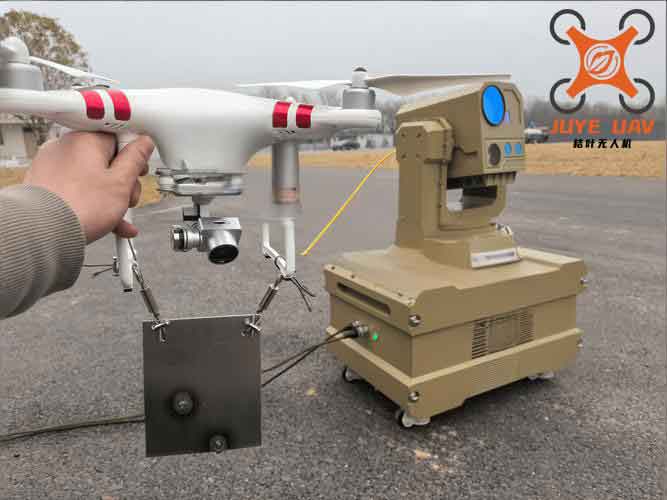
In my assessment, the anti-UAV system depicted exemplifies how kinetic and non-kinetic effects are harmonized. Soft-kill options, such as SIGINT electronic warfare, disrupt UAV control links by jamming or spoofing communications—a direct outcome of electromagnetic big data analysis that identifies signal origins. This anti-UAV tactic not only disables drones but also enables operator localization for further action. Hard-kill mechanisms, including autocannons and interceptor drones, provide physical neutralization. The effectiveness of these anti-UAV measures can be quantified through engagement probabilities. For example, the probability of destroying a UAV with a directed energy weapon might be modeled as:
$$ P_{\text{destroy}} = 1 – e^{-\lambda \cdot I \cdot t} $$
where \( \lambda \) is the threat density, \( I \) is the interception rate, and \( t \) is the exposure time. Such models inform the design of anti-UAV systems, ensuring they meet operational requirements. Moreover, the use of AI-driven interceptor drones, like those equipped with high-speed propulsion, introduces new dynamics in anti-UAV warfare. These interceptors can be launched vertically to engage targets at range, leveraging real-time data from electromagnetic sensors for precision.
The synergy between electromagnetic big data and anti-UAV technologies extends to command and support applications. Research indicates that data mining from spectrum monitoring facilitates UAV threat assessment and resource allocation. For instance, clustering algorithms group similar signal patterns to identify UAV types or missions, enhancing anti-UAV situational awareness. A common approach is k-means clustering, which minimizes the within-cluster variance:
$$ \arg \min_S \sum_{i=1}^k \sum_{x \in S_i} \| x – \mu_i \|^2 $$
where \( S \) is the set of clusters, \( k \) is the number of clusters, \( x \) represents data points (e.g., signal features), and \( \mu_i \) is the centroid of cluster \( i \). Applied to electromagnetic data, this helps distinguish benign signals from hostile UAV emissions, streamlining anti-UAV responses. Additionally, knowledge graphs built from spectrum data enable inference of UAV networks and interference sources, supporting targeted anti-UAV strategies. The graph structure can be represented as \( G = (V, E) \), where vertices \( V \) denote entities (e.g., drones, operators) and edges \( E \) represent relationships (e.g., communication links).
To further illustrate the data-driven anti-UAV ecosystem, I have compiled a table comparing various anti-UAV techniques based on their reliance on electromagnetic big data:
| Anti-UAV Technique | Data Input | Key Algorithm | Advantages |
|---|---|---|---|
| Signal Jamming | RF communication signals | Real-time frequency analysis | Low cost, immediate effect |
| Trajectory Prediction | Historical radar tracks | LSTM neural networks | Enables preemptive anti-UAV positioning |
| Swarm Detection | Multi-sensor fusion data | Deep learning classifiers | Handles complex UAV groups |
| Operator Localization | SIGINT geolocation data | Time-difference of arrival (TDOA) | Targets source of UAV threats |
| Autonomous Interception | EO/IR and radar feeds | Reinforcement learning | Reduces human intervention in anti-UAV |
In my view, the future of anti-UAV defense hinges on adaptive learning systems that continuously update from electromagnetic big data. Machine learning methods, such as supervised learning for signal classification or unsupervised learning for anomaly detection, are pivotal. For example, a support vector machine (SVM) classifier for UAV signal identification can be formulated as:
$$ \min_{w,b} \frac{1}{2} \| w \|^2 \quad \text{subject to} \quad y_i (w \cdot x_i + b) \geq 1, \forall i $$
where \( w \) is the weight vector, \( b \) is the bias, \( x_i \) are feature vectors (e.g., spectral signatures), and \( y_i \) are labels (UAV or non-UAV). This enhances the discrimination capability of anti-UAV sensors. Furthermore, cloud-edge architectures facilitate distributed learning, where edge devices process local data for anti-UAV tasks while contributing to global model improvements. The optimization objective in such federated learning scenarios might be:
$$ \min_{\theta} \sum_{k=1}^K \frac{n_k}{n} F_k(\theta), \quad F_k(\theta) = \frac{1}{n_k} \sum_{i \in P_k} f_i(\theta) $$
where \( \theta \) represents model parameters, \( K \) is the number of edge nodes, \( n_k \) is the data size at node \( k \), and \( f_i \) is the loss function. This approach ensures that anti-UAV systems evolve with diverse data sources, maintaining efficacy against emerging UAV threats.
The integration of mobile platforms with anti-UAV suites, as highlighted earlier, represents a tangible advancement. These systems embody the principles of electromagnetic big data mining by fusing multi-sensor inputs for comprehensive threat management. For instance, radar data correlation with SIGINT allows for tracking UAVs even in cluttered environments, a critical aspect of anti-UAV operations in urban settings. The system’s ability to deploy both soft-kill and hard-kill options based on real-time analytics underscores the importance of data-driven decision-making. In anti-UAV engagements, the choice between jamming and kinetic defeat often depends on factors like threat priority and collateral damage risks, which can be optimized using predictive models from historical data.
Another key area is the use of electromagnetic big data for predictive maintenance of anti-UAV systems. By analyzing sensor health data and performance metrics, anomalies can be detected early, ensuring readiness. Time-series forecasting models, such as exponential smoothing, aid in this regard:
$$ \hat{y}_{t+1} = \alpha y_t + (1-\alpha) \hat{y}_t $$
where \( \hat{y} \) is the forecasted value, \( y_t \) is the observed value, and \( \alpha \) is the smoothing factor. Applied to anti-UAV system logs, this predicts component failures, minimizing downtime. Additionally, spectrum occupancy data mined from monitoring stations informs frequency management, preventing interference with friendly communications during anti-UAV missions.
In conclusion, my analysis reveals that electromagnetic big data mining and anti-UAV technologies are inextricably linked, driving innovations in defense capabilities. The software frameworks and analytical methods discussed enable sophisticated threat detection and response, making anti-UAV systems more autonomous and effective. As UAV threats evolve, continued research into data integration, machine learning, and mobile platforms will be essential for advancing anti-UAV defenses. The collaborative use of cloud, edge, and end devices ensures scalability and resilience, positioning electromagnetic big data as a cornerstone of modern anti-UAV strategy. Through persistent refinement of algorithms and hardware, the vision of seamless anti-UAV protection across diverse operational domains becomes increasingly attainable.