
The rapid proliferation of unmanned aerial vehicle (UAV) technology has made it a significant disruptive factor on the modern battlefield, posing threats ranging from low-altitude reconnaissance to kamikaze attacks. Countering these versatile and often low-cost threats requires efficient and scalable defensive solutions. In this context, directed energy weapons, particularly high-energy laser systems, have emerged as a core component of modern anti-UAV defense architectures. Their advantages include near-instantaneous engagement speed, low cost-per-shot, deep magazines limited mainly by electrical power, and precision engagement capabilities. Operational systems like Israel’s “Iron Beam” have demonstrated interception rates exceeding 90% against small UAVs in conflict zones, while tests by major defense contractors like Lockheed Martin have validated the capability of high-power laser systems to defeat tactical UAV targets.
However, the operational effectiveness of a laser weapon in an anti-UAV role is not determined by a single parameter like output power. It is a complex function of the weapon’s inherent physical characteristics, its integration into a larger sensor-shooter system, and its adaptability to diverse battlefield conditions. Different laser systems, with varying power levels, beam control technologies, and platform integrations, will exhibit significantly different performance levels against UAV threats in complex, real-world environments. Therefore, establishing a scientific and comprehensive methodology for evaluating the combat effectiveness of laser weapons in anti-UAV missions is crucial. It provides essential support for critical decisions regarding equipment selection, optimal deployment strategies, and the development of effective tactical doctrines.
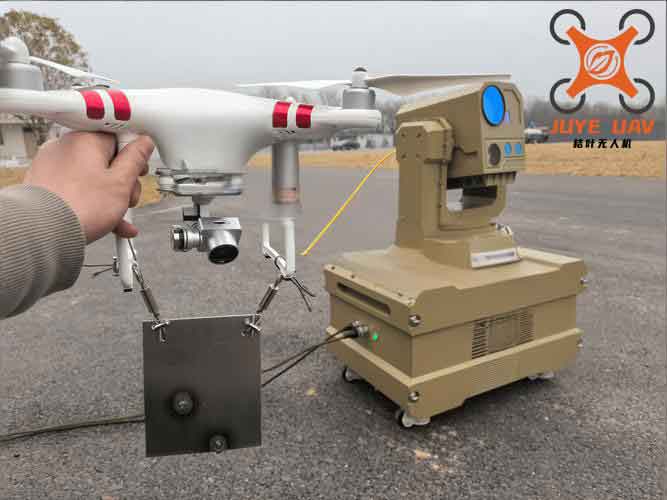
Current research on evaluating laser weapon effectiveness often faces several shortcomings. Firstly, many evaluation index systems tend to adopt generic frameworks not tailored to the unique “power-defined damage, environment-constrained range” physics of laser engagement. Secondly, prevalent evaluation methods frequently rely on single weighting techniques, such as the Fuzzy Analytic Hierarchy Process (FAHP), which can be overly subjective, or the entropy weight method, which may ignore crucial expert operational experience. These approaches struggle to adapt to the nuanced requirements of complex anti-UAV combat scenarios. Thirdly, there is often a lack of alignment between evaluation models and actual, measurable performance parameters of fielded or developmental systems, reducing the practical credibility of the assessment results.
To address these gaps, this article constructs a dedicated evaluation index system that captures the core physical and operational facets of laser anti-UAV engagements. Furthermore, we propose a novel integrated evaluation methodology based on Game Theory Optimization Weighting (GTOW) and the Technique for Order Preference by Similarity to Ideal Solution (TOPSIS). This GTOW-TOPSIS approach seeks an optimal balance between subjective expert judgment and objective data-driven analysis, thereby generating more reliable and actionable assessments of laser weapon anti-UAV combat effectiveness.
1. Constructing the Combat Effectiveness Evaluation Index System for Laser Anti-UAV Operations
Constructing a robust evaluation index system is the foundational step for assessing the combat effectiveness of any weapon system. For laser-based anti-UAV systems, this framework must reflect the closed-loop logic from basic physical parameters to realized operational performance under systemic constraints. The construction adheres to the principles of scientific rigor, purposiveness, systematic structure, and feasibility. Specifically, for anti-UAV laser weapon evaluation, the index selection emphasizes: 1) accurately reflecting the core effectiveness of neutralizing UAV threats; 2) being grounded in the specific operational tasks of detecting, tracking, engaging, and destroying UAVs; and 3) maintaining generality and adaptability across different laser system types and deployment scenarios.
Accordingly, the combat effectiveness evaluation index system for laser anti-UAV operations is constructed along three primary dimensions: Basic Projection Capability, Comprehensive Combat Efficacy, and Scenario Adaptability. This structure encompasses 3 first-level indices and 12 second-level indices, as detailed below and summarized in the subsequent framework.
1) Basic Projection Capability (B1)
This dimension encapsulates the fundamental physical parameters that objectively determine the energy delivered to the target to cause damage. It is the direct performance layer of the laser weapon system.
- Available Energy Value (C11): The difference between the weapon’s full electrical charge capacity and the minimum charge required for system operation. It defines the total “magazine depth” for sustained engagements.
- Power Density on Target (C12): A critical parameter for lethality, calculated as the laser power at the target divided by the spot area. It is governed by laser power, transmitter optics (e.g., diameter of the primary mirror), wavelength, engagement range, and atmospheric transmission characteristics. The damage mechanism (e.g., heating, structural failure) is directly related to this metric.
- Beam Aiming Accuracy (C13): The angular error in the weapon’s ability to point and hold the laser beam on the intended aimpoint on the target. Typically measured in microradians (μrad), it affects the stability and efficiency of energy deposition.
- Effective Engagement Range (C14): The maximum distance at which the laser weapon can achieve a specified probability of kill (or mission kill) against a UAV under defined conditions (e.g., atmospheric conditions, target type). It is a composite measure of beam quality, power, and atmospheric effects.
2) Comprehensive Combat Efficacy (B2)
This dimension assesses the practical, system-level performance of the laser weapon in intercepting UAV targets, considering temporal and capacity factors.
- Target Interception Probability (C21): The probability that a single lasing engagement (given specified conditions of range, weather, and dwell time) results in a kill or mission kill of the UAV.
- Maximum Continuous Operation Time (C22): The duration for which the laser weapon can sustain continuous firing before requiring a shutdown due to thermal management limits or energy depletion. It is constrained by stored electrical energy and the thermal capacity of optical components.
- Firepower Shift Time (C23): The time required for the system to disengage from one target (after a kill or abort), slew, acquire, track, and stabilize the beam on a subsequent target. This is critical for engaging multiple threats or salvos.
- Saturation Interception Capability (C24): Reflects the total number of UAVs the system can effectively kill from a fully charged state down to a defined minimum energy level (e.g., 20% charge). It is a holistic metric derived from single-kill dwell time, firepower shift time, and total available engagement time.
3) Scenario Adaptability (B3)
This dimension evaluates the flexibility, robustness, and integration potential of the laser weapon across varying operational contexts.
- Cooperative Engagement Capability (C31): A qualitative measure of the system’s ability to interoperate with other air defense or combat systems. This includes data link interoperability, command-and-control integration, and complementary firing protocols for layered defense. It is rated on a scale (e.g., Extremely Strong, Strong, Moderate, Weak).
- Target Adaptability (C32): The system’s average effectiveness against a spectrum of UAV types (small, medium, large; rotary vs. fixed-wing; different materials). Higher adaptability indicates robustness against diverse threats.
- Environmental Adaptability (C33): The average operational effectiveness of the system under various meteorological conditions (clear sky, cloudy, haze, light rain). Laser propagation is highly sensitive to atmospheric absorption and scattering.
- Platform Adaptability (C34): The ease and effectiveness with which the laser weapon can be integrated onto different deployment platforms (ground vehicle, naval ship, aircraft).
The structure of this anti-UAV combat effectiveness evaluation index system is summarized in the following hierarchical representation:
| Target Layer (A) | First-Level Indices (B) | Second-Level Indices (C) |
|---|---|---|
| Laser Weapon Anti-UAV Combat Effectiveness Evaluation | Basic Projection Capability (B1) | Available Energy Value (C11) |
| Power Density on Target (C12) | ||
| Beam Aiming Accuracy (C13) | ||
| Effective Engagement Range (C14) | ||
| Comprehensive Combat Efficacy (B2) | Target Interception Probability (C21) | |
| Maximum Continuous Operation Time (C22) | ||
| Firepower Shift Time (C23) | ||
| Saturation Interception Capability (C24) | ||
| Scenario Adaptability (B3) | Cooperative Engagement Capability (C31) | |
| Target Adaptability (C32) | ||
| Environmental Adaptability (C33) | ||
| Platform Adaptability (C34) |
2. Combat Effectiveness Evaluation Based on GTOW-TOPSIS
To enhance the scientific rigor of assigning weights to the evaluation indices and overcome the limitations of single subjective or objective weighting methods, we propose a Game Theory Optimization Weighting (GTOW) approach. This method first derives subjective and objective weights via FAHP and the Entropy Weight Method, respectively. It then seeks a Nash equilibrium to obtain an optimal combination of these weights. Finally, the TOPSIS method is employed to calculate the relative closeness of each laser weapon alternative to the ideal solution, enabling a precise ranking of their anti-UAV combat effectiveness.
2.1 Fuzzy Analytic Hierarchy Process (FAHP)
FAHP extends the classical AHP to handle uncertainty and vagueness in expert judgments, making it suitable for multi-criteria decision-making in complex domains like military equipment evaluation.
Step 1: Construct the fuzzy complementary judgment matrix. Using a 0.1–0.9 scale, experts compare the relative importance of factors pairwise. For a set of n indices, the matrix R is:
$$ \mathbf{R} = (r_{ij})_{n \times n} $$
where $r_{ij}$ denotes the importance of index i relative to index j, with $r_{ij} + r_{ji} = 1$.
Step 2: Calculate the subjective weight vector $\mathbf{w^F} = [w^F_1, w^F_2, …, w^F_n]^T$. The weight for the i-th factor is:
$$ w^F_i = \frac{\sum_{j=1}^{n} r_{ij} + \frac{n}{2} – 1}{n(n-1)} $$
Step 3: Consistency check. The compatibility index $I(\mathbf{R}, \mathbf{w^F})$ between the judgment matrix and its characteristic matrix is calculated. If $I(\mathbf{R}, \mathbf{w^F}) < \alpha$ (typically $\alpha = 0.1$), the matrix is considered acceptably consistent.
2.2 Entropy Weight Method
This objective method determines weights based on the amount of information provided by each index’s data variation across the alternatives.
Step 1: Collect data for m alternatives (laser weapons) and n evaluation indices, forming matrix $\mathbf{X} = (x_{ij})_{m \times n}$.
Step 2: Normalize the data to construct the standardized matrix $\mathbf{R’} = (r’_{ij})_{m \times n}$. For benefit-type (larger-is-better) and cost-type (smaller-is-better) indices:
$$ \text{Benefit: } r’_{ij} = \frac{x_{ij} – \min(x_j)}{\max(x_j) – \min(x_j)} $$
$$ \text{Cost: } r’_{ij} = \frac{\max(x_j) – x_{ij}}{\max(x_j) – \min(x_j)} $$
Step 3: Calculate the information entropy $e_j$ and information utility value $d_j$ for the j-th index:
$$ e_j = -\frac{1}{\ln m} \sum_{i=1}^{m} r’_{ij} \ln(r’_{ij}) $$
$$ d_j = 1 – e_j $$
Step 4: Determine the objective weight vector $\mathbf{w^E} = [w^E_1, w^E_2, …, w^E_n]^T$:
$$ w^E_j = \frac{d_j}{\sum_{k=1}^{n} d_k} $$
2.3 Game Theory Optimization Weighting (GTOW) Method
The GTOW method integrates multiple weight vectors to find their Nash equilibrium, yielding a balanced combined weight.
Step 1: Assume K weighting methods yield weight sets $\{\mathbf{w_1}, \mathbf{w_2}, …, \mathbf{w_K}\}$, where $\mathbf{w_k}=[w_{k1}, w_{k2}, …, w_{kn}]$. A comprehensive weight vector $\mathbf{w}$ is a linear combination:
$$ \mathbf{w} = \sum_{k=1}^{K} a_k \mathbf{w_k}^T $$
where $a_k > 0$ is the combination coefficient.
Step 2: To find the optimal $a_k$, minimize the deviation between $\mathbf{w}$ and each base weight $\mathbf{w_p}$:
$$ \min \left\| \sum_{k=1}^{K} a_k \mathbf{w_k}^T – \mathbf{w_p}^T \right\|_2, \quad p=1,2,…,K $$
Step 3: This optimization leads to a system of linear equations derived from the first-order derivative condition:
$$
\begin{bmatrix}
\mathbf{w_1}\mathbf{w_1}^T & \mathbf{w_1}\mathbf{w_2}^T & \cdots & \mathbf{w_1}\mathbf{w_K}^T \\
\mathbf{w_2}\mathbf{w_1}^T & \mathbf{w_2}\mathbf{w_2}^T & \cdots & \mathbf{w_2}\mathbf{w_K}^T \\
\vdots & \vdots & \ddots & \vdots \\
\mathbf{w_K}\mathbf{w_1}^T & \mathbf{w_K}\mathbf{w_2}^T & \cdots & \mathbf{w_K}\mathbf{w_K}^T
\end{bmatrix}
\begin{bmatrix}
a_1 \\ a_2 \\ \vdots \\ a_K
\end{bmatrix}
=
\begin{bmatrix}
\mathbf{w_1}\mathbf{w_1}^T \\ \mathbf{w_2}\mathbf{w_2}^T \\ \vdots \\ \mathbf{w_K}\mathbf{w_K}^T
\end{bmatrix}
$$
Step 4: Solve for the coefficient vector $\mathbf{a}=[a_1, a_2, …, a_K]$ and normalize it:
$$ a^*_k = \frac{a_k}{\sum_{k=1}^{K} a_k} $$
Step 5: The final optimal comprehensive weight vector from GTOW is:
$$ \mathbf{w^*} = \sum_{k=1}^{K} a^*_k \mathbf{w_k}^T $$
2.4 Combat Effectiveness Evaluation Using TOPSIS
TOPSIS is a data-driven, objective ranking method that identifies the best alternative based on its geometric distance from ideal solutions.
Step 1: Construct the weighted normalized decision matrix $\mathbf{O} = (o_{ij})_{m \times n}$, where $o_{ij} = w^*_j \cdot r’_{ij}$.
Step 2: Determine the positive ideal solution (PIS) $O^+_j$ and negative ideal solution (NIS) $O^-_j$:
$$ O^+_j = \max_{i=1,…,m} o_{ij}, \quad O^-_j = \min_{i=1,…,m} o_{ij} $$
Step 3: Calculate the Euclidean distances of each alternative i to the PIS ($D^+_i$) and NIS ($D^-_i$):
$$ D^+_i = \sqrt{\sum_{j=1}^{n} (o_{ij} – O^+_j)^2 }, \quad D^-_i = \sqrt{\sum_{j=1}^{n} (o_{ij} – O^-_j)^2 } $$
Step 4: Compute the relative closeness $C_i$ to the ideal solution for each laser weapon alternative:
$$ C_i = \frac{D^-_i}{D^+_i + D^-_i} $$
A higher $C_i$ score (closer to 1) indicates better overall anti-UAV combat effectiveness.
3. Case Study and Results Analysis
Consider five different models of laser weapons (S1, S2, S3, S4, S5) designed for anti-UAV missions. Their performance data and expert ratings according to the 12 established indices are collected as shown in the table below. Qualitative ratings (C31-C34) are quantified as: Extremely Strong=5, Strong=4, Moderate=3, Weak=2, Very Weak=1.
| Evaluation Index | Type | Laser Weapon System | ||||
|---|---|---|---|---|---|---|
| S1 | S2 | S3 | S4 | S5 | ||
| C11: Available Energy (kJ) | Benefit | 700 | 800 | 1000 | 800 | 650 |
| C12: On-Target Power Density (W/cm²) | Benefit | 500 | 700 | 600 | 550 | 400 |
| C13: Effective Range (km) | Benefit | 3.0 | 5.0 | 4.0 | 3.5 | 2.5 |
| C14: Beam Accuracy (μrad) | Cost | 1 | 8 | 5 | 6 | 4 |
| C21: Interception Probability (%) | Benefit | 90 | 95 | 88 | 92 | 90 |
| C22: Max Operation Time (min) | Benefit | 180 | 100 | 120 | 160 | 200 |
| C23: Fire Shift Time (s) | Cost | 2.5 | 5 | 4 | 3 | 1 |
| C24: Saturation Kill Capacity | Benefit | 10 | 8 | 12 | 8 | 7 |
| C31: Cooperative Capability | Benefit | 5 | 4 | 4 | 3 | 4 |
| C32: Target Adaptability | Benefit | 4 | 5 | 3 | 4 | 2 |
| C33: Environmental Adaptability | Benefit | 4 | 2 | 2 | 4 | 3 |
| C34: Platform Adaptability | Benefit | 3 | 4 | 2 | 2 | 4 |
3.1 FAHP Weight Calculation
Expert pairwise comparisons yield fuzzy complementary judgment matrices for the criterion and sub-criteria layers. Following the FAHP steps (Eq. 1), the weights for the first-level indices are calculated as $\mathbf{w^F_{A\_B}} = [0.35, 0.40, 0.25]^T$ for (B1, B2, B3). The consistency index is verified to be satisfactory ($I < 0.1$). The combined subjective weights for all 12 second-level indices (C11-C34) are then derived, as shown in the second column of Table 2.
3.2 Entropy Weight Calculation
Using the data from Table 1 and applying the normalization (Eq. 2) and entropy formulas (Eq. 3, 4), the objective weight vector $\mathbf{w^E}$ is computed. The results are listed in the third column of Table 2.
3.3 GTOW-based Comprehensive Weight Calculation
The subjective ($\mathbf{w^F}$) and objective ($\mathbf{w^E}$) weights from Table 2 serve as inputs to the GTOW model ($K=2$). Solving the linear equations (derived from Eq. 8) yields the optimal combination coefficients: $a^*_1 = 0.3193$ (for FAHP) and $a^*_2 = 0.6807$ (for Entropy). The final comprehensive weights $\mathbf{w^*}$ are calculated using Eq. 10 and presented in the fourth column of Table 2.
| Evaluation Index | FAHP Weight ($\mathbf{w^F}$) | Entropy Weight ($\mathbf{w^E}$) | GTOW Weight ($\mathbf{w^*}$) |
|---|---|---|---|
| C11 | 0.0933 | 0.0791 | 0.0836 |
| C12 | 0.1050 | 0.0573 | 0.0725 |
| C13 | 0.0817 | 0.0704 | 0.0740 |
| C14 | 0.0700 | 0.0517 | 0.0575 |
| C21 | 0.1200 | 0.0695 | 0.0856 |
| C22 | 0.0933 | 0.0656 | 0.0744 |
| C23 | 0.0800 | 0.0554 | 0.0633 |
| C24 | 0.1067 | 0.0843 | 0.0915 |
| C31 | 0.0729 | 0.1857 | 0.1497 |
| C32 | 0.0667 | 0.0635 | 0.0645 |
| C33 | 0.0583 | 0.1088 | 0.0927 |
| C34 | 0.0521 | 0.1088 | 0.0907 |
Analysis: The results in Table 2 reveal significant discrepancies between FAHP and Entropy weights for several indices, such as Power Density on Target (C12), Interception Probability (C21), and most notably, Cooperative Engagement Capability (C31). This highlights the inherent conflict between expert-prioritized factors and data-driven variance. The GTOW-derived weights generally lie closer to the entropy weights, suggesting a greater influence of objective data variance in the final balanced assessment for this anti-UAV evaluation. This outcome is logical as the entropy method captures the actual performance dispersion among the candidate systems, which is crucial for differentiation.
3.4 TOPSIS-based Anti-UAV Combat Effectiveness Ranking
Using the GTOW weights ($\mathbf{w^*}$) from Table 2 and the normalized data from Table 1, the weighted normalized matrix $\mathbf{O}$ is constructed. The Positive and Negative Ideal Solutions (PIS, NIS) are then identified (Eq. 11). The Euclidean distances ($D^+_i$, $D^-_i$) and the final relative closeness scores ($C_i$) for each laser weapon system are calculated using Eq. 12 and Eq. 13. The results are presented in Table 3.
| Laser Weapon System | Distance to PIS ($D^+_i$) | Distance to NIS ($D^-_i$) | Relative Closeness ($C_i$) | Comprehensive Ranking |
|---|---|---|---|---|
| S1 | 0.1586 | 0.2047 | 0.5635 | 1 |
| S2 | 0.2150 | 0.1822 | 0.4587 | 2 |
| S3 | 0.1796 | 0.1382 | 0.4348 | 3 |
| S4 | 0.2299 | 0.1583 | 0.4078 | 4 |
| S5 | 0.2521 | 0.1319 | 0.3435 | 5 |
The ranking order is: $S1 > S2 > S3 > S4 > S5$. System S1 exhibits the highest relative closeness (0.5635), indicating it is the best-performing system among the five in terms of overall anti-UAV combat effectiveness according to our model. Despite having lower raw power (C11) or range (C13) than some others, S1’s strengths likely lie in a balanced combination of good accuracy (C14), high cooperative capability (C31), and strong environmental adaptability (C33), which are highly weighted in the GTOW scheme. System S5 ranks last, primarily due to lower scores in key areas like power density (C12), target adaptability (C32), and saturation capacity (C24).
4. Conclusion
This study addresses key challenges in evaluating laser weapon systems for anti-UAV missions, namely the lack of tailored evaluation frameworks and the biases inherent in single-method weighting approaches. We constructed a dedicated combat effectiveness evaluation index system structured around the core dimensions of Basic Projection Capability, Comprehensive Combat Efficacy, and Scenario Adaptability. This framework explicitly captures the unique physics and operational requirements of laser-based anti-UAV engagements.
Furthermore, we proposed and demonstrated the GTOW-TOPSIS evaluation methodology. By integrating FAHP’s expert insight with the Entropy Weight Method’s objective data analysis and seeking their Nash equilibrium, the GTOW approach generates a balanced and defensible set of index weights. This effectively mitigates the subjectivity of purely judgmental methods and the potential irrelevance of purely statistical variance. The subsequent application of TOPSIS provides a clear, data-driven ranking of candidate systems.
The case study involving five laser weapon models validated the practicality and effectiveness of the proposed index system and methodology. The process yielded a quantifiable and explainable ranking of anti-UAV combat effectiveness, with System S1 identified as the optimal choice under the defined criteria and weights. The analysis showed that the GTOW weights leaned towards the objective entropy results, emphasizing the importance of measurable performance differentials in the evaluation. This work provides a systematic and scientifically grounded tool to support critical decision-making processes for laser weapon selection, deployment optimization, and tactical development in the increasingly vital domain of counter-unmanned aerial systems.