
The rapid evolution of low-altitude economies has fundamentally reoriented urban development strategies. As a pivotal technological driver of this trend, the unmanned drone has transcended its origins to become a critical instrument for smart city governance. By offering unparalleled flexibility, efficiency, and multi-dimensional sensing capabilities, unmanned drones are catalyzing a paradigm shift towards more精细化 and intelligent urban management systems. This analysis adopts a first-person perspective to systematically explore the application landscapes, inherent risks, and comprehensive countermeasures associated with drone-enabled urban governance, following the logical progression of “current applications → risk assessment → strategic response.”
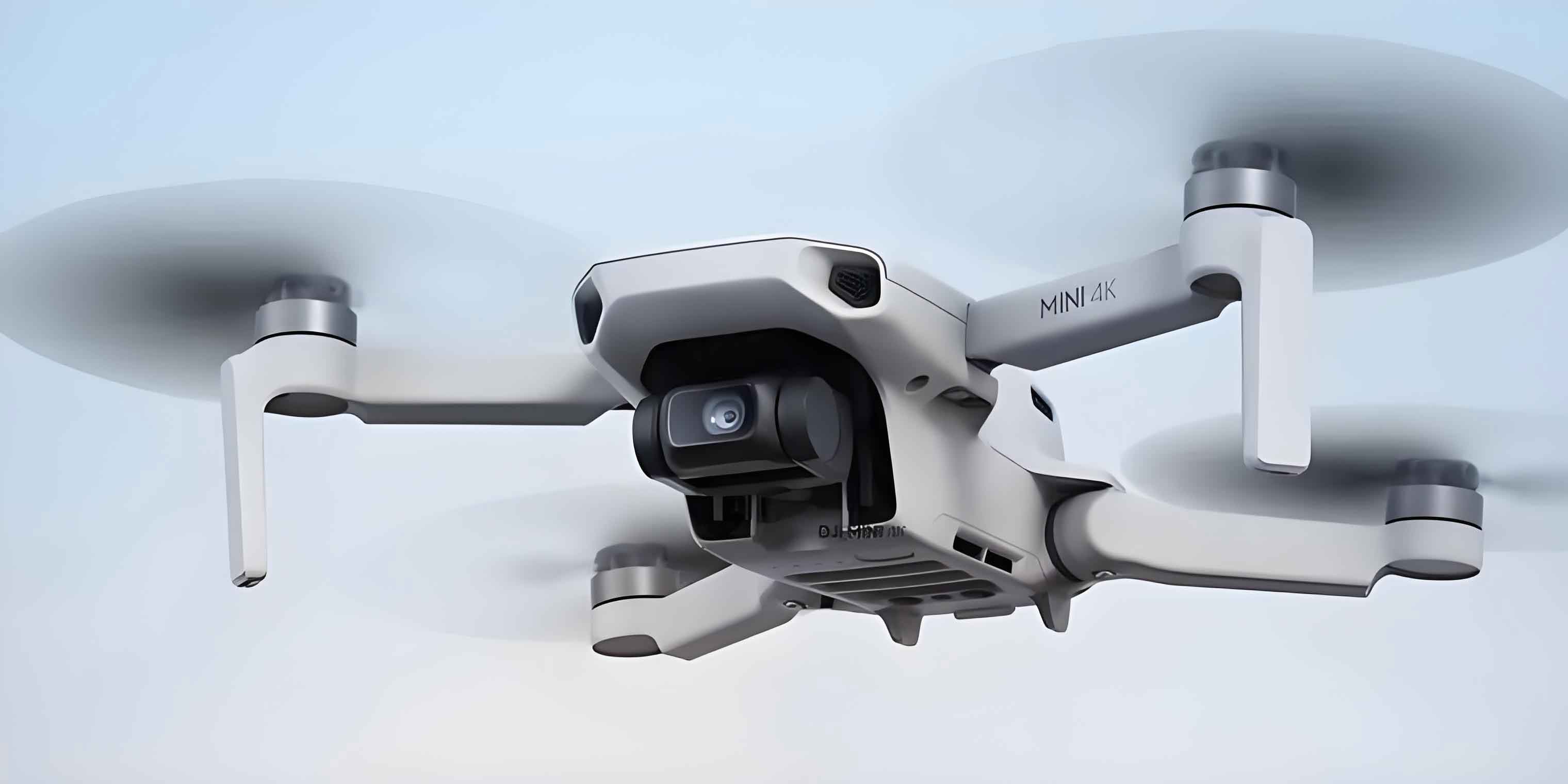
The core value proposition of the unmanned drone lies in its ability to extend the sensory and operational reach of city management into the third dimension. Traditional governance, largely confined to ground-based networks, often grapples with significant blind spots and delayed responses. The integration of unmanned drone technology facilitates a transition from two-dimensional, reactive governance to a proactive, three-dimensional “air-ground-human” integrated model. This spatial reconfiguration is not merely additive but transformative, demanding new analytical frameworks and governance adaptations.
Analytical Framework: From Ground-Based to Three-Dimensional Governance
The effective deployment of an unmanned drone fleet for urban governance rests on a triad of core technological characteristics that align with specific governance needs. This synergy creates a new logic for urban management, as summarized in the table below.
| Core Drone Characteristic | Governance Capability Enabled | Mechanism & Impact |
|---|---|---|
| Intelligence & Autonomy | Fine-Grained Governance | Equipped with AI recognition, autonomous navigation, and real-time data analytics, the unmanned drone enables precise monitoring of infrastructure, environment, and public spaces. This data-driven approach shifts decision-making from experience-based to model-supported, significantly enhancing urban perceptual acuity. |
| Operational Efficiency & Agility | Responsive and Agile Governance | The unmanned drone’s ability to quickly deploy and cover large or complex areas compresses the timeline from problem identification to intervention. It overcomes geographical barriers in dense urban fabrics and enables rapid delivery of critical services, thereby improving the coverage and timeliness of public service provision. |
| Multi-Scenario Adaptability | Collaborative and Integrated Governance | A single unmanned drone platform can be configured for diverse tasks (e.g., traffic monitoring, environmental sensing, security patrols). This multi-functionality helps break down departmental silos by providing a common data stream to various agencies (police, environmental protection, transportation), fostering cross-departmental collaboration and integrated service delivery. |
The operational logic can be further conceptualized through a simple formula representing the enhanced governance efficacy (G_e) achieved by integrating unmanned drones:
$$ G_e = G_b + \alpha \cdot (C_c \cdot R_t \cdot D_q) $$
Where:
– \( G_b \) represents baseline (ground-only) governance efficacy.
– \( \alpha \) is an integration efficiency coefficient (0 ≤ α ≤ 1), dependent on regulatory and infrastructural support.
– \( C_c \) is the spatial coverage multiplier provided by the aerial perspective.
– \( R_t \) is the temporal response improvement factor.
– \( D_q \) is the quality and granularity of data acquired.
Primary Application Scenarios of Unmanned Drones in Urban Governance
The application of unmanned drones spans core public administration functions and extends into enhanced public service delivery. The following table categorizes and details these key scenarios, highlighting the specific technological implementations and governance outcomes.
| Governance Domain | Specific Application Scenarios | Key Technologies Employed | Governance Impact & Metrics |
|---|---|---|---|
| Public Safety & Security | Critical Infrastructure & Area Patrol | High-zoom cameras, multispectral sensors, RTK positioning | 24/7 automated surveillance; Reduction in required manual patrols. |
| Large Event Security | Real-time crowd analytics, “air-ground” coordination systems | Dynamic risk预警; Enhanced capacity for rapid intervention. | |
| Community Policing | AI-powered anomaly detection, routine automated flight paths | Deterrent effect; Extended reach of limited ground personnel. | |
| Integrated Traffic Management | Network-wide Congestion Monitoring | Aerial traffic flow analysis, AI-based prediction algorithms | Real-time congestion identification; Data for signal optimization. |
| Accident Scene Investigation | Tilt photography for 3D reconstruction, infrared thermal imaging | Reduced road closure time (e.g., by ~60%); Safer investigation process. | |
| Traffic Law Enforcement | Automated violation recognition (lane change, illegal parking), real-time evidence upload | Increased violation detection accuracy (>95%); Improved enforcement efficiency. | |
| Environmental Monitoring | Air Quality & Pollution Tracking | Onboard gas sensors (PM2.5, VOCs), 5G data transmission | High-resolution pollution mapping; Source identification for targeted enforcement. |
| Illegal Waste Disposal & Land Use | High-res optical/ LiDAR, deep learning for change detection | Rapid identification of unauthorized dumpsites/constructions; Quantifiable compliance metrics. | |
| Emergency Response | Firefighting Support | Infrared thermal imaging to pinpoint火源, 3D modeling of structures | Enhanced firefighter safety; Informed strategy for resource deployment. |
| Flood Disaster Assessment | Rapid aerial surveying, material delivery via unmanned drone | Quick damage assessment and 3D modeling for reconstruction planning. | |
| Hazardous Material Leaks | Specialized gas detection payloads, UV imaging | Remote monitoring of plume dispersion, keeping personnel at a safe distance. | |
| Smart Elderly Care | Health Monitoring & Emergency Aid | Non-contact vital sign monitoring, emergency medication delivery | Extended independent living for seniors; Faster emergency response in communities. |
| Municipal Maintenance | Green Space & Park Management | Multispectral analysis for plant health, precision spraying systems | Targeted irrigation/pest control, reducing resource use by ~30%. |
The effectiveness of an unmanned drone in a task like area surveillance can be modeled by its effective coverage area over time, considering its flight parameters:
$$ A_{effective}(t) = v \cdot w \cdot t \cdot \eta_{overlap} \cdot \eta_{availability} $$
Where:
– \( v \) is the unmanned drone’s cruising speed.
– \( w \) is the effective sensor swath width at the operational altitude.
– \( t \) is the total mission time.
– \( \eta_{overlap} \) is the efficiency factor accounting for necessary image overlap.
– \( \eta_{availability} \) accounts for system readiness and maintenance downtime.
Systemic Risk Challenges in Drone-Enabled Urban Governance
Despite the clear benefits, scaling the application of unmanned drones presents multifaceted risks that span technology, regulation, and society. These challenges are interconnected and must be addressed holistically.
| Risk Category | Specific Challenges | Underlying Causes & Potential Consequences |
|---|---|---|
| Technology-Management Misalignment |
|
Fragmented “信息孤岛” (information silos); Inefficient cross-agency coordination; Increased operational risks due to skill gaps. |
| Safety & Privacy Infringement |
|
Inadequate low-altitude traffic management rules; Absence of specific standards for low-altitude environmental impact; Weak data governance frameworks for aerial collection. |
| Regulatory & Institutional Lag |
|
Traditional aviation law is ill-suited for high-density urban unmanned drone operations; Lack of a central coordinating authority creates bureaucratic hurdles. |
| Infrastructure & Ecosystem Deficits |
|
Low-altitude infrastructure not integrated into urban planning; Innovation misaligned with actual governance pain points; Weak industry-academia-research collaboration. |
A critical risk equation involves the probability of a systemic failure (P_f), which depends on the reliability of multiple, often interdependent, subsystems involved in an unmanned drone operation:
$$ P_f = 1 – \prod_{i=1}^{n} (1 – p_i) $$
Where \( p_i \) represents the failure probability of subsystem \( i \) (e.g., flight control \( p_{fc} \), communication link \( p_{com} \), navigation \( p_{nav} \), data security \( p_{ds} \)). This highlights how risks compound in complex systems.
Strategic Pathways for Risk-Resilient Drone Governance
Navigating the above challenges requires a coordinated, multi-pronged strategy focused on building a safe, efficient, and trusted governance ecosystem. The proposed framework is built on four pillars.
1. Constructing a “Trinity” Collaborative Governance System
This involves simultaneous advancement in standardization, management, and institutional innovation.
– Technology Standardization: Develop and mandate unified communication protocols, data formats, and hardware interfaces for public-sector unmanned drones. Implement blockchain-based secure data logging for accountability.
– Management Consolidation: Establish a centralized Urban Unmanned Drone Operations Center to coordinate flight missions, manage a shared fleet, and oversee a standardized pilot certification and training regime.
– Institutional Innovation: Encourage “sandbox” regulatory pilots to test new applications. Foster public-private-academic partnerships to co-develop solutions and inform agile policy-making.
2. Fortifying Safety Governance and Privacy Protection Capabilities
Proactively address societal concerns through technology and transparency.
– Intelligent Supervision: Deploy AI-driven Unmanned Traffic Management (UTM) systems for real-time airspace awareness and deconfliction. Develop noise and emission monitoring models tailored for low-altitude operations.
– Privacy-by-Design: Implement technical safeguards such as automated blurring of non-relevant areas in video feeds, encrypted data transmission, and strict access controls within dedicated data middle platforms.
– Public Engagement: Launch public awareness campaigns on unmanned drone benefits and safeguards. Establish clear public guidelines on data collection scope and usage to build societal trust.
3. Refining Policy Frameworks and Cross-Departmental Mechanisms
Create an enabling and clear regulatory environment.
– Adaptive Legislation: Enact specialized regulations governing the entire lifecycle of unmanned drone operations in cities, including clear definitions for different airspace classes and scenario-based “negative lists” for flight restrictions.
– Unified Oversight Platform: Leverage national comprehensive management platforms to enable “one-stop” flight approval and inter-departmental data sharing, reducing bureaucratic friction.
– Central-Local Coordination: Define clear accountability boundaries between national regulators (setting standards) and local governments (managing implementation), supported by targeted fiscal transfers for infrastructure.
4. Strengthening Infrastructure and Fostering Industrial Synergy
Build the physical and industrial base for scalable, advanced applications.
– Integrated Physical Infrastructure: Incorporate unmanned drone vertiports, charging hubs, and maintenance facilities into urban master plans, particularly around transport hubs and key service areas.
– Resilient Digital Infrastructure: Accelerate the deployment of dedicated, secure low-altitude communication networks (e.g., 5G-A/6G) and enhance BeiDou satellite navigation integration for reliable positioning.
– Ecosystem Cultivation: Support R&D in core technologies like chips and advanced sensors. Use “scenario opportunity lists” published by governments to guide industry innovation towards genuine governance needs, fostering a robust “manufacturing-operation-service” industrial chain.
The strategic investment required to mitigate risks and harness the potential of unmanned drone systems can be viewed as a function of desired resilience (R):
$$ I_{total} = I_{tech}(R_{tech}) + I_{infra}(R_{infra}) + I_{inst}(R_{inst}) + I_{ecos}(R_{ecos}) $$
Where \( I_{tech} \), \( I_{infra} \), \( I_{inst} \), and \( I_{ecos} \) represent investments in technology hardening, infrastructure, institutional capacity, and ecosystem development, respectively, each contributing to an overall resilience factor against the identified risks.
Conclusion: Redefining the Urban Governance Paradigm
The integration of the unmanned drone into urban governance signifies more than a simple technological upgrade; it represents a fundamental reimagining of the city’s spatial logic and operational philosophy. The shift from a planar to a volumetric governance model compels a reconsideration of urban planning, where low-altitude airspace is treated as a strategic resource on par with land. Furthermore, the “panoptic” capabilities of unmanned drone networks necessitate a delicate and transparent balance between collective security and individual privacy, making public trust a central currency of effective implementation.
As artificial intelligence evolves from a tool to an autonomous “agent,” the unmanned drone will transition from a remotely piloted device to an intelligent node within a self-organizing urban sensory grid. This impending evolution demands proactive governance that is both technologically literate and ethically grounded. The ultimate objective is not merely automated efficiency but the cultivation of a “humane” smart city—a governance ecosystem where unmanned drones and associated technologies are harnessed to foster inclusivity, resilience, and public well-being, ensuring that technological advancement aligns seamlessly with the broader pursuit of urban善治 (good governance).