
The evolution of warfare in the 21st century is being profoundly reshaped by rapid advancements in military technology. Among these, Unmanned Aerial Vehicles (UAVs), and particularly UAV swarm technology, have emerged as a disruptive force, challenging traditional paradigms of air defense and operational conduct. The core of this challenge lies in the swarm’s utilization of a large number of inexpensive, collaborative drones that operate with a significant degree of autonomy and decentralized coordination. This paradigm presents a stark contrast to the capabilities and design philosophies of legacy air defense systems, creating an asymmetry that adversaries may seek to exploit. Therefore, the development of effective, adaptable, and resilient anti-UAV strategies is not merely an operational requirement but a strategic imperative for modern defense forces. This paper analyzes the technological underpinnings of UAV swarms and the limitations of traditional countermeasures. It then proposes and elaborates on a novel strategic framework centered on the dynamic construction of the “kill chain” as the cornerstone for an effective anti-UAV swarm defense system.
The UAV Swarm Challenge: Technology and Asymmetric Advantage
UAV swarm operations draw inspiration from biological systems like flocks of birds or schools of fish, achieving complex collective behaviors through simple local interactions. This approach translates militarily into enhanced survivability, resilience, and mission efficacy. The technological pillars enabling this are:
- Advanced Autonomy and AI: Leveraging machine learning and artificial intelligence for real-time perception, navigation, target recognition, and mission adaptation without constant human input.
- Robust Communication Networks: Employing mesh networking, adaptive protocols, and data links that allow for resilient, peer-to-peer communication even in contested electromagnetic environments.
- Collaborative Behaviors: Implementing distributed algorithms for formation flying, dynamic task allocation, collective decision-making, and self-healing coordination.
The operational impact creates a multi-faceted challenge. Swarms can execute saturation attacks to overwhelm point defenses, conduct distributed sensing for superior situational awareness, and employ heterogeneous groups for combined effects (e.g., electronic warfare drones paired with kinetic attackers). Their low radar cross-section (RCS), low-altitude flight profiles, and use of commercial components make them difficult to detect and costly to engage with traditional weaponry, leading to potential cost-exchange ratios heavily favoring the attacker.
| Characteristic | Traditional UAV/Threat | UAV Swarm |
|---|---|---|
| Control Architecture | Centralized, hierarchical | Decentralized, distributed |
| Resilience | Single point of failure (GCS, link) | Network resilience, functional redundancy |
| Signature | Potentially larger, predictable | Low RCS, low-altitude, dispersed |
| Tactical Model | Single or few high-value platforms | Mass, saturation, distributed collaboration |
| Cost Basis | High unit cost | Low unit cost, attritable |
Limitations of Traditional Air Defense Against Swarms
Legacy integrated air defense systems (IADS) were primarily engineered to counter manned aircraft, cruise missiles, and other conventional threats characterized by higher speeds, larger signatures, and more predictable flight paths. When confronted with a UAV swarm, these systems reveal critical vulnerabilities:
- Detection and Tracking Gap: Sensors optimized for larger targets struggle with the “low, slow, and small” (LSS) profile of swarm drones, leading to reduced detection ranges, track breaks, and difficulty in maintaining custody of numerous, highly maneuverable targets.
- Decision-Making Latency: Centralized command and control (C2) structures, while effective for orchestrated campaigns, can introduce fatal delays in the observe-orient-decide-act (OODA) loop when facing a fast-evolving swarm threat that requires near-instantaneous reaction.
- Unsustainable Cost Exchange: Engaging individual swarm drones with expensive surface-to-air missiles (SAMs) or even advanced gun systems is economically prohibitive and logistically unsustainable. A swarm can deliberately attrit a defender’s magazine depth and financial resources.
- Single-Engagement Focus: Traditional kill chains are often linear and platform-centric, designed to prosecute a single high-value target through a sequence of find, fix, track, target, engage, and assess (F2T2EA). This model is too rigid and slow to handle a diffuse, emergent threat entity like a swarm.
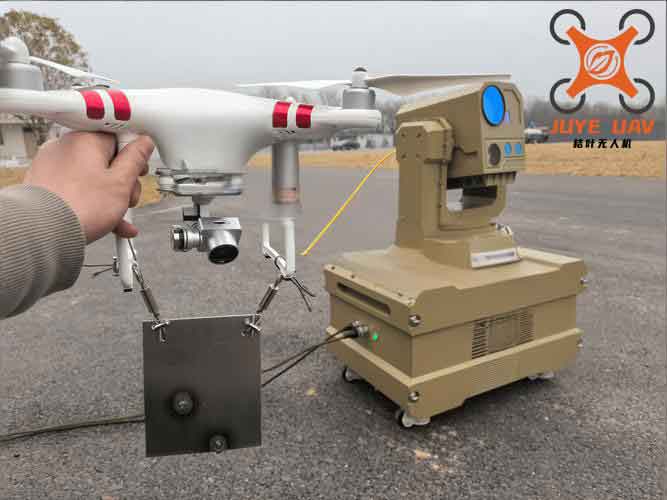
The image above illustrates the complexity of modern anti-UAV defense, requiring a layered, multi-technology approach to address the swarm threat, which is a core argument for moving beyond traditional systems.
Theory of the Dynamic Kill Chain: A Paradigm Shift
To counter swarms effectively, we must reconceptualize the kill chain from a static, linear process into a dynamic, adaptive, and networked system. A dynamic kill chain (DKC) is a self-organizing framework of sensing, decision-making, and effector capabilities that can be rapidly composed, decomposed, and reconfigured in response to the specific characteristics and actions of a UAV swarm threat. It transitions from a predetermined sequence to a set of composable services.
The mathematical representation of a dynamic kill chain’s agility can be modeled as an optimization problem where the goal is to minimize the total engagement time \( T_{engage} \) for a swarm \( S \) under resource constraints \( R \).
$$
T_{engage}(S) = \min_{C \in \mathcal{C}} \left( T_{detect}(S, C_s) + T_{decide}(S, C_c) + T_{effector}(S, C_e) \right)
$$
subject to: \( C_s \cup C_c \cup C_e \subseteq R \), where \( C = \{C_s, C_c, C_e\} \) represents a specific chain configuration drawn from the set of all possible configurations \( \mathcal{C} \), comprising sensor (\(C_s\)), C2 (\(C_c\)), and effector (\(C_e\)) assets.
The strategic necessity of this shift is clear:
- Enhanced Tactical Flexibility: Allows defenders to match the swarm’s adaptability, creating tailored responses for different swarm behaviors (e.g., dispersed search vs. concentrated attack).
- Improved System Resilience: A distributed, composable chain has no single point of failure. If one sensor node is blinded or one effector is destroyed, the network can re-route functions to maintain defensive integrity.
- Optimal Resource Utilization: Enables smart pairing of threats with the most cost-effective and available countermeasures, preserving high-value interceptors for high-priority threats within the swarm.
| Traditional Kill Chain Phase | Dynamic Re-conceptualization for Swarms |
|---|---|
| Find/Fix | Persistent Multi-Domain Custody: Fused data from radars, EW sensors, acoustics, EO/IR, creating a common, continuously updated track on the swarm as a collective entity and key individuals. |
| Track | Predictive Behavioral Modeling: Using AI to anticipate swarm maneuver patterns, intent, and likely high-value units (e.g., command nodes, payload carriers). |
| Target/Decide | Adaptive Real-Time C2: Distributed decision nodes assign engagements based on real-time weapon status, probability of kill (Pk), rules of engagement (RoE), and swarm priority analysis. |
| Engage | Multi-Effector Orchestration: Simultaneous or sequenced use of kinetic (micromissiles, lasers), non-kinetic (jamming, spoofing, cyber), and physical (net, collision) means. |
| Assess | Closed-Loop Battle Damage Assessment (BDA): Real-time feed of engagement results (sensor-based) back into the track and decision loops to enable immediate re-engagement or threat reclassification. |
Strategies for Dynamic Kill Chain Construction in Anti-UAV Operations
Implementing a DKC requires coordinated advances across several domains. The following strategies provide a concrete roadmap, particularly relevant to the modern battlefield where anti-UAV defenses must be mobile, integrable, and effective.
1. Multi-Domain Sensing and Intelligent Fusion
This strategy addresses the “Find/Fix/Track” challenge. No single sensor is sufficient. A heterogeneous network is required:
$$
\text{Fused Track Quality} = F\left( \sum_{i}^{n} w_i \cdot S_i(t), M_{AI}(H_t) \right)
$$
where \( S_i(t) \) is the data from sensor \( i \) (e.g., radar, RF detector, EO) at time \( t \), \( w_i \) is its dynamically adjusted confidence weight, and \( M_{AI}(H_t) \) is an AI model’s prediction based on historical swarm behavior \( H_t \).
- Sensor Mix: Deploy mobile 3D radars (AESA), electronic support measures (ESM) for RF fingerprinting, electro-optical/infrared (EO/IR) systems, and acoustic arrays.
- Fusion Core: Implement an AI-powered data fusion center that correlates tracks, rejects false positives, classifies drone types, and identifies potential swarm command signals.
- Networked Awareness: Share the common operational picture (COP) across all anti-UAV units and integrated air defense nodes in near-real-time.
2. Distributed and Adaptive Command & Control (C2)
This is the brain of the DKC, enabling the “Decide” phase. It must move from a centralized hierarchy to a “hierarchical mesh.”
- Decentralized Decision Nodes: Empower individual weapon platforms or local command posts with pre-authorized engagement protocols and autonomous reaction capabilities for immediate threats, based on a shared COP.
- AI for Decision Support: Use recommendation engines that analyze swarm dynamics, resource status, and RoE to propose optimal effector-target pairings to human operators or autonomous systems.
- Resilient Communications: Utilize tactical data links (e.g., Link 16, MADL) and ad-hoc mesh networks to ensure C2 continuity even under electronic attack.
3. Dynamic Resource Scheduling and Optimization
This strategy ensures efficient “Engage” phase resource allocation. It can be framed as a constrained optimization problem:
$$
\max \sum_{j=1}^{m} \sum_{k=1}^{p} Pk_{jk} \cdot V_j \cdot x_{jk}
$$
subject to:
$$ \sum_{j=1}^{m} x_{jk} \leq 1 \ \forall k \quad \text{(one threat per effector)}$$
$$ \sum_{k=1}^{p} c_k \cdot x_{jk} \leq B_j \ \forall j \quad \text{(cost/resource budget)}$$
$$ x_{jk} \in \{0,1\}$$
Where \( V_j \) is the value/priority of threat \( j \), \( Pk_{jk} \) is the probability of effector \( k \) killing threat \( j \), \( c_k \) is the cost of using effector \( k \), \( B_j \) is the resource budget, and \( x_{jk} \) is the assignment variable.
- Weapon-Target Pairing Algorithms: Automatically assign the cheapest, most available effector with sufficient Pk to each drone, prioritizing swarm leaders or payload carriers.
- Logistics Integration: Connect the anti-UAV C2 to logistics systems for real-time ammunition status, enabling predictive resupply alerts.
4. Multi-Layer, Innovative Interception Technologies
A diversified effector portfolio is critical. The overall swarm neutralization probability \( P_{neutralize} \) for a layered defense is:
$$
P_{neutralize} = 1 – \prod_{l=1}^{L} (1 – P_{engage}(l) \cdot P_{kill}(l))
$$
where \( L \) is the number of defensive layers, \( P_{engage}(l) \) is the probability that a drone is presented to layer \( l \), and \( P_{kill}(l) \) is the conditional kill probability of that layer.
| Layer/Technology | Role in Dynamic Kill Chain | Advantage vs. Swarms |
|---|---|---|
| Radio Frequency (RF) Jamming/Spoofing | Non-kinetic engagement; disrupts C2 & navigation. Can be area-denial. | Low cost per engagement, scalable, affects multiple drones simultaneously. |
| Directed Energy (HPEM/HPM, Laser) | Precision, magazine-deep kinetic/non-kinetic. High-Power Microwave (HPM) for area, laser for point defense. | |
| Kinetic Effectors (Micro-missiles, HPM-enhanced ammunition) | Hard-kill point defense. Used for high-priority or leaker targets. | High certainty of kill. New smart munitions designed for swarm intercepts. |
| Cyber-Electronic Attack | Exploit specific swarm protocols to take control or inject malware. | Potentially the most cost-effective, turning the adversary’s asset against itself. |
Conclusion and Path Forward
The threat posed by intelligent, collaborative UAV swarms represents a fundamental shift in the aerial threat spectrum. Defeating them requires an equally fundamental shift in defensive thinking—from static, platform-centric interception to the dynamic, network-centric construction of mission-specific kill chains. The proposed framework, integrating multi-domain sensing, distributed AI-driven C2, optimized resource调度, and a layered interceptor suite, provides a viable path toward a resilient and effective anti-UAV swarm defense system. The core tenet is that the defense must be more adaptable and agile than the attack it seeks to neutralize. Future work must focus on the robust integration of these components, the development of secure and resilient networking protocols, and extensive wargaming in complex, contested environments to refine the tactics, techniques, and procedures (TTPs) for dynamic kill chain operations. The race in modern defense is not merely about better weapons, but about smarter, faster, and more adaptive systems-of-systems. Mastering the dynamic kill chain is essential to winning that race in the age of drone swarms.