
In the evolving landscape of firefighting and emergency response, the integration of drone technology has revolutionized traditional fire training and operational tactics. As a practitioner in this field, I have witnessed firsthand how drones are transforming firefighting into a more intelligent, efficient, and adaptive discipline. This article delves into the applications and tactical optimization of drones in fire training, emphasizing the critical role of drone training in enhancing overall firefighting capabilities. Through detailed analysis, tables, and mathematical models, I aim to elucidate the multifaceted benefits and challenges of drone integration, providing insights for future advancements.
The advent of drones in firefighting marks a paradigm shift, leveraging aerial capabilities to address complex urban and environmental fire scenarios. Drone training is essential for equipping firefighters with the skills to harness these technologies effectively. In this context, I explore how drones contribute to reconnaissance, initial fire suppression, search and rescue, and协同作战, while also addressing existing limitations and proposing optimization strategies. The focus on drone training underscores its importance in ensuring operational proficiency and safety.
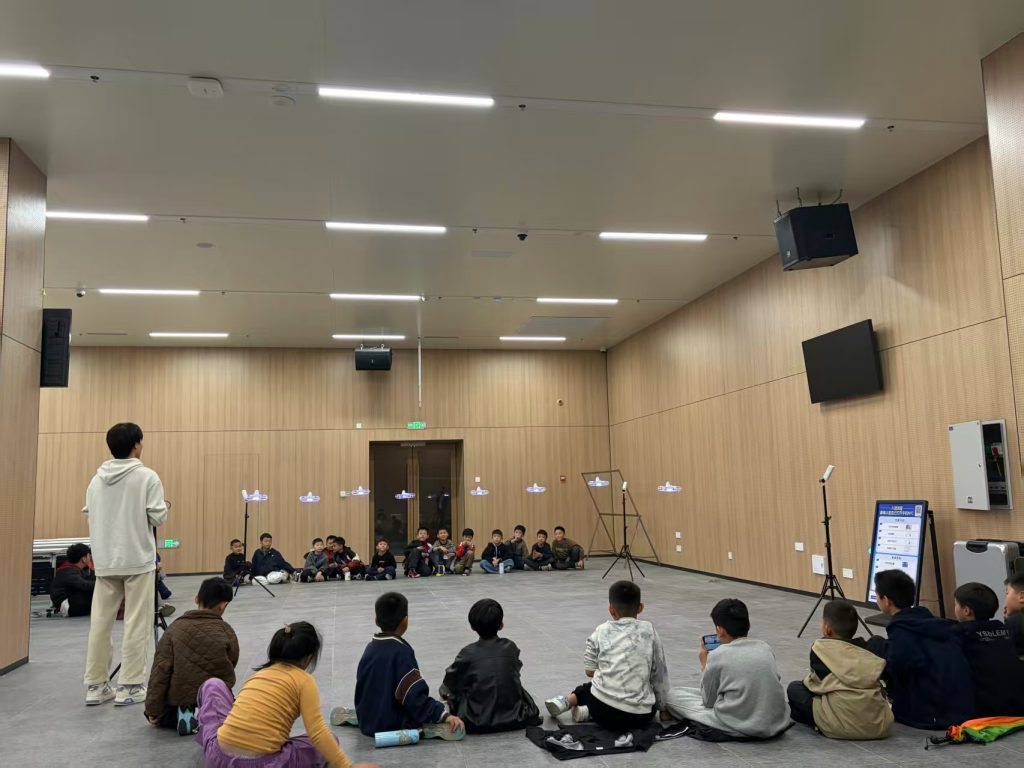
One of the core aspects of drone training in firefighting is understanding the technical advantages that drones bring to the table. Drones offer unparalleled high-altitude reconnaissance capabilities, enabling real-time data acquisition in challenging environments such as dense urban areas or smoke-filled fire zones. This enhances situational awareness and decision-making accuracy. For instance, drones equipped with thermal imaging can detect heat signatures through obscurants, facilitating rapid location of trapped individuals. The technical superiority of drones can be summarized in the following table, which highlights key features and their impact on fire training operations.
| Feature | Description | Impact on Fire Training |
|---|---|---|
| High-Altitude Reconnaissance | Ability to survey large areas from above, providing panoramic views. | Enables precise火情研判 and resource allocation. |
| Thermal Imaging | Detection of heat sources through smoke and darkness. | Improves搜救 efficiency and reduces response time. |
| Real-Time Data Transmission | Streaming of live video and sensor data to command centers. | Facilitates remote指挥 and collaborative决策. |
| Maneuverability | Ability to navigate through tight spaces and复杂地形. | Enhances adaptability in diverse fire scenarios. |
| Payload Capacity | Carrying灭火剂 or other equipment for direct intervention. | Supports初期灭火 and reduces火势蔓延. |
The effectiveness of drone training is further amplified when drones are integrated with other firefighting装备 in a协同作战 framework. This synergy optimizes overall救援响应速度 and灭火效率. From my experience, drone training must encompass not only solo operations but also coordinated maneuvers with消防车辆,消防机器人, and personnel. A mathematical model can illustrate the efficiency gain from such integration. Consider the协同作战效率 formula:
$$ \eta_{coop} = \frac{S_{drone} + S_{vehicle} + S_{human}}{S_{total}} \times 100\% $$
Where $\eta_{coop}$ represents the协同作战 efficiency, $S_{drone}$ is the contribution from drones (e.g.,侦察 coverage), $S_{vehicle}$ is from消防车辆 (e.g., water delivery), $S_{human}$ is from personnel (e.g., ground operations), and $S_{total}$ is the total potential output without integration. In practice, drone training focuses on maximizing $S_{drone}$ through skills like path planning and data sharing. For example, drones can guide消防车辆 through optimal routes, reducing travel time. This协同作战 approach is crucial in urban settings where congestion and complex structures pose challenges.
Another vital component of drone training is mastering the flexibility and adaptability of drones in varied fire scenarios. Drones can be deployed in森林火灾,高层建筑火灾, and地下空间火灾, each requiring tailored strategies. The adaptability stems from modular designs and advanced flight control systems. To quantify this, we can use a flexibility index $F_{drone}$ based on mission diversity:
$$ F_{drone} = \sum_{i=1}^{n} w_i \cdot M_i $$
Here, $n$ is the number of mission types (e.g., reconnaissance,灭火,搜救), $w_i$ is the weight assigned to each mission based on importance, and $M_i$ is the performance metric for that mission (e.g., success rate). Drone training programs should aim to improve $M_i$ through simulated exercises and real-world drills. The following table outlines how drone training enhances adaptability across different fire types.
| Fire Scenario | Drone Training Focus | Key Skills Developed |
|---|---|---|
| Forest Fires | Large-area monitoring and灭火剂空投. | Long-endurance飞行,精准投送. |
| High-Rise Building Fires | Penetrating浓烟 for侦察 and搜救. | Vertical maneuvering, thermal imaging operation. |
| Underground Space Fires | Navigation in confined, low-visibility areas. | Obstacle avoidance, communication in信号弱 zones. |
| Industrial Fires | Handling hazardous materials and complex structures. | Risk assessment, coordinated suppression. |
Despite these advantages, drone training in firefighting faces several challenges that must be addressed to unlock full potential. Technical maturity and stability issues, such as limited续航能力 and susceptibility to interference, hinder consistent performance. From my perspective, these limitations directly impact the reliability of drone operations in critical moments. For instance, the续航时间 $T_{flight}$ of a drone can be modeled as:
$$ T_{flight} = \frac{E_{battery}}{P_{consumption}} $$
Where $E_{battery}$ is the battery energy capacity and $P_{consumption}$ is the power consumption during flight. Current drone technology often results in $T_{flight}$ being insufficient for prolonged missions, necessitating frequent recharging. Drone training must incorporate应急处理 protocols for such scenarios, but technological improvements are essential. Additionally, tactical application remains单一, with drones often underutilized beyond basic侦察. This stems from a lack of systemic planning in drone training curricula, which should expand to include advanced roles like autonomous灭火 and integrated command systems.
Moreover, personnel training and operational规范不足 pose significant risks. Inadequate drone training can lead to操作失误, compromising safety and efficiency. To mitigate this, a comprehensive drone training framework is needed, emphasizing standardized procedures and certification. For example, the competency level $C_{operator}$ of a drone operator can be expressed as:
$$ C_{operator} = \alpha \cdot K_{theory} + \beta \cdot S_{practice} + \gamma \cdot A_{safety} $$
Where $K_{theory}$ represents theoretical knowledge, $S_{practice}$ is practical skill proficiency, $A_{safety}$ is safety awareness, and $\alpha, \beta, \gamma$ are weighting coefficients. Drone training programs should balance these components through structured modules and assessments. The following table summarizes key issues and their implications for drone training.
| Challenge | Description | Impact on Drone Training |
|---|---|---|
| Technical Limitations | Short battery life, instability in恶劣天气. | Requires specialized training for应急响应 and maintenance. |
| Tactic Singularity | Overreliance on侦察, neglecting other applications. | Limits skill diversity and innovation in training exercises. |
| Training Gaps | Inconsistent access to resources and expert guidance. | Leads to uneven operator proficiency and increased risks. |
| Lack of规范 | Absence of standardized operating procedures. | Hinders interoperability and safety compliance. |
To optimize drone training in firefighting, a multi-faceted approach is necessary. First,加强技术研发 is crucial to enhance无人机性能. This involves advancing battery technologies, improving抗干扰 capabilities, and integrating人工智能 for autonomous decision-making. From my viewpoint, drone training should evolve alongside these technological strides, incorporating modules on新系统 operation and troubleshooting. For instance, the development of smart energy management can extend续航能力, modeled as:
$$ E_{effective} = E_{battery} \times \epsilon_{management} $$
Where $\epsilon_{management}$ is the efficiency factor of the energy management system (0 < $\epsilon_{management}$ ≤ 1). Drone training can teach operators to optimize $\epsilon_{management}$ through flight patterns and payload management.
Second,制定综合战术方案 is essential to realize协同作战 potential. Drone training must emphasize scenario-based exercises that simulate real-fire conditions, fostering collaboration between drones,消防车辆, and personnel. This can be quantified using a协同作战 score $S_{scenario}$ based on task completion time and accuracy. Regular drone training drills should aim to minimize $S_{scenario}$ through iterative improvements. Additionally, establishing integrated command platforms will facilitate信息共享, enhancing the overall effectiveness of drone training programs.
Third,完善培训体系 is key to规范操作流程. A robust drone training curriculum should include theoretical education, hands-on practice, and certification exams. The培训 intensity $I_{training}$ can be defined as:
$$ I_{training} = \frac{H_{total}}{N_{trainees} \cdot T_{duration}} $$
Where $H_{total}$ is the total training hours, $N_{trainees}$ is the number of trainees, and $T_{duration}$ is the program duration. Higher $I_{training}$ values indicate more comprehensive drone training, leading to better operator readiness. Moreover, developing detailed操作规范 will ensure safety and consistency, with drone training incorporating these guidelines into every phase.
In conclusion, drone training in firefighting is a cornerstone for leveraging aerial technologies to save lives and property. Through continuous emphasis on drone training, we can overcome existing challenges and unlock new tactical possibilities. The integration of drones not only boosts operational efficiency but also paves the way for智能化 firefighting systems. As drone training evolves with technological advancements, it will undoubtedly play an increasingly vital role in shaping the future of firefighting, making our communities safer and more resilient.