
The application of unmanned aerial vehicles (UAVs) in modern agriculture, particularly for plant protection (spraying pesticides, fertilizers), stands as a transformative force. It is a critical component in the broader strategy of Rural Revitalization, which seeks to modernize the agricultural sector, improve rural livelihoods, and achieve comprehensive national development. At the heart of scaling this technology effectively lies a fundamental challenge: the cultivation of a skilled, knowledgeable, and professional workforce. This article explores the imperative for systematic drone training and talent development, analyzing the industry’s context, its challenges, and proposing a multifaceted framework for educational institutions to nurture the specialists needed to propel smart agriculture forward.
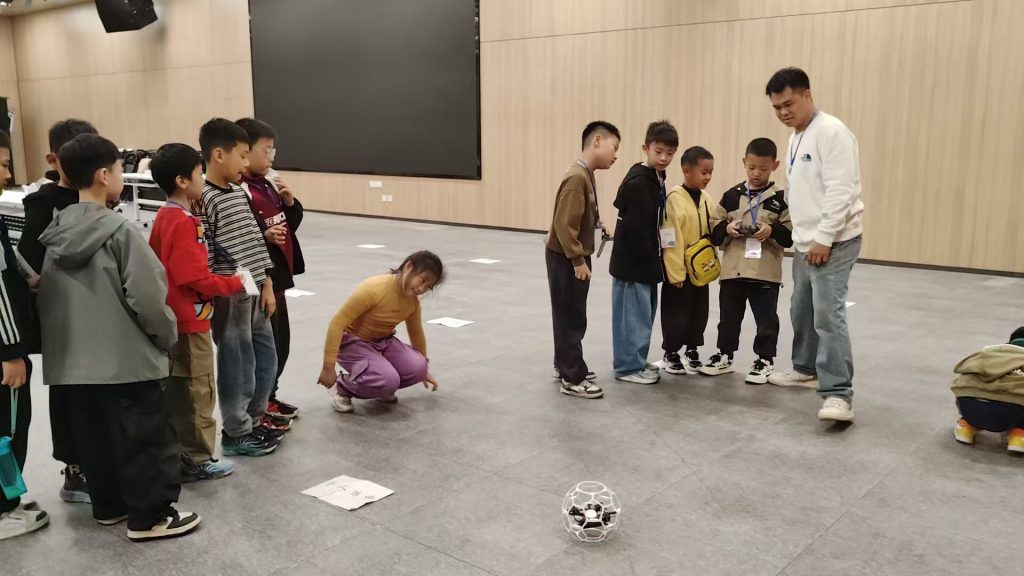
The domestic UAV market, evolving over three decades from military to civilian use, has seen explosive growth. The civilian sector, especially agricultural drones, is now recognized for its vast potential. Investment, the number of industry players, and job creation have surged exponentially. Consequently, the demand for qualified professionals—those who can operate, maintain, manage, and innovate with these systems—has reached unprecedented levels. Strategic drone training is no longer an option but a necessity to bridge this skills gap and ensure the sustainable integration of technology into farming practices.
The Imperative for Talent Development in the Context of Rural Revitalization
Rural areas are complex ecosystems integral to national stability and prosperity. The comprehensive modernization of agriculture is a cornerstone of Rural Revitalization. This modernization is inextricably linked to mechanization and, ultimately, smart, digital agriculture. Agricultural drones represent a pinnacle of this smart machinery, offering solutions that are efficient, precise, and environmentally conscious. Therefore, investing in human capital through targeted drone training programs is an investment directly into the engine of rural development.
The advantages of drone-based plant protection are compelling and form the core rationale for its promotion and the associated need for skilled operators:
- High Efficiency: Drones cover large areas significantly faster than manual or traditional tractor-based methods.
- Resource Efficiency & Precision: They enable low-volume, targeted application, reducing chemical usage by 20-30% on average. This precision mitigates environmental runoff and soil contamination.
- Enhanced Safety & Accessibility: Operators are removed from direct contact with chemicals, and drones can access difficult terrain (e.g., muddy fields, hills, dense crops) inaccessible to ground equipment.
- Data-Driven Operations: Modern systems allow for pre-programmed flight paths and variable rate application based on data, promoting scientific farming.
The operational superiority can be summarized by comparing key metrics. Let $A_t$ represent the area covered per unit time (ha/hour), $C_c$ the chemical consumption per unit area (L/ha), and $L_o$ the labor overhead (person-hours/ha). For traditional ($T$) and drone ($D$) methods, the relationship typically shows:
$$A_{t(D)} \gg A_{t(T)}$$
$$C_{c(D)} < C_{c(T)}$$
$$L_{o(D)} \ll L_{o(T)}$$
This fundamental shift in operational parameters is what drives adoption and creates demand for structured drone training to maximize these benefits safely.
Industry Landscape: Growth, Data, and Persistent Challenges
The sector’s growth trajectory is steep. National statistics indicate the agricultural drone fleet has expanded rapidly, with operational coverage exceeding 93 million hectare-passes annually. Regional adoption, such as in Anhui province, exemplifies this trend, where drone numbers have grown from a few hundred to tens of thousands within a few years, accounting for a substantial portion of the national fleet.
Table 1: Comparative Advantages and Challenges of Drone Plant Protection
| Advantages | Current Challenges & Risks |
|---|---|
| High Operational Speed & Efficiency | Spray Drift Potential under certain conditions |
| Precision Application, Chemical Reduction | Lack of Standardized Operator Certification & Safety Protocols |
| Access to Difficult Terrain | Insufficient & Non-Standardized Drone Training |
| Reduced Labor Intensity & Human Exposure | Unregulated Market Competition Affecting Service Quality |
| Data Collection & Integration Capabilities | High Initial Investment & Complex Subsidy Access |
| Lack of Specialized Formulations for Aerial Application | |
| Acute Shortage of Multi-Disciplinary Technical Talent |
A critical analysis reveals a “demand imbalance” between service providers (operators) and clients (farmers). This imbalance highlights the specific skills gaps that drone training must address.
Table 2: Key Demand Imbalances in the Drone Service Market
| Service Provider (Operator) Pain Points | Client (Farmer) Concerns & Needs |
|---|---|
| Rapid product iteration leading to reliability issues. | Doubts about application efficacy and consistency. |
| High entry/operational cost vs. shrinking profit margins. | Lack of trust in operator expertise (agronomy & tech). |
| Inadequate post-purchase support and training from dealers. | Unclear liability for crop damage due to operational error. |
| Lack of integrated knowledge (agronomy, pesticides, machinery). | Perception of high service costs; desire for flexible pricing. |
| Difficulty navigating government subsidies and policies. | Preference for certified, professionally trained operators. |
These tables underscore that the industry’s瓶颈 is not primarily technology, but rather human factors: knowledge, skill, standardization, and trust. Comprehensive drone training is the bridge to resolving these imbalances.
A Framework for Holistic Drone Training and Talent Cultivation
Educational institutions, particularly vocational and agricultural colleges, must take a leading role. The goal is to produce versatile professionals who “understand agriculture, master technology, and possess business acumen.” A successful drone training ecosystem requires a multi-pronged approach.
1. Curriculum Development: The Core of Knowledge
A robust curriculum must extend far beyond basic flight controls. It should be an interdisciplinary blend:
- Technical Drone Mastery: Aerodynamics, UAV assembly, maintenance, repair, sensor integration, and data management.
- Agronomic Science: Local crop cycles, pest and disease identification (Integrated Pest Management principles), plant physiology.
- Applied Chemistry: Pesticide types, modes of action, safe handling, tank mixing principles, and knowledge of adjuvants suitable for low-volume aerial application. The formula for calculating required chemical volume is fundamental:
$$V_r = \frac{A \times R}{C}$$
Where $V_r$ is the required volume of concentrate (L), $A$ is the area to treat (ha), $R$ is the recommended application rate (L/ha), and $C$ is the concentration of the product. - Mission Planning & Law: Airspace regulations, weather assessment, flight path optimization for coverage and minimal drift, insurance, and liability.
2. Practical, Region-Specific Training:
Drone training must be contextual. Programs should partner with local farms to provide hands-on experience with dominant local crops (e.g., rice, wheat, tea, orchards). Training should cover the entire workflow: pre-flight scouting, mission planning based on pest pressure, calibration for specific chemicals, execution, and post-application assessment.
3. Standardization, Certification, and Continuous Education:
Institutions should collaborate with government agencies and industry bodies to develop and host credible certification programs. These programs must include rigorous theory and practical exams. Furthermore, they should offer continuous education modules for existing operators to update skills on new technologies, regulations, and best practices, ensuring drone training is a lifelong process.
4. Industry-Academia-Government Collaboration:
Active partnerships are crucial:
- With Government: To align training with subsidy policies and regional agricultural development plans. To conduct labor market analyses forecasting drone-related job needs.
- With Industry: For access to latest equipment, internship opportunities, and insights into real-world challenges. Joint research on optimizing application parameters (e.g., droplet size, flight height) for local conditions is vital. The relationship between droplet size ($D_v$, in microns) and drift potential ($P_d$) is inverse, highlighting a key training topic:
$$P_d \propto \frac{1}{D_v}$$ - With Insurance & Research Bodies: To develop tailored insurance products for drone operations and to participate in R&D for ultra-low-volume (ULV) formulations and anti-drift technologies.
Table 3: Proposed Modules for a Comprehensive Drone Training Program
| Training Module | Key Content & Skills | Outcome Metric |
|---|---|---|
| Core UAV Piloting | Basic/Advanced Flight Maneuvers, Emergency Procedures, Battery Management | Flight Proficiency Test, Safety Protocol Exam |
| Agro-Technology Integration | Crop Scouting, Map-Based Mission Planning, Variable Rate Technology Basics | Creation of a Correct Spray Plan for a Given Field Scenario |
| Chemical Application Science | Pesticide Selection, Calibration, Tank Mixing, Drift Mitigation Strategies | Accurate Calibration Test; Calculation of Chemical Needs |
| Maintenance & Diagnostics | Pre/Post-flight Checks, Routine Maintenance, Basic Troubleshooting & Repair | Practical Assessment on Diagnosing and Resolving Common Faults |
| Business & Compliance | Service Costing, Client Relations, Regulation Navigation, Insurance Basics | Development of a Business & Safety Case Study |
Conclusion: Seeding the Future of Smart Agriculture
The widespread and responsible adoption of drone technology in agriculture is pivotal for achieving the goals of Rural Revitalization—enhancing productivity, sustainability, and farmer welfare. However, the technology itself is only a tool. Its effectiveness, safety, and economic viability are entirely dependent on the human operator. The current industry challenges, from safety incidents to mistrust and inefficiency, largely stem from a deficit in standardized, comprehensive, and accessible drone training.
Therefore, a concerted national effort is required to establish a formalized talent pipeline. Vocational and higher education institutions must be empowered and funded to become hubs of excellence for drone training. By implementing interdisciplinary curricula, fostering strong industry links, and advocating for professional certification standards, these institutions can cultivate a new generation of agricultural technologists. These professionals will not merely be drone pilots; they will be certified crop advisors, precision application specialists, and rural entrepreneurs. They will ensure that every flight maximizes crop health, minimizes environmental impact, and builds farmer confidence. In nurturing this talent, we directly nurture the seeds of a modernized, resilient, and prosperous agricultural sector, laying the most critical foundation for genuine and sustainable Rural Revitalization.