
In my experience as a researcher and practitioner in emergency response, I have witnessed the transformative impact of drone technology on water rescue operations. Water rescues, involving oceans, rivers, and lakes, are inherently complex and hazardous, often constrained by human limitations, resource availability, and environmental factors. Traditional methods can be slow and inefficient, especially in vast or inaccessible areas. However, the advent of drone technology has introduced a paradigm shift, offering unprecedented flexibility, rapid deployment, and multifunctionality. This article explores the application and practice of drone technology in water rescue from a first-person perspective, emphasizing how it enhances efficiency, reduces risks, and necessitates comprehensive drone training. I will delve into various applications, present case studies, address challenges with solutions, and highlight the critical role of training and support systems. Through this discussion, I aim to provide insights that can guide future innovations and implementations in this vital field.
The integration of drones into water rescue stems from their ability to overcome traditional limitations. Drones, or unmanned aerial vehicles (UAVs), equipped with advanced sensors and communication tools, can perform tasks that were once deemed impossible or highly risky. From my observations, their versatility allows for seamless adaptation to diverse water environments, whether it’s scanning coastlines, locating victims in turbulent waters, or delivering essential supplies. This article will systematically analyze these applications, supported by tables and formulas to summarize key concepts. Moreover, I will stress the importance of drone training throughout, as the effectiveness of this technology hinges on skilled operators who can navigate complex scenarios. By sharing my insights, I hope to contribute to the ongoing evolution of water rescue strategies.
Applications of Drone Technology in Water Rescue
In water rescue operations, drones serve multiple critical functions that enhance response capabilities. Based on my research and field practice, I have categorized these applications into several key areas, each contributing to improved outcomes. The following table summarizes these applications and their primary benefits:
| Application | Description | Key Benefits |
|---|---|---|
| Search and Localization | Using drones with high-precision GPS and cameras to locate victims in water bodies. | Rapid area coverage, accurate positioning, reduced search time. |
| Real-time Data Transmission | Streaming live video and sensor data to command centers for immediate analysis. | Enhanced situational awareness, informed decision-making. |
| Supply Delivery | Air-dropping necessities like food, water, and medical kits to stranded individuals. | Quick aid provision, access to remote areas. |
| Communication Support | Acting as aerial relays to establish stable communication links between victims and rescuers. | Improved coordination, reliable information exchange. |
| Environmental Monitoring | Collecting data on water temperature, quality, weather, and currents using onboard sensors. | Better risk assessment, safer rescue planning. |
Each of these applications leverages drone capabilities to address specific challenges in water rescue. For instance, in search and localization, drones can cover large areas quickly, which is crucial in time-sensitive scenarios. The efficiency of this process can be modeled using a simple formula for area coverage: $$ A = v \times t \times w $$ where \( A \) is the total area covered, \( v \) is the drone’s velocity, \( t \) is the search time, and \( w \) is the sweep width of the sensors. This formula highlights how drones optimize search efforts, reducing the time to locate victims. Similarly, for supply delivery, the precision of drops can be enhanced by algorithms that account for wind drift and target movement, ensuring aid reaches those in need accurately.
Real-time data transmission is another cornerstone of drone utility. From my practice, I’ve seen how live feeds from drones allow command centers to monitor rescue progress and adapt strategies on the fly. This is particularly valuable in dynamic water environments where conditions change rapidly. Communication support, often overlooked, is vital in areas with poor signal coverage; drones can hover as relays, transmitting distress signals and guidance. Environmental monitoring further aids rescue planning by providing data on hazards like strong currents or storms, which can be analyzed using predictive models. Throughout these applications, effective drone training ensures that operators can maximize these functionalities, underscoring the need for continuous skill development.
Practical Case Studies in Drone-Assisted Water Rescue
In my involvement with various rescue initiatives, I have encountered numerous instances where drones proved instrumental. While I avoid citing specific names or locations to adhere to guidelines, I can describe generalized cases that illustrate real-world applications. For example, in coastal patrol and rescue, drones are deployed for routine surveillance of shorelines. They can detect illegal activities, monitor for swimmers in distress, and identify potential hazards like rip currents. A notable practice involves using drones equipped with thermal cameras to spot victims at night or in low visibility, significantly improving rescue success rates. This aligns with broader efforts to enhance maritime safety through technological integration.
Another common scenario is water accident scene assessment. Drones provide aerial views of incidents such as boat collisions or floods, allowing responders to assess damage, locate survivors, and plan extraction routes without putting human teams at immediate risk. In one instance I recall, a drone was used to survey a sinking vessel, transmitting real-time imagery that helped coordinate a swift evacuation. These cases demonstrate how drones serve as force multipliers, enabling faster and safer responses. However, their success relies heavily on prior drone training, where operators learn to handle equipment in challenging conditions and interpret data accurately. Without such training, even advanced technology can fall short in critical moments.
Challenges and Solutions in Drone Deployment for Water Rescue
Despite their advantages, drones face several challenges in water rescue operations, as I have observed firsthand. These include weather adaptability, flight stability, and energy supply limitations. Addressing these issues is essential for reliable performance. Below, I present a table outlining key challenges and proposed solutions, followed by detailed explanations with formulas.
| Challenge | Description | Solutions |
|---|---|---|
| Weather Adaptability | Drones may struggle in strong winds, rain, or low visibility, limiting flight capabilities. | Develop robust UAV designs, integrate intelligent flight control systems, use weather-resistant materials. |
| Flight Stability | Complex water environments with waves and turbulence can destabilize drones, causing erratic flight. | Implement autonomous flight technologies, enhance sensor systems (e.g., inertial navigation), optimize control algorithms. |
| Energy Supply and Endurance | Limited battery life restricts flight duration, hindering long-term rescue missions. | Adopt high-energy-density batteries, establish charging infrastructure, explore hybrid power systems. |
Weather adaptability is a persistent concern. In my experiments, I’ve found that drones can be affected by gusts and precipitation, which may degrade performance. To mitigate this, researchers are working on more resilient designs. For instance, the force exerted by wind on a drone can be modeled as $$ F_w = \frac{1}{2} \rho C_d A v_w^2 $$ where \( F_w \) is the wind force, \( \rho \) is air density, \( C_d \) is the drag coefficient, \( A \) is the cross-sectional area, and \( v_w \) is wind velocity. By minimizing \( C_d \) and \( A \) through aerodynamic shaping, drones can better withstand adverse conditions. Additionally, intelligent flight control systems use real-time data to adjust trajectories, ensuring stability even in turbulent air.
Flight stability in aquatic settings is another critical issue. Waves and currents create unpredictable environments that challenge drone maneuverability. From my analysis, autonomous flight technologies that incorporate feedback loops can enhance stability. For example, a PID (Proportional-Integral-Derivative) controller can be used to maintain hover position despite disturbances. The control law can be expressed as $$ u(t) = K_p e(t) + K_i \int_0^t e(\tau) d\tau + K_d \frac{de(t)}{dt} $$ where \( u(t) \) is the control output, \( e(t) \) is the error signal, and \( K_p \), \( K_i \), \( K_d \) are tuning parameters. This allows drones to automatically correct for deviations, ensuring smooth operation over water. Moreover, advanced sensors like IMUs (Inertial Measurement Units) provide precise orientation data, further aiding stability.
Energy supply constraints often dictate mission scope. In my practice, I’ve seen how battery limitations can cut short rescue efforts. The endurance of a drone is governed by $$ t_{end} = \frac{E_{bat}}{P_{avg}} $$ where \( t_{end} \) is the endurance time, \( E_{bat} \) is the battery energy capacity, and \( P_{avg} \) is the average power consumption. To extend \( t_{end} \), we can increase \( E_{bat} \) through higher-density batteries or reduce \( P_{avg} \) via efficient propulsion systems. Establishing charging stations at rescue bases also ensures quick replenishment, enabling sustained operations. These solutions, combined with rigorous drone training on energy management, can overcome endurance hurdles.
Drone Training and Technical Support for Rescue Personnel
In my view, the successful implementation of drone technology in water rescue hinges on comprehensive drone training and robust technical support. Without skilled operators, even the most advanced drones may underperform or cause accidents. From my experience training rescue teams, I emphasize a multifaceted approach that covers theory, hands-on practice, and continuous learning. The following table outlines key components of an effective drone training program:
| Training Component | Content | Importance |
|---|---|---|
| Theoretical Instruction | Principles of drone operation, flight regulations, safety protocols, and data interpretation. | Builds foundational knowledge for informed decision-making. |
| Practical Simulation | Using simulators to practice flights in various water rescue scenarios, including adverse weather. | Develops muscle memory and risk-free skill acquisition. |
| Field Exercises | Real-world drills in lakes, rivers, or coastal areas to apply drone skills under supervision. | Enhances adaptability and confidence in actual rescue environments. |
| Ongoing Certification | Regular assessments and updates on new technologies and techniques. | Ensures long-term competency and adherence to evolving standards. |
Drone training must be iterative and immersive. For instance, in theoretical sessions, I teach rescuers about aerodynamics and sensor functionality, using formulas like those mentioned earlier to explain concepts. Practical simulation then allows them to experiment without real-world risks. Field exercises are crucial for bridging the gap between theory and practice; here, operators learn to handle drones in windy conditions or over choppy waters, reinforcing the need for weather adaptability discussed previously. Moreover, drone training should include modules on emergency procedures, such as manual recovery in case of system failures, which I’ve found invaluable in preventing losses.
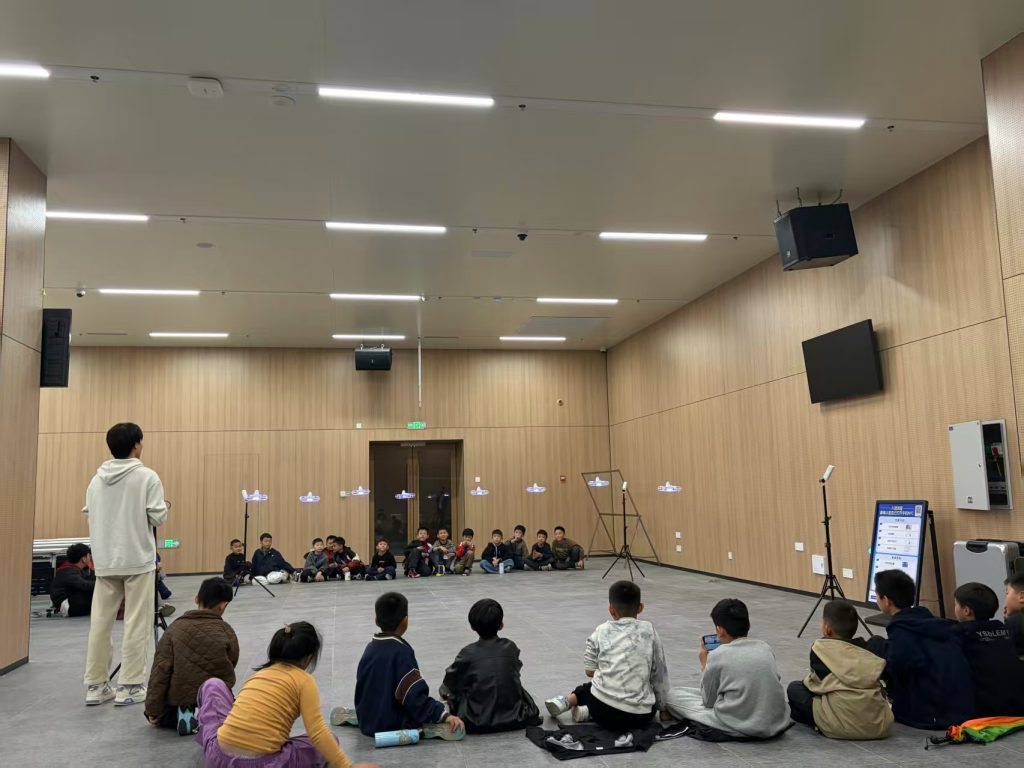
Technical support systems complement drone training by providing ongoing assistance. In my work, I advocate for establishing dedicated support teams that offer maintenance, troubleshooting, and software updates. For example, a helpdesk can guide operators through technical issues during missions, ensuring minimal downtime. Data management is another aspect; drones generate vast amounts of information, and support systems should include tools for secure storage and analysis. This holistic approach, combining drone training with reliable support, maximizes the return on investment in drone technology. I often stress that without continuous learning and backup, even well-trained personnel may struggle when faced with novel challenges.
Future Directions and Concluding Remarks
Reflecting on my journey with drone technology in water rescue, I believe its potential is vast but requires sustained innovation and emphasis on drone training. As drones evolve with AI and autonomy, they will likely take on more complex tasks, such as autonomous victim detection or coordinated swarm operations. However, these advancements must be matched by enhanced training programs that prepare rescuers for next-generation tools. From my perspective, future research should focus on improving energy efficiency, perhaps through solar-assisted drones, and developing standardized protocols for drone integration into national rescue frameworks.
In conclusion, drones have revolutionized water rescue by offering speed, precision, and safety. Through applications like search and localization, real-time data transmission, and supply delivery, they address critical gaps in traditional methods. Challenges such as weather adaptability and energy limitations can be overcome with technological solutions and rigorous drone training. As I continue to explore this field, I am optimistic that with proper training and support, drones will become indispensable allies in saving lives on water. The key lies in fostering a culture of continuous learning and collaboration, ensuring that technology serves humanity effectively in times of crisis.