
The evolution of autonomous systems has ushered in an era where coordinated groups, or formations, of Unmanned Aerial Vehicles (UAVs) are no longer a futuristic concept but a present-day operational reality. These drone formations are pivotal for a vast array of applications, from large-scale aerial light shows and precision agriculture to complex search-and-rescue missions and tactical surveillance. The core intelligence enabling these synchronized feats lies not in the individual drone, but in the sophisticated communication fabric that binds them together—the drone formation support network. This network is the central nervous system of the formation, responsible for the critical transmission of command data, sensor fusion information, and cooperative tasking, thereby allowing each member to understand its role, position, and relationship within the collective. The efficiency, reliability, and robustness of this network directly dictate the overall performance and capability of the entire drone formation.
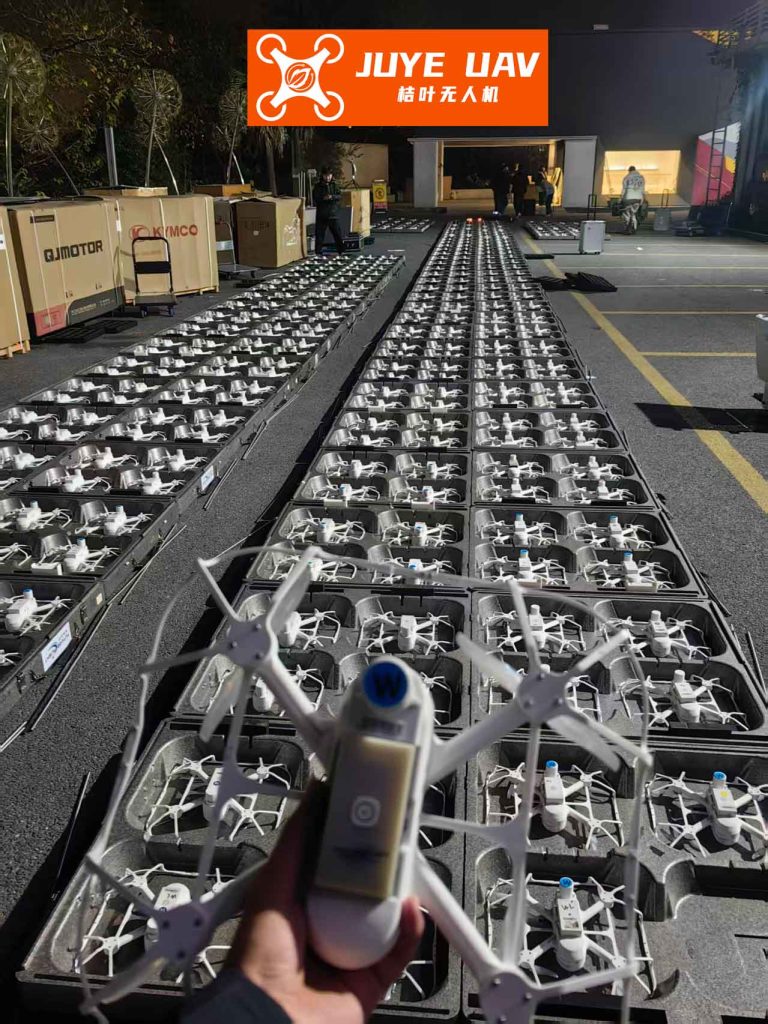
Traditional communication paradigms, which rely heavily on a central infrastructure like a ground control station or a satellite link, present significant bottlenecks for dynamic, large-scale drone formations. Latency, single points of failure, and limited scalability become critical issues. To address these challenges, Device-to-Device (D2D) communication has emerged as a transformative technology. D2D enables direct, peer-to-peer links between drones within a drone formation, bypassing central hubs for local data exchange. This paradigm offers profound advantages: drastically reduced communication latency, lower transmission power leading to extended endurance, and efficient spatial reuse of spectral resources which enhances overall network capacity. The application of D2D principles forms the bedrock of a resilient and scalable drone formation support network.
However, the efficacy of direct D2D links can be severely degraded by the harsh and dynamic propagation environments typical of drone operations—obstacles, distance, and interference. This is where cooperative communication, facilitated by intelligent relay selection, becomes indispensable. By strategically employing other idle members within the drone formation as intermediate relays, the network can overcome poor direct-link conditions, extend communication range, and improve data rates. The pivotal question then becomes: how does one optimally select the best relay from a set of candidate drones within a formation to maximize the support network’s performance? This paper delves into this very problem, proposing a novel relay selection strategy for drone formation support networks that synthesizes spatial awareness with the nuanced concept of social interdependence among formation members.
System Model and Problem Formulation for Drone Formation Networks
We consider a stable drone formation operating in three-dimensional space. The formation consists of a heterogeneous mix of members with distinct communication roles, which can be categorized as follows:
| Member Type | Symbol | Description | Primary Role |
|---|---|---|---|
| Primary Member | \( m \) | Acts as a central coordination/command node (e.g., a lead drone or ground station interface). | Network control and aggregation. |
| Cellular Members | \( C = \{c_1, c_2, …, c_C\} \) | Drones with active, orthogonal communication links to the primary member \( m \). | Primary backbone communication. |
| D2D Pair (Source & Target) | \( D = \{d_1, d_2, …, d_D\} \) | A pair of drones that need to exchange data locally. The source \( t \) initiates communication to the target \( a \). | Local, direct data exchange. |
| Idle Members | \( I = \{i_1, i_2, …, i_I\} \) | Drones not currently engaged in primary or D2D communication tasks. They are potential relay candidates. | Act as cooperative relays. |
We assume the formation geometry is relatively stable over short communication intervals. The D2D pairs seek to communicate by reusing the uplink spectral resources of the cellular members to enhance spectral efficiency, as uplink traffic is typically less congested. The primary interference in this model stems from the cellular transmitter to the D2D receiver and vice-versa.
The Signal-to-Interference-plus-Noise Ratio (SINR) for the cellular link (from cellular member \( c \) to primary member \( m \)) and the direct D2D link (from source \( t \) to target \( a \)) are fundamental to determining link quality:
$$ \gamma_c = \frac{p_c g_{c,m} |h_{c,m}|^2}{p_t g_{t,m} |h_{t,m}|^2 + N_0} $$
$$ \gamma_d = \frac{p_t g_{t,a} |h_{t,a}|^2}{p_c g_{c,a} |h_{c,a}|^2 + N_0} $$
where \( p \) denotes transmit power, \( g \) represents path loss (a function of distance), \( h \) is the small-scale fading channel gain, and \( N_0 \) is the noise power. The subscripts indicate the nodes involved.
A direct D2D communication link is feasible only if both the cellular and D2D links meet their minimum Quality of Service (QoS) thresholds:
$$ \gamma_c \ge \gamma_{c}^{th} \quad \text{and} \quad \gamma_d \ge \gamma_{d}^{th} $$
If these conditions are met, the D2D pair communicates directly. However, in a dynamic drone formation, environmental factors often cause link degradation. When the required power to meet \( \gamma_d^{th} \) exceeds the drone’s maximum transmit power \( p_{max} \), or doing so would violate \( \gamma_c^{th} \), direct communication fails. This is the trigger for cooperative relaying. The problem, therefore, is to select an optimal idle member \( r \) from the set \( I \) to act as a relay, establishing a two-hop link (source \( t \) → relay \( r \) → target \( a \)) that maximizes the end-to-end throughput of the drone formation’s support network while respecting all power and interference constraints. Formally, we aim to:
$$ \max \sum_{r \in C_{R,i}} x_r R_d $$
$$ \text{subject to:} $$
$$ \gamma_{i,r} \ge \gamma_{d}^{th}, \quad \gamma_{r,j} \ge \gamma_{d}^{th} $$
$$ \gamma_c \ge \gamma_{c}^{th} $$
$$ 0 < p_c \le p_{c}^{max}, \quad 0 < p_t, p_r \le p_{d}^{max} $$
$$ \sum_{r \in C_{R,i}} x_r = 1, \quad x_r \in \{0,1\} $$
Here, \( C_{R,i} \) is the candidate relay set for source \( i \), \( x_r \) is a binary selection variable, and \( R_d \) is the achievable throughput of the relay-assisted D2D link, which depends critically on our relay choice.
Foundational Concepts: Adjacency Domain and Social Interdependence
The proposed strategy is built upon two pillars: the spatial Adjacency Domain and the relational Social Interdependence. These concepts are tailored to the unique structure and requirements of a drone formation.
1. Defining the Adjacency Domain in a Drone Formation
In a densely packed drone formation, maintaining safe separation is paramount. We define the Adjacency Domain of a drone \( \epsilon_i \) as a spherical region of influence centered on the drone’s position \( \mathbf{l}_i(t) \). The radius of this domain is the adjacency distance \( d_i^{max} \), which is derived from the drone’s safety requirements and operational envelope. Formally, the adjacency domain encompasses all formation members \( \epsilon_j \) satisfying:
$$ || \mathbf{l}_i(t) – \mathbf{l}_j(t) || < d_i^{max}, \quad i \neq j $$
This domain physically represents the “neighborhood” of a drone within the formation. For a D2D pair (source \( \epsilon_i \) and target \( \epsilon_j \)), we consider the overlap of their adjacency domains. We partition the combined space into two key regions crucial for relay selection:
Region I (Overlap Region): The intersection of the two hemispherical sub-domains facing each other along the line connecting \( \epsilon_i \) and \( \epsilon_j \). This region contains drones that are reasonably close to both the source and the target.
Region II (Peripheral Region): The remaining parts of the two adjacency domains. Drones here may be close to one endpoint but far from the other.
The core spatial heuristic of our strategy is that the most efficient relay candidate for a drone formation is likely located in Region I. A relay in this region balances the distances to both the source and target, minimizing path loss for both hops and reducing the total transmission power required across the drone formation.
2. Quantifying Social Interdependence within a Drone Formation
Beyond mere proximity, members of a drone formation exhibit functional relationships. A drone’s ability to complete its mission often depends on resources, data, or coverage provided by others. We model this as Social Interdependence (SI). For two drones \( \epsilon_i \) and \( \epsilon_j \), we define the Social Interdependence Degree \( \rho_{ij} \) from \( \epsilon_i \)’s perspective as:
$$ \rho_{ij} = \frac{C_{ij}}{C_i} = \frac{C_{ij}}{C_{ij} + C_{b_i}} $$
Here:
• \( C_{ij} \) is the Social Capacity: the utility or benefit \( \epsilon_i \) derives from its link to \( \epsilon_j \). In our communication context, we pragmatically define this as the achievable SINR of the link from \( i \) to \( j \):
$$ C_{ij} = \gamma_{ij} = \frac{p_i |h_{ij}|^2}{p_c |h_{c,j}|^2 + N_0} $$
where \( p_i = p_i^T \tau (d_{ij})^{-\alpha} \) incorporates path loss.
• \( C_{b_i} \) is the Basic Capacity: the innate capability of \( \epsilon_i \) to operate independently. We define this as a function of its maximum transmit power and its adjacency distance, representing its inherent communication reach: \( C_{b_i} = p_i^{max} / d_i^{max} \).
• \( C_i = C_{ij} + C_{b_i} \) is the Total Capacity.
The Social Interdependence Degree \( \rho_{ij} \) ranges between 0 and 1. A value closer to 1 indicates that \( \epsilon_i \)’s operational capacity is highly dependent on a high-quality link to \( \epsilon_j \). Conversely, a value near 0 suggests independence or a poor link. This metric provides a nuanced, context-aware measure of link importance within the drone formation, going beyond instantaneous channel state to reflect a more stable relational utility.
The Proposed Relay Selection Strategy for Drone Formations
Integrating the concepts of the Adjacency Domain and Social Interdependence, we propose a two-stage relay selection algorithm designed specifically for the dynamic environment of a drone formation support network.
Stage 1: Spatial Pre-Selection via Adjacency Domain.
When a source drone \( \epsilon_i \) needs to establish a relay-assisted link to target \( \epsilon_j \), it first calculates their respective adjacency domains and identifies the overlap Region I. It broadcasts a relay solicitation message specifically within this spatially optimized region. This step efficiently narrows the candidate pool from the entire drone formation to a geographically promising subset, reducing signaling overhead and focusing on drones likely to provide good two-hop performance.
Stage 2: Social-Aware Optimization.
From the respondents in Region I, the source drone calculates the Social Interdependence Degree \( \rho_{ir} \) with each candidate relay \( r \). The candidate with the highest \( \rho_{ir} \)** value is selected as the optimal relay. This choice prioritizes drones with which the source has a historically or contextually strong and reliable interdependent link, promoting stability and high throughput.
Fallback Mechanism: If Region I is empty, the algorithm expands the search to Region II of the adjacency domains and repeats the Social Interdependence evaluation. This ensures the strategy remains effective even when ideal spatial positions are unoccupied in the drone formation.
The complete decision workflow for the drone formation support network is summarized below:
| Step | Action | Objective |
|---|---|---|
| 1 | Source \( \epsilon_i \) identifies target \( \epsilon_j \) and checks direct link SINR \( \gamma_{ij} \). | Assess feasibility of direct D2D. |
| 2 | If \( \gamma_{ij} \ge \gamma_d^{th} \), use direct transmission. ELSE, initiate relay selection. | Employ simplest mode if possible. |
| 3 | Calculate Region I of the \( \epsilon_i \)-\( \epsilon_j \) adjacency domain overlap. | Spatially constrain candidate search. |
| 4 | Solicit and collect responses from idle members in Region I. | Form initial candidate set \( \Omega \). |
| 5 | If \( \Omega \) is not empty, calculate \( \rho_{ir} \) for all \( r \in \Omega \). Select \( r^* = \arg\max_r(\rho_{ir}) \). | Optimize selection based on social interdependence. |
| 6 | If \( \Omega \) is empty, solicit from Region II to form set \( \Psi \). Apply Step 5 to \( \Psi \). | Ensure a relay is found if one exists nearby. |
| 7 | Establish two-hop relay link \( i \rightarrow r^* \rightarrow j \). | Execute cooperative communication. |
Throughput Calculation for the Selected Relay
We adopt a Decode-and-Forward (DF) relaying protocol for its noise-cleaning property and flexibility. The throughput of the two-hop link is limited by the weaker of the two hops. Therefore, the achievable throughput when using relay \( r \) is:
$$ R_r = \frac{B}{2} \min \left( \log_2(1 + \gamma_{i,r}), \log_2(1 + \gamma_{r,j}) \right) $$
where the factor \( \frac{1}{2} \) accounts for the two time slots required for cooperative transmission. The SINR for the first hop \( \gamma_{i,r} \) and the second hop \( \gamma_{r,j} \) are calculated similarly to the direct link SINR, factoring in interference from the cellular member whose resource is being reused.
Our strategy’s goal is to maximize this \( R_r \) across the drone formation by choosing the relay \( r \) that, based on its location in Region I and its high social interdependence \( \rho_{ir} \), is expected to provide the highest balanced SINR on both hops, thus maximizing the min-term in the equation above.
Performance Evaluation in Drone Formation Scenarios
To evaluate the efficacy of the proposed Social-Interdependence and Adjacency Domain (SI-AD) strategy, we simulate a drone formation operating within a defined airspace. The formation is modeled with a minimum inter-drone distance for safety and a maximum communication radius. Key simulation parameters are aligned with typical UAV communication scenarios: a path-loss exponent reflective of aerial channels, transmit power limits for small UAVs, and bandwidth appropriate for tactical data links.
We compare the proposed SI-AD strategy against two benchmark strategies common in relay selection literature:
1. Distance-Based Selection: Selects the idle drone that minimizes the sum of distances \( d_{i,r} + d_{r,j} \). This is a common geometric heuristic.
2. Instantaneous SNR-Based Selection: Selects the idle drone that provides the highest instantaneous Signal-to-Noise Ratio for the first hop \( \gamma_{i,r} \). This strategy is highly channel-aware but myopic.
The primary metric for comparison is the Cumulative Distribution Function (CDF) of the aggregate network throughput experienced by all D2D pairs within the drone formation.
Results and Analysis:
The simulation results clearly demonstrate the superiority of the proposed SI-AD strategy for the drone formation context. The CDF curve for SI-AD lies to the right of both benchmark curves, indicating that for any given probability level, a higher throughput is achieved. Specifically, a significantly larger proportion of D2D links in the drone formation enjoy high-throughput communication when using the SI-AD strategy. The Distance-Based strategy performs the worst, as minimizing geographic distance does not directly account for interference or link quality, which are paramount in a resource-reusing D2D network embedded in a drone formation. The SNR-Based strategy performs better but is outperformed by SI-AD because it focuses only on the first-hop quality, neglecting the second hop’s condition and the broader relational stability. By jointly considering the balanced spatial position (Region I) and the sustained link quality metric (\( \rho_{ir} \)), the SI-AD strategy makes more robust selections that lead to superior end-to-end performance across the entire drone formation support network.
A further comparison was made against a strategy that uses Social Interdependence alone (without the Adjacency Domain pre-filter). While this strategy selects highly dependent relays, it can sometimes choose drones that are spatially unfavorable (e.g., behind the source or target), leading to unpredictable and often longer paths. The SI-AD strategy’s integration of the spatial constraint consistently yields better performance by ensuring the socially-selected relay is also geographically sensible for the two-hop relay task within the drone formation.
Conclusion and Future Work for Advancing Drone Formation Networks
This work has addressed the critical challenge of relay selection within a D2D-based drone formation support network. The proposed strategy innovatively combines the spatial structure of the formation—via the concept of the Adjacency Domain—with the functional relationships among drones—via the metric of Social Interdependence. By first filtering candidate relays to those located in the optimal overlapping region between source and target, and then selecting the one with the strongest social interdependence, the strategy ensures reliable, high-throughput cooperative links. This method not only enhances the aggregate throughput of the formation network but also promotes more stable and predictable communication links compared to conventional distance-based or instantaneous channel-aware methods.
The effectiveness of this strategy underscores the importance of cross-layer design for drone formations, where networking algorithms must be aware of physical layer constraints, spatial group dynamics, and application-layer relationships. Future research directions are abundant. The current model assumes a relatively stable formation; integrating this relay selection strategy with dynamic formation control algorithms, where drones are constantly maneuvering, presents a significant challenge and opportunity. Furthermore, the concept of social interdependence can be extended beyond communication SINR to include other shared resources like computational load, remaining energy, or sensor type, leading to a multi-dimensional utility metric for even smarter, more adaptive relay selection in heterogeneous drone formations. Finally, machine learning techniques could be employed to learn and predict the social interdependence graph within a formation over time, further optimizing the selection process and enhancing the resilience and intelligence of the drone formation support network.