
We at DJI Agriculture are thrilled to announce a monumental leap in agricultural technology with the official launch of our T100 and T70 series agricultural drones. This release marks a significant milestone in our 12-year journey of integrating cutting-edge unmanned aerial systems into farming practices worldwide. Our mission, “Making Agriculture Easier, Making Life Better,” drives every innovation, and these new DJI drones embody our commitment to providing safe, reliable, cost-effective, and versatile solutions for the entire agricultural, forestry, animal husbandry, and fishery sectors. The T100 and T70 series are designed to meet the diverse needs of all user types and operational scenarios, setting new industry benchmarks for performance, safety, and accessibility.
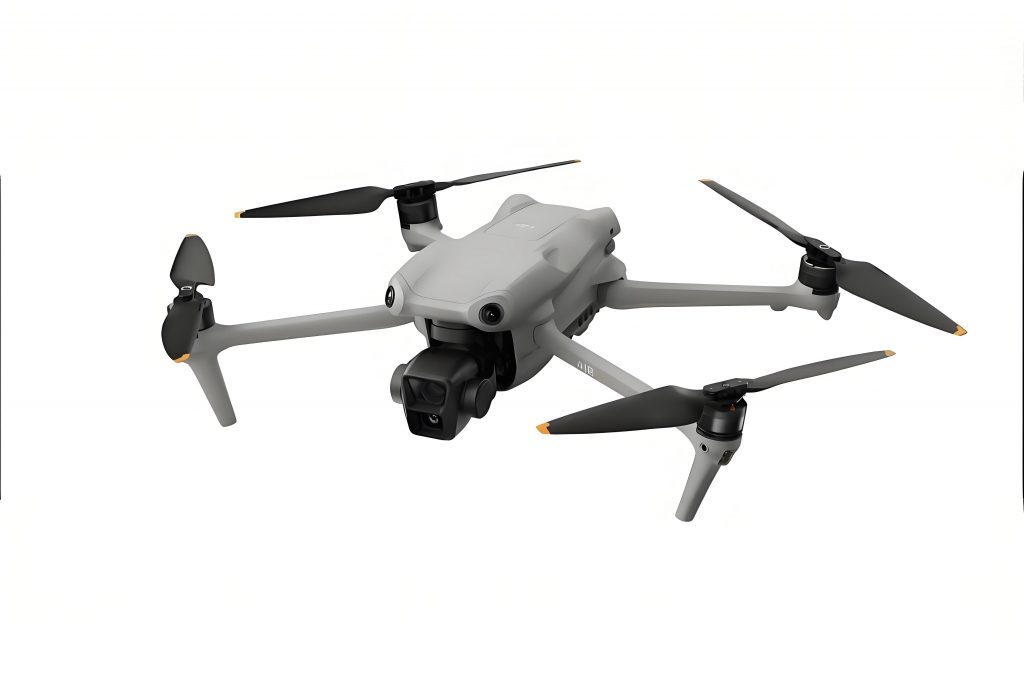
The evolution of the DJI drone in agriculture has been transformative. Since our entry into this field, we have consistently pushed boundaries, and the T100 series represents our new flagship standard. As we reflect on over a decade of pioneering work, we recognize that the modern farmer demands tools that are not only powerful but also intelligent and adaptable. The latest DJI drone models, the T100 and T70, are engineered to deliver unprecedented efficiency, safety, and multi-scenario functionality, ensuring that every user—from large-scale agribusinesses to individual farmers—can harness the power of aerial technology to enhance productivity and sustainability.
Let us delve into the specifics of these groundbreaking DJI drones. The T100 is our first flagship agricultural drone equipped with AI and AR capabilities, boasting a maximum takeoff weight of 149.9 kg. It features a co-axial dual-rotor configuration with 1.57-meter carbon fiber blades, delivering robust power with a single-axis maximum pull of 82 kg. This allows for a maximum flight speed of 13.8 m/s, ensuring swift and efficient operations. The T100 is a true multi-role DJI drone, offering 75L spraying capacity, 150L spreading capacity, and 85kg lifting capability. To quantify its operational superiority, consider the following efficiency metrics for a typical spraying mission. The effective coverage rate $E_c$ can be expressed as:
$$E_c = \frac{A_{covered}}{t_{total}} \times \eta_{spray}$$
where $A_{covered}$ is the area covered in square meters, $t_{total}$ is the total mission time in minutes, and $\eta_{spray}$ is the spraying uniformity coefficient (typically 0.85-0.95 for our systems). For the T100 DJI drone, with its dual-nozzle maximum flow rate of 30 L/min and optimized flight path, $E_c$ can reach values exceeding 2.5 hectares per minute under ideal conditions, a significant improvement over previous models.
| Feature | T100 Series | T70 Series |
|---|---|---|
| Maximum Takeoff Weight | 149.9 kg | Varies by model (e.g., T70P enhanced) |
| Spraying Capacity | 75 L | 50 L (T70), 70 L (T70P) |
| Spreading Capacity | 150 L | 70 L |
| Lifting Capacity | 85 kg | 65 kg |
| Max Flight Speed | 13.8 m/s | Similar optimized speeds |
| AI & AR Integration | Full suite (obstacle recognition, AR轨迹) | Comprehensive (similar safety features) |
| Battery System | New intelligent battery with three-duct cooling | Higher energy density, lighter weight |
| Typical Application | Large-scale farms, orchards, heavy transport | Mid-scale farms, diverse scenarios |
Safety is paramount in agricultural operations, and our new DJI drone models incorporate the most advanced protection systems available. The T100 features a “top-tier” safety suite with a new laser radar and active phased array radar for omnidirectional perception. The laser radar captures spatial point cloud densities up to 300,000 points per second, enabling precise identification of obstacles like斜拉线 and wires. Coupled with a five-eye fisheye vision system, this DJI drone provides 360° real-time environmental awareness, with alerts sent directly to the remote controller. The AI algorithms automatically detect and log obstacles during operations, storing them in field information for improved efficiency and safety in subsequent flights—truly making the DJI drone smarter and safer with each use.
The AR safety辅助 functions are equally innovative. During takeoff and landing, the DJI drone detects nearby people and vehicles, alerting the operator. In flight, AR轨迹 generation helps predict the drone’s path, and a safety landing projection ensures stable returns. For the T70 series, similar AI and AR capabilities are integrated, including三目 vision systems and front/rear active phased array radar. The safety enhancement for these DJI drones can be modeled through a risk reduction factor $R_r$:
$$R_r = 1 – \frac{N_{incidents, new}}{N_{incidents, legacy}}$$
where $N_{incidents}$ represents the number of safety incidents. With the new systems, we project $R_r$ to approach 0.7-0.8, meaning a 70-80% reduction in potential accidents compared to earlier DJI drone models.
Spraying performance of the T100 DJI drone is exceptional. With a 75 kg spray load and adjustable droplet sizes from 50 to 500 µm, it caters to various crop needs. For orchards with thick canopies, an optional four-nozzle water-cooled misting system delivers a flow rate of 4,030 L/min with droplets as fine as 10 µm. The spraying efficiency $S_e$ can be calculated based on flow rate $F$ (L/min), swath width $W$ (m), and flight speed $v$ (m/s):
$$S_e = F \times \frac{60}{A_{unit}} \times \eta_{deposit}$$
where $A_{unit} = W \times v \times 60$ is the area covered per minute, and $\eta_{deposit}$ is the deposition efficiency (often above 0.9 for our nozzles). For the T100, $S_e$ can exceed 4 hectares per hour for standard crops, showcasing the prowess of this DJI drone.
In spreading, the T100 DJI drone’s 150L capacity handles two bags of fertilizer per load. The new spiral auger doubles the flow rate to 400 L/min, with auger motor torque also doubled, supporting high-speed spreading and boosting overall efficiency by 70%. The spread uniformity $U_s$, critical for crop yield, is given by:
$$U_s = 1 – \frac{\sigma_{application}}{\mu_{application}}$$
where $\sigma_{application}$ is the standard deviation of material distribution and $\mu_{application}$ is the mean application rate. Our DJI drone systems maintain $U_s > 0.85$, ensuring even coverage.
Lifting capabilities transform the T100 DJI drone into a versatile transport tool. With 85 kg capacity and a三向力 sensor to eliminate cargo swing, it enables stable aerial logistics. Users can set loading and unloading points via手机, with AR real-time display on the remote controller. The weight detection feature prevents overloading, facilitating easy结算. The transport efficiency $T_e$ for a DJI drone is:
$$T_e = \frac{C_{payload} \times D_{round}}{t_{cycle}}$$
where $C_{payload}$ is payload capacity (kg), $D_{round}$ is round-trip distance (km), and $t_{cycle}$ is cycle time (hours). For the T100, $T_e$ can reach 500 kg·km/h in typical scenarios, outperforming manual methods.
The T70 series DJI drones offer a balance of strength and affordability. The T70 model provides 50 kg spraying and 70 kg spreading, while the T70P upgrades to 70L tank and 41Ah long-endurance battery, significantly enhancing efficiency. These DJI drones are ideal for users seeking robust performance without the flagship price. Their energy systems are optimized, with batteries of higher density and lighter weight, supporting two-battery循环 for continuous operation. The energy consumption reduction is notable: per sortie, energy savings $\Delta E$ can be expressed as:
$$\Delta E = E_{legacy} – E_{T70} = E_{legacy} \times 0.25$$
meaning a 25% reduction in power use per mission, translating to daily fuel cost savings of 25% for charging systems. This makes the T70 series DJI drone exceptionally cost-effective.
Both series benefit from our new intelligent battery design with three-duct cooling, addressing the industry challenge of heat dissipation while ensuring safety. The D14000iE versatile charging station enables 9-minute fast charging, reducing油耗 and operational costs. Additionally, new车载 chargers offer quiet, green energy replenishment. The charging time $t_{charge}$ for a DJI drone battery can be modeled as:
$$t_{charge} = \frac{C_{battery} \times (1 – SOC_{initial})}{P_{charger} \times \eta_{charger}}$$
where $C_{battery}$ is battery capacity (Ah), $SOC_{initial}$ is initial state of charge, $P_{charger}$ is charger power (kW), and $\eta_{charger}$ is charger efficiency (~0.9). Our systems achieve $t_{charge}$ under 10 minutes for a full cycle, maximizing uptime for the DJI drone.
Beyond hardware, we are committed to full-chain service support. Our “Pilot Loan” program, in collaboration with banks, reduces interest rates to 3.2% with a 20% down payment, lowering entry barriers for acquiring a DJI drone. This fosters entrepreneurship and job creation in rural areas. The售后 network now spans 1,100 repair points, with over 90% of operational sites within a 50km, 1-hour drive. In 2024, over 98% of repairs are completed within 6 hours, ensuring minimal downtime for your DJI drone.
Every new DJI drone comes with a care plan covering基础额度和易损件额度, allowing zero-cost repairs within limits. We also provide third-party liability insurance with coverage up to 600,000 yuan per incident, with single medical limits increased to 100,000 yuan, now including aerial lifting scenarios. This comprehensive保障 ensures peace of mind for operators. The total cost of ownership $TCO$ for a DJI drone over its lifecycle can be summarized as:
$$TCO = C_{acquisition} + \sum_{i=1}^{n} (C_{operation,i} + C_{maintenance,i}) – S_{resale}$$
where $C_{acquisition}$ is purchase cost (reduced by loan options), $C_{operation}$ includes energy and labor, $C_{maintenance}$ is mitigated by our care plan, and $S_{resale}$ is residual value. Our models are designed to minimize $TCO$, making the DJI drone a wise investment.
| Scenario | Key Metric | T100 Value | T70 Series Value |
|---|---|---|---|
| Spraying (Field Crops) | Area per hour (ha/h) | 4.2 – 5.0 | 3.0 – 3.8 |
| Spreading (Fertilizer) | Throughput (kg/min) | Up to 400 | Up to 200 |
| Lifting (Transport) | Payload-Distance Product (kg·km/h) | 500 – 600 | 350 – 450 |
| Battery Life | Sorties per day (with fast charging) | 15 – 20 | 12 – 18 |
| Safety Improvement | Risk Reduction Factor ($R_r$) | 0.75 | 0.70 |
Our vision extends beyond products. Over 12 years, DJI Agriculture has expanded to six continents, serving over 100 countries and regions. As of October 2024, global cumulative sales of DJI agricultural drones have surpassed 400,000 units, benefiting hundreds of millions in the agricultural community. Each DJI drone is a testament to our dedication to innovation and reliability. Looking ahead, we will continue to refine our solutions, integrating more smart technologies to address evolving challenges in agriculture.
In conclusion, the T100 and T70 series DJI drones represent a holistic advancement in agricultural aviation. From the flagship T100 with its AI and AR enhancements to the cost-effective T70 series, these tools are engineered to elevate farming efficiency, safety, and sustainability. We invite farmers worldwide to experience the transformative power of our DJI drones, supported by an unmatched service ecosystem. Together, we can shape a future where agriculture is not only more productive but also more resilient and accessible for all.