
The rapid proliferation of Unmanned Aircraft Systems (UAS), commonly known as drones, across civilian sectors presents a paradigm shift in aviation. From infrastructure inspection and precision agriculture to logistics and aerial photography, the potential applications are vast. However, this integration into shared airspace, particularly lower-level airspace traditionally used by general aviation, introduces complex safety challenges. The fundamental step towards enabling this integration safely and efficiently is the precise definition of a Concept of Operations (ConOps). A well-articulated ConOps serves as the foundational document, describing how a system—in this case, a drone operation—is intended to work from the user’s perspective. It is the critical first input for any safety assessment, outlining the “who, what, where, when, and how” of the proposed operation, thereby allowing regulators and operators to identify, analyze, and mitigate associated risks.
This article explores the development of a drone ConOps through the lens of operational risk. The core thesis is that a robust ConOps must be inherently risk-based, serving not only as a description of intent but as the primary tool for structuring safety management. We will analyze the essential components of a drone ConOps, dissect the specific safety risks posed by drone operations, review existing regulatory frameworks, and finally, propose a structured framework for developing a ConOps that seamlessly integrates with Safety Risk Management (SRM) processes. A recurring and vital element within this risk mitigation strategy is comprehensive drone training, which builds the human capability essential for safe operations.
1. Deconstructing the Drone Concept of Operations
A Concept of Operations for drones is a comprehensive narrative that details the purpose, environment, and execution of a proposed flight or series of flights. Its primary audience from a regulatory standpoint is the aviation authority, which uses the document to understand the operation sufficiently to judge its safety. While details may vary, a standardized ConOps should clearly address several core elements, as summarized in the table below.
| ConOps Component | Description | Risk Relevance |
|---|---|---|
| Operational Overview & Objectives | High-level description of the organization and the specific mission (e.g., “LiDAR survey of a 10km power line corridor”). | Defines the scope and intent, framing the risk context. |
| Detailed Operational Description | Specifics of the flight: take-off/landing points, route, altitude, schedule, duration, phases of flight. | Directly informs the exposure calculation (e.g., time over populated areas, proximity to airports). |
| UAS Description & Performance | Specifications of the drone (weight, dimensions, capabilities), control station, communication links, fail-safe modes, and performance envelope. | Identifies technical failure modes and performance limitations that contribute to risk. |
| Personnel & Roles | Qualifications, responsibilities, and number of Remote Pilots, Visual Observers, maintenance staff, etc. This is where drone training programs and competencies are detailed. | The human element is a major risk factor; competency mitigates error. |
| Operating Environment | Airspace class, terrain, weather minima, ground environment (population density, property type), presence of other airspace users. | Defines the hazard landscape (e.g., risk of collision or ground impact). |
| Support Services & Procedures | Maintenance procedures, flight planning tools, communication protocols with ATC (if applicable), contingency, and emergency procedures. | Procedural and organizational barriers to prevent or contain failures. |
The purpose of this description is to eliminate ambiguity. A regulator must be able to read a ConOps and form a clear, reasonable judgment about the associated risks. For instance, a ConOps for a 2kg drone inspecting a remote pipeline in Class G airspace presents a fundamentally different risk profile than one for a 25kg drone delivering medical supplies in a suburban area. The former might focus on ground risk to isolated personnel, while the latter must rigorously address air risk from other low-level traffic and ground risk to a dispersed public.
2. Analyzing Drone Operational Safety Risks
The safety risks associated with drone operations can be systematically categorized. The paramount concern for regulators is the safety of third parties—people and property on the ground and other airspace users who are not involved in the drone operation. The primary hazards stem from two critical failure events:
- Ground Impact Hazard: The drone or its components losing control and striking people or property on the ground.
- Mid-Air Collision Hazard: The drone colliding with a manned aircraft (Conventionally Piloted Aircraft – CPA).
These primary hazards can, in turn, trigger secondary hazards, such as the release of hazardous payloads (e.g., chemicals in agricultural drones), fire from damaged batteries or fuel, or cascading damage from falling debris. The relationship is modeled below, where $R_{total}$ represents the total risk, which is a function of the probability and severity of these hazard chains.
$$ R_{total} = \sum (P_{impact} \cdot S_{impact}) + \sum (P_{collision} \cdot S_{collision}) + \sum (P_{secondary} \cdot S_{secondary}) $$
Here, $P$ denotes the probability of the event, and $S$ denotes its severity. The industry’s primary regulatory focus remains on mitigating the first two terms of this equation.
2.1. Establishing the Safety Target: The Equivalent Level of Safety (ELOS)
A cornerstone principle in aviation safety regulation is that new entrants, like drones, should not degrade the existing level of safety. This is formalized as the requirement for an Equivalent Level of Safety (ELOS) to manned aviation. But what is this “level”? It is typically expressed as a quantitative Target Level of Safety (TLS), often derived from historical accident data for manned aviation.
Common TLS metrics include:
- Ground Risk: Fatality rate per flight hour for people on the ground. Manned aviation historical data suggests a TLS in the range of $1 \times 10^{-6}$ to $1 \times 10^{-8}$ fatalities per flight hour.
- Air Risk: Mid-air collision rate per flight hour. Estimates for this TLS vary between $1 \times 10^{-7}$ and $1 \times 10^{-9}$ per flight hour.
A critical debate is whether to use average or peak risk values from manned aviation. Using an average might be overly permissive for dense operations. A more conservative and arguably more appropriate approach is to use a peak or “worst credible” risk level as the benchmark, ensuring that even in demanding scenarios, drone operations do not create pockets of higher risk than historically tolerated in manned flight. This target can be expressed as a constraint:
$$ R_{UAS} \leq TLS_{CPA(peak)} $$
Where $R_{UAS}$ is the estimated risk of the proposed drone operation and $TLS_{CPA(peak)}$ is the peak target level of safety derived from manned aviation.
3. Regulatory Frameworks and the Role of ConOps
Globally, regulatory bodies have adopted risk-based approaches to drone integration, and the ConOps is central to all of them. The European Union Aviation Safety Agency (EASA) and the U.S. Federal Aviation Administration (FAA) provide clear examples.
| Regulatory Framework | Risk Categories | ConOps Role | Key Mechanism |
|---|---|---|---|
| EASA Specific Category | Medium Risk | Primary input document | Specific Operations Risk Assessment (SORA): The ConOps is analyzed to determine an Initial Risk Level (Ground & Air), which is then reduced by claiming “Mitigations” (like robust drone training, technical standards, procedural controls) to achieve an Acceptable Level of Risk. |
| FAA Part 107 Waiver/Authorization | Operations beyond basic rules | Foundation of the waiver petition | The applicant must describe the operation in detail (a de facto ConOps) and demonstrate how safety will be maintained, often through equivalent mitigations akin to SORA, including advanced pilot qualifications and training. |
| ICAO Model UAS Regulations | All risk levels | Fundamental to the safety case | Advocates for a performance-based approach where the operator develops a safety case based on the ConOps, proving how risks are managed to meet the State’s safety objectives. |
The SORA process exemplifies the iterative, ConOps-driven approach. If the risk assessment based on the initial ConOps yields an unacceptable residual risk, the ConOps must be revised—by changing the operational parameters, adding more robust equipment, or enhancing drone training—and the assessment is repeated. This loop continues until a compliant ConOps is achieved.
4. The Drone Operating System: A Systemic View
To effectively manage risk, one must view a drone operation not just as an aircraft, but as a complex socio-technical system. The Drone Operating System encompasses several interacting components:
- The Physical UAS: The drone (airframe, propulsion, flight control system), control station, and the command, control, and communication (C3) link.
- Personnel: Remote pilots, visual observers, maintenance technicians, operational managers. Their competency, gained through effective drone training, is a critical safety barrier.
- Operating Environment: The dynamic external context: airspace structure, weather, terrain, presence of other aircraft (cooperative and non-cooperative), and ground population density.
- Support & Management: The organizational safety management system (SMS), maintenance procedures, flight planning tools, and coordination with Air Traffic Management (ATM) or UAS Traffic Management (UTM) services.
Failures can originate in any component or, more critically, at the interfaces between them. A broken communication link (interface between UAS and pilot), a misinterpreted airspace rule (interface between personnel and environment), or a lapse in maintenance procedure (interface between management and UAS) can all trigger a hazardous sequence. Therefore, a systemic ConOps must describe these interfaces and specify the controls at each one.
5. A Framework for Risk-Based ConOps Development
Building on the principles above, we propose a structured framework for developing a drone ConOps that is intrinsically linked to safety risk management. This framework is cyclical and iterative.
Phase 1: ConOps Definition
Articulate the detailed description following the component structure in Section 1. This is the “target” operational picture.
Phase 2: Hazard Identification & Risk Analysis
Systematically analyze the defined ConOps to identify potential hazards. Techniques like Systems Theoretic Process Analysis (STPA) are useful here. For each hazard (e.g., “Loss of C2 Link over populated area”), estimate the initial risk:
$$ Risk_{Initial} = Likelihood_{Estimate} \times Severity_{Estimate} $$
This estimation can be qualitative (High, Medium, Low) or semi-quantitative.
Phase 3: Risk Evaluation & Mitigation Design
Compare the initial risk against the TLS (e.g., $10^{-6}$/fh). If $Risk_{Initial} > TLS$, design mitigation strategies. These are the operational and technical “barriers” integrated back into the ConOps. For example:
- To mitigate ground risk: Limit operations to sparsely populated areas, implement a parachute recovery system.
- To mitigate air risk: Equip with Detect-and-Avoid (DAA) systems, operate in segregated airspace.
- To mitigate human error: Implement rigorous pre-flight checklists and recurrent scenario-based drone training.
The effectiveness of each mitigation reduces the likelihood or severity. The residual risk is calculated as:
$$ Risk_{Residual} = (Likelihood_{Initial} \cdot MF_{Likelihood}) \times (Severity_{Initial} \cdot MF_{Severity}) $$
Where $MF$ are mitigation factors (values between 0 and 1 representing reduction).
Phase 4: Iteration & Acceptance
If $Risk_{Residual} \leq TLS$, the ConOps is deemed acceptable, and its description now includes the necessary risk controls. If not, return to Phase 1 or Phase 3 to refine the operational parameters or add stronger mitigations. The final, approved ConOps is thus a complete package: the desired operation wrapped in its necessary safety envelope.
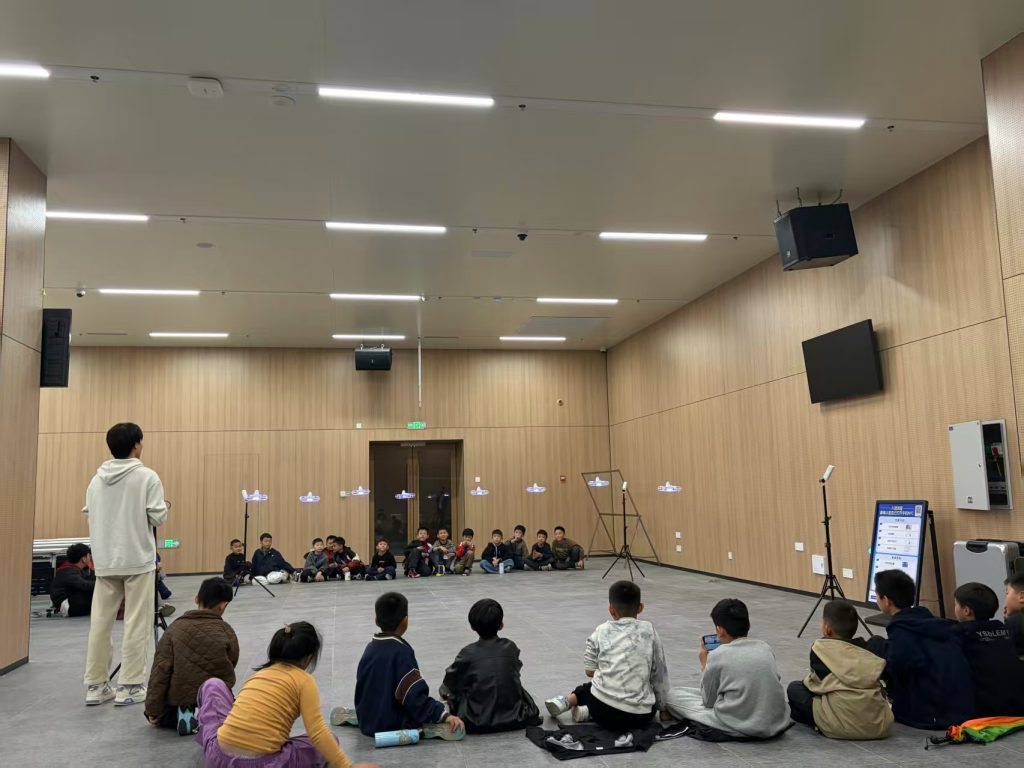
A pivotal and often most impactful mitigation is the investment in human capital. A comprehensive drone training ecosystem is not just about basic piloting skills. It must encompass systems knowledge, emergency procedures, airspace regulation, human factors, risk assessment, and specific mission training. This creates adaptable, safety-conscious personnel who serve as the most dynamic and effective risk mitigation barrier. Advanced drone training programs, often involving simulations for failure modes and abnormal procedures, directly lower the probability term ($P$) in the risk equation for human-error-initiated events.
6. Conclusion: The Path Forward
The safe and scalable integration of drones into the national airspace system is contingent upon a rigorous, standardized, and risk-based approach to operational planning. The Concept of Operations is the keystone of this approach. It transforms a vague mission idea into a structured plan that can be scrutinized, measured, and made safe. By adopting a framework where the ConOps is dynamically coupled with safety risk management—where every operational detail is linked to a potential hazard and every hazard is addressed with a designed mitigation—we create a transparent and rational path to authorization.
This process underscores that safety is not an add-on but is baked into the operational design from the outset. Critical to this design are robust technical standards, reliable procedural controls, and especially, a deeply ingrained culture of competence fostered by continuous and comprehensive drone training. As drone technology and applications evolve, so too must the sophistication of our ConOps development frameworks, ensuring that innovation in flight is always matched by an unwavering commitment to safety.