
The reliable operation of power transmission lines is fundamental to the stability of modern power grids. Among the critical components, insulators are particularly vulnerable to defects such as self‑explosion and contamination due to prolonged exposure to harsh environmental conditions. Traditional manual inspection methods are inefficient and unsafe, driving the adoption of unmanned aerial vehicles (UAVs) for intelligent patrol. However, the conventional “offline recognition” workflow—where images are captured and later processed on cloud servers—introduces significant latency, often requiring days to close the inspection loop. This delay is unacceptable for urgent defect handling, especially in remote mountainous regions and heavy‑pollution corridors.
To overcome this bottleneck, power grid enterprises are increasingly exploring edge‑based real‑time defect recognition, where detection models are deployed directly on the UAV or nearby edge nodes. Yet this paradigm faces two intertwined challenges: (1) the severe computational constraints of embedded platforms (e.g., Raspberry Pi, Jetson) that limit model size and inference speed, and (2) the difficulty of detecting tiny insulator defects (e.g., self‑exploded glass caps) against complex aerial backgrounds with vegetation, buildings, and varying illumination.
In this work, we present a task‑specific lightweight insulator defect detector, named LE‑Det‑ID, designed from the ground up for real‑time edge deployment on China UAV platforms. Starting from the YOLO11 architecture, we systematically redesign the backbone, neck, and detection head to reallocate computational resources toward small defect features. The resulting model achieves a remarkable balance: compared to the baseline, it reduces parameters by 73.7% and GFLOPs by 71.4%, while improving mAP@0.5 from 86.3% to 93.2% on a real‑world transmission line dataset comprising over 4,000 images. On two mainstream edge computing devices, LE‑Det‑ID sustains inference speeds above 25 FPS, confirming its suitability for China UAV‑based real‑time inspection tasks.
The key contributions of our work are four novel modules that synergistically address the small‑defect vs. low‑compute contradiction:
- Edge‑Efficient Convolution (EEConv): A decomposed spatial‑channel convolution that amplifies weak defect signals while dramatically reducing computational cost.
- Micro‑feature Focus Attention (MFA): A plug‑and‑play multi‑scale attention mechanism that sharpens the model’s focus on tiny defect regions.
- Low‑latency Cross‑scale Fusion Neck (LCF‑Neck): A lightweight feature pyramid that replaces standard convolutions with depthwise convolutions and injects MFA only on the highest‑resolution path.
- Self‑Adaptive Decoupled Head (SAD‑Head): A task‑specific detection head that integrates MFA, semi‑decoupled prediction branches, and evolutionary anchor optimization.
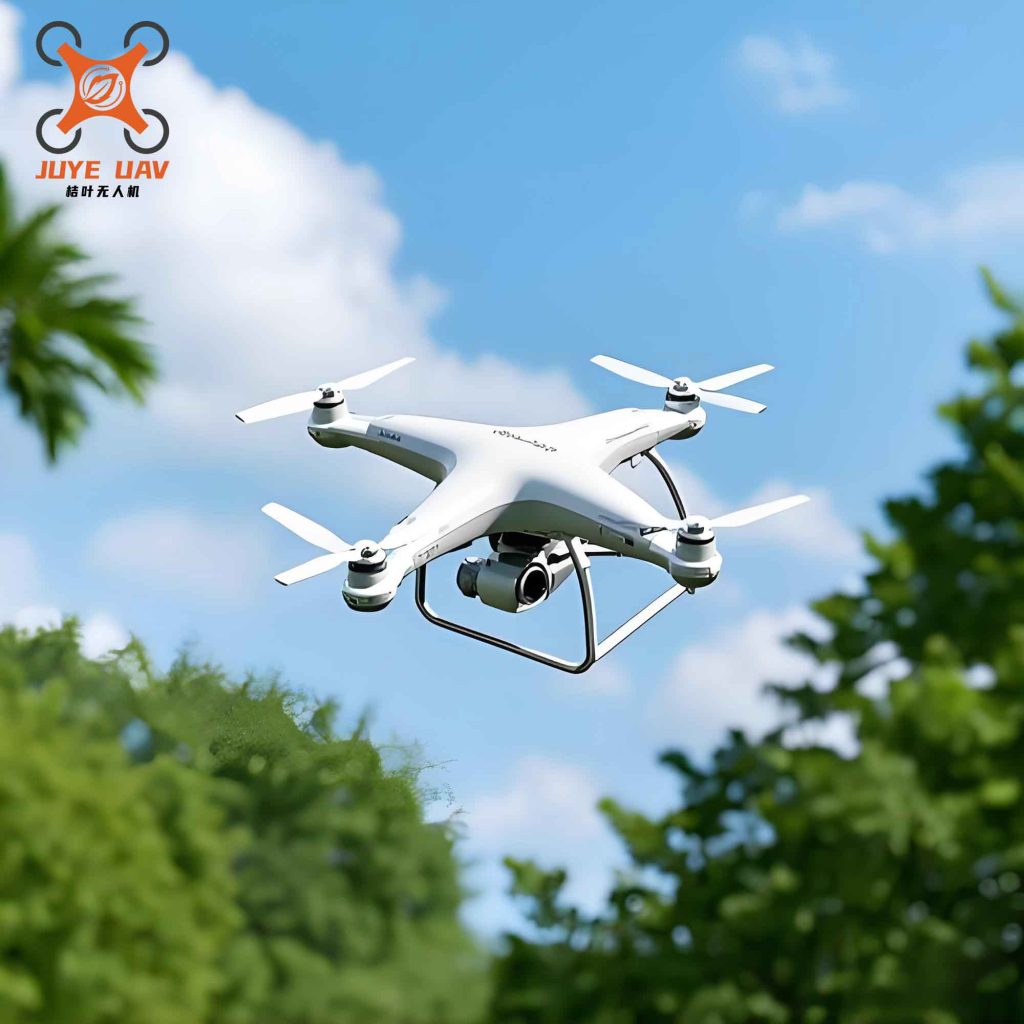
Figure 1 illustrates typical aerial images captured by a China UAV during inspection missions.
1. Dataset and Experimental Setup
We constructed a dataset combining real inspection images provided by a provincial power grid company in China and randomly sampled normal glass and porcelain insulator images from the public InsPLAD dataset. The defect categories and instance counts are summarized in Table 1.
| Type | Object | Number of Instances |
|---|---|---|
| Insulator | Porcelain insulator | 1500 |
| Glass insulator | 1500 | |
| Defect | Glass self‑explosion | 384 |
| Glass contamination | 464 | |
| Porcelain contamination | 869 |
The dataset was split into training (70%), validation (20%), and testing (10%) sets. All models were trained on an NVIDIA RTX 4090 GPU with PyTorch 2.4.1 and Ultralytics 8.3.25. For fair comparison, all accuracy evaluations were performed at an input resolution of 640×640. Edge inference speeds were measured on Raspberry Pi 5 (ARM CPU only) and Jetson Orin Nano (integrated GPU) using FP32 precision at 320×320 and 416×416.
2. Methodology
2.1 Edge‑Efficient Convolution (EEConv)
Standard convolution mixes spatial and channel information in a single operation, which often dilutes weak defect responses. We decompose this process into two dedicated branches. Let the input feature map be \( X \in \mathbb{R}^{B \times C \times H \times W} \). We split it evenly along the channel dimension: \( X = [X_1, X_2] \), each having \( C/2 \) channels.
- Spatial Refinement Unit (SRU) processes \( X_1 \) with a depthwise convolution (3×3) followed by a pointwise convolution (1×1). This preserves fine spatial textures without channel blurring.
- Channel Refinement Unit (CRU) processes \( X_2 \) using only a 1×1 convolution, reweighting channel importance to emphasize defect‑related semantics.
The two branch outputs are concatenated and then shuffled via channel shuffle (inspired by ShuffleNet) to promote cross‑branch information flow. The overall operation can be expressed as:
$$
\begin{aligned}
Y_{\text{SRU}} &= \text{PWConv}(\text{DWConv}(X_1)), \\
Y_{\text{CRU}} &= \text{PWConv}(X_2), \\
Y &= \text{Shuffle}(\text{Concat}(Y_{\text{SRU}}, Y_{\text{CRU}})).
\end{aligned}
$$
EEConv replaces all standard 3×3 convolutions inside the Bottleneck modules of the backbone, forming EEC‑Bottleneck and subsequently EEC‑C3k2 blocks. This substitution reduces the computational load while strengthening small‑defect feature representation.
2.2 Micro‑feature Focus Attention (MFA)
MFA is designed to aggregate multi‑scale context and then perform channel‑spatial recalibration with minimal overhead. Given an input \( X \), the module:
- Applies two parallel depthwise convolution branches with different kernel sizes (e.g., 3×3 and 5×5) to capture local detail and broader context respectively. The two outputs are fused by element‑wise addition.
- Passes the fused feature through a bottleneck 1×1 convolution to reduce channel count, then computes channel attention via global average pooling and a lightweight MLP:
$$
\text{ChannelWeight} = \sigma(\text{FC}(\text{GAP}(F_{\text{fused}}))),
$$where \( \sigma \) is the sigmoid function and FC denotes a two‑layer fully connected network.
- Applies spatial attention on the channel‑weighted feature using a large‑kernel depthwise convolution (e.g., 7×7) followed by sigmoid:
$$
\text{SpatialWeight} = \sigma(\text{DWConv}_{7\times7}(F_{\text{channel}})).
$$ - Restores the channel dimension with a 1×1 convolution and adds a residual connection to the input:
$$
X_{\text{out}} = X + \text{Conv}_{1\times1}(F_{\text{spatial}}).
$$
MFA is inserted into two strategic locations: (1) replacing the attention mechanism in the C2PSA modules of the backbone (forming MFA‑C2PSA), and (2) in the highest‑resolution path of the neck, which is responsible for detecting the smallest defects.
2.3 Self‑Adaptive Decoupled Head (SAD‑Head)
The original YOLO11 head uses separate but heavy branches for classification and regression. For small‑defect detection, we redesign the head with three improvements:
- Feature refinement: The input feature from the neck is first passed through an MFA module to further enhance defect‑relevant responses.
- Semi‑decoupled prediction: After the shared MFA‑enhanced feature, we employ lightweight 1×1 convolution branches for classification and regression separately. This avoids both full coupling (which forces one branch to handle conflicting tasks) and fully decoupled heavy branches.
- Evolutionary anchor optimization (EAO): We search for optimal anchor boxes by maximizing the average best IoU between anchors and ground‑truth boxes using differential evolution:
$$
\text{Fitness}(A) = \frac{1}{N_{\text{gt}}} \sum_{i=1}^{N_{\text{gt}}} \max_{a_j \in A} \text{IoU}(\text{gt}_i, a_j).
$$The evolved anchor set better matches the concentrated size distribution of insulator defects.
2.4 Low‑latency Cross‑scale Fusion Neck (LCF‑Neck)
We rebuild the PANet‑style neck of YOLO11 to reduce latency while maintaining multi‑scale fusion quality. Three modifications are applied:
- Depthwise convolutions: All standard 3×3 convolutions in the neck are replaced by depthwise separable convolutions, reducing parameters and FLOPs by about a factor of 8.
- EEC‑C3k2 blocks: The cross‑stage partial blocks are replaced with the proposed EEC‑C3k2 (which uses EEConv inside), further lowering computation while improving cross‑scale feature interaction.
- MFA injection: Only on the highest‑resolution feature path (P3) we insert an MFA module to specifically enhance small‑target features. No extra modules are added to other paths to keep the neck lightweight.
The complete architecture of LE‑Det‑ID integrates all four modules: EEC‑C3k2 in the backbone, MFA‑C2PSA in the backbone, LCF‑Neck as the neck, and SAD‑Head as the detection head.
3. Experiments and Results
3.1 Ablation Study (RQ1)
We conducted a stepwise ablation experiment on the YOLO11n baseline. The results are summarized in Table 2.
| Configuration | mAP@0.5 (%) | Params (M) | GFLOPs |
|---|---|---|---|
| Baseline (YOLO11n) | 86.3 | 2.580 | 6.3 |
| + EEConv / EEC‑C3k2 | 87.8 (+1.5) | 1.894 (−0.686) | 4.4 (−1.9) |
| + MFA / MFA‑C2PSA | 89.8 (+3.5) | 2.549 (−0.031) | 6.3 (0.0) |
| + LCF‑Neck | 87.4 (+1.1) | 1.787 (−0.793) | 5.0 (−1.3) |
| + SAD‑Head | 90.8 (+4.5) | 2.242 (−0.338) | 4.9 (−1.4) |
| LE‑Det‑ID (all) | 93.2 (+6.9) | 0.679 (−1.901) | 1.8 (−4.5) |
Each module contributes positively to accuracy while reducing or maintaining computational load. The complete LE‑Det‑ID achieves a 6.9‑point improvement in mAP@0.5 with 73.7% fewer parameters and 71.4% fewer GFLOPs compared to the baseline, demonstrating the effectiveness of our task‑specific redesign.
3.2 Comparison with State‑of‑the‑Art Methods (RQ2)
We compared LE‑Det‑ID with several recent lightweight insulator defect detectors on the same dataset. Table 3 reports precision (P), recall (R), mAP@0.5, and model complexity.
| Model | P (%) | R (%) | mAP@0.5 (%) | Params (M) | GFLOPs |
|---|---|---|---|---|---|
| YOLOv8n | 84.5 | 86.3 | 85.5 | 2.693 | 6.8 |
| YOLOv9t | 81.3 | 85.8 | 84.2 | 1.728 | 6.4 |
| YOLOv10n | 80.2 | 84.6 | 83.4 | 2.698 | 8.2 |
| GC‑YOLO | 87.6 | 85.2 | 87.8 | 2.164 | 8.2 |
| BC‑YOLO | 86.7 | 85.2 | 87.6 | 1.787 | 5.6 |
| AE‑YOLO | 89.3 | 86.3 | 88.1 | 2.251 | 6.0 |
| FINet | 87.0 | 86.3 | 88.0 | 2.217 | 5.9 |
| CACS‑YOLO | 89.7 | 91.2 | 90.4 | 2.655 | 7.0 |
| LiteYOLO‑ID | 90.4 | 91.8 | 91.2 | 0.952 | 2.7 |
| LE‑Det‑ID (Ours) | 92.7 | 92.5 | 93.2 | 0.679 | 1.8 |
Our method achieves the highest mAP@0.5 (93.2%) and the best precision/recall trade‑off. Notably, compared to the recent lightweight model LiteYOLO‑ID, LE‑Det‑ID reduces GFLOPs from 2.7 to 1.8 while still improving mAP by 2.0 percentage points. This confirms that our holistic redesign is more effective at balancing accuracy and efficiency for China UAV edge deployment.
3.3 Edge Inference Speed (RQ3)
We measured the FP32 inference speed on two representative edge devices: Raspberry Pi 5 (ARM CPU only) and Jetson Orin Nano (with GPU). The results are shown in Table 4.
| Model | RPi 5 (FPS) | Jetson Orin Nano (FPS) | ||
|---|---|---|---|---|
| 320×320 | 416×416 | 320×320 | 416×416 | |
| YOLO11n | 15.89 | 9.88 | 22.25 | 13.83 |
| GC‑YOLO | 20.09 | 12.09 | 28.13 | 16.93 |
| BC‑YOLO | 21.93 | 12.42 | 30.70 | 17.39 |
| AE‑YOLO | 19.26 | 11.01 | 26.96 | 15.41 |
| FINet | 21.44 | 10.51 | 30.02 | 14.71 |
| LiteYOLO‑ID | 23.26 | 13.02 | 32.56 | 18.23 |
| LE‑Det‑ID (Ours) | 25.96 | 16.80 | 36.34 | 23.52 |
On the Jetson Orin Nano, LE‑Det‑ID achieves 36.34 FPS at 320×320 and 23.52 FPS at 416×416, sufficient for real‑time processing. Even on the severely resource‑constrained Raspberry Pi 5, it sustains 25.96 FPS at 320×320—well above the typical real‑time threshold of 20 FPS. These results demonstrate that our model is exceptionally well‑suited for deployment on China UAV platforms with limited onboard computing resources.
3.4 Qualitative Analysis
We visually compared the detection outputs of the baseline YOLO11n and our LE‑Det‑ID on challenging examples (e.g., small distant insulators, dense clusters, strong illumination, and partial occlusion). The baseline frequently missed tiny defects or produced false positives on complex backgrounds. In contrast, LE‑Det‑ID consistently detected more correct defects with stable bounding boxes and fewer false alarms. These qualitative observations align with the quantitative improvements in recall and precision, confirming that the proposed modules effectively enhance the model’s ability to focus on small defect features while suppressing background noise.
4. Conclusion
We have presented LE‑Det‑ID, a lightweight insulator defect detector specifically optimized for real‑time edge deployment on China UAV inspection platforms. Through a systematic redesign of the YOLO11 architecture—introducing EEConv, MFA, LCF‑Neck, and SAD‑Head—we have achieved a remarkable balance between detection accuracy and computational efficiency. On a real‑world dataset comprising over 4,000 images, LE‑Det‑ID improves mAP@0.5 from 86.3% to 93.2% while reducing parameters by 73.7% and GFLOPs by 71.4%. Edge deployment tests on Raspberry Pi 5 and Jetson Orin Nano confirm real‑time inference speeds above 25 FPS. These results demonstrate that task‑specific architectural redesign is a promising path toward enabling reliable, real‑time visual inspection on resource‑constrained China UAV systems. Future work will extend the approach to composite insulators and other transmission line components, as well as validate performance on additional hardware platforms.