
Modern warfare is undergoing a transformative shift with the integration of unmanned systems, where military drones have emerged as critical force multipliers. These systems leverage advancements in communications, artificial intelligence, and materials science to deliver unprecedented capabilities across reconnaissance, combat, and logistics operations. This article examines the structural frameworks and evolutionary trajectories of military UAV systems deployed by leading global powers, supported by quantitative analyses and empirical data.
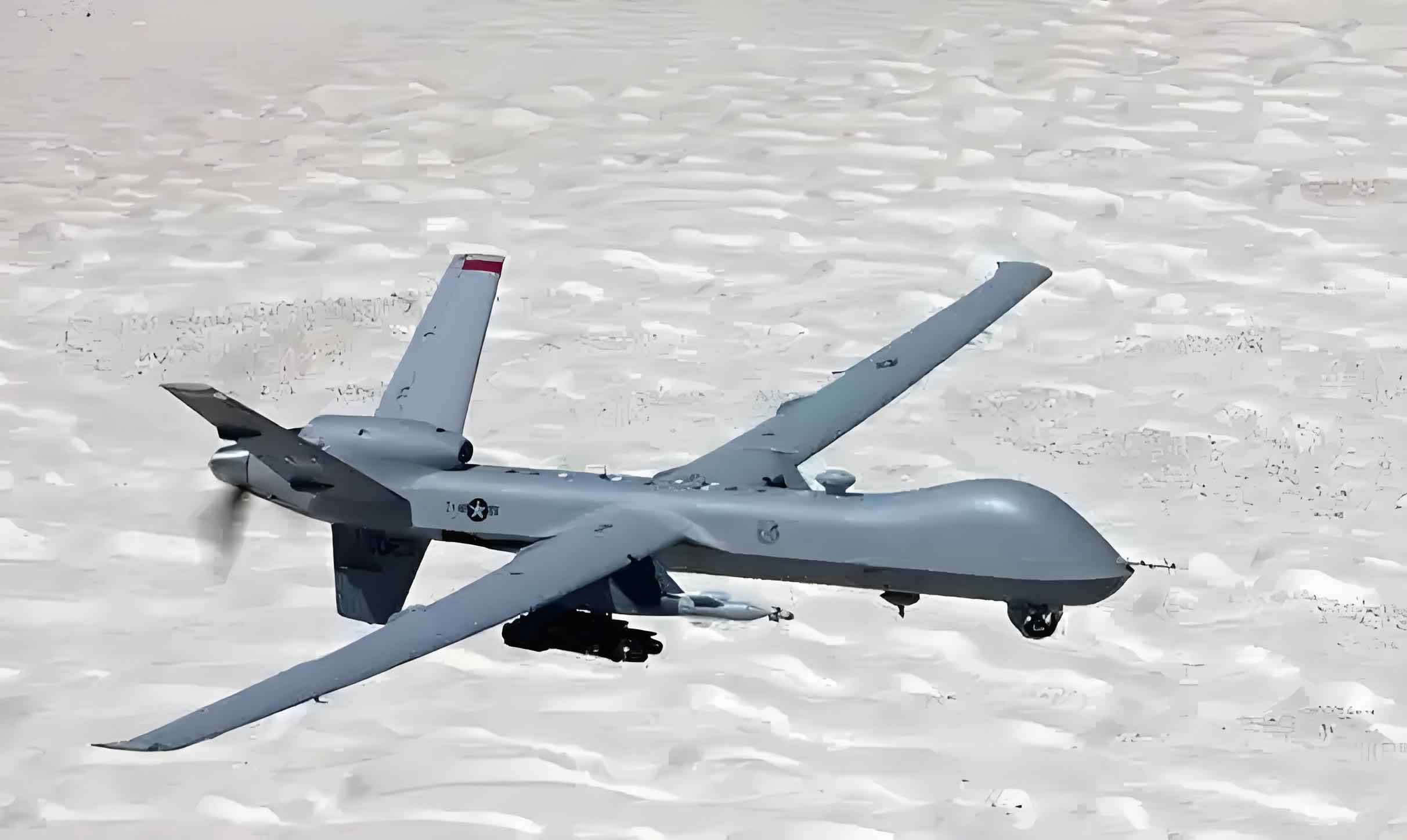
Comparative Analysis of Military UAV Systems
Military drone programs exhibit distinct developmental philosophies across nations, reflecting strategic priorities and operational doctrines:
United States: Tiered System Architecture
The U.S. employs a stratified military UAV classification system optimized for mission-specific deployment. Energy endurance follows an exponential growth model relative to size class: $$E = E_0 \cdot e^{k \cdot m}$$ where \(E\) represents endurance (hours), \(m\) denotes mass category index, \(E_0\) is the baseline endurance (8 hours), and \(k\) the scaling coefficient (0.35).
| Class | Representative Military UAV | Operational Radius | Endurance | Payload Capacity |
|---|---|---|---|---|
| Nano | Nano Hummingbird | 1 km | 0.13 hr | 0.02 kg |
| Micro | MicroStar | 5 km | 0.33 hr | 0.5 kg |
| Small | Pointer | 10 km | 1 hr | 2 kg |
| Light | RQ-7B Shadow | 80 km | 6 hr | 25 kg |
| Medium | MQ-1 Predator | 3,700 km | 40 hr | 200 kg |
| Heavy | RQ-4 Global Hawk | 5,500 km | 42 hr | 1,400 kg |
Combat deployment statistics reveal progressive military UAV utilization:
| Theater | Period | Military Drone Types | Sortie Rate |
|---|---|---|---|
| Iraq | 2003-2011 | MQ-1, RQ-7, RQ-4 | 120+/month |
| Afghanistan | 2001-2014 | RQ-1, MQ-9, RQ-170 | 150+/month |
| Syria | 2015-present | MQ-9, Avenger ER | 200+/month |
Israel: Modular Multi-Role Platforms
Israeli military drone development emphasizes sensor-payload interchangeability governed by the mission effectiveness equation: $$M_e = \frac{\sum_{i=1}^{n} S_i \cdot P_w}{C_t \cdot t_d}$$ where \(S_i\) represents sensor capability indices, \(P_w\) payload weight allocation, \(C_t\) operational cost, and \(t_d\) deployment time.
| Military UAV | Primary Role | Endurance | Special Capabilities |
|---|---|---|---|
| Heron TP | ELINT/SIGINT | 50 hr | Multi-spectral surveillance |
| Harop | SEAD/DEAD | 6 hr | Anti-radiation homing |
| Cormorant | MEDEVAC | 2 hr | Autonomous triage systems |
| AirMule | Logistics | 1.5 hr | 227 kg payload capacity |
European Collaborative Programs
Joint European military drone initiatives demonstrate networked autonomy through distributed AI architectures. The cognitive autonomy index \(A_c\) quantifies decision-making capability: $$A_c = \frac{N_d \cdot V_d}{t_r \cdot E_e}$$ where \(N_d\) is number of daily autonomous decisions, \(V_d\) decision validation rate, \(t_r\) response time, and \(E_e\) environmental complexity.
| Military UAV | Participating Nations | AI Capabilities | Stealth Features |
|---|---|---|---|
| nEUROn | France/Sweden/Italy | Target ID/Engagement | −40 dBsm RCS |
| Taranis | United Kingdom | Adaptive Threat Response | −35 dBsm RCS |
| Watchkeeper | UK/France/Israel | Automated ISR Analysis | NATO STANAG compliant |
Military Drone Technology Trajectories
Operational Domain Expansion
Military UAV capabilities are bifurcating into distinct operational paradigms:
High-Altitude Persistent Systems: Solar-electric stratospheric platforms obey the endurance-scaling principle: $$t_{max} = \frac{\eta_s \cdot A_s \cdot I_s \cdot \eta_c}{P_{av} + \frac{1}{2} \rho v^3 C_D A_f}$$ where \(\eta_s\) is solar cell efficiency, \(A_s\) surface area, \(I_s\) solar irradiance, \(\eta_c\) energy conversion efficiency, \(P_{av}\) avionics power, \(\rho\) air density, \(v\) velocity, \(C_D\) drag coefficient, and \(A_f\) frontal area.
Micro-UAV Swarms: Swarm effectiveness follows Metcalfe’s Law modified for combat networks: $$U_v \propto N^{k \cdot \log{N}}$$ where \(U_v\) is swarm utility value, \(N\) number of military drones, and \(k\) network coefficient (typically 0.6–0.8).
Enhanced Combat Effectiveness
Hypersonic Platforms: Scramjet-powered military UAVs achieve velocities governed by: $$v = M \cdot \sqrt{\gamma R T}$$ where \(M\) is Mach number, \(\gamma\) specific heat ratio, \(R\) gas constant, and \(T\) temperature. Current systems operate at Mach 5–20.
Sensor Fusion: Multi-spectral detection probability follows: $$P_d = 1 – \prod_{i=1}^{n} (1 – p_i)$$ where \(p_i\) represents detection probability of individual sensors (EO/IR/RF).
Autonomous Combat: OODA loop compression in military UAVs is quantified by: $$\Delta t_{OODA} = \frac{t_h}{\log_2(N_{cpu} \cdot C_{ai})}$$ where \(t_h\) is human decision time, \(N_{cpu}\) processing cores, and \(C_{ai}\) AI competence factor.
Coordinated Swarm Engagement: Swarm saturation effectiveness against defensive systems: $$P_k = 1 – e^{- \lambda \cdot N \cdot t_e}$$ where \(\lambda\) is defense kill rate, \(N\) military drones in swarm, and \(t_e\) engagement window.
Converging Development Vectors
Emerging military UAV technologies demonstrate synergistic progression:
| Technology Domain | Current Capability | 2025 Projection | 2030 Horizon |
|---|---|---|---|
| Propulsion | Turbofan/Jet (Mach 0.9) | Dual-Mode Scramjets (Mach 8) | Pulse Detonation (Mach 12+) |
| Stealth | −30 dBsm RCS | Adaptive Metamaterials | Plasma Cloaking |
| AI Autonomy | ALI Level 2 | ALI Level 4 | ALI Level 5 |
| Swarm Size | 50–100 units | 1,000+ units | 10,000+ units |
| Energy Endurance | 40–50 hours | Solar-Regenerative (weeks) | Atmospheric Ion Harvesting |
The exponential advancement curve for military drone capabilities follows Moore’s Law adaptation: $$C_t = C_0 \cdot 2^{t/\tau}$$ where \(C_t\) is capability metric at time \(t\), \(C_0\) initial capability, and \(\tau\) doubling period (currently 18 months).
Conclusion
Military drone systems are evolving toward increasingly autonomous, networked, and multi-domain operational frameworks. The convergence of hypersonic propulsion, artificial intelligence, and swarm technologies will fundamentally transform combat paradigms. Future conflicts will likely witness the deployment of integrated military UAV ecosystems operating across stratospheric to subterranean domains, with capability growth rates exceeding traditional military system development cycles. This technological trajectory necessitates corresponding advances in counter-drone systems and operational doctrines to maintain strategic balance.