
The implementation of the “National Vocational Education Reform Implementation Plan” has ushered in a new era of development for vocational education across China. With enhanced governmental support at all levels, vocational institutions are seizing this opportunity to deepen reforms, promote industry-education integration, strengthen school-enterprise collaboration, and improve the quality of talent cultivation. Within this transformative context, the “1+X” certificate system (where “1” represents the academic diploma and “X” represents various vocational skill level certificates) has emerged as a pivotal “baton” guiding the direction of curriculum reform. The primary mission of vocational colleges is to develop skilled professionals who can meet immediate industry demands. The vocational skill level certificate serves as a crucial benchmark, objectively reflecting a student’s practical competency.
As societal progress accelerates, surveying and mapping technology evolves rapidly. Drone piloting technology has become a vital methodology within the geomatics field, revolutionizing traditional measurement approaches and creating new opportunities. However, a significant gap persists: the current talent market for drone training in surveying and mapping fails to meet the specific, growing demands of the industry. Therefore, exploring effective strategies for cultivating highly skilled drone surveying professionals under the “1+X” framework is not only relevant but imperative for sustaining industry growth.
The Strategic Importance of the Drone Pilot Certificate within “1+X”
The “1+X” certificate system is a cornerstone of the national vocational education reform, designed to bridge the gap between academic credentials and vocational skill certifications. It is a critical measure for establishing a modern vocational education system and cultivating a new generation of technical-skilled talent. The Drone Pilot Vocational Skill Level Certificate, authorized by the Ministry of Human Resources and Social Security, stands as the nationally recognized professional competency certification for the drone industry.
Holding this certificate legally qualifies an individual to operate drones professionally, positioning them as a specialist in a field of expanding applications. The proliferation of drones in sectors like agriculture, surveying, aerial photography, and logistics has led to a surge in demand for certified pilots. Consequently, obtaining this certificate significantly enhances an individual’s career competitiveness and broadens their professional trajectory. For vocational institutions, the successful designation as a pilot college for the “1+X” Drone Pilot Certificate signifies recognition of their continuous exploration in educational reform, their advantages in comprehensive educational conditions (including faculty and practical training facilities), and their achievements in talent cultivation. It provides substantial guidance for institutions to fulfill their fundamental task of fostering integrity and professional ability, implement national policies, and contribute to perfecting the vocational education system. Embracing this reform, institutions can focus on enhancing vocational skills, thereby comprehensively boosting student employability and learning satisfaction, ultimately forming a distinctive talent cultivation model.
| Stakeholder | Benefits & Strategic Importance |
|---|---|
| Student / Trainee | • Validates specific, industry-recognized operational skills. • Enhances employability and starting salary potential. • Provides a clear, standardized pathway for skill development. • Facilitates lifelong learning and skill stacking with other “X” certificates. |
| Vocational Institution | • Aligns curriculum directly with dynamic industry standards. • Strengthens industry partnerships through collaborative drone training. • Improves graduate employment rates and institutional reputation. • Guides faculty development towards dual-qualification (teacher & practitioner). |
| Industry / Employer | • Reduces onboarding time and training costs for new hires. • Ensures a baseline of certified safety and operational proficiency. • Provides a reliable talent pipeline with verified competencies. • Drives innovation through closer collaboration with academic institutions on drone training needs. |
Critical Challenges in Current Drone Surveying and Mapping Talent Cultivation
The effective implementation of the “1+X” system must align with the precise needs of the surveying and mapping industry and match the talent cultivation objectives of relevant programs. This requires a deep understanding of the requisite skill sets, informed by scientific market research and analysis of professional roles. Despite growing program offerings, a national study on establishing drone-related majors reveals persistent systemic issues in drone training for surveying.
Mismatch Between Curriculum and Industry Dynamism
A significant challenge lies in the disconnection between academic curricula and the fast-paced evolution of drone technology and its geomatics applications. Many programs lack the agility to update their course content, leading to graduates skilled in outdated software or flight methodologies.
$$ \text{Curriculum Lag Time (CLT)} = T_{\text{Industry Adoption}} – T_{\text{Curriculum Integration}} $$
Where a positive \( CLT \) indicates the industry has moved ahead, rendering parts of the curriculum obsolete. Minimizing \( CLT \) is crucial for effective drone training.
Deficiencies in Practical Teaching Materials
While foundational textbooks on drone history, multi-rotor basics, and general aviation knowledge are necessary, they are insufficient for cultivating job-ready surveyors. The market suffers from a scarcity of high-quality, application-specific teaching materials that integrate surveying theory (e.g., photogrammetry, LiDAR principles) with practical, step-by-step drone workflows. Many existing materials are either too theoretical or overly simplistic, failing to bridge the gap to real-world project execution.
Shortage of Qualified “Dual-Qualified” Instructors
This is perhaps the most critical bottleneck. Effective drone training demands instructors who are both pedagogically skilled and possess current, hands-on industry experience. The reality is a polarized faculty landscape:
- Experienced academics may lack recent, practical drone operation and data processing expertise.
- Industry practitioners hired as part-time instructors may lack formal teaching methodology.
The rapid technological turnover exacerbates this issue, creating a constant need for intensive faculty upskilling.
Inadequate and Outdated Training Infrastructure
Drone training requires significant investment in hardware (drones, sensors, GNSS equipment), software (photogrammetry, GIS, planning tools), and simulation environments. Many institutions struggle with:
- Limited fleets of modern survey-grade drones.
- Insufficient access to professional data processing software licenses.
- Lack of dedicated, safe flight training areas.
- Absence of virtual simulation platforms to reduce initial crash risks and costs.
| Challenge Category | Specific Manifestations | Impact on Talent Quality |
|---|---|---|
| Curriculum & Materials | Slow update cycle; theory-practice disconnect; lack of project-based textbooks. | Graduates possess theoretical knowledge but lack applicable, current technical skills. |
| Faculty | Shortage of dual-qualified teachers; rapid skill obsolescence; insufficient industry immersion. | Inconsistent teaching quality; training lags behind industry best practices. |
| Infrastructure | Limited advanced equipment; inadequate simulation tools; restricted flight zones. | Reduced hands-on proficiency; increased operational risk during learning; inability to practice complex scenarios. |
| Assessment | Over-reliance on theoretical exams; lack of standardized, competency-based practical evaluation. | Certification may not fully guarantee operational readiness and problem-solving ability in the field. |
Integrated Strategies for Cultivating Talent under the “1+X” Framework
To address these challenges and leverage the “1+X” system effectively, a multi-faceted strategy targeting curriculum, faculty, resources, and pedagogy is essential. The goal is to create a seamless “curriculum-certificate-post” integration pathway.
1. Optimizing the Curriculum System through “Course-Certificate Integration”
The core of the strategy is to deconstruct the Drone Pilot Skill Level Certificate standards and the competency requirements of surveying technician roles, then rebuild the curriculum accordingly. This involves a modular approach:
- Module A: Core Surveying Theory: Geodesy, Photogrammetry, Remote Sensing, GIS.
- Module B: Drone-Specific Knowledge: Aviation Regulations, Meteorology, Flight Principles, Mission Planning.
- Module C: Practical Skills Development: Pre-flight Procedures, Autonomous & Manual Flight, Data Acquisition, Emergency Handling.
- Module D: Data Processing & Analysis: Image Processing, 3D Modeling, DEM/DSM Generation, Accuracy Assessment.
Each module maps directly to specific competencies tested in the “X” certificate and desired by employers. The mapping can be represented as a matrix ensuring full coverage:
$$ C_{ij} = \text{Coverage(Module}_i, \text{Competency}_j) $$
where the goal is to have a comprehensive coverage for all essential competencies \( j \).
| Academic Course Module | Key Learning Outcomes | Linked “X” Certificate Competency (e.g., Intermediate Level) | Linked Industry Task |
|---|---|---|---|
| Digital Photogrammetry with Drones | Plan a photogrammetric flight; process imagery to generate orthomosaic and DEM; assess accuracy. | Able to plan a mapping mission; able to process aerial images to produce standard mapping products. | Conduct topographic survey for a small construction site; calculate cut/fill volumes. |
| Drone Operation & Safety Management | Perform systematic pre-flight checks; execute manual & automated flights; handle common in-flight anomalies. | Able to perform standard flight operations safely; able to identify and respond to basic equipment failures. | Safely deploy drone for infrastructure inspection in a semi-constrained environment. |
2. Developing Dynamic, Project-Based Teaching Materials
Teaching materials must evolve from static textbooks to dynamic learning resources. They should be organized around realistic surveying projects (e.g., “Creating a Digital Twin of the Campus”). These resources should include:
- Task briefs and project specifications.
- Step-by-step workflow guides for planning, flying, and processing.
- Troubleshooting checklists for common issues.
- Case studies with real data sets.
- Links to updated online video tutorials and software documentation.
The development principle prioritizes practicality and forward-looking content, ensuring materials are co-developed or reviewed by industry partners.
3. Building a Robust “Dual-Qualified” Teaching Team
A multi-pronged approach is required for faculty development:
- Systematic Upskilling: Mandate and fund periodic industry immersion for core teachers (e.g., every 2-3 years).
- Incentivize Certification: Support and incentivize teachers to obtain the Drone Pilot Certificate and advanced “X” certificates themselves.
- Industry Recruitment: Hire part-time instructors directly from leading surveying and drone service companies.
- Establish “Dual Tutors”: Implement a system where each student group has an academic tutor (for theory) and an industry tutor (for practical projects and internships).
The competency growth of a faculty member can be modeled as:
$$ F_{t+1} = F_t + \alpha(I_t) + \beta(C_t) + \gamma(P_t) $$
where \( F \) represents faculty competency, \( I \) is industry immersion input, \( C \) is certification achievement, \( P \) is pedagogical training, and \( \alpha, \beta, \gamma \) are positive coefficients.
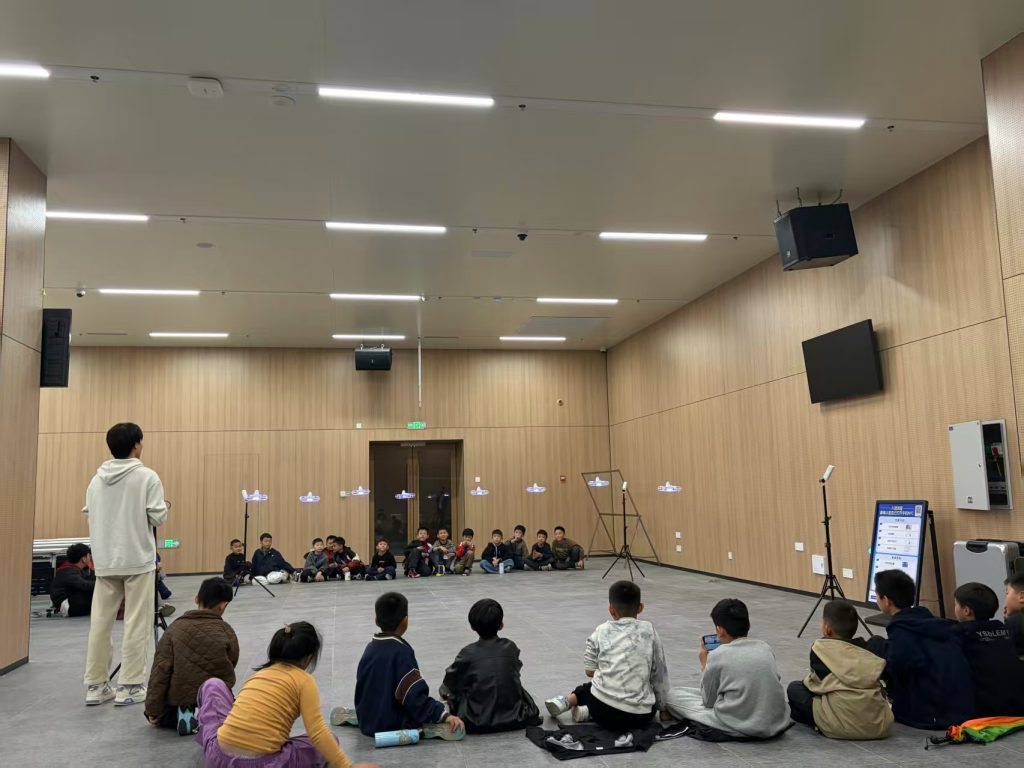
4. Optimizing Student Selection and Phased Training
Given resource constraints, a selective and phased approach to advanced drone training for the “X” certificate is prudent. This involves:
- Foundation Phase (All Students): Basic drone theory and safety in core courses.
- Screening Phase: Voluntary online theory modules and simulator performance; selection based on scores, motivation, and foundational grades.
- Intensive Training Phase (Selected Cohort): Focused, hands-on training for certificate preparation.
5. Innovating Blended and Safe Training Methodologies
A hybrid training model maximizes efficiency and safety:
- Online Theory: Use platforms for regulated knowledge (airspace, regulations, meteorology). Students learn at their own pace, with online assessments.
- Virtual Simulation: Before touching a physical drone, students must master flight controls in a high-fidelity simulator. This drastically reduces costly crashes and builds muscle memory safely.
$$ \text{Risk Reduction Factor} = 1 – \frac{\text{Crashes (with sim training)}}{\text{Crashes (without sim training)}} \approx 0.8 $$ - Supervised Practical Flight: Progressive training on real drones, starting with small trainers in netted areas, advancing to survey-grade platforms in controlled fields.
- Project-Based Data Labs: Hands-on sessions using industry-standard software to process collected data into final deliverables.
6. Reforming the Assessment and Evaluation System
Assessment must mirror real-world performance. Move beyond written exams to a competency-based portfolio:
- Process Evaluation (40%): Checklists for pre-flight planning, safety protocols, teamwork.
- Skill Evaluation (40%): Practical tests on flight execution, data acquisition quality, emergency response.
- Product Evaluation (20%): Quality and accuracy of final maps, 3D models, or survey reports generated.
Industry standards (e.g., ASPRS positional accuracy standards) should be directly incorporated into grading rubrics. The final “X” certificate examination becomes a natural, high-stakes milestone within this continuous assessment framework.
| Assessment Dimension | Evaluation Method | Tools / Metrics | Link to “X” Certificate |
|---|---|---|---|
| Theoretical Knowledge | Online quizzes; Written exams; Case study analysis. | Passing score on certified theory exam platform. | Directly aligns with the theoretical component of the certificate exam. |
| Operational Skill | Simulator assessments; Live flight tests on obstacle courses; Mission planning exercises. | Checklist completion; Time/accuracy in simulator; Flight pattern precision. | Directly aligns with the practical flight test for the certificate. |
| Data Processing Proficiency | Project submission; Software practical tests; Accuracy validation reports. | Comparison of derived products to ground truth data; Completeness of workflow. | Assesses higher-order skills essential for advanced certificate levels and job performance. |
| Safety & Professionalism | Peer assessment; Instructor observation; Logbook review. | Record of pre-flight checks; Adherence to protocols; Response to simulated emergencies. | Embedded in all practical evaluations and is a core, fail-critical element of certification. |
Case Implementation Pathway and Future Outlook
A successful implementation follows a structured pathway. A vocational college would first conduct a deep needs analysis with local surveying firms. Based on this, the curriculum committee would redesign the program, mapping each new module to certificate standards. Simultaneously, faculty undergo “train-the-trainer” programs. In Year 1, the reformed curriculum is launched for incoming students, with the selective “X” certificate training stream offered in Year 2. Partnerships with enterprises provide internship slots and guest lecturers. The college invests in a core fleet of drones and a simulation lab. Assessment is gradually shifted to the portfolio model. Continuous feedback from the first cohort of certificate holders and their employers is used to refine the program in an iterative cycle.
The future of drone training under “1+X” points towards greater sophistication. “X” certificates may evolve to include specializations like “Drone-based LiDAR Surveying” or “UAS for Precision Agriculture.” Curriculum will need to integrate with Building Information Modeling (BIM), Artificial Intelligence for automated feature extraction, and real-time data processing. The role of virtual and augmented reality in simulation will expand. Ultimately, the success of this framework will be measured by the seamless transition of graduates into the workforce, their ability to drive innovation, and the closing of the critical skills gap that currently hinders the full potential of drone technology in shaping our world.
In conclusion, the immense market demand for drone applications is constrained by a significant talent shortage. The “1+X” certificate system provides a powerful institutional framework to address this. By deeply aligning with industry needs, reforming curricula around “course-certificate integration,” building strong dual-qualified faculties, innovating safe and blended training methods, and implementing rigorous competency-based assessments, vocational institutions can dramatically enhance the quality and relevance of their drone training programs. This holistic approach ensures that graduates are not merely certificate holders but are truly job-ready professionals, capable of contributing immediately to the evolving field of drone surveying and mapping, thereby fueling both individual career success and broader industry growth.