
In recent years, with rapid economic development, UAV drones have seen widespread application globally. Their efficiency, precision, and flexibility have enabled them to permeate military, commercial, scientific, environmental, and public service sectors. As a key component of the low-altitude economy, the UAV drone industry has experienced significant growth. However, the extensive use of UAV drones also introduces public safety risks. Illegal flights, often referred to as “black flights,” can be used for unauthorized surveillance, privacy invasion, or even pose threats to national security. Therefore, researching and developing countermeasures against UAV drones has become critically important. We will explore the current challenges, technological solutions, and future trends in UAV drone countermeasures, emphasizing the need for integrated approaches.
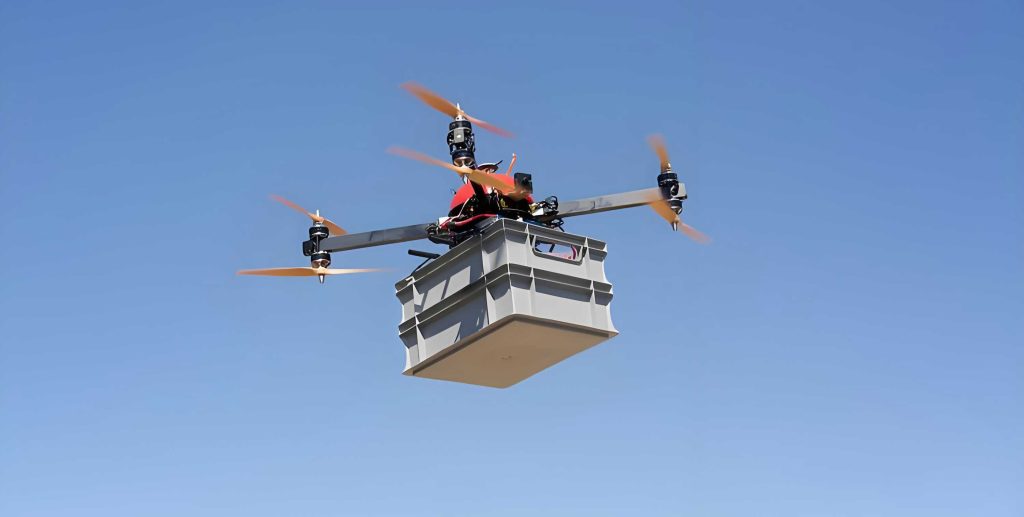
The proliferation of UAV drones has underscored the urgency of effective countermeasures. We begin by analyzing the primary issues faced in detecting and countering UAV drones, particularly those classified as “low, slow, and small” (LSS) targets. These UAV drones fly at low altitudes, move slowly, and have small cross-sections, making them difficult to detect using conventional methods. Urban environments exacerbate this challenge due to building obstructions and background clutter. Moreover, UAV drones are portable, easy to operate, and can launch suddenly, demanding rapid response times for countermeasures. From a cost perspective, countering UAV drones often requires substantial resources compared to the low cost of the drones themselves, highlighting the need for stricter regulations and penalties to deter malicious operators.
To quantify the detection difficulty, we can model the signal-to-noise ratio (SNR) for radar detection of UAV drones. The radar equation is given by:
$$ P_r = \frac{P_t G_t G_r \lambda^2 \sigma}{(4\pi)^3 R^4 L} $$
where \(P_r\) is the received power, \(P_t\) is the transmitted power, \(G_t\) and \(G_r\) are the antenna gains, \(\lambda\) is the wavelength, \(\sigma\) is the radar cross-section (RCS) of the UAV drone, \(R\) is the range, and \(L\) represents losses. For LSS UAV drones, \(\sigma\) is typically small (e.g., 0.01 m² to 0.1 m²), resulting in low \(P_r\) and challenging detection. We can express the detection probability \(P_d\) as:
$$ P_d = 1 – \left(1 + \frac{SNR}{2}\right)^{-N} $$
where \(N\) is the number of pulses integrated. In cluttered environments, \(P_d\) decreases further, necessitating advanced sensor fusion techniques.
Current UAV drone countermeasure technologies are diverse but vary in effectiveness. We categorize them into four main types: interference and disruption, physical interception, monitoring and control, and strike and destruction. Each has distinct advantages and limitations, as summarized in Table 1. Selecting the appropriate countermeasure depends on factors such as environment, scenario, and desired outcome (e.g., warning,驱逐,击落,定位,侦察,捕获). For instance, interference methods are cost-effective but may affect legitimate communications, while physical interception is suitable for urban settings but has limited range.
| Technology Type | Sub-categories | Advantages | Disadvantages | Typical Scenarios |
|---|---|---|---|---|
| Interference & Disruption | Radio communication jamming, GNSS spoofing | Low cost, fast response, no precise aiming needed | Risk of collateral damage, may disrupt合法通信 | Civil security, temporary no-fly zones |
| Physical Interception | Net capture, bird-of-prey systems | Minimal electromagnetic pollution, allows capture for analysis | Short range (<100 m), ineffective against high-speed UAV drones | Urban安保, events |
| Monitoring & Control | Protocol hijacking, sky net systems | Precise attack, minimal environmental impact | Relies on protocol vulnerabilities, high technical门槛 | Critical infrastructure, military bases |
| Strike & Destruction | Laser weapons, microwave systems, conventional火力 | High effectiveness,彻底 neutralization | High cost, potential次生伤害, weather-dependent | Military, high-threat areas |
Interference and disruption techniques exploit the reliance of UAV drones on radio communication and global navigation satellite systems (GNSS). For radio jamming, the jamming-to-signal ratio (JSR) is crucial:
$$ JSR = \frac{P_j G_j G_r \lambda^2}{(4\pi d_j)^2 L_j} \div \frac{P_s G_s G_r \lambda^2}{(4\pi d_s)^2 L_s} $$
where \(P_j\) and \(P_s\) are jamming and signal powers, \(G_j\) and \(G_s\) are gains, \(d_j\) and \(d_s\) are distances, and \(L_j\) and \(L_s\) are losses. Effective jamming requires JSR > 1, often achieved with high-power transmitters. GNSS spoofing involves transmitting伪造 signals to mislead UAV drone navigation. The欺骗 signal \(S_{spoof}(t)\) can be modeled as:
$$ S_{spoof}(t) = A \cos(2\pi f t + \phi(t) + \Delta \phi) $$
where \(A\) is amplitude, \(f\) is frequency, \(\phi(t)\) is phase modulation, and \(\Delta \phi\) is phase offset to induce positioning errors. This can cause UAV drones to误认为 in no-fly zones or follow altered trajectories.
Physical interception methods, such as net capture, involve launching nets to entangle UAV drone rotors. The kinetic energy \(E_k\) of a net projectile is:
$$ E_k = \frac{1}{2} m v^2 $$
where \(m\) is mass and \(v\) is velocity. For effective capture, \(E_k\) must be sufficient to overcome air resistance and ensure net deployment. Bird-of-prey systems use trained eagles, but their可控性 is low, and training costs are high.
Monitoring and control techniques, like protocol hijacking, require decoding UAV drone communication protocols. The success probability \(P_h\) depends on signal strength and encryption:
$$ P_h = \int_{0}^{\infty} f_{SNR}(x) \cdot C_{decrypt}(x) \, dx $$
where \(f_{SNR}(x)\) is the SNR distribution and \(C_{decrypt}(x)\) is the decryption success rate as a function of SNR. Sky net systems integrate phased array radar and electro-optical sensors for broad coverage. The detection range \(R_d\) for such systems is enhanced by sensor fusion:
$$ R_d = \max(R_{radar}, R_{EO}) + \alpha \cdot \sqrt{R_{radar} \cdot R_{EO}} $$
where \(R_{radar}\) and \(R_{EO}\) are individual sensor ranges, and \(\alpha\) is a fusion coefficient.
Strike and destruction methods employ directed energy weapons. For laser weapons, the power density \(I\) on target is:
$$ I = \frac{P_l G_l}{\pi \theta^2 R^2} e^{-\beta R} $$
where \(P_l\) is laser power, \(G_l\) is gain, \(\theta\) is beam divergence, \(R\) is range, and \(\beta\) is atmospheric attenuation coefficient. To damage a UAV drone, \(I\) must exceed a threshold \(I_{th}\) for a duration \(\tau\):
$$ E_{damage} = I \cdot \tau > E_{threshold} $$
Microwave weapons use high-power electromagnetic pulses to fry electronics. The electric field \(E\) at distance \(r\) is:
$$ E = \frac{\sqrt{30 P_{mw} G_{mw}}}{r} $$
where \(P_{mw}\) is power and \(G_{mw}\) is antenna gain. When \(E\) exceeds the breakdown voltage of UAV drone components, permanent damage occurs.
Despite these technologies, no single countermeasure is perfect for all scenarios. We must consider a system-of-systems approach. The future of UAV drone countermeasures lies in integrated trends, including legal frameworks, technological fusion, and combined human-physical-technical defenses. Regulations play a vital role; for example, China’s “Interim Regulations on Flight Management of Unmanned Aircraft” restrict anti-UAV devices to authorized entities, reducing misuse. Clear no-fly zones, pilot education, and registration systems help mitigate risks from UAV drones.
Technological advancements focus on multi-sensor fusion and artificial intelligence (AI). Multi-sensor fusion combines radar, electro-optical, infrared, acoustic, and radio frequency sensors to improve detection accuracy. The fused detection probability \(P_{fused}\) can be expressed using Dempster-Shafer theory:
$$ P_{fused} = \frac{\sum_{A \cap B = C} m_1(A) m_2(B)}{1 – \sum_{A \cap B = \emptyset} m_1(A) m_2(B)} $$
where \(m_1\) and \(m_2\) are mass functions from different sensors. This enhances reliability in complex environments. AI algorithms enable智能感知, threat assessment, and automated responses. For instance, AI can predict UAV drone trajectories using Kalman filters:
$$ \hat{x}_{k|k} = \hat{x}_{k|k-1} + K_k (z_k – H \hat{x}_{k|k-1}) $$
where \(\hat{x}\) is state estimate, \(K_k\) is Kalman gain, \(z_k\) is measurement, and \(H\) is observation matrix. AI-driven systems can dynamically allocate countermeasures, such as deploying干扰 for low-threat UAV drones or lasers for high-value targets.
The integration of human, physical, and technical defenses (“三防融合”) is essential for a holistic security体系. Human defense involves trained personnel for monitoring and decision-making; physical defense includes barriers and interception devices; technical defense leverages advanced sensors and weapons. Their synergy can be modeled as a networked system where effectiveness \(E\) is:
$$ E = \gamma_H \cdot H + \gamma_P \cdot P + \gamma_T \cdot T + \gamma_{int} \cdot \sqrt{H \cdot P \cdot T} $$
where \(H, P, T\) represent human, physical, and technical defense scores, and \(\gamma\) coefficients denote their weights and interaction effects.
To further illustrate the technological landscape, we present Table 2, which details sensor characteristics for detecting UAV drones. This underscores the importance of融合 in countering evolving UAV drone threats.
| Sensor Type | Detection Range | Advantages | Limitations | 融合 Potential |
|---|---|---|---|---|
| Radar | Up to 5 km | All-weather, long-range | Clutter susceptibility, low RCS for UAV drones | High |
| Electro-Optical | 1-3 km | High resolution, visual confirmation | Weather-dependent, requires line-of-sight | Medium |
| Infrared | 0.5-2 km | Night capability, heat signature detection | Affected by temperature, low range | Medium |
| Acoustic | 0.1-0.5 km | Passive, low cost | Short range, noise interference | Low |
| RF Spectrum | 2-10 km | Detects communication signals, identifies UAV drone types | Requires active emissions,加密 challenges | High |
In addition, the cost-effectiveness of countermeasures is critical. We can define a cost-benefit ratio \(CBR\) for反制 UAV drones:
$$ CBR = \frac{C_{countermeasure}}{N_{UAV} \cdot (P_{success} \cdot V_{damage} + (1 – P_{success}) \cdot V_{risk})} $$
where \(C_{countermeasure}\) is countermeasure cost, \(N_{UAV}\) is number of UAV drones targeted, \(P_{success}\) is success probability, \(V_{damage}\) is value of damage prevented, and \(V_{risk}\) is risk value from failure. Lower CBR indicates better efficiency. For instance,干扰 systems often have low \(C_{countermeasure}\) but may incur high \(V_{risk}\) due to collateral effects, whereas laser weapons have high upfront costs but high \(P_{success}\) against specific UAV drones.
Looking ahead, the evolution of UAV drone technology will necessitate continuous innovation in countermeasures. Swarm UAV drones, for example, pose new challenges due to their coordinated behavior. Countering swarms requires area-effect weapons like microwave systems or AI-driven swarm interception. The effectiveness against swarms can be modeled using Lanchester’s laws for modern combat:
$$ \frac{dU}{dt} = -\beta C U $$
$$ \frac{dC}{dt} = -\alpha U C $$
where \(U\) and \(C\) are numbers of UAV drones and countermeasure units, and \(\alpha, \beta\) are attrition coefficients. For swarm scenarios, \(\beta\) may increase with swarm density, favoring weapons with wide coverage.
Moreover, stealth UAV drones with reduced RCS and encrypted links demand advanced detection and deception techniques. Quantum sensing and radar advancements may offer solutions, but their practical deployment is still emerging. We believe that a layered defense strategy, combining early warning, identification, and multi-tiered engagement, is key to protecting critical areas from UAV drone threats.
In conclusion, as the low-altitude economy expands, UAV drones will become even more pervasive, making robust countermeasures imperative. We have analyzed the current issues, technological categories, and trends in UAV drone countermeasures. No single technology suffices for all scenarios; instead, a flexible, integrated approach is essential. By combining legal frameworks, multi-sensor fusion, AI, and human-physical-technical defenses, we can build comprehensive security systems. Future research should focus on cost reduction, interoperability, and adaptive systems to stay ahead of evolving UAV drone threats. Ultimately, through协同工作 and innovation, we can harness the benefits of UAV drones while mitigating their risks.