
In the realm of modern geospatial data acquisition, the application of Unmanned Aerial Vehicle (UAV) technology has revolutionized traditional surveying and mapping methodologies. This is particularly evident in the context of water conservancy projects, where accurate and efficient topographic data is paramount for design, analysis, and construction. This article details a first-hand application of UAV-based oblique photogrammetry, specifically utilizing China UAV drone technology, for a flash-flood control project. The workflow, from mission planning to final digital mapping and accuracy validation, demonstrates the profound capabilities of these systems in capturing complex linear terrain features such as river channels and embankments.
The significance of water conservancy infrastructure in mountainous regions cannot be overstated. These projects are vital for safeguarding agricultural and industrial production, protecting communities from natural disasters like floods, and ensuring regional water security. The foundational step for any such project is precise surveying and mapping. Traditional ground-based surveying methods, while accurate, are often time-consuming, labor-intensive, and pose significant safety risks in rugged or inaccessible terrain. The integration of China UAV drone platforms offers a transformative solution, enabling rapid, high-resolution data collection over large areas with minimal ground crew exposure to hazardous environments.
The Rise of China UAV Drone Technology in Geomatics
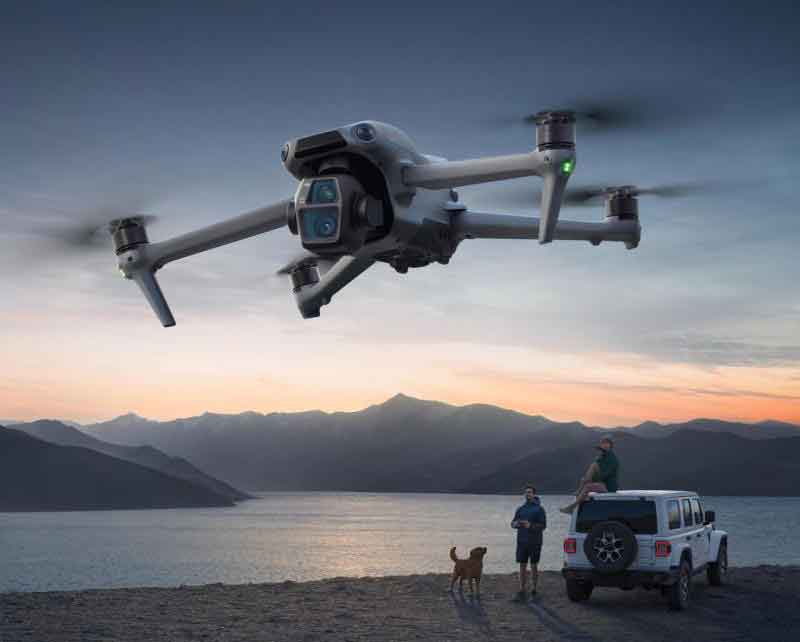
The global proliferation of UAV, or drone, technology for surveying has been significantly accelerated by innovations from manufacturers within China. China UAV drone systems, particularly those designed for mapping like the DJI Mavic 3E, Phantom 4 RTK, and Matrice series, have become industry standards due to their reliability, integrated high-precision GNSS modules, user-friendly software ecosystems, and cost-effectiveness. These systems often come equipped with Real-Time Kinematic (RTK) or Post-Processed Kinematic (PPK) capabilities, drastically reducing the need for numerous ground control points (GCPs) while maintaining centimeter-level accuracy. The synergy between robust hardware and sophisticated photogrammetric software, much of which is also developed in China, has made professional-grade surveying accessible to a broader range of engineering firms and government agencies. The project discussed herein is a direct beneficiary of this technological advancement, employing a mainstream China UAV drone to tackle a challenging linear survey.
Project Methodology: An Integrated Survey Workflow
The core objective was to generate high-accuracy digital topographic maps and cross-sectional data for a mountain torrent (flash-flood gully) regulation project. The adopted methodology follows a streamlined, integrated workflow: Reconnaissance & Planning -> Control Network Establishment -> UAV Data Acquisition -> Photogrammetric Processing -> 3D Modeling -> Digital Mapping & Accuracy Assessment.
Equipment and Software Suite
The success of a UAV survey hinges on selecting the appropriate tools. For this project, a combination of field and office equipment was used.
| Category | Equipment | Key Specification/Purpose |
|---|---|---|
| Hardware | DJI Mavic 3E UAV | 4/3” CMOS, 20MP, Mechanical Shutter, RTK Module |
| Geodetic GNSS Receiver (e.g., Huace X6) | For establishing control points and checkpoints (RTK mode) | |
| Total Station | For precise control point measurement in areas with poor GNSS signal | |
| Software | Flight Planning App (e.g., DJI Pilot 2) | For autonomous flight path planning and mission execution |
| Category | Software | Primary Function in Workflow |
|---|---|---|
| Processing & Mapping | DJI Terra / ContextCapture / Pix4D | Aerial Triangulation, Dense Point Cloud Generation, 3D Mesh/Textured Model, Digital Surface Model (DSM), Orthomosaic |
| CAD Platform with 3D Support (e.g., CASS 11.0) | 3D stereo digitization of topographic features from the model, final map editing | |
| Point Cloud Processing Software (e.g., Global Mapper, CloudCompare) | Point cloud classification, filtering, and analysis | |
| GIS Software | Spatial analysis, volume calculation, and data management |
Pre-Flight Planning and Control Survey
Prior to the UAV flight, a thorough site reconnaissance was conducted using satellite imagery to understand terrain, vegetation cover, and potential obstacles. Given the linear nature of the gully, the flight plan was designed as a corridor. Key planning parameters are calculated based on the desired Ground Sampling Distance (GSD), which dictates the spatial resolution of the final orthophoto and model. The GSD is a function of the sensor width, focal length, image width in pixels, and flight altitude.
The fundamental formula for calculating GSD is:
$$ GSD = \frac{H \times Sw}{f \times Iw} $$
Where:
- $GSD$ = Ground Sampling Distance (cm/pixel)
- $H$ = Flight altitude above ground (m)
- $Sw$ = Sensor width (mm)
- $f$ = Focal length (mm)
- $Iw$ = Image width in pixels
For the DJI Mavic 3E, with a sensor width of approximately 17.3 mm and a focal length of 8.8 mm, flying at an altitude of 80 meters yields a theoretical GSD of about 2.2 cm. To ensure robust 3D reconstruction, high overlap rates were set: 80% front overlap and 70% side overlap. A network of control points was established using the GNSS receiver in RTK mode. These points, marked with high-contrast targets, are crucial for georeferencing the model and correcting any residual errors from the drone’s onboard RTK.
Flight Execution and Data Capture
The China UAV drone was deployed to execute the pre-planned mission autonomously. The DJI Mavic 3E captures both nadir (vertical) and oblique imagery, which is essential for modeling vertical surfaces like riverbanks, culverts, and retaining walls. Each image is tagged with precise geolocation (latitude, longitude, altitude) and orientation (roll, pitch, yaw) from the RTK/IMU system. The flight was conducted under optimal weather conditions—clear skies with minimal wind—to ensure image sharpness and stability. In addition to the aerial imagery, RTK was used to collect precise topographical points at critical locations that might be occluded or poorly defined in the imagery, such as the precise water’s edge (thalweg) and under dense vegetation canopies.
Photogrammetric Processing and 3D Model Reconstruction
The post-processing stage transforms thousands of overlapping 2D images into accurate, measurable 3D spatial data. This process is computationally intensive and follows several key steps:
- Aerial Triangulation (AT) and Bundle Adjustment: The software identifies matching feature points (tie points) across all images. Using the known camera positions (from RTK) and lens calibration parameters, it solves a large bundle adjustment problem to refine the exterior orientation (position and attitude) of every camera and the 3D coordinates of all tie points. The mathematical foundation is the collinearity condition equations:
$$ x – x_0 = -f \frac{m_{11}(X – X_L) + m_{12}(Y – Y_L) + m_{13}(Z – Z_L)}{m_{31}(X – X_L) + m_{32}(Y – Y_L) + m_{33}(Z – Z_L)} $$
$$ y – y_0 = -f \frac{m_{21}(X – X_L) + m_{22}(Y – Y_L) + m_{23}(Z – Z_L)}{m_{31}(X – X_L) + m_{32}(Y – Y_L) + m_{33}(Z – Z_L)} $$
Where $(x, y)$ are image coordinates, $(x_0, y_0, f)$ are camera interior orientation parameters, $(X_L, Y_L, Z_L)$ are camera exposure station coordinates, $(X, Y, Z)$ are object space coordinates, and $m_{ij}$ are elements of the rotation matrix from object space to image space. - Dense Point Cloud Generation: After AT, multi-view stereo algorithms match pixels (not just feature points) to create a dense cloud of millions or billions of 3D points representing the earth’s surface.
- 3D Mesh and Textured Model: The dense point cloud is converted into a continuous triangular irregular network (TIN) mesh. High-resolution imagery is then draped onto this mesh, creating a photorealistic 3D model in formats like OSGB or OBJ.
- Digital Surface Model (DSM) and Orthomosaic: The dense point cloud is interpolated to create a raster DSM. An orthorectified image mosaic (orthophoto) is generated by differentially rectifying each image using the DSM to remove perspective and relief displacement, producing a planimetrically accurate image map.
Topographic Mapping and Feature Extraction
The photorealistic 3D model serves as the primary source for topographic mapping. Using CAD software like South CASS 11.0 in its 3D mode, an operator can digitally stereo-plot features directly onto the model. This includes:
- Planimetric Features: River centerlines, bank lines, road edges, buildings, and other cultural features.
- Terrain Features: Contour lines, breaklines (e.g., ridges, toe of slopes), and spot elevations.
- Engineering-Specific Features: Cross-section lines for hydraulic modeling, proposed embankment alignments, and excavation boundaries.
The efficiency of data collection is dramatically increased compared to traditional field surveying. Furthermore, the 3D model allows for the extraction of an infinite number of cross-sections at any desired location, which is invaluable for hydraulic engineering design and earthwork volume calculations.
Rigorous Accuracy Assessment and Validation
The ultimate test of any survey methodology is its accuracy. To validate the UAV-derived products, a set of independent checkpoints was surveyed using the high-precision RTK GNSS receiver. These points were not used in the aerial triangulation process. The coordinates (Easting, Northing, Elevation) extracted from the final orthomosaic and DSM at these checkpoint locations were compared against the RTK-measured “ground truth” values.
The standard metrics for accuracy assessment are the Root Mean Square Error (RMSE) in planimetry and elevation. The formulas are as follows:
Planimetric RMSE: $$ RMSE_{xy} = \sqrt{\frac{\sum_{i=1}^{n} ((\Delta X_i)^2 + (\Delta Y_i)^2)}{n}} $$
Elevation RMSE: $$ RMSE_z = \sqrt{\frac{\sum_{i=1}^{n} (\Delta Z_i)^2}{n}} $$
Where $n$ is the number of checkpoints, and $\Delta X_i, \Delta Y_i, \Delta Z_i$ are the coordinate differences between the UAV-derived value and the RTK-measured value for checkpoint $i$.
| Checkpoint ID | RTK Easting (m) | RTK Northing (m) | UAV Easting (m) | UAV Northing (m) | ΔEasting (cm) | ΔNorthing (cm) | Horizontal Error (cm) |
|---|---|---|---|---|---|---|---|
| CP01 | 2798163.97 | 39403307.68 | 2798163.95 | 39403307.69 | -2 | +1 | 2.2 |
| CP02 | 2798165.50 | 39403311.76 | 2798165.49 | 39403311.73 | -1 | -3 | 3.2 |
| CP03 | 2798148.77 | 39403313.87 | 2798148.75 | 39403313.85 | -2 | -2 | 2.8 |
| … | … | … | … | … | … | … | … |
| CP10 | 2798167.13 | 39403344.02 | 2798167.15 | 39403344.05 | +2 | +3 | 3.6 |
| Calculated RMSExy: | 2.51 cm | ||||||
| Checkpoint ID | RTK Elevation (m) | UAV DSM Elevation (m) | ΔElevation (cm) | ΔElevation² (cm²) |
|---|---|---|---|---|
| CP01 | 463.73 | 463.71 | +2 | 4 |
| CP02 | 463.58 | 463.62 | -4 | 16 |
| CP03 | 463.72 | 463.74 | -2 | 4 |
| … | … | … | … | … |
| CP10 | 461.43 | 461.42 | +1 | 1 |
| Sum of Squares: | – | 163 | ||
| Calculated RMSEz: | 3.18 cm | |||
The results, with an RMSExy of 2.51 cm and RMSEz of 3.18 cm, comfortably meet and exceed the accuracy requirements stipulated in major engineering surveying standards such as GB 50026-2020 (Code for Engineering Surveying) and CJJ/T 8-2011 (Code for Urban Surveying). This level of accuracy is more than sufficient for detailed engineering design of hydraulic structures, earthwork calculations, and environmental impact assessments.
Advantages and Impact on Water Conservancy Engineering
The implementation of a China UAV drone-based survey system offers multifaceted advantages over conventional techniques:
| Aspect | Traditional Ground Survey (Total Station/GNSS) | UAV Oblique Photogrammetry |
|---|---|---|
| Data Collection Speed | Slow; linear point collection. | Extremely fast; area-based data capture. |
| Field Personnel Safety | High risk in steep, flooded, or unstable terrain. | Minimal risk; operators remain in safe areas. |
| Data Density & Completeness | Sparse point data; potential for missed features. | Continuous, high-density point cloud; full scene context. |
| Visualization & Communication | 2D maps and profiles. | Photorealistic 3D models, videos, and interactive scenes. |
| Cross-Section Flexibility | Sections must be planned and surveyed in the field. | Unlimited sections can be extracted from the 3D model at any location post-survey. |
| Cost for Large Areas | High, scales linearly with area and complexity. | Lower marginal cost per unit area; highly scalable. |
For the specific case of the mountain torrent project, the China UAV drone provided an irreplaceable bird’s-eye view, clearly revealing the gully’s morphology, erosion patterns, and the relationship between the channel and surrounding land use. This holistic perspective is critical for designing effective flood control measures, such as where to place check dams, how to armor banks, and how to integrate the project into the existing landscape.
Challenges, Limitations, and Future Directions
Despite its strengths, the technology is not without limitations. Dense vegetation remains a significant challenge; the photogrammetric model represents the top of the canopy, not the ground surface (bare earth). In such cases, supplemental techniques like terrestrial laser scanning (TLS) or the use of UAV-borne LiDAR, which can penetrate vegetation gaps, are necessary. Water surfaces, being featureless and reflective, cause problems for image matching and result in noisy or missing data in the model. Furthermore, the accuracy of the model is highly dependent on the quality and distribution of ground control, especially for projects not using RTK/PPK-enabled drones.
The future of China UAV drone applications in water conservancy is incredibly promising. We are moving towards greater integration:
- Multi-Sensor Fusion: Combining RGB cameras with multispectral, thermal, and LiDAR sensors on a single UAV platform for comprehensive analysis (e.g., vegetation health, water seepage detection, precise volumetric calculations).
- AI-Powered Automation: Using machine learning algorithms to automatically classify point clouds (ground, vegetation, buildings), detect changes over time, and identify structural defects in infrastructure like dams and levees.
- Real-Time Processing and Analysis: Development of edge computing capabilities on drones to process data in near-real-time, providing immediate insights during emergency response scenarios like post-flood damage assessment.
- Enhanced Long-Endurance Platforms: Advancements in hydrogen fuel cells or hybrid systems will enable China UAV drone to cover vast reservoir or river basin areas in a single flight.
The mathematical models will also evolve, incorporating more robust algorithms for dealing with challenging surfaces and optimizing flight paths for efficiency and accuracy autonomously, further solidifying the role of the China UAV drone as an indispensable tool in the water resources engineer’s toolkit.
In conclusion, the practical application detailed here underscores a paradigm shift in water conservancy surveying. The China UAV drone, equipped with oblique photogrammetry capabilities, has proven to be a highly accurate, efficient, and safe solution for acquiring critical geospatial data. By generating rich, measurable 3D reality models, it provides engineers and planners with an unparalleled understanding of the project site, leading to better-informed designs, more accurate cost estimations, and ultimately, more resilient and effective water management infrastructure. As technology continues to advance, the synergy between sophisticated China UAV drone platforms and intelligent processing software will only deepen, unlocking new possibilities for sustainable water conservancy development worldwide.