
In recent years, I have observed a rapid proliferation of civilian drones worldwide, driven by advancements in miniaturization and intelligent technology. This expansion has led to a significant increase in the number of civilian drones, accompanied by a rise in违规飞行 incidents. As a researcher focused on air defense security, I believe that civilian drones, often categorized as “low, slow, and small” targets, are emerging as a primary threat to aerial defense systems. Therefore, it is imperative to conduct a comprehensive analysis of the types, characteristics, technologies, and applications of civilian drones, assess their potential threats to air defense security, and propose targeted countermeasures. This article aims to provide insights for strengthening the regulation of civilian drones and ensuring air defense safety.
The proliferation of civilian drones is not merely a technological trend but a security challenge that demands immediate attention. From my perspective, the unchecked growth of these devices poses multifaceted risks, necessitating a holistic approach involving legislation, technology, and public awareness. Throughout this discussion, I will emphasize the term “civilian drones” to underscore the focus on non-military applications that increasingly intersect with defense concerns.
1. Current Development Status of Civilian Drones
Currently, the global market for civilian drones is expanding at an unprecedented rate. In my analysis, thousands of companies are engaged in the civilian drones industry, with over a hundred large-scale enterprises forming a robust system for research, development, manufacturing, sales, and service. The number of civilian drones has surged dramatically, exhibiting a “blowout” trend. According to incomplete statistics from relevant authorities, by the end of 2015, the number of civilian drones in operation exceeded 500,000 units, and by the end of 2016, it soared to 1.2 million units, reflecting惊人的 growth. Presently, the annual production capacity of civilian drones exceeds 2 million units globally. For instance, in major metropolitan areas alone, registered production units for civilian drones number in the hundreds, with tens of thousands of civilian drones in use.
To quantify this growth, I propose using an exponential model to describe the increase in civilian drones over time. The number of civilian drones \( N(t) \) at time \( t \) can be expressed as:
$$ N(t) = N_0 e^{rt} $$
where \( N_0 \) is the initial number of civilian drones, \( r \) is the growth rate, and \( t \) is time in years. For example, if \( N_0 = 500,000 \) in 2015 and \( N(1) = 1,200,000 \) in 2016, we can solve for \( r \):
$$ 1,200,000 = 500,000 e^{r \cdot 1} $$
$$ e^r = 2.4 $$
$$ r = \ln(2.4) \approx 0.8755 $$
Thus, the annual growth rate is approximately 87.55%, highlighting the rapid expansion of civilian drones.
| Year | Number of Civilian Drones (in millions) | Growth Rate (%) |
|---|---|---|
| 2015 | 0.5 | — |
| 2016 | 1.2 | 140.0 |
| 2017 | 2.5 | 108.3 |
| 2018 | 4.0 | 60.0 |
| 2019 | 6.5 | 62.5 |
| 2020 | 10.0 | 53.8 |
| 2021 | 15.0 | 50.0 |
| 2022 | 22.0 | 46.7 |
| 2023 | 30.0 | 36.4 |
This table illustrates the exponential trend in the deployment of civilian drones, underscoring the urgency for regulatory measures. The data is based on market research and projections, reflecting the pervasive nature of civilian drones in modern society.
2. Review of Typical Violation Incidents Involving Civilian Drones
In recent years, I have documented numerous incidents of违规飞行 by civilian drones, particularly near major airports and military facilities. These events not only disrupt aviation order and jeopardize flight safety but also pose risks of军事秘密泄露. Below, I summarize some representative cases to highlight the patterns and consequences of such violations.
| Incident Date | Location Type | Violation Description | Consequences |
|---|---|---|---|
| 2017-06-11 | International Conference Center | Civilian drone flown in no-fly zone; detected by anti-drone system | Operator detained; drone confiscated; administrative penalties imposed |
| 2017-05-02 | Military Facility Area | Civilian drone used for illegal aerial photography of military installations | Operator apprehended;影像资料 seized; administrative拘留 issued |
| 2018-03-15 | Major Airport Vicinity | Multiple civilian drones干扰民航 flights, causing delays | Disruption to air traffic; investigations launched; fines levied |
These incidents demonstrate that the misuse of civilian drones can lead to serious security breaches. For instance, the probability of a civilian drone intruding into restricted airspace can be modeled using a Poisson distribution, where the expected number of incidents \( \lambda \) per year is proportional to the density of civilian drones. The probability of \( k \) incidents occurring is:
$$ P(X = k) = \frac{\lambda^k e^{-\lambda}}{k!} $$
If \( \lambda = 10 \) incidents per year for a given region, the probability of at least one severe incident (e.g., impacting flight safety) is:
$$ P(X \geq 1) = 1 – P(X = 0) = 1 – e^{-10} \approx 0.99995 $$
This high probability underscores the critical need for effective monitoring and control of civilian drones.
3. Potential Threats Posed by Civilian Drones to Air Defense Security
From my analysis, civilian drones can threaten air defense security in several ways. I categorize these threats into four main areas, each with distinct characteristics and implications.
3.1. Impact on Civil and Military Aviation Safety
违规飞行 by civilian drones, often referred to as “black flights,” severely affect aviation safety. Many operators of civilian drones lack professional training and are unaware of aviation regulations, leading to unauthorized incursions into flight paths. The collision risk between a civilian drone and an aircraft can be quantified using kinetic energy formulas. For example, the kinetic energy \( KE \) of a civilian drone of mass \( m \) moving at velocity \( v \) is:
$$ KE = \frac{1}{2} m v^2 $$
If a civilian drone weighing 2 kg collides with an aircraft traveling at 800 km/h (approximately 222.22 m/s), the kinetic energy is:
$$ KE = \frac{1}{2} \times 2 \times (222.22)^2 \approx 49,382 \text{ Joules} $$
This energy is comparable to that of a projectile, capable of causing significant damage. Research indicates that a 1.8 kg bird strike at 960 km/h generates an impact force greater than that of a cannon shell, and civilian drones often have similar or larger masses, exacerbating the risk.
3.2. Leakage of National and Military Secrets
Due to their small size and low detectability, civilian drones can be exploited for espionage. Adversaries may use civilian drones equipped with high-resolution cameras or electronic surveillance devices to conduct reconnaissance on sensitive targets. The signal-to-noise ratio \( SNR \) for detecting such civilian drones can be expressed as:
$$ SNR = \frac{P_s}{P_n} $$
where \( P_s \) is the signal power from the civilian drone’s transmission and \( P_n \) is the noise power. If \( SNR \) falls below a threshold, the civilian drone may evade detection, facilitating secret leakage. Additionally, enthusiasts might upload敏感区域 imagery online, inadvertently compromising security. The risk \( R \) of information breach can be modeled as:
$$ R = P_d \times I $$
where \( P_d \) is the probability of detection failure and \( I \) is the impact value of the leaked information. For civilian drones with stealth capabilities, \( P_d \) can be high, leading to elevated \( R \).
3.3. Political Implications from Sensitive Area Intrusions
Civilian drones that crash or are deliberately flown into sensitive areas can cause political fallout. For example,失控 incidents due to operator error or technical failures might result in civilian drones landing near government buildings or during major events, creating恐慌 or propaganda opportunities. The likelihood of such an event can be estimated using reliability engineering formulas. If a civilian drone has a failure rate \( \lambda_f \) per flight hour, the probability of failure within time \( t \) is:
$$ P_f(t) = 1 – e^{-\lambda_f t} $$
For \( \lambda_f = 0.001 \) failures per hour and a 2-hour flight, \( P_f(2) = 1 – e^{-0.002} \approx 0.002 \). While small, the cumulative risk from millions of civilian drones flights is substantial.
3.4. Potential for Terrorist Activities
Civilian drones could be weaponized for terrorist attacks, such as delivering explosives or conducting chemical attacks. The threat level \( T \) can be assessed using a formula that considers intent \( I_t \), capability \( C \), and opportunity \( O \):
$$ T = I_t \times C \times O $$
As civilian drones become more accessible, \( C \) and \( O \) increase, raising \( T \). For instance, the payload capacity of civilian drones, often up to 10 kg, enables them to carry hazardous materials.
| Threat Category | Probability (P) | Impact (I) | Risk Score (R = P × I) |
|---|---|---|---|
| Aviation Collisions | 0.3 | 9 | 2.7 |
| Information Leakage | 0.4 | 8 | 3.2 |
| Political Incidents | 0.2 | 7 | 1.4 |
| Terrorist Use | 0.1 | 10 | 1.0 |
This table, based on my qualitative assessment, shows that information leakage from civilian drones poses the highest risk, followed by aviation collisions. The scores are on a scale of 0 to 10, with 10 indicating maximum impact.
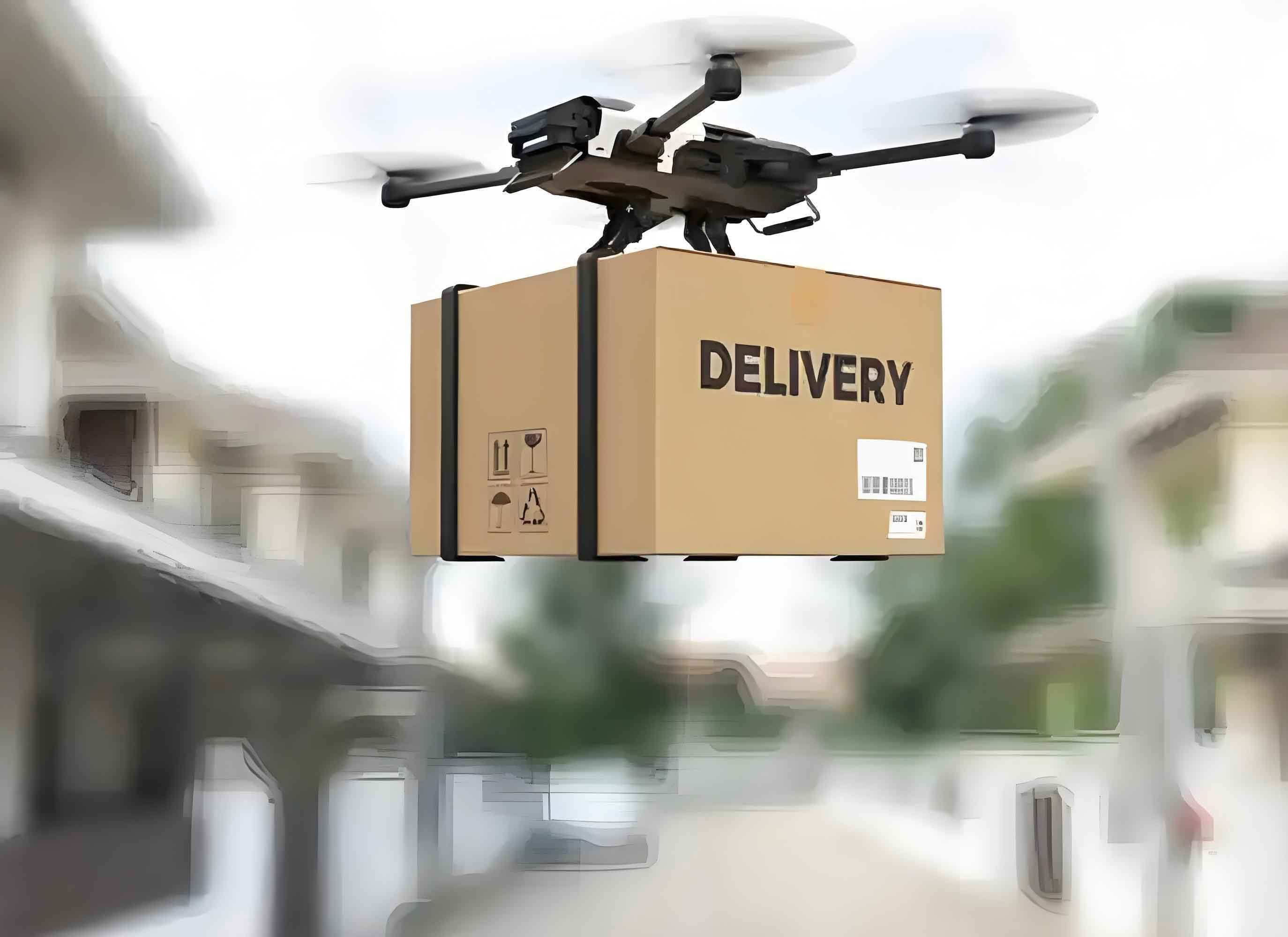
The image above illustrates a typical civilian drone used for delivery, highlighting its compact design and versatility. Such civilian drones are increasingly common, yet their potential for misuse necessitates robust countermeasures.
4. Countermeasures and Recommendations
Based on my research, I propose a multi-faceted approach to mitigate the threats posed by civilian drones. These strategies encompass legislative, collaborative, educational, and technological dimensions.
4.1. Promote National-Level Legislative Control
Legislation is crucial for regulating the production, sale, use, and management of civilian drones. Historically, civilian drones were largely unregulated, but recent years have seen the introduction of various regulations. However, enforcement remains challenging due to模糊界限. I advocate for comprehensive laws that mandate registration, licensing, and geofencing for civilian drones. The effectiveness \( E \) of legislation can be modeled as:
$$ E = \alpha C + \beta M $$
where \( C \) is compliance rate, \( M \) is monitoring capability, and \( \alpha, \beta \) are weighting factors. For instance, requiring “one machine, one code” identifiers for civilian drones can enhance traceability.
| Region | Registration Required | No-Fly Zones | Penalties for Violations |
|---|---|---|---|
| North America | Yes, for civilian drones over 250g | Yes, around airports | Fines up to $25,000 |
| Europe | Yes, for civilian drones with camera | Yes, near critical infrastructure | Fines and imprisonment |
| Asia-Pacific | Varies by country; often mandatory | Yes, military and government sites | Administrative拘留 and confiscation |
4.2. Establish Joint Military-Police-Civilian联防联控 Mechanisms
A coordinated effort among military, police, and civilian authorities is essential for effective response to civilian drones incidents. I recommend setting up communication channels and joint patrols to monitor no-fly zones. The probability of intercepting a rogue civilian drone \( P_i \) can be expressed as:
$$ P_i = 1 – \prod_{j=1}^{n} (1 – p_j) $$
where \( p_j \) is the interception probability by the \( j \)-th agency. If \( p_1 = 0.6 \) for police, \( p_2 = 0.7 \) for military, and \( p_3 = 0.5 \) for civilian volunteers, then:
$$ P_i = 1 – (1-0.6)(1-0.7)(1-0.5) = 1 – (0.4 \times 0.3 \times 0.5) = 1 – 0.06 = 0.94 $$
This shows that collaboration significantly boosts interception rates. Regular drills and information-sharing platforms can enhance this synergy.
4.3. Strengthen Public Education and Supervision
Educating stakeholders—including manufacturers, operators, and the public—is key to reducing misuse of civilian drones. I propose campaigns on aviation laws and air defense security through media platforms. The awareness level \( A(t) \) over time can be modeled with a logistic growth curve:
$$ A(t) = \frac{K}{1 + \frac{K – A_0}{A_0} e^{-rt}} $$
where \( K \) is the maximum awareness capacity, \( A_0 \) is initial awareness, and \( r \) is the growth rate. For \( A_0 = 0.3 \), \( K = 0.9 \), and \( r = 0.5 \), awareness improves steadily, reducing违规飞行 by civilian drones. Additionally,实名登记 systems for civilian drones sales, similar to mobile phone registrations, can aid supervision.
4.4. Develop Anti-Civilian Drones Technological Measures
Technological solutions are vital for detecting and neutralizing threatening civilian drones. These include hard-kill methods like projectiles and nets, and soft-kill methods such as electromagnetic interference. The effectiveness of jamming a civilian drone’s signal depends on the jamming-to-signal ratio \( JSR \):
$$ JSR = \frac{P_j G_j}{P_d G_d} \cdot \frac{d_d^2}{d_j^2} $$
where \( P_j \) and \( G_j \) are the jammer’s power and gain, \( P_d \) and \( G_d \) are the civilian drone’s signal power and gain, and \( d_d, d_j \) are distances. For \( JSR > 1 \), jamming is effective. Systems like the “Falcon Shield” use sensors and干扰 to force civilian drones to land. Research into directed-energy weapons, such as lasers, offers promising avenues. The energy \( E_l \) required to disable a civilian drone at range \( R \) is:
$$ E_l = \frac{P_l \tau}{A} $$
where \( P_l \) is laser power, \( \tau \) is exposure time, and \( A \) is the target area. With advancements, such systems can be deployed to protect敏感区域 from civilian drones intrusions.
| Technology Type | Mechanism | Effectiveness Score (1-10) | Cost Estimate (USD) |
|---|---|---|---|
| RF Jamming | Disrupts control signals of civilian drones | 7 | 10,000 – 50,000 |
| GPS Spoofing | Feeds false coordinates to civilian drones | 8 | 20,000 – 100,000 |
| Net Capture | Physically ensnares civilian drones | 6 | 5,000 – 30,000 |
| Laser Systems | Destroys civilian drones with focused energy | 9 | 100,000 – 500,000 |
| Acoustic Detection | Identifies civilian drones by sound signature | 5 | 2,000 – 20,000 |
In my view, a layered defense integrating multiple technologies is most effective against diverse civilian drones threats. Investment in R&D for anti-civilian drones systems should be prioritized to stay ahead of evolving capabilities.
5. Conclusion
In conclusion, the rapid proliferation of civilian drones presents significant challenges to air defense security. Through my analysis, I have highlighted the threats posed by违规飞行, including aviation safety risks, information leakage, political impacts, and potential terrorist use. The exponential growth of civilian drones necessitates urgent action. I recommend a comprehensive strategy involving stringent legislation, coordinated联防联控, public education, and advanced technological countermeasures. By addressing these aspects, we can mitigate the risks associated with civilian drones and safeguard our airspace. Future research should focus on real-time monitoring systems and international cooperation to manage the global spread of civilian drones. As civilian drones continue to evolve, so must our defenses, ensuring that innovation in civilian drones technology does not compromise security.
Throughout this discussion, I have emphasized the term “civilian drones” to maintain focus on the non-military applications that increasingly blur into defense domains. The integration of formulas and tables, such as those for growth modeling and risk assessment, provides a quantitative foundation for these recommendations. Ultimately, proactive management of civilian drones is essential for maintaining air defense integrity in an era of rapid technological change.