
Reflecting on the evolution of remote sensing, I have witnessed a remarkable transformation. From the era of satellite and manned aircraft dominance, a new, agile player has emerged, fundamentally reshaping how we observe our planet: the unmanned aerial vehicle, or drone. In my view, a drone is far more than a simple flying machine; it is a data-driven, intelligent, and mobile agent within our future networked environment. Among its myriad applications, drone remote sensing stands out as the most influential and pioneering industry. Over the past twenty years, the trajectory of China’s drone remote sensing sector has been nothing short of extraordinary, evolving from nascent prototypes to a sophisticated, strategically vital ecosystem. This journey, marked by state-guided initiatives, profound technological breakthroughs, and expansive industrial applications, merits a comprehensive review.
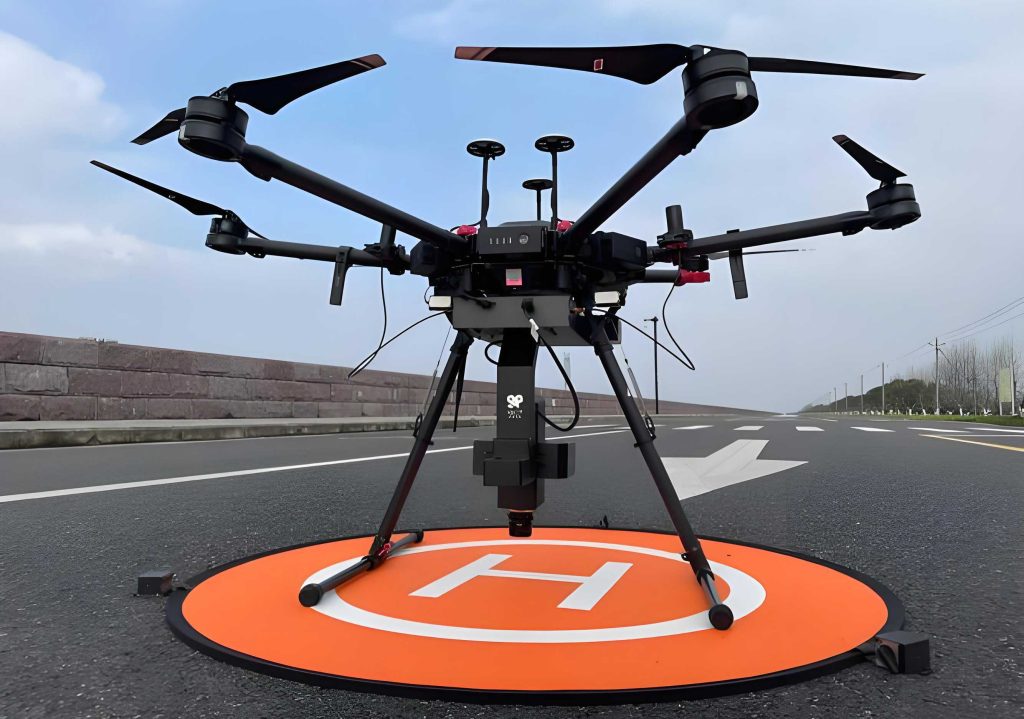
This narrative begins by tracing the pivotal national milestones that propelled the China drone industry forward. It then delves into the core technical conquests that enabled quantitative and automated observation, before exploring the diverse sectors revolutionized by this technology. Finally, it peers into the horizon, where intelligent networking promises to unlock unprecedented capabilities. Throughout this account, the term “China drone” will recur as a testament to this distinct and powerful technological lineage.
I. The Formative Years: A State-Sponsored Ascent
The global backdrop for drone remote sensing saw early military predominance, particularly in the United States, with systems like Global Hawk demonstrating high-altitude, long-endurance reconnaissance capabilities. Commercial and scientific applications began to surface elsewhere, utilizing drones for atmospheric research and marine monitoring. In contrast, China’s drone activities, starting from the mid-20th century, were primarily militarily oriented for decades. The true turning point for civilian China drone remote sensing arrived at the dawn of the 21st century, catalyzed by structured national planning and funding.
The 10th Five-Year Plan period (2001-2005) marked the genesis. Supported by the Ministry of Science and Technology’s Innovation Fund for Small and Medium-sized Technological Enterprises, the first integrated civilian drone remote sensing prototype system was developed. This system encompassed aerial platforms, sensor payloads, ground control, and data processing subsystems. Its historic maiden flight in August 2005 was a national event, successfully acquiring imagery with a ground resolution of 2.25 cm and demonstrating automated mission control and real-time data downlink. This achievement filled a critical gap in China’s industrial-grade civilian drone remote sensing capabilities and set the stage for everything that followed.
Subsequent national plans systematically amplified these efforts. The 11th Five-Year Plan (2006-2010) focused on moving from demonstration to quantification. A key national research program led to the establishment of China’s first dedicated drone remote sensing payload calibration fields in the north (Baotou) and south (Anshun). Concurrently, the Songshan Aerospace-Aviation Calibration Field was built, creating a unified benchmark for sensor performance across drone and satellite platforms. This period was dedicated to answering a fundamental question: how can we trust and precisely measure what the China drone sensors see?
The 12th Five-Year Plan (2011-2015) shifted emphasis towards reliability, safety, and networked operations. Research focused on drone system safety testing standards, reliability assessment, and the pioneering integration of satellite relay communications (like the single-Ka band terminal) for real-time, long-distance data transmission from drones. This work laid the groundwork for moving beyond isolated drone missions towards coordinated fleets.
Under the 13th Five-Year Plan (2016-2020) and continuing, the vision expanded dramatically. National key research and development programs now explicitly target the creation of “High-Frequency and Agile Unmanned Aerial Vehicle Regional Networked Remote Sensing Observation Systems.” The goal is no longer a single drone, but a resilient, responsive mesh of drones—a true observational network. The state’s role has evolved from seeding initial research to orchestrating the integration of drone networks into the national Earth observation infrastructure.
| Five-Year Plan Period | Strategic Focus | Key Representative Achievements |
|---|---|---|
| 10th (2001-2005) | Prototype System & Industrial Genesis | First civilian drone remote sensing system flight; Integrated aerial-ground system validation. |
| 11th (2006-2010) | Quantification & Calibration | Establishment of North/South drone calibration fields; Songshan aerospace-air calibration field. |
| 12th (2011-2015) | Safety, Reliability & Networking | Drone safety detection standards; Satellite relay communication terminals; Automated data processing software. |
| 13th (2016-Present) | Intelligent Regional Networking | National R&D programs for drone swarm observation; Integration with 5G, AI, and cloud computing. |
II. The Core Conquests: Engineering Precision and Autonomy
The advancement of the China drone remote sensing industry rested on conquering two intertwined technical challenges: Quantitative Accuracy and Operational Automation. Without the first, data is merely pictorial; without the second, the technology cannot scale.
A. The Pursuit of Quantification: Building the Metrological Foundation
For drone data to be scientifically and industrially trustworthy, it must be traceable to physical standards. This requires rigorous calibration of the sensors for geometry (position), radiation (light intensity), and spectrum (color). The establishment of specialized calibration fields was the masterstroke that addressed this.
The dedicated drone calibration fields feature an array of permanent and mobile targets with known reflective properties and precise coordinates. A key innovation was the mobile vehicle-mounted hard target, which serves as a dynamic reference to correct for the degradation of static soft targets. These fields enable an unprecedented level of in-situ validation, achieving remarkable uncertainties: better than 6% for absolute radiometric calibration, better than 5% for relative calibration, and better than 0.5 nm for spectral calibration.
The Songshan field took this further by providing a common “ruler” for both drone and satellite sensors. This harmonization is crucial for the fusion of multi-source remote sensing data, enabling seamless integration of high-resolution drone imagery with broader-coverage satellite data. The geometric calibration relies on dense ground control point networks, while radiometric calibration uses grayscale targets with precise gradients. The core mathematical model for radiometric calibration traditionally follows a linear relationship:
$$ DN = k \cdot L + b $$
where \( DN \) is the digital number from the sensor, \( L \) is the true radiance at the sensor’s aperture, \( k \) is the gain coefficient, and \( b \) is the bias or dark current offset. The calibration process determines \( k \) and \( b \) to convert raw \( DN \) values into physical radiance units.
B. The Sensor Revolution: From General to Specific
The payload is the eyes of the China drone. The industry’s growth has been paralleled by the miniaturization and diversification of these “eyes.” Early systems relied on repurposed or adapted digital cameras. Today, a suite of specialized lightweight sensors exists:
- High-Resolution Optical Cameras: The workhorses for mapping and surveying, now offering centimeter-resolution from lightweight platforms.
- Multispectral & Hyperspectral Imagers: These sensors capture data across many narrow spectral bands, enabling detailed analysis of vegetation health, water quality, and mineral composition. The challenge has been to shrink traditionally bulky spectrometers onto drone platforms.
- Light Detection and Ranging (LiDAR): This active sensor uses laser pulses to measure distances, generating precise 3D point clouds of the terrain and vegetation structure. It has revolutionized forestry, archaeology, and topographic surveying.
- Thermal Infrared Cameras: Sensitive to heat, they are indispensable for night operations, search and rescue, and monitoring industrial facilities or agricultural water stress.
- Synthetic Aperture Radar (SAR): Capable of seeing through clouds and in darkness, drone-based SAR is a game-changer for all-weather, day-night monitoring, particularly in disaster response.
- Polarization Sensors: By measuring the polarization state of reflected light, these sensors enhance contrast, mitigate atmospheric haze, and can detect specific materials, offering advantages in environmental monitoring and target detection.
The development philosophy has shifted from treating the sensor as a black box to a deep, physics-based understanding. This involves photoelectric parameter decomposition, where the imaging process is modeled through its fundamental optical and electronic components. By linking system performance directly to these physical parameters, engineers can diagnose performance degradation at the component level and design higher-fidelity sensors from the ground up. This approach ensures that the China drone payloads are not just small, but also metrologically robust.
C. The Drive for Automation: Systems and Models
Automation is what makes drone remote sensing scalable, cost-effective, and safe. This required breakthroughs both in hardware system integration and in the mathematical models that govern them.
A significant leap was the development of a unified physical model for the drone remote sensing system. Traditionally, the gimbal-mounted sensor and the drone airframe were treated as multiple rigid bodies with complex interactions. The new approach conceptualizes the entire system—airframe, gimbal, and sensor—as a single integrated rigid body for imaging purposes. This simplification, represented in a consolidated system equation, drastically reduces the complexity of flight control and geo-referencing. The geometric positioning model evolves from a multi-component chain to a more direct form:
$$ \begin{bmatrix} X_G \\ Y_G \\ Z_G \end{bmatrix} = \begin{bmatrix} X_{UAV} \\ Y_{UAV} \\ Z_{UAV} \end{bmatrix} + R \cdot \begin{bmatrix} x_s \\ y_s \\ f \end{bmatrix} $$
Here, \( (X_G, Y_G, Z_G) \) are ground coordinates, \( (X_{UAV}, Y_{UAV}, Z_{UAV}) \) is the drone’s position from GNSS, \( R \) is a consolidated rotation matrix encompassing drone attitude and gimbal angles, and \( (x_s, y_s, f) \) are the image coordinates and focal length. This model enables automated, dynamic observation planning and real-time data processing.
Extensive flight verification programs validated these system advancements. Industrial-grade China drone platforms demonstrated exceptional reliability, undertaking missions in challenging environments like the high-altitude, high-wind “Death Valley” of the Jinsha River, flying for over 10 hours in narrow gorges to complete critical surveying tasks. This proved the maturity of the China drone industry for demanding, real-world operational scenarios.
| Technical Pillar | Key Challenge | Breakthrough Solution | Impact |
|---|---|---|---|
| Quantification | Lack of trustable, traceable data. | Establishment of national calibration fields; Photoelectric parameter decomposition. | Enabled cm-level precision; Unified standard for drone-satellite data fusion. |
| Payload Development | Bulky, expensive sensors unfit for drones. | Miniaturization of hyperspectral, LiDAR, SAR, polarization sensors. | Diversified applications; Physics-based sensor design for higher quality. |
| Automation | Complex, manual operation limiting scale. | Unified system physical model; Single rigid-body imaging concept. | Enabled automated mission control, planning, and real-time processing. |
III. The Industrial Imperative: Transforming Sectors
The technological foundations laid by the China drone ecosystem have catalyzed transformative applications across defense, civil governance, and commercial sectors.
A. National Defense and Security
The China drone industry has matured into a strategic asset for national defense. Modern Chinese unmanned reconnaissance systems, ranging from medium-altitude long-endurance (MALE) to high-altitude long-endurance (HALE) platforms, provide persistent, high-resolution intelligence, surveillance, and reconnaissance (ISR). They perform roles from border patrol and target acquisition to communications relay and battle damage assessment. The integration of advanced EO/IR/SAR payloads ensures all-weather, day-night capability, significantly enhancing situational awareness and force protection while reducing risk to personnel.
B. Territorial and Marine Sovereignty
In the realm of territorial mapping and maritime rights protection, China drone technology has proven indispensable. Drones efficiently map complex coastlines and inaccessible islands. A landmark achievement was the high-resolution surveying of the Diaoyu Islands. Drones launched from the mainland accomplished long-distance flights (over 870 km) to acquire 0.05-meter resolution imagery, enabling the production of large-scale topographic maps and providing irrefutable, detailed geospatial data for sovereignty management. This application underscores the unique value of drones for rapid, precise, and flexible mapping of sensitive and remote areas.
C. Geological Disaster Monitoring and Emergency Response
Perhaps the most socially impactful application is in disaster management. Drones provide a first line of sight when disasters strike. Following events like the 2014 Ludian earthquake and the 2015 Nepal earthquake, China drone teams were rapidly deployed. They generated immediate post-disaster imagery and 3D models of landslides and barrier lakes, enabling rescuers to assess damage, plan routes, and identify survivor locations with unprecedented speed. The technology has moved beyond response to include pre-disaster investigation (using drones for detailed landslide mapping) and ongoing monitoring of geological hazards, providing critical data for early warning systems.
D. Agricultural Modernization
In agriculture, drones are moving from simple spraying platforms to intelligent crop management systems. Equipped with multispectral sensors, they can generate Normalized Difference Vegetation Index (NDVI) maps to reveal crop health variability. More sophisticated systems integrate sensing and actuation: they first identify areas of pest infestation or nutrient deficiency, then automatically guide another drone to apply pesticide or fertilizer precisely to those spots. This “observe-and-treat” paradigm, a form of precision agriculture, optimizes input use, increases yield, and minimizes environmental pollution, showcasing the intelligent automation potential of the China drone industry.
| Application Sector | Primary Use Case | Key Drone Payloads | Outcome/Impact |
|---|---|---|---|
| National Defense | ISR, Border Security, Target Designation | EO/IR Gimbals, SAR, SIGINT Payloads | Enhanced situational awareness; Reduced risk to personnel. |
| Mapping & Sovereignty | High-resolution topographic mapping of islands/coasts. | High-res Optical Cameras, LiDAR | Rapid production of accurate maps for sovereignty and management. |
| Disaster Response | Rapid post-disaster assessment, landslide monitoring. | Optical Cameras, LiDAR, Thermal IR | Faster, safer rescue operations; Improved hazard analysis and early warning. |
| Precision Agriculture | Crop health monitoring, variable-rate application. | Multispectral/Hyperspectral Sensors, Spraying Systems | Increased yield and resource use efficiency; Reduced chemical runoff. |
IV. The Next Frontier: Intelligent Networking and the “Cloud Sky”
The future of the China drone remote sensing industry lies not in isolated vehicles, but in intelligent, collaborative networks—a vision often described as the “cloud sky” of drones. The national research agenda is now squarely focused on this paradigm shift.
A. The Networked Swarm: From Single Agent to Collaborative Fleet
The goal is to establish high-frequency, agile regional observation networks. This requires solving complex problems in multi-agent coordination. Key research thrusts include:
- Intelligent Swarm Control: Developing algorithms for collaborative task allocation, dynamic path planning (using methods like ant colony optimization), and formation flying. The integration with 5G networks provides the necessary low-latency, high-bandwidth communication for real-time swarm control and data exchange.
- Public Air Route Planning: As drone traffic density increases, the concept of structured low-altitude “highways” or corridors becomes essential for safe and efficient large-scale operations.
- Redundant and Fault-Tolerant Systems: Future networks will be resilient. This involves platform redundancy (using a mix of fixed-wing, multi-rotor, and lighter-than-air vehicles), payload redundancy, and cross-redundant workflows where tasks can be dynamically re-assigned if one unit fails.
A conceptual model for swarm area coverage efficiency can be represented as:
$$ \eta_{coverage}(t) = \frac{\bigcup_{i=1}^{N} A_i(t) – \bigcup_{overlap}(t)}{A_{total}} $$
where \( \eta_{coverage} \) is the coverage efficiency at time \( t \), \( A_i(t) \) is the area covered by the i-th drone, \( \bigcup_{overlap}(t) \) accounts for redundant coverage, \( N \) is the number of drones, and \( A_{total} \) is the target area. Maximizing \( \eta_{coverage} \) while minimizing energy and time is a core optimization problem for swarm operations.
B. The Polar Coordinate Metric: A New Mathematical Foundation
Traditional photogrammetry relies on Cartesian coordinates. For the highly dynamic, multi-angle observations typical of drones, a polar coordinate-based metric system offers intriguing advantages. This system represents a point not by (X, Y, Z), but by its direction (azimuth \( \phi \), elevation \( \theta \)) and a depth-related parameter like parallax angle (\( \omega \)).
$$ \text{Point Representation: } P \rightarrow (\phi, \theta, \omega) $$
This framework more naturally aligns with the imaging geometry of a moving drone and can potentially simplify and accelerate bundle adjustment and 3D reconstruction algorithms, reducing dependency on extensive ground control. It forms a promising mathematical foundation for the real-time processing demands of future intelligent China drone networks.
C. The Data “Aircraft Carrier”: Cloud Processing and AI
The vision of nationwide drone networks generating petabytes of data necessitates a new processing paradigm: the drone remote sensing data “Aircraft Carrier.” This is a national-level cloud platform that serves as a hub for:
- Data Aggregation: Collecting heterogeneous data from myriad public and private drone operations.
- On-Demand Computing: Providing scalable cloud resources for automated processing chains—from stitching and orthorectification to AI-powered feature extraction (e.g., change detection, object counting).
- Service Provision: Delivering standardized data products and analytics to end-users across government, industry, and research.
This platform, powered by AI, will enable tasks like near-real-time national crop inventory, hourly disaster impact assessment, and persistent wide-area security surveillance, fundamentally changing how geospatial intelligence is produced and consumed.
| Future Direction | Core Concept | Enabling Technologies | Expected Outcome |
|---|---|---|---|
| Intelligent Networking | Swarm of drones as a single, coordinated sensing system. | 5G/6G, AI-based Swarm Algorithms, Public Route Grids | Regional persistent surveillance; Unmanned rapid response teams. |
| Advanced Metrics | Polar coordinate system for dynamic imaging geometry. | Computational Geometry, Real-time SLAM | Faster, more robust processing; Reduced ground control needs. |
| Cloud-Centric Processing | National “Data Aircraft Carrier” platform. | Cloud Computing, Big Data Analytics, AI/ML | Democratized data access; On-demand, continent-scale analytics. |
| Integrated Airspace | Safe integration of drones into national airspace. | UTM (UAS Traffic Management), CNS (Communication, Navigation, Surveillance) | Scalable, safe operations for mass commercial and civil use. |
V. Concluding Perspective: From Follower to Shaper
The journey of China’s drone remote sensing industry over the past two decades is a testament to strategic vision and sustained innovation. What began with a single prototype flight has blossomed into a comprehensive ecosystem encompassing advanced platform manufacturing, a diverse suite of world-class miniaturized sensors, rigorous metrological standards, and a growing portfolio of critical applications. The China drone story is one of transitioning from technology adoption to technology creation and leadership.
The path forward is clearly charted towards intelligent networking. The convergence of drone swarms, 5G/6G connectivity, edge-cloud computing, and artificial intelligence is poised to create an unprecedentedly responsive and granular Earth observation web. This “cloud sky” will not replace satellites or manned aircraft but will integrally complement them, filling the critical gap for high-frequency, high-resolution, and rapid-response data. As this vision materializes, the China drone remote sensing industry is set to solidify its role as a cornerstone of the national spatial infrastructure and a formidable force in the global geospatial landscape, ultimately contributing to the strategic goal of establishing China as a leading power in remote sensing.