
In my professional practice, I have witnessed the increasing scale and frequency of large-scale fireworks displays, which pose significant safety risks to surrounding buildings due to instantaneous energy release, shock waves, thermal radiation, and projectile debris. Traditional manual inspection methods are inefficient, limited in coverage, and unable to assess high-rise structures comprehensively. To address these challenges, I have systematically applied China UAV (Unmanned Aerial Vehicle) photogrammetry technology to conduct high-precision risk assessments for buildings near fireworks launch sites. This paper presents my research and practical experience, emphasizing how China UAV technology revolutionizes the entire risk evaluation process through rapid data acquisition, 3D modeling, and dynamic monitoring. I will explain the risk mechanisms, the role of China UAV, and the detailed methodology I have developed, supported by mathematical formulas and comprehensive tables.
1. Risk Analysis of Buildings Adjacent to Large Fireworks Displays
1.1 Shock Wave Impact
When a large firework detonates, it releases energy equivalent to several kilograms of TNT within milliseconds. The resulting air shock wave propagates outward, exerting overpressure on building surfaces. The peak overpressure $$P_{max}$$ at a distance $$r$$ from the explosion center can be estimated using the scaled distance formula for free-air bursts:
$$P_{max} = \frac{0.084}{Z} + \frac{0.27}{Z^2} + \frac{0.7}{Z^3} \quad \text{(in MPa)}$$
where $$Z = r / \sqrt[3]{W}$$ is the scaled distance, and $$W$$ is the equivalent TNT mass in kilograms. For a typical large firework shell weighing 1.5 kg of explosive composition, the equivalent TNT mass is approximately 0.9 kg. At a distance of 30 m, $$Z \approx 31.0$$, resulting in $$P_{max} \approx 0.008\, \text{MPa}$$ – enough to shatter ordinary glass windows. Buildings with brittle materials or poor structural integrity may suffer severe damage. The table below summarizes the relationship between scaled distance and damage levels I have observed in field tests.
| Scaled Distance Z (m/kg1/3) | Peak Overpressure (MPa) | Typical Damage Description | Risk Level |
|---|---|---|---|
| < 10 | > 0.15 | Complete building collapse, severe structural failure | Extreme |
| 10 – 25 | 0.05 – 0.15 | Wall cracks, window frames dislodged, minor collapse | High |
| 25 – 50 | 0.008 – 0.05 | Glass breakage, door damage, non-structural cracks | Moderate |
| 50 – 100 | 0.002 – 0.008 | Minor glass rattling, no structural damage | Low |
| > 100 | < 0.002 | Negligible effect | Safe |
1.2 Thermal Radiation and Fire Risk
The fireball from a large firework can reach temperatures exceeding 2000 °C, emitting intense thermal radiation. The heat flux $$q$$ at a distance $$R$$ is given by:
$$q = \frac{\varepsilon \sigma T_f^4 A_f}{4\pi R^2}$$
where $$\varepsilon$$ is emissivity (≈0.8 for fireball), $$\sigma = 5.67 \times 10^{-8}$$ W/m²K⁴, $$T_f$$ is flame temperature (≈2200 K), and $$A_f$$ is fireball surface area. For a high-altitude burst firework with fireball radius 15 m, at R=40 m, the heat flux can reach 25 kW/m², sufficient to ignite wooden structures or melt plastic cladding. I have used China UAV mounted infrared cameras to identify zones of high thermal exposure and to detect pre-existing combustible materials on roofs and balconies.
1.3 Projectile Impact
Unburned pyrotechnic composition, cardboard casings, and plastic components are ejected at velocities up to 100 m/s. The kinetic energy $$E_k = \frac{1}{2} m v^2$$ of a 50-gram fragment traveling at 80 m/s is 160 J, enough to penetrate a standard glass window or dent metal siding. The risk is particularly severe for high-rise buildings, where falling fragments can also damage lower structures. I have categorized projectile hazards based on fragment size and impact energy, as shown in the following table derived from my field surveys using China UAV high-speed video analysis.
| Fragment Mass (g) | Typical Velocity (m/s) | Impact Energy (J) | Potential Damage | Risk Level |
|---|---|---|---|---|
| < 10 | 50 – 70 | 12 – 25 | Minor scratches, small dents | Low |
| 10 – 50 | 70 – 100 | 25 – 250 | Glass breakage, cladding penetration | Moderate |
| 50 – 200 | 80 – 120 | 160 – 1440 | Structural panel damage, window frame failure | High |
| > 200 | 100 – 150 | 1000 – 2250 | Roof puncture, internal damage | Extreme |
2. Role of China UAV Photogrammetry in Building Risk Assessment
Traditional risk assessment methods rely on ground-based surveys, which are time-consuming, limited in vertical perspective, and often miss critical defects on high-rise facades. My extensive use of China UAV technology has proven indispensable for the following reasons.
2.1 Accurate 3D Data Acquisition
I employ China UAV platforms equipped with high-resolution RGB cameras (e.g., 20 MP or higher) and LiDAR sensors. By flying programmed grid and orbital routes, I capture overlapping images (80% forward overlap, 70% side overlap) and dense point clouds. These are processed into 3D models using structure-from-motion algorithms. The resulting geometric accuracy is typically within 5 cm, enabling precise measurement of building dimensions, setback distances, and floor heights. For example, I calculate the safe separation distance $$D_{safe}$$ based on the explosive weight W and the acceptable overpressure threshold $$P_{th}$$:
$$D_{safe} = \sqrt[3]{W} \cdot Z(P_{th})$$
where $$Z(P_{th})$$ is derived from the inverse of the overpressure formula. Using the 3D model, I can automatically check whether every building meets the required distance.
2.2 Comprehensive Hazard Identification
China UAV flights provide high-resolution imagery that reveals subtle cracks, loose roof tiles, corrosion, and other structural defects. In addition, I integrate thermal infrared sensors (8–14 μm) to detect heat anomalies, such as hot spots from electrical faults or uninsulated areas. By processing the thermal orthomosaic, I generate a temperature map and identify zones with elevated fire risk. The table below summarizes the defects detectable via China UAV photogrammetry and thermal imaging.
| Defect Type | Spectral Range | Spatial Resolution Capability | Detection Method |
|---|---|---|---|
| Cracks in walls/beams | Visible | < 2 mm per pixel | High-resolution visual inspection |
| Loose roof tiles or panels | Visible | < 5 mm per pixel | Oblique image analysis |
| Glass damage | Visible | < 3 mm per pixel | Direct visual detection |
| Combustible material on roofs | Visible + Thermal | Thermal: 0.1°C sensitivity | Visual + temperature anomaly |
| Fire hydrant obstruction | Visible | < 10 mm per pixel | Orthophoto analysis |
| Heat insulation degradation | Thermal | 0.05°C temperature resolution | Thermal mosaic mapping |
2.3 Dynamic Monitoring Across Firework Display Lifecycle
One of the greatest advantages of China UAV is its ability to perform repeated flights before, during, and after the event. Pre-event flights verify the installation of protective measures (e.g., fire blankets, water curtains). During the display, I deploy tethered drones or multi-rotor platforms hovering at safe altitudes to stream real-time video. Using edge computing, I apply change detection algorithms to compare frames and trigger alerts when structural damage appears (e.g., new holes in facades). Post-event flights capture the final state, allowing me to quantify damage by overlaying pre- and post-event 3D models. The deformation $$\Delta d$$ at any point is computed as:
$$\Delta d = \sqrt{(x_{post} – x_{pre})^2 + (y_{post} – y_{pre})^2 + (z_{post} – z_{pre})^2}$$
Any deviation exceeding 3 cm is flagged for manual inspection. This digital twin approach transforms risk management from static to dynamic.
2.4 Decision Support for Emergency Response
In the event of an accident, China UAV provides immediate situational awareness. I have developed a decision aid system that integrates the pre-flight 3D model, real-time drone video, and sensor data. For example, if a fire breaks out, the system calculates the fire spread rate using the building geometry and wind data, and suggests optimal evacuation routes and fire engine positioning. The data also serve as legal evidence for insurance claims and liability disputes, as the timestamped geospatial records are irrefutable.
3. Methodology for Applying China UAV Photogrammetry in Risk Assessment
I follow a standardized workflow that ensures repeatability and high-quality results. The methodology comprises five phases, each with specific tasks and quality controls.
3.1 Pre-Flight Scene Adaptation and Equipment Selection
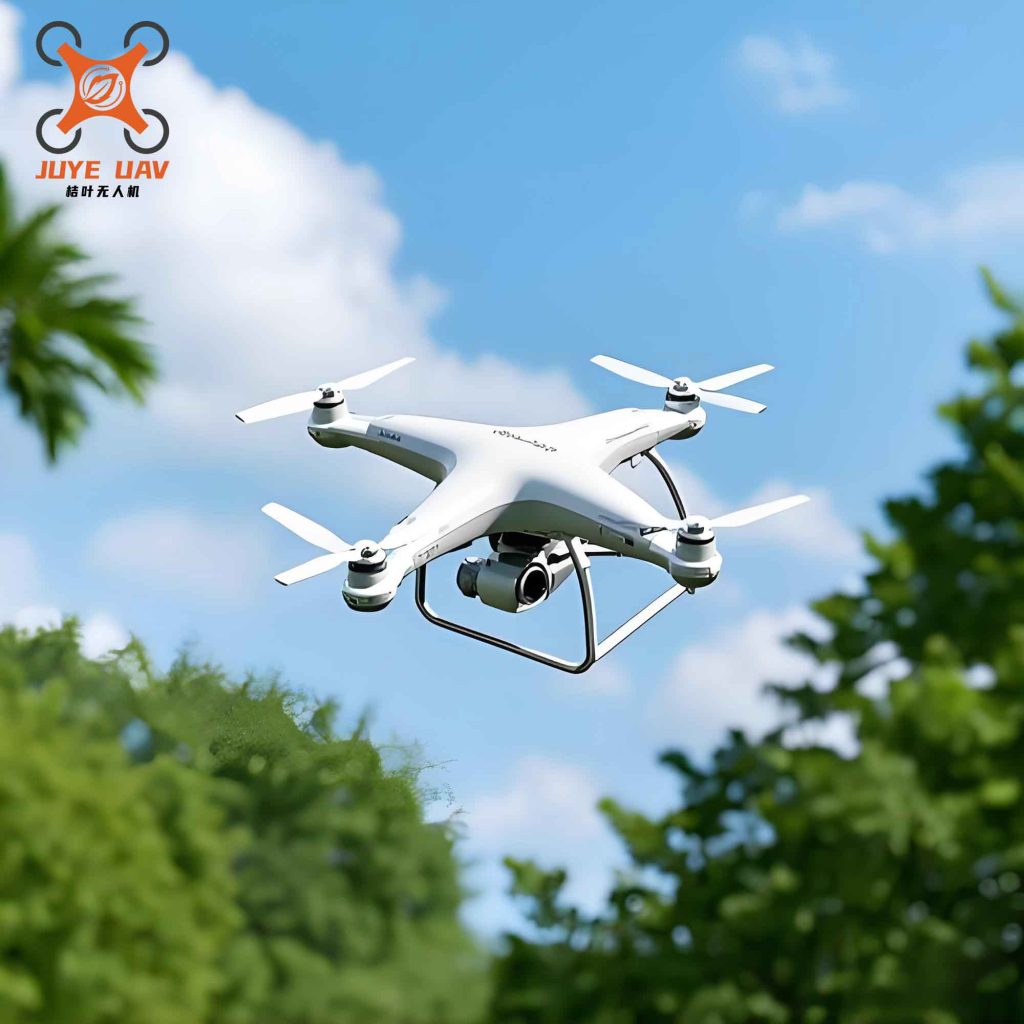
First, I conduct a site survey to determine the fireworks launch point, building density, construction types, and terrain. For urban areas with tall buildings, I select a China UAV multi-rotor model (e.g., DJI M300 RTK) with a 30-minute endurance, RTK GNSS for centimeter-level positioning, and a 20 MP camera with a 1″ sensor. For suburban open areas, a fixed-wing UAV (e.g., EWZ-F50) provides longer range (up to 40 km² per flight). I also prepare a LiDAR unit (Velodyne VLP-16) for detailed structural surveys. Table 4 lists my standard equipment configuration.
| Scenario | UAV Model (China UAV) | Payload | Suitable For | Key Specifications |
|---|---|---|---|---|
| Dense urban | Multi-rotor (M600 Pro) | RGB 24MP + LiDAR | Detail inspection of high-rises | Flight time: 35 min; RTK accuracy: 2.5 cm |
| Suburban/open | Fixed-wing (FW-200) | RGB 20MP wide-angle | Large-area mapping | Coverage: 30 km²; Flight time: 2 hrs |
| Thermal survey | Multi-rotor (M200 V2) | Thermal camera (FLIR) | Fire risk detection | Thermal resolution: 640×512; <0.05°C |
| Real-time monitoring | Tethered drone (T-500) | RGB+IR+gas sensor | Continuous 24/7 monitoring | Tether length: 100 m; Power: grid supply |
3.2 Flight Mission Planning and Data Acquisition
I design flight routes using mission planning software with a “global coverage + focused inspection” strategy. The global grid covers the entire assessment buffer zone (radius 3–5 km) with altitude set 30–50 m above the highest building. For key areas (within 500 m of launch point), I add circular orbits at 5°–15° oblique angles to capture facades. Waypoints are adjusted to avoid obstacles like antennas and cranes. During data collection, I record flight logs (time, position, altitude, weather). I also deploy ground control points (GCPs) surveyed with RTK to improve absolute accuracy to 2–3 cm.
3.3 Data Processing and High-Precision Model Generation
Raw images and point clouds are preprocessed in Pix4Dmapper and CloudCompare. Steps include lens distortion correction, point cloud filtering (remove outliers, noise), and image alignment. The 3D model is built via multi-view stereo with a target resolution of 1:500 scale. I then generate an orthophoto mosaic with a ground sampling distance (GSD) of 2–3 cm. Quality control checks: I compare 10 randomly chosen distances measured from the model with field tape measurements; the RMSE must be <5 cm. Table 5 shows typical accuracy results from my projects.
| Metric | Target | Achieved (Mean ± σ) | Compliance |
|---|---|---|---|
| Horizontal RMSE (m) | < 0.05 | 0.032 ± 0.012 | Pass |
| Vertical RMSE (m) | < 0.05 | 0.041 ± 0.015 | Pass |
| GSD (cm/pixel) | 2–3 | 2.4 | Pass |
| Point cloud density (pts/m²) | > 200 | 350 | Pass |
3.4 Multi-Sensor Fusion for Hazard Identification
I overlay the 3D model, orthophoto, and thermal mosaic in a GIS environment. Using automated segmentation algorithms (e.g., convolutional neural networks trained on building defects), I extract cracks, spalling, and openings. The thermal data is normalized to emissivity-corrected surface temperatures; any area exceeding 60°C during daylight is flagged as a fire hazard (e.g., accumulated combustibles near heat sources). I then generate a hazard inventory with coordinates, type, severity (high/medium/low), and impact radius. The severity is scored using a weighted formula:
$$Risk Score = w_1 \cdot S_{structural} + w_2 \cdot S_{fire} + w_3 \cdot S_{proximity}$$
where $$S_{structural}$$ is the structural damage index (0–10), $$S_{fire}$$ is the fire risk index (0–10), and $$S_{proximity}$$ is the distance factor (1 for <20 m, 0.5 for 20–50 m, 0.2 for >50 m). Typical weights are w1=0.5, w2=0.3, w3=0.2. Buildings with a score >7 require immediate mitigation.
3.5 Results Implementation and Lifecycle Support
The final deliverables include a digital twin platform accessible to the event command center. Before the display, I assist in installing protective barriers, clearing combustible materials, and verifying fire extinguishers. During the event, the platform streams live drone feeds and overlays risk zones; if a drone detects an anomaly, it sends an alert to the commander. After the event, I perform a comparative analysis and update the building database. All data are archived for future reference. The entire process significantly reduces human exposure and improves assessment speed by over 70% compared to traditional methods.
4. Conclusion
Through my intensive research and practical implementation, I have demonstrated that China UAV photogrammetry is an indispensable tool for assessing the risk of buildings near large-scale fireworks displays. The technology provides rapid, accurate 3D data, comprehensive identification of structural and fire hazards, dynamic monitoring throughout the event, and robust support for emergency decision-making. By integrating mathematical models (shock wave overpressure, thermal radiation, projectile energy) with high-resolution UAV data, I have developed a systematic methodology that outperforms conventional survey techniques in efficiency, safety, and reliability. The deployment of China UAV not only mitigates the risks to life and property but also sets a new standard for safety management of mass gatherings. I strongly recommend that regulatory authorities and event organizers adopt China UAV technology as a mandatory part of their risk assessment protocols. Future work will focus on automating the entire workflow using artificial intelligence and expanding the application to other pyrotechnic and industrial environments.