
In this study, I propose a novel bridge crack identification and monitoring method integrating China UAV technology to address the critical challenges of low efficiency and high safety risks associated with traditional manual inspection. My approach leverages the mobility of multi-rotor China UAV platforms equipped with industrial-grade cameras for high-resolution image acquisition, an improved convolutional neural network for automatic crack segmentation and quantification, and a layered monitoring system for tracking crack evolution. Through comprehensive field validation on an in-service bridge, I demonstrate that this China UAV-based method significantly outperforms conventional techniques in detection rate, measurement accuracy, and operational efficiency.
The structural integrity of concrete bridges is continuously compromised by vehicular dynamic loads and environmental erosion, with surface cracks representing a primary form of deterioration. Manual inspection, which relies on bridge inspection vehicles or elevated work platforms, is plagued by extended inspection cycles and inaccessible blind spots. In recent years, China UAV remote sensing technology has shown great promise for infrastructure inspection due to its agile spatial positioning capabilities. Deep learning has further advanced automatic crack detection, though challenges in suppressing false positives under complex lighting conditions persist.
Concrete bridges under service are subject to a combination of factors like temperature gradients, creep, shrinkage, and fatigue loading. Cracks can be categorized by orientation and origin: transverse cracks often arise from tensile stress in negative moment zones; longitudinal cracks correlate with tendon corrosion expansion or alkali-silica reactions; and map cracking indicates carbonation or freeze-thaw damage of the cover layer. Once cracks penetrate the concrete cover, they accelerate steel reinforcement corrosion, weaken the effective cross-sectional area, cause stiffness degradation, and potentially lead to sudden capacity loss. Accurately obtaining crack location, width, length, and orientation is essential for reliable bridge condition assessment and maintenance planning.
Multi-rotor China UAVs offer vertical takeoff, precise hovering, and low-speed cruise capability, allowing them to carry diverse sensors like visible-light cameras, thermal imagers, or LiDAR. Unlike traditional bridge inspection vehicles, a China UAV platform is not constrained by under-bridge clearance and can effectively reach blind areas such as cable stays, arch rib interiors, and box girder webs. Combined with mature real-time video transmission and centimeter-level differential GPS, China UAV technology enables precise georeferencing of aerial images and multi-temporal overlay analysis, making dynamic crack monitoring feasible.
Conventional crack detection methods include visual inspection, crack width gauges, and bridge inspection vehicles. Visual inspection is subjective and qualitative. Crack width gauges provide precise measurements but are slow for large areas. Bridge inspection vehicles require lane closures and professional operators, with a single bridge inspection taking days. These methods are particularly problematic for high-pier, long-span bridges or heavy-traffic routes, and the data is often recorded on paper, hindering spatiotemporal analysis and digital management.
The China UAV inspection platform extends the workspace to a three-dimensional space around the bridge, with flight paths flexibly planned based on structural geometry. Quadcopter or hexacopter models maintain stable hovering even in winds of 5-10 m/s, thanks to three-axis stabilized gimbals that capture sharp, jitter-free images. A single China UAV flight lasts approximately 25-40 minutes and can cover thousands of square meters. The acquired high-resolution orthophotos can be stitched to create a digital surface model of the bridge, and combined with pixel calibration, enable non-contact measurement of crack geometry. All data is stored digitally, supporting the creation of a bridge disease database for lifecycle management.
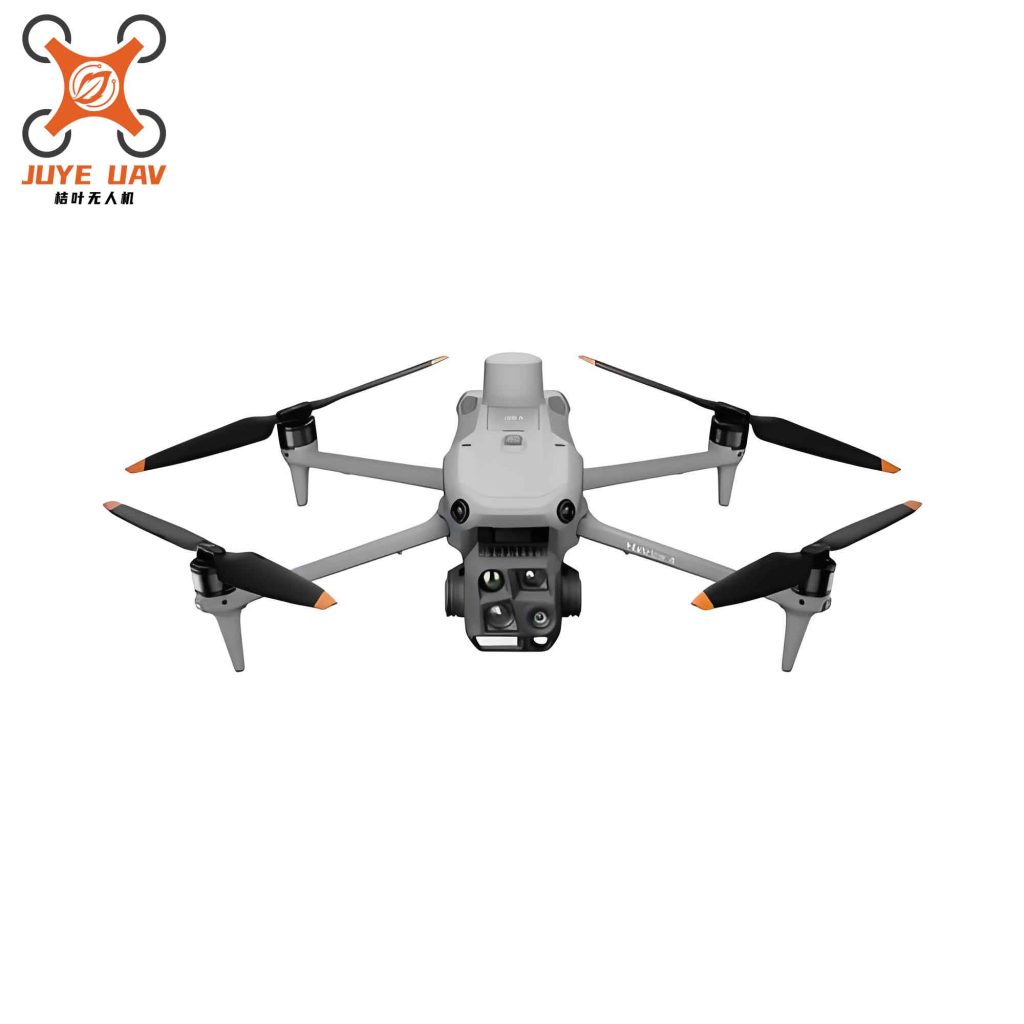
For China UAV mission planning, I consider bridge type, required inspection accuracy, and airspace regulations. For conventional girder bridges, I adopt a “longitudinal round-trip” flight pattern covering the soffit and web areas, with altitude controlled between 8-15 m to balance resolution and coverage. For cable-stayed or suspension bridges, I add spiral ascent paths around towers and cables. Camera settings follow minimum motion blur principles, with shutter speed no less than 1/800 s and ISO adapted to ambient light. Overlap rates are set at ≥70% longitudinally and ≥60% laterally to support later image stitching and stereo matching. The RTK module records camera position and attitude at each exposure moment for precise georeferencing.
Raw aerial images require preprocessing to eliminate uneven illumination and lens distortion. I use Contrast Limited Adaptive Histogram Equalization (CLAHE) to enhance local contrast, highlighting cracks against the background. A radial distortion model corrects edge deformation from wide-angle lenses. Preprocessed images are fed into a semantic segmentation network for pixel-level crack extraction. To address the issue of thin cracks breaking, I apply morphological closing operations to connect adjacent pixels and use skeleton thinning to extract crack centerlines. Crack width is measured using a gray-level profile analysis perpendicular to the skeleton, converting pixel dimensions to physical sizes based on ground sample distance (GSD).
Deep convolutional neural networks excel in semantic segmentation. My architecture is an encoder-decoder structure. The encoder path uses stacked residual modules to extract multi-scale feature maps. The decoder path uses transposed convolutions for upsampling and skip connections with encoder features to restore crack edge details. The loss function combines binary cross-entropy and Dice coefficient:
$$
L = -\frac{1}{N}\sum_{i=1}^{N}\left[ y_i \lg \hat{y}_i + (1 – y_i) \lg (1 – \hat{y}_i) \right] + 1 – \frac{2\sum_{i=1}^{N} y_i \hat{y}_i}{\sum_{i=1}^{N} y_i + \sum_{i=1}^{N} \hat{y}_i}
$$
where \(L\) is the total loss, \(N\) is the total number of image pixels, \(y_i\) is the ground truth label (1 for crack, 0 for background), and \(\hat{y}_i\) is the predicted probability for pixel \(i\). This composite loss balances pixel-wise accuracy with region-level overlap, making it suitable for crack segmentation tasks with class imbalance.
My bridge crack intelligent monitoring system uses a three-layer architecture: data acquisition layer, data processing layer, and application service layer. The data acquisition layer uses a hexacopter China UAV carrying a 42-megapixel industrial camera and RTK module, transmitting real-time images via 5.8 GHz digital link. The processing layer on a ground station performs lens distortion correction and contrast enhancement, then runs the trained CNN for semantic segmentation, followed by skeleton extraction and gray-level profile analysis to output crack length, average width, and maximum width. It also aligns data from multiple inspections via feature matching to track geometric changes of the same crack over time. The application service layer presents crack spatial distribution and evolution trends on a web interface, determines damage levels based on standards, and sends alerts to maintenance personnel.
The onboard camera is a full-frame CMOS industrial sensor with 4240 effective megapixels and a sensor size of 35.9 mm × 24.0 mm. With a 35 mm fixed lens, the field of view is about 54°. At a 10 m flight altitude, the GSD is approximately 0.85 mm/pixel, allowing resolution of cracks wider than 0.2 mm. The camera is connected to the frame via a three-axis brushless gimbal with stabilization accuracy better than ±0.01° in pitch, roll, and yaw. The RTK module uses a dual-frequency multi-constellation receiver supporting GPS, BeiDou, and Galileo, providing planar positioning accuracy of 1 cm + 1 ppm and elevation accuracy of 1.5 cm + 1.5 ppm.
The field inspection follows a “global to local” principle. I first complete a panoramic survey at a higher altitude, then after identifying suspected damage clusters, reduce altitude for detailed re-inspection. Raw images are stored in RAW format to retain full dynamic range. The processing flow includes image quality screening, geocoding, distortion correction, contrast enhancement, semantic segmentation, and vectorization. Batch processing on GPU accelerates inference, with each 42-megapixel image taking about 0.8 s for segmentation. Vectorized cracks are stored in GeoJSON format, including ID, center coordinates, length, width, orientation, and timestamp, ready for GIS overlay display.
To handle varying lighting conditions during field inspections, I employ data augmentation strategies during model training, including random adjustments to brightness, contrast, and hue. During inference, I use a sliding window with overlapping edge merging to process large-format images without segmentation fractures at boundaries. To improve crack width measurement accuracy affected by skeleton localization errors, I optimize skeleton extraction using a weighted gray-level centroid method. The width calculation formula is:
$$
W = \frac{1}{M} \sum_{j=1}^{M} d_j \cdot \sqrt{ 1 + \left( \frac{dy}{dx} \right)_j^2 }
$$
where \(W\) is the average crack width (mm), \(M\) is the total number of sampling profiles along the skeleton, \(d_j\) is the pixel span of the crack perpendicular to the skeleton direction at the \(j\)-th profile (pixel), and \(\left( \frac{dy}{dx} \right)_j\) is the tangent slope at the \(j\)-th skeleton point. This slope correction term compensates for projection shortening in non-horizontal cracks. Multiplying the pixel span by the GSD converts it to physical width.
I selected a 28-year-old prestressed concrete continuous girder bridge for field validation. The bridge has five spans with a total length of 186 m and a deck width of 12.5 m. The inspection was performed under clear, calm weather with wind speed about 3 m/s and stable illumination. I used a hexacopter China UAV with a 42-megapixel camera, flying at an altitude of 8 m along the longitudinal direction at 2 m/s, with 75% forward overlap and 65% side overlap. A total of 412 valid images were collected, covering the soffit, webs, and deck surface. Six checkerboard targets were placed as ground control points, measured by network RTK with ±1.5 cm planar accuracy and ±2.0 cm elevation accuracy.
I processed the collected images using the trained CNN, which was pre-trained on a custom bridge crack dataset for 2000 epochs, achieving a validation Intersection over Union (IoU) of 0.82. After morphological post-processing and skeleton extraction, I calculated geometric parameters for each crack. In total, 47 cracks were identified. The quantified parameters for typical cracks are presented below:
| Crack ID | Component Location | Orientation Type | Length (mm) | Max Width (mm) | Average Width (mm) |
|---|---|---|---|---|---|
| C-01 | Span 2 Soffit | Transverse | 1258 | 0.42 | 0.31 |
| C-02 | Span 2 Soffit | Transverse | 986 | 0.38 | 0.27 |
| C-03 | Span 3 Web | Diagonal | 1542 | 0.56 | 0.41 |
| C-04 | Span 3 Soffit | Transverse | 2134 | 0.68 | 0.49 |
| C-05 | Span 4 Web | Longitudinal | 876 | 0.35 | 0.24 |
| C-06 | Span 4 Soffit | Transverse | 1687 | 0.51 | 0.38 |
| C-07 | Span 5 Web | Diagonal | 1123 | 0.44 | 0.33 |
| C-08 | Deck Pavement | Map Cracking | 3256 | 0.72 | 0.53 |
From the table, transverse cracks were predominantly found in the soffit negative moment zones. The maximum width of 0.72 mm occurred in the deck pavement map cracking area. Spans 3 and 4 showed more concentrated damage.
To evaluate the performance of my China UAV-based intelligent inspection, I compared its results with those from traditional manual inspection using a bridge inspection vehicle. Three certified engineers measured the same cracks using crack width gauges. A performance comparison is summarized below:
| Evaluation Metric | China UAV Intelligent Inspection | Manual Bridge Vehicle Inspection | Improvement (%) |
|---|---|---|---|
| Crack Detection Rate (%) | 94.6 | 87.2 | +8.5 |
| Width Measurement Error (mm) | ±0.05 | ±0.08 | -37.5 |
| Single Span Inspection Time (min) | 12 | 95 | -87.4 |
| Full Bridge Inspection Duration (h) | 3.5 | 28 | -87.5 |
| Data Digitization Rate (%) | 100 | 35 | +185.7 |
| Missed Detection Rate (%) | 5.4 | 12.8 | -57.8 |
| Manual Work at Height Duration (h) | 0 | 22 | -100 |
The data shows that compared to traditional manual inspection, my China UAV method improved the detection rate by 8.5%, reduced the missed detection rate from 12.8% to 5.4%, and achieved width measurement accuracy of ±0.05 mm, surpassing the manual ±0.08 mm. Single span inspection time was cut from 95 minutes to 12 minutes, and the full bridge inspection cycle from 28 hours to 3.5 hours—an 8-fold increase in efficiency. Data was 100% digitized, eliminating the traceability issues of paper records, and the method completely eliminated the safety risks of working at height.
In conclusion, I have developed a bridge crack intelligent monitoring system by integrating China UAV aerial photography with deep learning algorithms, achieving fully automated processing from image acquisition to crack identification and parameter quantification. Field validation on a real bridge demonstrated excellent applicability across various component surfaces including soffits, webs, and decks, with significant improvements in both efficiency and accuracy over traditional manual methods. However, limited by visible-light imaging, this system is only suitable for surface crack detection and cannot identify hidden cracks within the concrete cover. Furthermore, the training samples were primarily from concrete girder bridges, so its generalization performance for steel bridges or masonry arch bridges requires further verification. Future work could incorporate infrared thermal imaging to expand capabilities for detecting hidden defects and could enrich the dataset with samples from diverse bridge types to enhance model robustness.