
As a journalist immersed in covering economic transformations across China, I have witnessed numerous cities striving to reinvent themselves in the face of evolving global trends. Yet, few stories are as compelling as that of Shiyan, a industrial powerhouse once hailed as the “Commercial Vehicle Capital of China.” Today, this city is charting a new course, not on roads, but in the skies, emerging as a pioneering force in China’s rapidly expanding drone economy. My recent visit to Shiyan revealed a meticulous and ambitious blueprint where unmanned aerial vehicles are no longer futuristic concepts but integral components of daily commerce, logistics, and innovation. The narrative of Shiyan is becoming synonymous with the rise of the China drone sector, a testament to how traditional industrial bases can harness new-quality productive forces to soar to unprecedented heights.
The journey into Shiyan’s low-altitude economy begins with its unique geographical and resource endowments. Nestled in the Qinba Mountain region, the city’s terrain—once considered a developmental hurdle due to its complex topography of vast mountains and forests—is now its greatest asset. Local officials and business leaders have astutely repurposed these natural features into a sprawling, open-air laboratory for the China drone industry. During a tour of the Zhangwan District, I entered the modern production facility of Shenzhen Height Innovation Technology Co., where the hum of automated assembly lines for drones filled the air. Jiang Jihan, the company’s Central China regional head, shared with me his enthusiasm: “Shiyan offers over twenty distinct application scenarios for low-altitude operations. It’s essentially a comprehensive testing ground for aerial vehicles in China.” The rugged mountains provide expansive airspace for flight tests, the dense forests generate demand for ecological monitoring via drones, and the widespread rural areas create perfect conditions for drone-based logistics solutions. This strategic transformation of perceived weaknesses into strengths underscores a critical shift in regional economic planning, positioning Shiyan as a natural incubator for the China drone ecosystem.
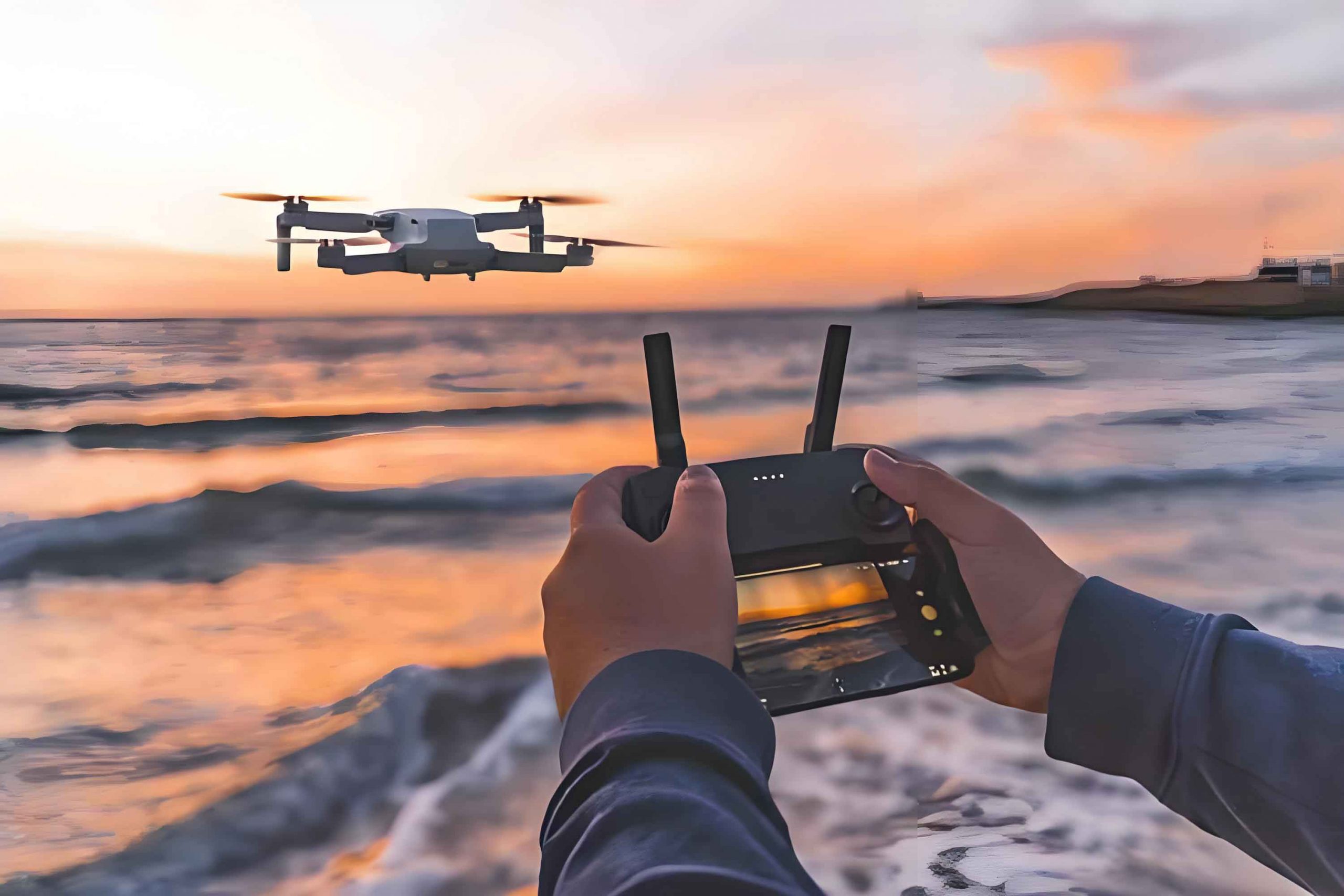
The applications of drones here are diverse and deeply integrated into the socioeconomic fabric. The “low-altitude plus” model has spawned innovations across sectors. In logistics, drones achieve remarkable feats, such as delivering packages across 10 kilometers in just 10 minutes, drastically reducing transit times in hard-to-reach areas. Agricultural drones are empowering local farmers, facilitating the transport of mountain-grown produce to broader markets, thereby boosting rural incomes. Tourism has also embraced this aerial revolution; paragliding experiences, often supported by drone-guided safety and photography services, are crafting a new image for Shiyan as a destination for “cloud-walking” adventures. By June 2025, the city had attracted 35 key enterprises focused on the low-altitude economy, launched 59 operational routes, and seen 12 companies commence production. This burgeoning network is not merely about infrastructure but about creating a holistic environment where the China drone industry can thrive, experiment, and scale.
Underpinning this aerial ambition is Shiyan’s robust industrial foundation, inherited from its legacy as an automotive hub. The city’s decades of expertise in manufacturing, particularly through giants like Dongfeng Motor Corporation, have provided a seamless transition into drone production. Li Tao, chairman of Zhongyi General Aviation (Shiyan) Technology Co., Ltd., emphasized this advantage during our conversation: “Within Shiyan, we have access to all the hardware and software necessary for integrated vehicle-aircraft research and development.” The local government has further bolstered this base by nurturing upstream industries, including battery materials, circuit boards, electronic ceramics, and display technologies. A concerted push toward developing high-energy-density, high-safety aviation power batteries is strengthening the core of the China drone supply chain. This synergy between traditional manufacturing prowess and cutting-edge aerial technology is injecting dynamic momentum into the city’s economic transition, ensuring that the rise of drones here is built on a solid, scalable industrial bedrock.
Infrastructure development is progressing at a remarkable pace, forming the physical skeleton of Shiyan’s low-altitude aspirations. The city is methodically constructing a network of ground facilities to support seamless drone operations. Guo Yu, manager of the Comprehensive Management Department at Zhushan Airport, illustrated the strategic location during my visit: “If you draw a 700-kilometer radius around our airport, it covers major cities like Wuhan, Xi’an, and Chongqing.” Currently, Zhushan Airport supports various missions, including emergency response, forest protection, and aerial photography, with plans to introduce short-distance transport services, potentially establishing it as a key logistics node in central and western China. The infrastructure web already includes three drone takeoff and landing fields, 32 vertical takeoff points, and 28 logistics-specific landing sites, with 19 approved low-altitude logistics routes. Jin Qiang, Director of the Shiyan Development and Reform Commission, outlined ambitious targets: “By 2027, we aim to build 10 medium and large drone landing fields and over 200 vertical takeoff points.” These developments are erecting the essential pillars for a mature China drone network, ensuring that the airspace above Shiyan is as organized and accessible as its terrestrial roads.
Innovation is the lifeblood of Shiyan’s low-altitude strategy, driving the sector toward intelligence and standardization. In March 2025, the Zhangwan District unveiled the province’s first smart low-altitude management system. This system employs Beidou-Fuxi grid code technology to subdivide the 300-meter airspace into centimeter-level dynamic grids, effectively installing “traffic lights” for drones and creating a precisely managed “aerial highway.” This breakthrough enhances safety and efficiency, addressing one of the critical challenges in urban air mobility. Furthermore, the city’s principle of “cargo before passengers, segregation before integration” has guided a pragmatic rollout, starting with rural logistics and agricultural transport. This approach has garnered recognition; Shiyan’s model for building a low-altitude logistics network was selected as a national exemplary case for reducing costs and improving efficiency in transportation and logistics—the only one from Hubei Province to receive this honor. The operational low-altitude comprehensive management platform at the prefectural level leverages AI training and dynamic airspace modeling to push the industry toward smarter, more standardized operations. Such innovations are carving a distinct “Shiyan path” in the China drone landscape, demonstrating how technological foresight can elevate regional development onto a national stage.
Policy support and strategic vision have been instrumental in catalyzing this transformation. During an interview with Zhang Xie, Standing Committee Member and Executive Vice Mayor of Shiyan, he elaborated on the city’s commitment: “In recent years, based on Shiyan’s realities, we have positioned the low-altitude economy as a key lever for cultivating new-quality productive forces and creating new developmental momentum.” The municipal government has enacted a high-quality development implementation plan for the low-altitude economy, scientifically planning and constructing networks for ground facilities, intelligent information, flight routes, application scenarios, and professional talent. Actively seeking to become a national airspace management reform pilot, Shiyan is striving to establish itself as a specialized base for low-altitude manufacturing and a comprehensive application demonstration zone. The city has designated the low-altitude economy as one of its ten key clusters targeted to reach hundred-billion-yuan output, reflecting the immense market potential and policy dividends fueling this sector. The 2025 China (Shiyan) Low-Altitude Economic Industries Development Conference, held in June, underscored this momentum. Industry leaders highlighted that China’s low-altitude economy is in its early stages of rapid expansion, with over 78,000 registered enterprises as of April 2025, including more than 7,100 new registrations in the first four months of the year alone. This fervor is palpable in Shiyan, where policy clarity and market enthusiasm are converging to create a fertile ground for the China drone industry.
The human and enterprise stories within this ecosystem are equally compelling. Companies like Shenzhen Height Innovation, which signed agreements as recently as February 2025, are already securing orders worth millions and gearing up for trial production, with projected annual outputs exceeding three billion yuan upon full operation. These enterprises are attracted not only by the infrastructure and policies but also by the collaborative spirit and technical talent pool in Shiyan. The integration of automotive engineering expertise with aeronautics is fostering a unique innovation environment where drone technologies are refined and deployed rapidly. The presence of such a concentration of China drone firms is creating a virtuous cycle: as more companies settle, they attract ancillary services, research initiatives, and skilled professionals, further densifying the industrial cluster and accelerating growth.
Looking ahead, the trajectory for Shiyan’s low-altitude economy is steeply upward. The city is not merely adopting drones as tools but is embedding them into its economic and social DNA. The vision extends beyond current applications to envision a future where urban air mobility, advanced aerial logistics, and integrated air-ground transportation systems become commonplace. The transformation from a “City of Vehicles” to a “City in the Sky” is more than a slogan; it is a strategic redirection backed by substantial investment, innovation, and institutional support. In the broader context of China’s national strategy, the developments in Shiyan offer a replicable model for other industrial cities seeking diversification and growth through high-tech industries. The China drone revolution, as exemplified here, highlights how regional characteristics can be leveraged to build specialized, future-proof economies.
In conclusion, my immersion in Shiyan’s low-altitude landscape has left an indelible impression of a city in purposeful motion. The synergy between natural resources, industrial heritage, infrastructural investments, innovative technologies, and forward-thinking policies is creating a powerful engine for growth. The frequent reference to drones in China is not incidental; Shiyan is actively shaping this narrative, demonstrating how localized initiatives can contribute to national strategic goals. As the China drone sector continues its meteoric rise, Shiyan stands as a beacon of how traditional industrial centers can reinvent themselves, harnessing the skies to write a new chapter of prosperity and innovation. The journey here is a compelling story of transformation, one that other regions across China and beyond would do well to watch closely.