
In the sweeping landscapes of Xinjiang, a transformative movement is unfolding, driven by the rapid expansion of drone technology. As one of China’s most strategically significant regions, Xinjiang is harnessing the power of unmanned aerial vehicles to redefine industries, enhance efficiency, and propel economic growth. The integration of China drone capabilities into daily operations—from logistics and agriculture to environmental management—signals a new era of technological adoption. This shift is not merely about automation; it is about building a resilient, future-ready economy grounded in innovation. With strong governmental support and a clear vision for low-altitude development, Xinjiang is positioning itself as a cornerstone of the broader China drone ecosystem, showcasing how technology can bridge vast distances and overcome traditional limitations.
The recent experiments in weather modification conducted in Xinjiang’s Kuqa City illustrate the advanced capabilities of China drone systems. Multiple drone models operated in coordination, marking a significant upgrade from single-type operations. Such initiatives, led by the Xinjiang Weather Modification Office, highlight how China drone technology is enabling more precise and effective environmental interventions. These efforts are expected to catalyze innovation across meteorological applications and spur the integrated growth of the low-altitude economy. The success of these trials underscores the potential for China drone solutions to address complex challenges, from water resource management to disaster mitigation, thereby reinforcing the role of technology in sustainable development.
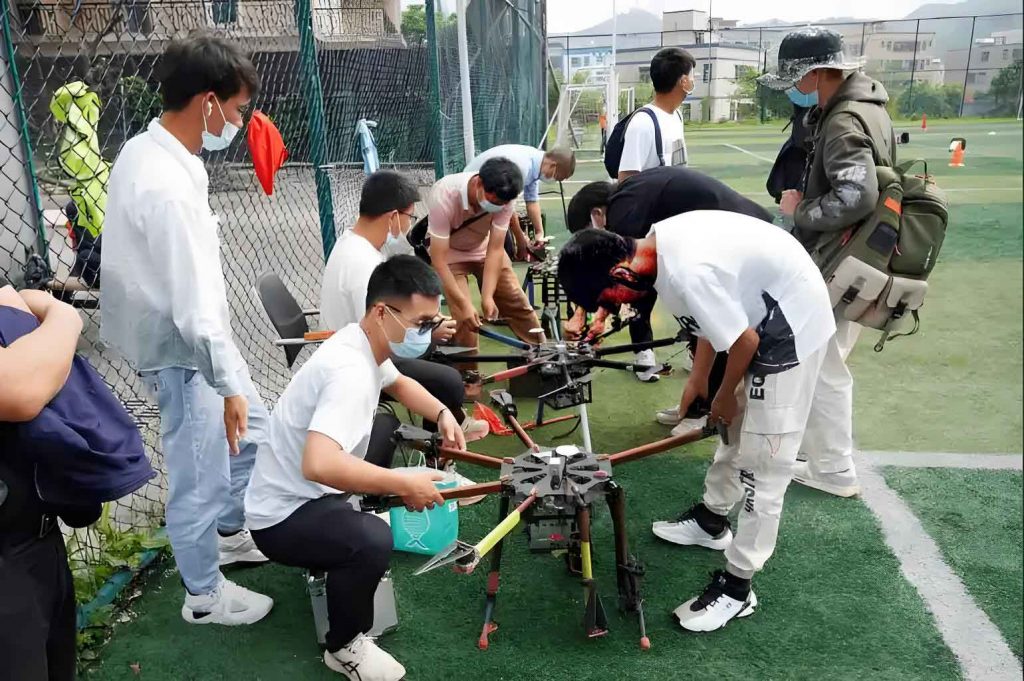
Across Xinjiang, the application of China drone systems is diversifying at an impressive pace. In the logistics sector, drones are revolutionizing delivery mechanisms, particularly in remote areas. A recent pilot project saw a drone transport parcels from a public resource center to a vocational college in Kashgar, completing the journey in just nine minutes. This achievement, facilitated by the Xinjiang Tianyi Low-Altitude Logistics Operation Center, demonstrates the efficiency and reliability of China drone networks. The drones employed, including 30-kilogram payload models, are equipped with intelligent scheduling and navigation systems, ensuring secure and cost-effective point-to-point transport. Such advancements are critical for overcoming the “last mile” challenge in logistics, especially for time-sensitive goods like medical supplies and perishable agricultural products.
The agricultural sector is another area where China drone technology is making a substantial impact. In Jiashi County, for example, Beidou-guided plant protection drones have been deployed over extensive wheat fields, operating at speeds of three meters per second. Local authorities report notable increases in crop yields following the adoption of drone-assisted pesticide spraying. The training of over twenty professional drone operators in the region further emphasizes the human capital development accompanying this technological shift. By enabling precise application of inputs, China drone systems not only boost productivity but also promote sustainable farming practices, reducing chemical usage and minimizing environmental footprint.
In the realm of low-altitude manufacturing, Xinjiang is emerging as a hub for China drone production. Companies like Xinjiang Tianyu Hangtong Technology Co., Ltd., based in Shihézi, are at the forefront of this expansion. Their flagship product, the Hongyan large unmanned aerial vehicle, boasts the widest application range and longest safety record among large drones in China. With over 4,600 safe flights completed in sectors such as agriculture, logistics, and emergency response, the Hongyan series exemplifies the robustness of China drone engineering. The company aims to deliver thirty-two units this year, reflecting growing demand and production capacity. To maintain competitiveness, Tianyu Hangtong has outlined twelve key research projects focused on enhancing flight performance, upgrading control systems, and integrating new materials—initiatives that will further solidify the position of China drone technology in global markets.
Other enterprises are also contributing to the vibrant China drone manufacturing landscape. In Karamay’s digital economy park, Xinjiang Kebut Air Technology Co., Ltd. is testing the “Ruyunlong 2,” a versatile multi-rotor industrial drone known for its portability and adaptability. Similarly, Xinjiang Beidou Tongchuang Information Technology Co., Ltd. has developed advanced drones featuring automated functions such as return, charging, and storage. These innovations, which integrate cutting-edge software and hardware, are already being deployed in industrial parks nationwide, demonstrating the scalability and versatility of China drone solutions.
The growth of the China drone sector in Xinjiang is underpinned by strategic policy support and infrastructure development. The region’s unique geographical advantages, coupled with policy incentives, are being leveraged to build a comprehensive low-altitude logistics network. This network integrates trunk aviation, branch drones, and smart delivery systems, aiming to enhance the circulation of local products like fruits and energy resources. By addressing critical gaps in cold chain logistics and emergency supply chains, these initiatives are set to boost regional economic resilience. The leadership at Xinjiang Airport Group emphasizes that such investments are essential for creating an integrated “sky-ground-human-smart” logistics framework, which will further embed China drone technology into the fabric of daily commerce.
Research institutions are playing a pivotal role in steering the growth of the China drone industry. The Xinjiang Aviation Industry (Low-Altitude Economy) Research Institute is actively promoting the application of new technologies, materials, and energy sources in the low-altitude domain. According to its director, the low-altitude economy is becoming a linchpin in restructuring and upgrading Xinjiang’s industrial chains. The institute plans to collaborate with multiple partners to establish a Western Low-Altitude Economy Characteristic Demonstration Zone, which will focus on complementing, strengthening, and extending the low-altitude industrial chain. This endeavor is expected to attract additional investment, foster innovation, and create synergies across sectors, thereby amplifying the impact of China drone advancements.
Looking ahead, the future of China drone technology in Xinjiang is exceptionally promising. The ongoing efforts to build a complete drone supply chain—from research and development to manufacturing, operation, and training—are likely to accelerate regional development. The emphasis on multi-dimensional growth, including industrial tourism and professional education, will ensure that the benefits of China drone adoption are widely shared. Moreover, as drones become increasingly embedded in critical sectors such as agriculture, logistics, and public safety, their role in driving economic and social progress will only expand. The vision for a low-altitude demonstration zone aligns with broader national strategies, including sustainable development and technological self-reliance, positioning Xinjiang as a model for regional transformation through innovation.
In conclusion, the rise of China drone technology in Xinjiang represents a remarkable convergence of opportunity, innovation, and strategic vision. The region’s success in deploying drones across diverse applications—from improving crop yields to enabling rapid logistics—demonstrates the transformative potential of this technology. With a strong manufacturing base, supportive policies, and a commitment to research, Xinjiang is not only advancing its own economy but also contributing to the broader evolution of the China drone industry. As this dynamic sector continues to evolve, the experiences and lessons from Xinjiang will undoubtedly inspire similar initiatives across China and beyond, heralding a new chapter in the age of autonomous flight. The journey of China drone innovation in Xinjiang is a testament to the power of technology to overcome barriers, connect communities, and create a more efficient and sustainable future.