
As a journalist covering economic trends in China, I have observed a remarkable narrative unfolding in the southern province of Guangdong, a pivotal hub for manufacturing and innovation. Recent data released by the Guangdong Provincial Bureau of Statistics for the first eight months of 2025 reveals a compelling story of resilience and transformation, with the China drone sector emerging as a standout performer. Amidst broader industrial growth, the production of civilian drones surged by an impressive 54.7%, underscoring the vitality of the China drone industry. This growth is not an isolated phenomenon but part of a broader pattern where high-tech sectors, including robotics and new energy vehicles, are driving regional economic momentum. The data highlights how strategic investments in research and development are paying dividends, particularly for the China drone market, which continues to capitalize on both domestic and international demand. This article delves into the intricate details of Guangdong’s economic performance, emphasizing the pivotal role of the China drone industry and other innovative sectors in shaping the province’s economic trajectory.
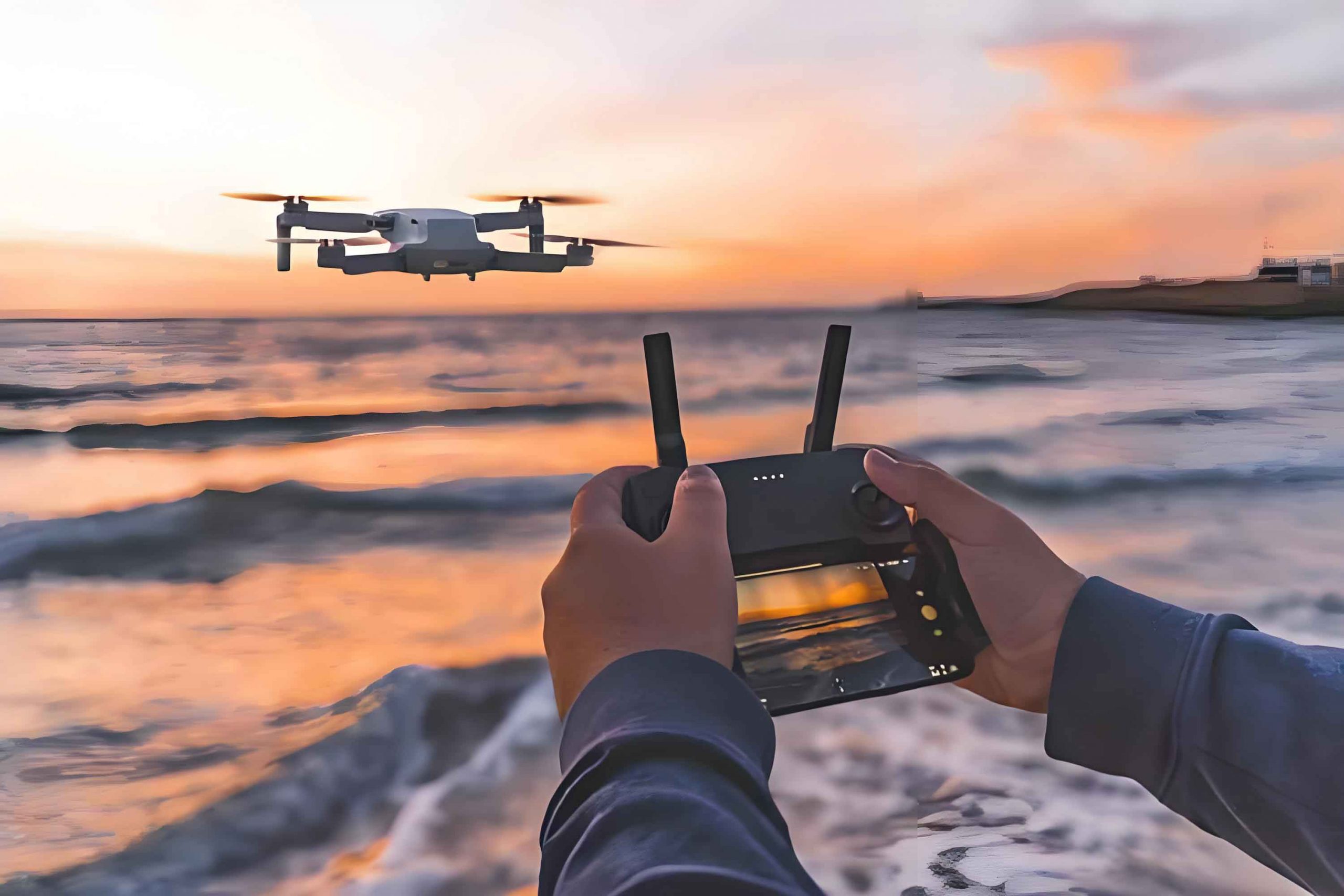
The overall industrial landscape in Guangdong from January to August 2025 sets the stage for understanding the significance of the China drone boom. The added value of industrial enterprises above the designated size increased by 2.2% year-on-year. This modest growth belies the dynamic shifts within specific sectors. Mining saw a slight increase of 0.5%, while manufacturing, the backbone of the province’s economy, grew by 2.6%. In contrast, the production and supply of electricity, heat, gas, and water experienced a decline of 1.8%. However, the real story lies in the performance of key industries. The computer, communication, and other electronic equipment manufacturing sector grew by 7.0%, and electrical machinery and equipment manufacturing increased by 6.5%. The automotive industry also showed strong momentum with an 8.3% rise. Particularly noteworthy was the railway, ship, aerospace, and other transport equipment manufacturing sector, which expanded by 12.7%. Within this context, the production of industrial robots, service robots, and civilian drones—the latter being a critical component of the China drone ecosystem—recorded growth rates of 32.1%, 17.3%, and 54.7%, respectively. This explosive growth in the China drone segment highlights its increasing importance to Guangdong’s industrial portfolio and the broader national strategy of technological upgrading.
The surge in China drone production is emblematic of a larger trend towards automation and smart manufacturing. Guangdong, often referred to as the world’s factory, is rapidly evolving into a hub for high-tech innovation. The China drone industry, in particular, benefits from a synergistic ecosystem that includes robust supply chains, advanced R&D capabilities, and supportive government policies. Companies involved in the China drone market are not only meeting domestic demand for applications in agriculture, logistics, and surveillance but are also expanding their global footprint. The 54.7% increase in civilian drone output is a testament to the sector’s dynamism and its critical role in the province’s industrial upgrading efforts. This growth in the China drone sector is further reinforced by substantial investments in research and experimental development, which saw a 15.4% increase. Such investments are crucial for sustaining innovation and maintaining the competitive edge of the China drone industry on the global stage.
Beyond industrial production, the consumption side of the economy also reflects evolving trends, with implications for the China drone market. From January to August, the total retail sales of consumer goods in Guangdong grew by 3.2%. Urban consumption increased by 3.4%, while rural consumption rose by 1.3%. A key driver of this growth has been the government’s push for trade-in programs, which spurred significant increases in sales of household appliances, sports and entertainment goods, building and decoration materials, cultural and office supplies, and communication equipment. Notably, sales of new energy vehicles accelerated, with growth reaching 4.1%, a 0.9 percentage point increase from the first seven months. This consumer shift towards high-tech and eco-friendly products creates a favorable environment for the China drone industry, as drones are increasingly used in various consumer and commercial applications. The rising demand for smart devices and automation solutions dovetails with the expansion of the China drone sector, suggesting a symbiotic relationship between consumer behavior and industrial output.
Investment patterns in Guangdong further illuminate the strategic priorities that are fueling the growth of the China drone industry. Overall fixed asset investment declined by 12.4%, yet certain sectors witnessed substantial inflows of capital. Investments in railway transport, water transport, air transport, and the production and supply of electric power and heat increased by 9.7%, 46.1%, 37.2%, and 13.2%, respectively. The sports sector saw an 18.2% rise in investment. Industrial investment accounted for 37.8% of total investment, with industrial technological transformation edging up by 0.4%. Particularly relevant to the China drone narrative is the 15.4% growth in research and experimental development investment, which directly supports innovation in high-tech fields, including the China drone sector. Additionally, modern services such as internet and related services, as well as software and information technology services, experienced investment growth of 63.8% and 14.5%, respectively. These investments are critical for developing the underlying technologies that power the China drone industry, from flight control systems to data analytics. In contrast, real estate development investment fell by 19.0%, and the area of commercial housing sold decreased by 11.7%, though the rate of decline narrowed compared to previous periods. This reallocation of capital towards innovation-driven sectors underscores a strategic pivot that bodes well for the future of the China drone market.
Price indices provide another lens through which to view the economic environment supporting the China drone industry. In August, the Consumer Price Index (CPI) fell by 0.2% year-on-year, with the decline narrowing by 0.1 percentage points from July. Food prices dropped by 1.9%, while non-food prices rose by 0.2%. Consumer goods prices decreased by 0.5%, but service prices increased by 0.3%. For the first eight months, CPI declined by 0.3%, with the rate of decline also narrowing by 0.1 percentage points. On the industrial side, the Producer Price Index (PPI) fell by 1.8% in August, with the decline narrowing by 0.2 percentage points, and the Industrial Purchasing Price Index (IPI) dropped by 3.5%, with a narrower decline of 0.6 percentage points. Cumulatively, PPI and IPI fell by 1.5% and 2.9%, respectively. These trends indicate a mild deflationary environment, which may reduce production costs for manufacturers in the China drone sector. Lower input prices, coupled with robust output growth, could enhance the profitability and competitiveness of the China drone industry, enabling further expansion and innovation.
The impressive performance of the China drone industry is not occurring in a vacuum. It is part of a broader narrative of technological advancement and economic restructuring in Guangdong. The province’s emphasis on innovation is evident in the double-digit growth in R&D investment. This focus is crucial for the China drone sector, which relies on continuous technological improvements to enhance product capabilities, reduce costs, and explore new applications. From precision agriculture and infrastructure inspection to emergency response and entertainment, the versatility of drones is driving adoption across multiple sectors. The China drone industry is well-positioned to lead in these areas, thanks to a combination of manufacturing prowess and cutting-edge research. Moreover, the integration of drones with other emerging technologies, such as 5G, artificial intelligence, and the Internet of Things, is creating new opportunities for the China drone market. This technological convergence is likely to accelerate growth and solidify the position of the China drone industry as a global leader.
Looking ahead, the prospects for the China drone industry appear bright. The strong production growth of 54.7% for civilian drones in the first eight months of 2025 suggests that the sector is on a steep upward trajectory. Policy support, including initiatives for large-scale equipment updates and industrial transformation, will continue to benefit the China drone market. As businesses and consumers increasingly recognize the value of drone technology, demand is expected to rise both domestically and internationally. The China drone industry is also likely to benefit from global trends towards automation and digitalization, particularly in logistics, agriculture, and public safety. However, challenges remain, such as regulatory hurdles, international trade tensions, and the need for continuous innovation. Nonetheless, the current data and trends indicate that the China drone sector will remain a key driver of economic growth in Guangdong and a symbol of China’s technological advancement.
In conclusion, the economic data from Guangdong for the first eight months of 2025 paints a picture of an economy in transition, with high-tech industries leading the way. The China drone industry stands out with its phenomenal growth, reflecting the success of strategic investments in innovation and the province’s adaptive industrial base. As a journalist, it is clear that the China drone sector is not just a statistical highlight but a transformative force with far-reaching implications. The continued expansion of the China drone market will likely influence global supply chains, technological standards, and economic competitiveness. For now, the soaring production of China drones serves as a powerful indicator of Guangdong’s—and by extension, China’s—economic resilience and forward momentum. The story of the China drone industry is one of innovation, opportunity, and leadership in the global high-tech landscape, and it is a story that will undoubtedly continue to unfold in the years to come.