
Since the world’s first unmanned aerial vehicle (UAV) was born in 1914, the drone technology has undergone a century of development, evolving from military applications to widespread civilian use. With advancements in science and aviation technology, countries increasingly recognize that drones will play a pivotal role in future economic, military, and technological competitions, thus attaching greater importance to this sector. Compared to aviation powerhouses such as the United States, Russia, and Europe, the China drone industry, which started in the 1980s, may not have the richest application experience. However, as a latecomer, it has successfully broken down the psychological barriers among the general public regarding aviation, becoming extensively integrated into various aspects of daily life. In this analysis, I will apply professional knowledge, linking theory with practice, to delve into the current competitive landscape of the China drone industry. Utilizing the SWOT model along with IFE and EFE matrices, I aim to provide an in-depth examination, primarily drawing insights from a leading drone manufacturer in China. Through this competitiveness analysis, I will derive implications for the development of technological products and regional growth in China, highlighting the strengths and challenges of the China drone sector.
The evolution of the civilian drone industry in China began in the 1980s and has accelerated over the past decade, driven by technological progress and market demand. Scholars have analyzed the rapid development of the China drone industry, attributing its success to several key factors. Many emphasize the crucial role of national policies in fostering growth, such as civil-military integration policies, reforms in the scientific research system, and specific supportive measures and plans that have facilitated the fusion of technology with market economies. Other scholars point to breakthroughs in core technologies within the drone industry itself, enabling advantages in miniaturization, integration, and modularization, which have helped China secure a leading position globally. Despite the unstoppable trend of civilian drone expansion, some researchers have identified existing issues. Internal industry challenges include a lack of technological innovation and creativity among many firms, product homogeneity, low efficiency in transforming technological achievements into marketable products, and concerns over safety and air traffic management. External problems involve fragmented and rudimentary regulations, inadequate supervision, and disordered usage of drones. In response, scholars propose solutions such as establishing robust market access mechanisms for drones, promoting the conversion of technological achievements from universities and military enterprises, improving management and supervision systems for civilian drones, refining laws and regulations, setting industry standards and airworthiness rules, clarifying liability management entities, enhancing control over drone operations, and creating a favorable flight environment. These insights form the foundation for understanding the dynamics of the China drone industry.
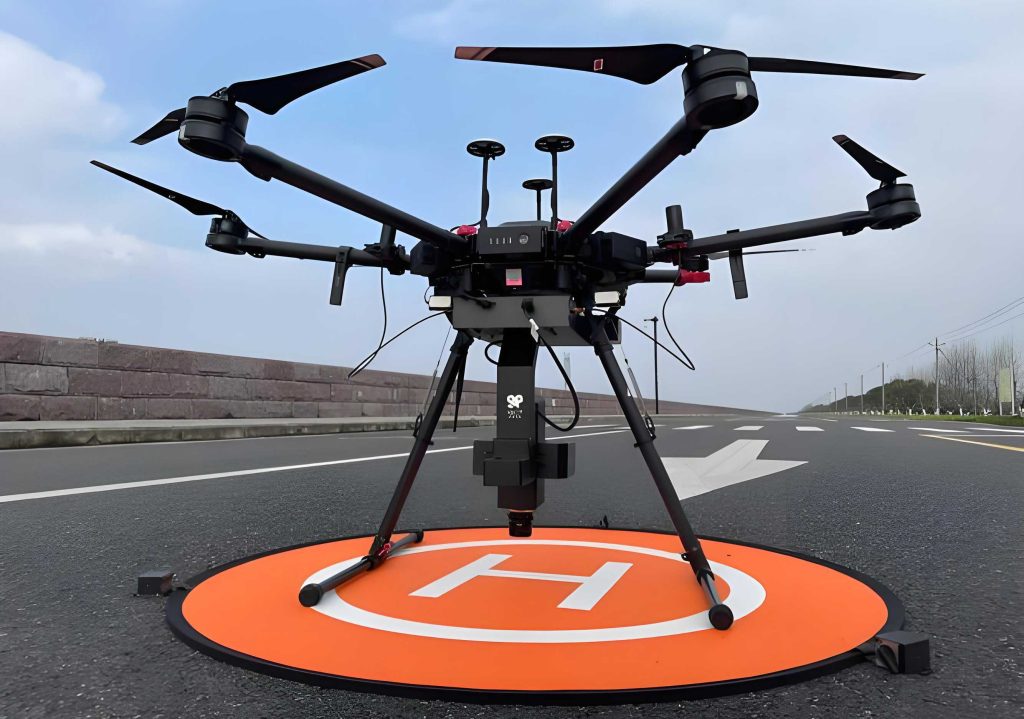
To assess the competitiveness of the China drone industry, I will first examine its current status. Presently, a city in southern China has emerged as a global hub for drone products, holding approximately 70% of the world market share for small civilian drones and earning the title “Drone Capital.” Around 95% of global drone products are exported from this region, which hosts over 300 drone enterprises with annual sales exceeding 20 billion yuan, making it a bellwether for the global drone market. The export data for China drone products reveal a remarkable growth trajectory. In terms of quantity, drone exports surged from 10 units in 2013 to 168,900 units in 2014, then to 891,200 units in 2015—a 4.28-fold increase from the previous year. By 2016, exports reached 3.116 million units, a 3.5-fold rise, and in the first two months of 2017 alone, exports exceeded the total for all of 2014, indicating a rapid and high-growth trend. Similarly, export value has seen exponential growth: drone export value hit $514 million in 2015, increased to $979 million in 2016 (a 90.27% growth), and reached $190 million in the first two months of 2017, more than triple the value for all of 2014. This robust performance underscores the strong momentum of the China drone industry in international markets.
To further analyze the competitiveness, I employ the SWOT framework, focusing on a representative enterprise in the China drone sector. This company has become a global leader in drone flight control systems and solutions, serving customers in over 100 countries and capturing about 70% of the global market share. As a microcosm of the China drone industry’s growth, analyzing its strengths, weaknesses, opportunities, and threats provides valuable insights into the overall competitiveness.
Strengths: The China drone industry benefits from a complete industrial chain. In the early stages, the industry stagnated due to uncoordinated supply chains and high technological costs during China’s economic transition. However, the development environment improved significantly in the 21st century, particularly in regions with strong manufacturing bases. For instance, the production of drones relies on key components such as magnetic materials, carbon fiber composites, and lithium batteries. The historical manufacturing expertise in areas like carbon fiber for products such as fishing rods and badminton rackets laid the groundwork for drone production, as drones essentially evolved from model aircraft integrated with control systems. Additionally, the thriving smartphone electronics industry in China provided essential technologies like lithium batteries and GPS sensors, which are readily adaptable to drones. This integrated supply chain has drastically reduced costs, facilitating the industrialization of drones and enabling companies to grow rapidly. Supportive policy environments also play a critical role. Governments have established drone industry bases and prioritized support through plans such as the aerospace industry development blueprint for 2020, which focuses on areas like human-machine interaction, final assembly integration, and drone testing. Industry associations have further contributed by releasing local standards for public safety and civilian drone systems, laying a foundation for international market entry. Entrepreneurial talent and corporate culture are another strength. The founder of a leading drone firm exemplifies a relentless pursuit of creativity and technological excellence, guiding the company from a small workshop to a global enterprise. During periods of high profitability, the decision to lower prices and pursue industrialization corrected earlier business model errors. The corporate culture emphasizes passion, integrity, and a focus on genuine innovation, attracting top talent and fostering a spirit of “extreme dedication and sincere craftsmanship.” Financial support is robust, with sales revenue serving as a primary capital source. For example, a major drone company reported sales of 10 billion yuan in 2016, a 60% year-on-year increase, and saw sales grow nearly 100-fold from 2011 to 2015. Moreover, rising industry interest has attracted substantial investment; in 2015 alone, 74 financing cases occurred, including a $75 million investment in a leading firm, fueling global expansion. Lastly, a favorable competitive landscape exists. The China drone industry holds over 70% of the global market share and accounts for more than 60% of global drone patents, indicating leading technological innovation capabilities. This dominance positions China as an absolute leader in the commercial drone market, with patent numbers roughly double those of key competitors.
Weaknesses: Despite advancements, the China drone industry faces technological bottlenecks. Key limitations include short battery life, which restricts consumer applications and negatively impacts user experience, and poor weather resistance, making drones vulnerable to adverse conditions like rain and wind. Another issue is product homogeneity and the weakening of core technologies. The popularity of drones has attracted numerous new entrants, leading to intense competition where companies imitate larger firms in performance, design, and marketing while lowering prices. This erodes advantages in areas other than core technology, forcing leading companies to invest more in innovation and intellectual property protection to maintain their edge. Regulatory hurdles, particularly in key markets like the United States, pose additional challenges. For instance, the Federal Aviation Administration (FAA) has historically imposed restrictions on commercial use of small drones, and bureaucratic delays in policy implementation hinder market growth for China drone exports.
Opportunities: The advent of the “drone plus” era presents significant opportunities. In a market-driven environment, technological development directly meets societal needs, freeing drone applications from the high costs of military technology. The integration of drones with various sectors has led to innovative applications: “drone plus agriculture” enables pesticide spraying, pest monitoring, forest protection, and ranch management; “drone plus transportation” facilitates road condition surveys and traffic guidance; and “drone plus entertainment” supports aerial photography, flight performances, and extreme sports selfies. This cross-industry integration expands the application scenarios for civilian drones, permeating daily life. Global giants like Google, Facebook, and Amazon have announced drone projects, while camera companies like GoPro and Sony have entered the market, further validating the potential. Additionally, the market size for drones is growing robustly. Estimates suggest the China drone market was around 800 million yuan in 2015 and is projected to reach 24 billion yuan by 2019, indicating sustained rapid growth and untapped application markets.
Threats: The China drone industry faces increasing competition from a rising number of rivals with enhanced capabilities. Although a leading Chinese company holds 70% of the global consumer drone market, its share is potentially being eroded by small and medium-sized manufacturers that have emerged recently. These newcomers often compete through lower prices, novel features, unique interaction methods, or design innovations, targeting niche markets. Major threats include firms like 3D Robotics in the United States, which has secured funding from companies like Qualcomm and SanDisk and moved production to China to leverage similar industrial advantages, and French manufacturer Parrot, which reported over $90 million in drone sales in 2014 and is rapidly expanding. Furthermore, management chaos and regulatory gaps pose risks. Incidents such as protesters using drones to deliver waste to official residences or criminals employing them to smuggle contraband into prisons have generated negative publicity, damaging the public image of drones. Recent cases of drones interfering with civilian aircraft flights in China highlight industry management issues, underscoring the urgent need for improved regulations, including no-fly zone designations, pilot training, and buyer registration systems, to mitigate social backlash.
To quantify these factors, I utilize the Internal Factor Evaluation (IFE) matrix and External Factor Evaluation (EFE) matrix. These tools help assess the internal strengths and weaknesses, as well as external opportunities and threats, by assigning weights and ratings to key factors. The overall competitiveness score can be derived from the weighted sum, providing a numerical basis for analysis. For instance, the IFE matrix score is calculated as: $$IFE\_Score = \sum_{i=1}^{n} (w_i \times s_i)$$ where \(w_i\) represents the weight of each internal factor, \(s_i\) denotes the rating, and \(n\) is the number of factors. Similarly, the EFE matrix score is: $$EFE\_Score = \sum_{j=1}^{m} (w_j \times s_j)$$ for external factors. A score above 2.5 indicates favorable conditions, while below 2.5 suggests challenges.
| Category | Element | Weight | Rating | Weighted Score |
|---|---|---|---|---|
| Strengths | Complete industrial chain | 0.17 | 4 | 0.68 |
| Favorable policy environment | 0.09 | 2 | 0.18 | |
| Substantial financial support | 0.06 | 1 | 0.06 | |
| Entrepreneurial talent and corporate culture | 0.11 | 2 | 0.22 | |
| Favorable competitive landscape | 0.12 | 3 | 0.36 | |
| Subtotal for Strengths | 0.55 | 1.50 | ||
| Weaknesses | Technological bottlenecks (e.g., battery life) | 0.15 | 3 | 0.45 |
| Product homogeneity and weakened core tech | 0.22 | 4 | 0.88 | |
| Regulatory resistance (e.g., FAA) | 0.08 | 1 | 0.08 | |
| Subtotal for Weaknesses | 0.45 | 1.41 | ||
| Total IFE Score | 1.00 | 2.91 |
The IFE matrix analysis yields a total score of 2.91, with strengths contributing 1.50 and weaknesses 1.41. Since the average rating is 2.5, a score above this indicates that internal advantages outweigh disadvantages, suggesting promising prospects for the China drone industry. However, weaknesses in technology and regulation require attention to fully leverage strengths.
| Category | Element | Weight | Rating | Weighted Score |
|---|---|---|---|---|
| Threats | Increasing number of competitors | 0.23 | 3 | 0.69 |
| Threats from dominant rivals | 0.17 | 4 | 0.68 | |
| Management chaos and regulatory gaps | 0.12 | 2 | 0.24 | |
| Subtotal for Threats | 0.52 | 1.61 | ||
| Opportunities | “Drone plus” era applications | 0.30 | 4 | 0.12 |
| Strong market growth momentum | 0.18 | 3 | 0.54 | |
| Subtotal for Opportunities | 0.48 | 0.75 | ||
| Total EFE Score | 1.00 | 2.36 |
The EFE matrix analysis results in a total score of 2.36, with threats accounting for 1.61 and opportunities 0.75. This score is slightly below the average of 2.5, indicating that external threats currently outweigh opportunities for the China drone industry. Therefore, it is crucial to capitalize on policy opportunities, overcome technological barriers, and mitigate competitive threats to enhance overall competitiveness.
Beyond numerical analysis, the growth of the China drone industry offers broader implications for technological product development and regional advancement in China. First, it highlights the need to define the future direction of manufacturing as innovative manufacturing. Traditional advantages in low-cost land and labor have driven China’s manufacturing sector, particularly in labor-intensive industries and segments of high-tech production. However, rising energy prices, land scarcity, and increasing wages are diminishing this cost advantage. Transitioning away from the low-cost era is essential for industrial upgrading and economic development. The China drone industry demonstrates how traditional cost benefits can be combined with enhanced innovation capabilities, shifting from price-based advantages in processing to innovation-driven manufacturing strengths. This requires continuous investment in research and development, as seen in the drone sector’s focus on core technologies like flight control systems and material science.
Second, the China drone experience underscores the importance of innovation models centered on small and medium-sized enterprises (SMEs). Traditional industrial division of labor often involves large firms setting standards for SMEs to follow, which can limit autonomy and creativity. In contrast, the drone ecosystem in China features a more open and flexible structure. Even with industry giants, there is no exclusive support; instead, SMEs are encouraged to innovate actively to keep pace with larger companies through collaboration and supply chain integration. This creates a competitive yet efficient environment where SMEs must continuously upgrade to provide better solutions or risk being淘汰. Such a model fosters industry-wide progress, as evidenced by the numerous drone startups in China that contribute to technological diversification and market expansion.
Third, encouraging private capital investment in科技创新 fields like drones is vital. The integration of technology and finance is a strategic priority for China to promote independent innovation, cultivate emerging strategic industries, and transform traditional sectors for global competitiveness. Private capital, being abundant, has become a significant source of科技投入. Companies in the China drone industry, often privately owned, have emerged as key forces in自主创新. Facilitating the flow of民间资本 into such sectors can accelerate innovation, as seen with the surge in drone-related investments from 2014 to 2015, which fueled R&D and market expansion. Policies should further streamline access to funding for tech startups, reduce bureaucratic hurdles, and provide incentives for venture capital in high-tech domains.
Fourth, the integration of new technologies with traditional industries, akin to the “drone plus” concept, offers valuable lessons. Following the “internet plus” trend, the “drone plus” era showcases how drones can merge with sectors like agriculture, transportation, environmental protection, land resources, rescue operations, and public safety, opening new frontiers for development. For instance, in agriculture, drones enable precision farming through data collection and targeted spraying, enhancing efficiency and sustainability. Similarly, other emerging technologies like artificial intelligence and 3D printing can be combined with traditional industries to unlock novel applications. This跨界融合 not only drives economic growth but also addresses societal challenges, such as improving disaster response or monitoring environmental changes. The China drone industry’s success in this area suggests that fostering such synergies through supportive policies and cross-sector collaboration can yield significant benefits.
In conclusion, the China drone industry has achieved remarkable competitiveness on the global stage, driven by a robust industrial chain, supportive policies, entrepreneurial vigor, and financial backing. However, it faces challenges such as technological limitations, regulatory obstacles, and intensifying competition. The IFE and EFE matrix analyses quantitatively confirm that while internal strengths are favorable, external threats require vigilant management. The implications drawn from this analysis—emphasizing innovative manufacturing, SME-led innovation, private capital involvement, and technology-industry integration—provide a roadmap for sustaining the growth of the China drone sector and offer broader insights for China’s technological advancement. As the drone industry continues to evolve, continuous adaptation and strategic focus will be key to maintaining its leadership and contributing to regional and national development goals.