
As an observer deeply involved in the technological landscape, I have witnessed the remarkable rise of unmanned aerial vehicles (UAVs), commonly known as drones, from niche military tools to ubiquitous civil applications. In recent years, the China drone sector has experienced an industrial wave, propelled by strategic policies and robust standardization efforts. From my perspective, this transformation is not merely a trend but a testament to how structured frameworks can elevate an entire industry. The journey of China drone development intertwines with national ambitions, where standards serve as the backbone for safety, innovation, and global competitiveness.
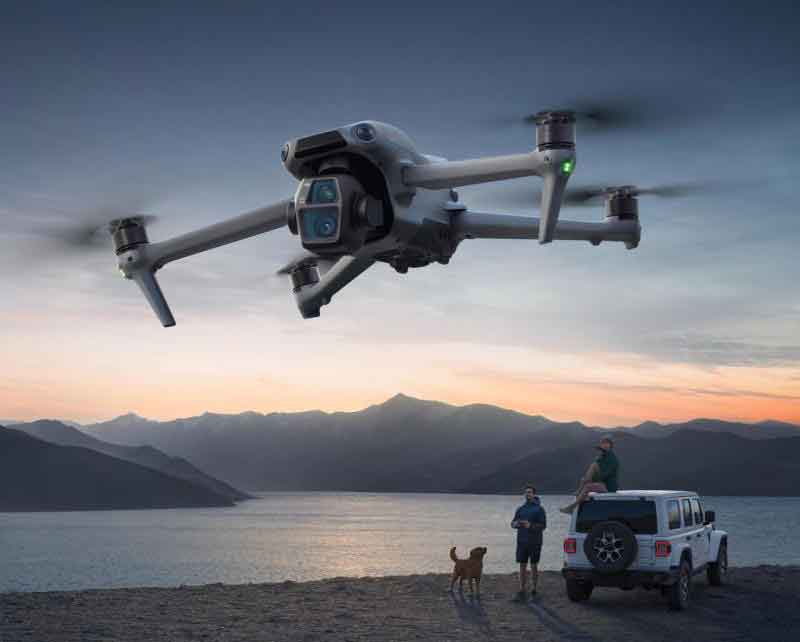
Reflecting on the history, drones originated over a century ago for military purposes, but since the 1980s, technological maturation has unlocked vast civilian potential. In China, the last decade has seen exponential growth, driven by cost reductions, policy support, and market demand. I believe that the China drone ecosystem now stands at a pivotal juncture, where standardization is key to sustaining this momentum. This article delves into the multifaceted aspects of China drone evolution, emphasizing how standards fuel its “Kunpeng-like” aspirations—a reference to the mythical bird symbolizing grand ambitions in Chinese culture.
The policy landscape for China drone initiatives has been meticulously crafted. National and local governments have rolled out successive development plans, creating a favorable institutional environment. For instance, in 2016, the State Council’s “13th Five-Year Plan for National Strategic Emerging Industries” explicitly prioritized the drone industry. This was followed by the Ministry of Industry and Information Technology’s (MIIT) 2017 guidance, which aimed to foster innovation, enhance product quality, and establish a comprehensive standard system. By 2020, MIIT set ambitious targets: reaching an output value of 180 billion yuan by 2025 with an annual growth rate exceeding 25%, while maintaining international leadership in scale and technology. More recently, the 2022 “14th Five-Year Plan for Civil Aviation” advocated for an innovative drone industry ecology, including low-altitude economic zones and regulatory experimentation. From my viewpoint, these policies underscore the strategic importance of China drone advancements, ensuring orderly development and widespread application.
To quantify the policy impact, I have summarized key milestones in the table below, highlighting how each step contributes to the China drone ecosystem.
| Year | Policy/Initiative | Key Focus for China Drone Development |
|---|---|---|
| 2016 | State Council’s “13th Five-Year Plan” | Prioritize drone industry as a strategic emerging sector |
| 2017 | MIIT Guidance on Civil Drones | Promote innovation, quality, and standard system establishment |
| 2020 | MIIT Updated Guidance | Set targets for output value and international leadership |
| 2022 | “14th Five-Year Plan for Civil Aviation” | Foster drone industry ecology and low-altitude economy |
Building on this foundation, the standardization work for China drone systems has become a cornerstone. In 2017, the Standardization Administration of China (SAC) released the “Unmanned Aircraft System Standard System Construction Guide (2017-2018 Edition),” serving as a top-level design document. This guide aligned with broader policies like “Made in China 2025” and aimed to fill standard gaps. As the China drone market expanded, new demands emerged for safety, performance, and classification. Consequently, in 2021, multiple departments jointly issued an updated guide, refining the standard system. I see this evolution as critical for addressing the dynamic needs of the China drone industry, from management to technical aspects.
The current China drone standard system is structured around four components: A) Basic Standards, B) Management Standards, C) Technical Standards, and D) Industry Application Standards. This framework ensures comprehensive coverage across the drone lifecycle. To illustrate, the management architecture integrates lifecycle stages, classification, and application objects, while the technical architecture considers system hierarchy, classification, and platform configuration. In my analysis, this dual approach encapsulates the standardization scope, supporting everything from R&D to operation. For example, the lifecycle includes phases like development, manufacturing, certification/airworthiness, circulation, and operation, each requiring tailored standards for China drone systems.
I can represent the management and technical relationships using a formulaic approach. Let the management architecture be defined by a set \( M = \{ L, C, A \} \), where \( L \) denotes lifecycle stages, \( C \) represents classification (e.g., micro, small, medium, large), and \( A \) signifies application objects (e.g., agriculture, logistics). Similarly, the technical architecture is \( T = \{ H, C, P \} \), with \( H \) as system hierarchy (system-level, subsystem-level), \( C \) as classification, and \( P \) as platform configuration (fixed-wing, multi-rotor). The interaction between these sets ensures robust China drone standardization:
$$ \text{Standard Coverage} = \sum_{i \in M} \sum_{j \in T} S_{ij} $$
where \( S_{ij} \) denotes the standard applicability for a given management-technical pair. This model highlights how China drone standards are designed to be holistic, addressing diverse scenarios.
The proliferation of China drone applications has spurred industry-specific standards. In agriculture, standards like “Technical Specification for UAV Image Preprocessing in Agricultural Remote Sensing Monitoring” (NY/T 4151–2022) have been issued. For surveying, “Quality Inspection and Acceptance of UAV Aerial Photography Results” (CH/T 1054–2022) provides guidelines. Environmental protection sectors adopt standards such as “Technical Specification for UAV Remote Sensing Interpretation in River/Sea Outfall Investigation” (HJ 1234–2021). From my observation, these industry application standards are vital for ensuring that China drone technologies integrate seamlessly into various fields, enhancing efficiency and safety.
To summarize the standard types and their foci, I have compiled the following table, which categorizes key standards relevant to the China drone landscape.
| Standard Category | Examples | Primary Focus for China Drone |
|---|---|---|
| Basic Standards | Terminology, classification, identification | Unify definitions and support regulatory frameworks |
| Management Standards | R&D management, manufacturing, operation | Oversee lifecycle processes and compliance |
| Technical Standards | Test methods for multi-rotor drones (GB/T 38058–2019) | Define performance and safety testing protocols |
| Industry Application Standards | Agriculture, surveying, environmental protection | Tailor drone use to specific sector requirements |
In terms of certification, China has implemented voluntary schemes like the “Civil UAV CR Certification Implementation Rules” (CR-1–04:2021), covering safety and electromagnetic compatibility. This aligns with product standards, facilitating market access. However, when comparing with international benchmarks, I notice gaps. For instance, the North American standard ANSI/CAN/UL-3030:2018 emphasizes structural requirements, safety circuits, injury protection, and labeling, whereas many China drone standards focus predominantly on performance testing. This discrepancy underscores areas for enhancement in the China drone standard system.
Delving into technical details, safety remains a paramount concern for China drone operations. The risk assessment can be modeled using the formula:
$$ R = P \times S $$
where \( R \) is the risk level, \( P \) is the probability of failure, and \( S \) is the severity of consequences. For China drone systems, reducing \( R \) involves improving inherent safety through design and standards. The ANSI/CAN/UL-3030:2018 standard, applicable to commercial drones under 25 kg, addresses electronic components like motors, batteries, and control circuits. In contrast, China drone safety assessments often reference general standards such as GB/T 15706–2012 for risk reduction or GB 4943.1–2011 for IT equipment safety. From my analysis, integrating more drone-specific safety criteria could bolster the China drone industry’s resilience.
One critical aspect for China drone durability is material aging. Drones are frequently used outdoors, exposing them to ultraviolet (UV) radiation, which can degrade materials over time. The degradation rate \( \lambda \) can be expressed as:
$$ \lambda = k \cdot I_{UV} \cdot t $$
where \( k \) is a material-specific constant, \( I_{UV} \) is the UV intensity, and \( t \) is exposure time. Effects include fading, cracking, and strength loss. For China drone manufacturers, enhancing UV resistance in外壳 materials is essential to prolong product lifespan and ensure reliability. This aligns with broader quality imperatives for the China drone market.
Additionally, accessory safety is often overlooked in China drone standards. Drones may carry electrical attachments like cameras or lights, which introduce additional hazards. A comprehensive safety model should account for these components. Let the total risk \( R_{total} \) be the sum of the drone base risk \( R_{base} \) and accessory risks \( R_{acc} \):
$$ R_{total} = R_{base} + \sum_{i=1}^{n} R_{acc,i} $$
where \( n \) is the number of accessories. Standards should thus encompass not only the drone itself but also its peripherals, especially for export-oriented China drone products that must meet diverse international requirements.
The performance metrics for China drone systems can be encapsulated in formulas. For example, flight time \( T_{flight} \) depends on battery energy \( E_{battery} \) and power consumption \( P_{consumption} \):
$$ T_{flight} = \frac{E_{battery}}{P_{consumption}} $$
Similarly, payload capacity \( W_{payload} \) relates to thrust \( F_{thrust} \) and drone weight \( W_{drone} \):
$$ W_{payload} = F_{thrust} – W_{drone} $$
Standardized test methods, such as those in GB/T 38058–2019, help quantify these parameters for China drone models, ensuring consistency and comparability across products.
Looking ahead, the China drone standard system must evolve to address emerging challenges. Currently, over 100 standards have been developed, yet gaps persist in unified safety and performance testing. Compared to North American frameworks, China drone standards need more emphasis on structural integrity, injury prevention, and labeling clarity. I advocate for accelerated development of integrated safety standards, drawing on international best practices while tailoring them to the unique needs of the China drone ecosystem. This includes updating standards to keep pace with technological iterations, as drones become smaller, smarter, and more versatile.
Innovation in standardization is also crucial. As China drone applications diversify—from logistics to emergency response—standards must be adaptive. A dynamic standard update mechanism can be represented as:
$$ \frac{dS}{dt} = \alpha \cdot I_{tech} + \beta \cdot M_{market} $$
where \( S \) is the standard set, \( t \) is time, \( I_{tech} \) is the rate of technological innovation, and \( M_{market} \) is market demand, with \( \alpha \) and \( \beta \) as weighting factors. For the China drone sector, this implies continuously refining standards to reflect new functionalities like obstacle avoidance, high-definition imaging, and autonomous tracking.
In conclusion, the China drone industry is poised for sustained growth, fueled by strategic policies and a maturing standard system. From my viewpoint, standards are not mere technical documents but enablers of safety, quality, and global trade. By bridging gaps in safety testing and embracing holistic approaches, China drone standards can enhance product competitiveness and break down international barriers. The journey ahead involves collaborative efforts among stakeholders to foster a robust, innovative environment where China drone technologies thrive. As the industry advances, I am confident that standardization will remain a key pillar, supporting the China drone’s ascent to new heights in the global arena.
Reflecting on the broader implications, the success of China drone initiatives offers lessons for other emerging technologies. Standardization, when coupled with policy support, can catalyze industrial transformation. I encourage ongoing dialogue and research to further refine the China drone standard framework, ensuring it meets future challenges. Ultimately, the China drone story is one of ambition and precision, where standards provide the wings for flight into a promising future.