
In my research and practice, I have extensively explored the integration of mechatronics into drone liquid cooling systems. Mechatronics, which combines mechanical engineering and electrical engineering, leverages electrical control systems to achieve automation and intelligence in mechanical devices. This technology plays a crucial role in modern industrial production, with its core being the electrical control system. This system comprises sensors, actuators, controllers, and other components that monitor, control, and regulate mechanical equipment. Sensors collect various parameters of the equipment, and controllers use feedback signals from these sensors to enable automatic control. This enhances equipment efficiency and stability, reduces production costs, and improves product quality. The application scope of mechatronics is vast, spanning multiple fields, including drone liquid cooling systems. In such systems, mechatronics can significantly improve safety and reliability while enabling efficient energy utilization. Based on this, I will delve into the detailed application effects of mechatronics in drone liquid cooling systems, with a particular focus on implications for drone training scenarios.
Drone liquid cooling systems are thermal management technologies designed for drones, utilizing circulating coolant to absorb and dissipate heat, thereby effectively lowering the operating temperature of drones and ensuring their normal function. These systems typically consist of radiators, pumps, coolant, and control devices. They generally employ a closed-loop cooling method where the coolant is transported via a pump to internal radiators within the drone. The pipes in the radiators contact critical components of the drone, transferring heat generated by these components to the coolant through thermal conduction. After absorbing heat, the coolant flows back to the pump for recirculation and further dissipation. The primary function of drone liquid cooling systems is to remove heat from key drone components via coolant circulation, maintaining operation within safe temperature ranges. The application of mechatronics in these systems can further optimize performance, increase usage efficiency, extend lifespan, and prevent damage to electronic components due to overheating during high-load flights, which could compromise communication and control system stability. This is especially critical in intensive drone training exercises, where drones undergo repeated high-stress maneuvers, generating substantial heat that must be managed effectively.
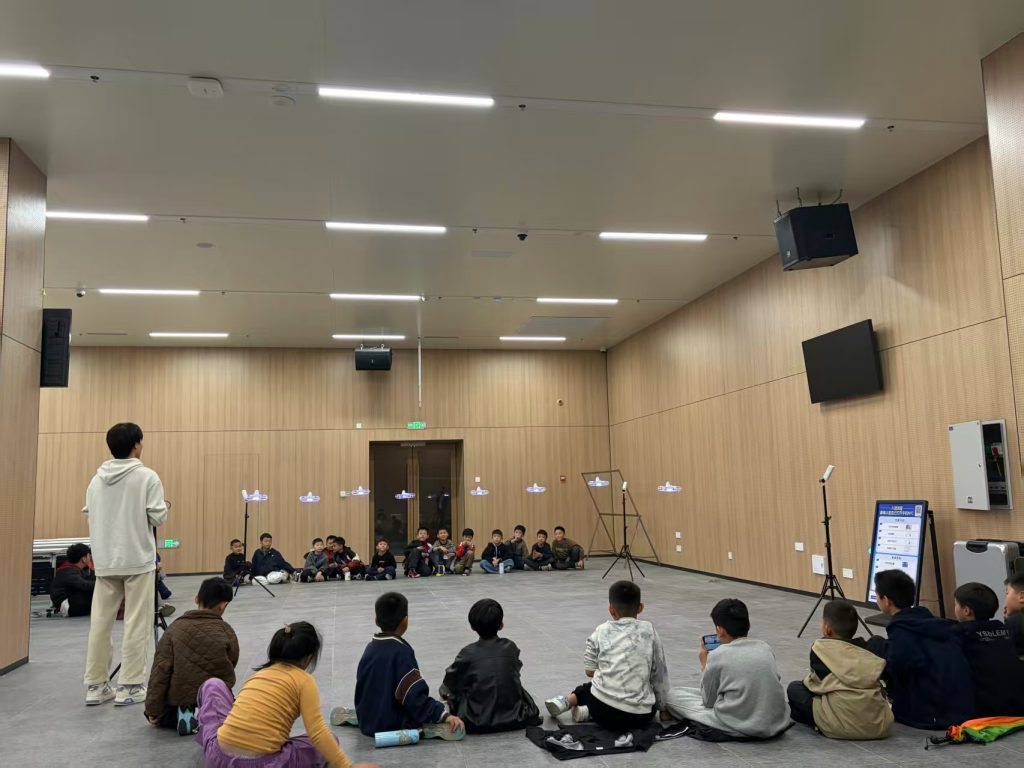
Throughout my analysis, I have identified several key areas where mechatronics enhances drone liquid cooling systems. The following table summarizes the primary application significances, particularly in the context of drone training programs that require robust thermal management for prolonged operations.
| Significance | Description | Impact on Drone Training |
|---|---|---|
| Performance and Efficiency Improvement | Liquid cooling systems transfer heat from drones to coolant, reducing operating temperatures and enhancing performance and efficiency. | In drone training, where drones are frequently pushed to limits, efficient cooling ensures optimal flight performance and reduces downtime due to overheating. |
| Safety and Reliability Enhancement | By lowering operating temperatures, liquid cooling extends the lifespan of electronic components, improving drone safety and reliability. | Enhanced reliability during repetitive training sessions minimizes failure risks, ensuring consistent training outcomes and safety for operators. |
| Adaptability and Flexibility Boost | Liquid cooling systems can adjust cooling effects based on environmental changes, allowing precise control and regulation. | Drone training often occurs in varied environments; adaptable cooling maintains system stability, supporting effective training across conditions. |
From my perspective, the application of mechatronics in drone liquid cooling systems is not without challenges. I have observed several issues that can arise, particularly during extended drone training regimens where systems are subjected to continuous stress. One major problem is unstable cooling effectiveness. Due to changes in working environments and loads, the cooling performance of liquid systems may fluctuate, leading to temperature increases that affect drone performance and reliability, potentially causing failures. For instance, in high-temperature environments, cooling systems may be limited by ambient temperatures, reducing their ability to dissipate heat. Conversely, in low-temperature environments, overcooling can occur, disrupting normal drone operation. This instability is compounded by variations in workload during drone training, where transitions from low to high load require rapid system response. If the liquid cooling system responds slowly or has insufficient capacity, cooling effectiveness becomes unstable. Additionally, the stability depends on coolant circulation; inconsistent flow rates or blockages can impair performance. To quantify this, I often use the heat transfer equation: $$Q = hA\Delta T$$, where \(Q\) is the heat transfer rate, \(h\) is the heat transfer coefficient, \(A\) is the surface area, and \(\Delta T\) is the temperature difference. Instabilities in \(h\) or flow can lead to unpredictable \(Q\), affecting overall cooling. This is critical in drone training, where predictable performance is essential for skill development and mission simulation.
Another challenge I have encountered is the difficulty in maintenance and repair. Compared to traditional air-cooling systems, liquid cooling systems are more complex, involving intricate components like coolant, piping, pumps, and valves. Any component failure can disrupt drone operations, and repairing these systems requires specialized skills and equipment, increasing both difficulty and costs. The technical complexity of mechatronics integration demands multidisciplinary knowledge in mechanics, electronics, and sensors, which may be lacking in maintenance personnel, especially in drone training facilities where staff turnover can be high. Moreover, specialized parts such as high-temperature-resistant materials or efficient radiators are often hard to source and expensive, and they degrade quickly in harsh environments, necessitating frequent replacements. Field maintenance during drone training in remote or adverse conditions—like high altitudes or poor weather—further complicates repairs, limiting timely interventions. To address this, I propose regular maintenance schedules and training for technicians, which I will discuss later. The costs associated with these issues are non-trivial; for example, the energy consumption of liquid cooling systems adds to operational expenses. Pumps and compressors require significant power, which can reduce drone flight time—a key concern in endurance-focused drone training. The initial manufacturing and upkeep costs are also higher, posing economic pressures for drone developers and training programs aiming to scale their operations.
To mitigate these problems, I have developed several application strategies based on mechatronics principles. First, addressing unstable cooling effectiveness requires optimized design and intelligent control. By leveraging mechatronics, I can enhance fluid flow distribution to increase coolant velocity near heat sources, improving stability. Introducing temperature control systems with sensors allows real-time monitoring and adjustment of coolant flow and cooling power. For instance, using PID controllers, the system can maintain a set temperature \(T_{\text{set}}\) by adjusting the pump speed \(v\) based on error \(e = T_{\text{actual}} – T_{\text{set}}\). The control law can be expressed as: $$v = K_p e + K_i \int e \, dt + K_d \frac{de}{dt}$$, where \(K_p\), \(K_i\), and \(K_d\) are tuning parameters. This ensures stable cooling during intensive drone training sessions. Additionally, implementing fault detection systems through machine learning can predict and prevent issues by analyzing historical data from training exercises. For example, anomaly detection algorithms can flag deviations in temperature or pressure, prompting preemptive maintenance.
Second, regular maintenance and repair of technical equipment are vital. In my experience, establishing a systematic maintenance protocol is key. This includes periodic inspections of cooling components for leaks or damage, cleaning of radiators and pipes to remove debris, and lubrication of pumps to reduce wear. I recommend using diagnostic tools integrated with mechatronics to automate checks, such as flow meters and thermal cameras. For drone training centers, maintaining logs of system performance—like temperature and pressure readings—can aid in predictive maintenance, reducing downtime. When repairs are needed, having a stock of common spare parts and trained personnel can expedite the process. Below is a table summarizing maintenance activities and their frequency, which I have found effective in sustaining system reliability during continuous drone training operations.
| Maintenance Activity | Frequency | Tools/Techniques | Relevance to Drone Training |
|---|---|---|---|
| Component Inspection | Monthly | Visual checks, leak detectors | Ensures systems are ready for frequent training flights, preventing mid-session failures. |
| Cleaning and Filter Replacement | Quarterly | Chemical cleaners, replacement filters | Maintains cooling efficiency in dusty training environments, common in outdoor drills. |
| Lubrication and Calibration | Bi-annually | Lubricants, calibration software | Keeps pumps and sensors accurate, crucial for precise control during advanced training maneuvers. |
| Data Recording and Analysis | Continuous | Sensors, data loggers | Provides insights for optimizing training schedules and cooling strategies based on usage patterns. |
Third, reducing energy consumption and costs is essential for sustainable operation. In my design approaches, I focus on structural optimization to minimize aerodynamic drag and improve flight efficiency, thereby lowering overall energy use. Selecting high-efficiency components like brushless motors and efficient pumps can cut power demands. For example, the power consumption \(P\) of a pump can be modeled as: $$P = \rho g Q H / \eta$$, where \(\rho\) is fluid density, \(g\) is gravity, \(Q\) is flow rate, \(H\) is head, and \(\eta\) is efficiency. By choosing pumps with higher \(\eta\), energy savings accrue over time. Intelligent control systems can further optimize energy use by adjusting cooling based on real-time needs during drone training—for instance, reducing coolant flow during low-load training exercises. Implementing energy-saving measures, such as optimized flight paths and speeds in training simulations, can also reduce thermal loads. Regular performance tuning and upkeep ensure the system operates at peak efficiency, extending component life and lowering long-term costs. From a cost perspective, I evaluate the total cost of ownership (TCO) using: $$\text{TCO} = C_{\text{initial}} + \sum_{t=1}^{n} (C_{\text{energy},t} + C_{\text{maintenance},t})$$, where \(C_{\text{initial}}\) is initial cost, and \(C_{\text{energy},t}\) and \(C_{\text{maintenance},t}\) are annual energy and maintenance costs. By minimizing these through mechatronics, TCO can be reduced, benefiting drone training programs with limited budgets.
Fourth, enhancing the professional素养 of technical personnel is critical. In my engagements with drone training institutions, I emphasize that mechatronics applications require a broad knowledge base in mechanics, electronics, and thermodynamics. Technicians must understand the principles of various mechatronic devices and system control methods. They need deep technical analysis skills to troubleshoot issues and perform repairs, ensuring system stability. I advocate for continuous training programs, including workshops and mentorship, to build expertise. For instance, hands-on drone training sessions on liquid cooling system maintenance can improve proficiency. Innovation is also key; technicians should be encouraged to propose改进s based on drone training experiences, such as customizing cooling protocols for specific training modules. By fostering a culture of learning and collaboration, technical teams can better support the integration of mechatronics, ultimately boosting application effectiveness in drone liquid cooling systems.
Throughout my research, I have also considered the specific role of drone training in refining these systems. Drone training provides a controlled yet demanding environment to test and optimize liquid cooling performance. For example, during simulated mission training, drones may execute complex maneuvers that generate peak heat loads; data from these sessions can inform cooling system adjustments. I often incorporate feedback loops where training outcomes guide mechatronic control parameter tuning. This iterative process enhances system resilience, making it more suited to real-world applications. Moreover, drone training facilities serve as ideal testbeds for new cooling technologies, allowing for practical validation before field deployment. By emphasizing drone training in development cycles, we can accelerate innovation and ensure that liquid cooling systems meet the rigorous demands of modern drone operations.
To further illustrate the thermal dynamics involved, I frequently use mathematical models. For instance, the cooling capacity \(C\) of a liquid system can be expressed as: $$C = \dot{m} c_p \Delta T$$, where \(\dot{m}\) is the mass flow rate of coolant, \(c_p\) is its specific heat capacity, and \(\Delta T\) is the temperature rise across the heat source. In drone training, maintaining \(C\) above the heat generation rate \(Q_{\text{gen}}\) is crucial. If \(Q_{\text{gen}}\) exceeds \(C\), overheating occurs. By using mechatronic controls to adjust \(\dot{m}\) based on sensor inputs, we can ensure \(C \geq Q_{\text{gen}}\). This balance is vital during intensive drone training drills, where heat output varies rapidly. Additionally, I analyze system efficiency through the coefficient of performance (COP), given by: $$\text{COP} = \frac{Q_{\text{cooling}}}{W_{\text{input}}}$$, where \(Q_{\text{cooling}}\) is the heat removed and \(W_{\text{input}}\) is the work input. Higher COP values indicate better energy efficiency, which is a goal in sustainable drone training programs. Through simulation and real-world testing in training scenarios, we can optimize COP by fine-tuning mechatronic components.
In conclusion, based on my extensive work, mechatronics demonstrates significant application effects in drone liquid cooling systems. By addressing challenges like unstable cooling, maintenance difficulties, and high costs through strategies such as intelligent control, regular upkeep, energy optimization, and personnel training, we can enhance system performance and reliability. The integration of these approaches is particularly beneficial in drone training contexts, where reliable thermal management supports effective skill development and mission readiness. As drone technology advances, the synergy between mechatronics and liquid cooling will continue to evolve, driving improvements in drone safety, efficiency, and adaptability. I recommend that stakeholders prioritize these strategies to maximize the benefits in both training and operational settings, ensuring that drones can operate optimally across diverse conditions.