
In recent years, the integration of unmanned aerial vehicles, commonly referred to as fire drones, into forest fire management has emerged as a transformative technology. As a researcher actively involved in this field, I have focused on exploring the efficacy of fire drones equipped with extinguishing bombs for combating small-scale forest fires. This study aims to optimize the operational parameters of fire drone systems through systematic experimentation, thereby enhancing their precision, safety, and efficiency in fire suppression tasks. The use of fire drones is particularly advantageous in challenging terrains, such as steep slopes or during nighttime operations, where human intervention is risky or impractical. By leveraging orthogonal experimental design, this research investigates the influence of key factors—extinguishing bomb shape, fire drone flight altitude, and bomb capacity—on灭火效果. The findings are intended to provide actionable insights for deploying fire drones in real-world forest fire scenarios, ultimately contributing to more effective aerial firefighting strategies.
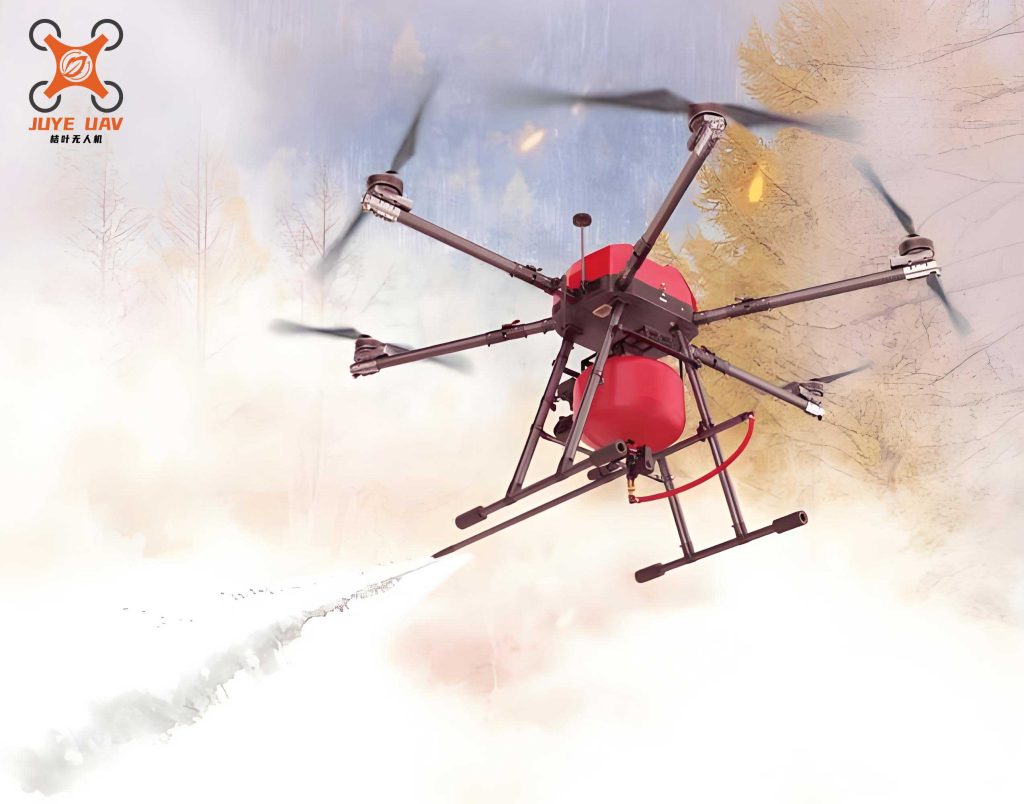
The adoption of fire drone technology in forest fire prevention represents a significant advancement in aerial firefighting. Fire drones offer the capability for targeted bomb deployment, enabling rapid response to incipient fires and reducing fire intensity within localized areas. This辅助作用 is crucial for containing wildfires before they escalate, especially in remote or inaccessible regions. However, the performance of fire drone systems is contingent upon multiple variables, which necessitates a thorough investigation to determine optimal configurations. In this study, I conducted a series of controlled experiments to evaluate how extinguishing bomb shape, fire drone flight altitude, and bomb capacity impact灭火时间 and overall effectiveness. The rationale for selecting these factors is grounded in practical considerations: bomb shape affects stability upon landing, flight altitude influences bomb placement accuracy relative to heat sources, and bomb capacity directly determines the volume of extinguishing agent delivered. By employing an orthogonal array, I systematically varied these factors to identify the most efficient combination for fire suppression, with the goal of maximizing the utility of fire drones in forest conservation efforts.
The experimental site was characterized by hilly terrain with an average slope of 28°, situated in a subtropical monsoon climate zone. This environment mimics typical forest fire conditions, where ground-based firefighting is often hindered by topographic challenges. The fire drone used in this study was a multi-rotor model capable of carrying extinguishing bombs with self-detonating mechanisms triggered by high temperatures. The bombs were filled with foam-based extinguishing agents and came in three shapes—square, circular, and triangular—and three capacities—1 kg, 2 kg, and 4 kg. The fire drone’s flight altitude was set at three levels: 5 m, 10 m, and 15 m. These parameters were chosen to reflect operational ranges that balance safety (avoiding drone damage from heat) and effectiveness (ensuring bomb proximity to flames). Each experimental run involved igniting a controlled fire with a flame height below 0.5 m, simulating a small forest fire, and deploying the fire drone to drop the bomb. The灭火时间, defined as the duration from bomb release to complete fire extinguishment, was recorded for analysis. To account for variability, each combination was replicated three times, and data were processed using statistical software to ensure robustness.
The orthogonal experimental design is a powerful tool for multi-factor optimization, as it allows for the simultaneous examination of multiple variables with minimal runs. In this study, I employed an L9(3^3) orthogonal array, which accommodates three factors each at three levels. The factors and levels are summarized in Table 1. The orthogonal array efficiently organizes the experimental runs, enabling the calculation of main effects and interactions through极差 analysis and multiple comparisons. The极差 (R) for each factor is computed as the difference between the maximum and minimum average灭火时间 across its levels, using the formula: $$ R = \max(\bar{K}_i) – \min(\bar{K}_i) $$ where $\bar{K}_i$ represents the average灭火时间 for level i of a given factor. A larger极差 indicates a greater influence on the outcome. Additionally, analysis of variance (ANOVA) principles were applied to assess significance, though the orthogonal design primarily relies on直观分析. The mathematical framework ensures that the conclusions drawn are statistically sound, guiding the identification of optimal settings for fire drone operations.
| Experiment Number | Factor A: Bomb Shape | Factor B: Flight Altitude (m) | Factor C: Bomb Capacity (kg) | Extinguishing Time (min) |
|---|---|---|---|---|
| 1 | Square | 5 | 1 | 10 |
| 2 | Square | 10 | 2 | 5 |
| 3 | Square | 15 | 4 | 2 |
| 4 | Circular | 5 | 2 | 10 |
| 5 | Circular | 10 | 4 | 6 |
| 6 | Circular | 15 | 1 | 17 |
| 7 | Triangular | 5 | 4 | 1 |
| 8 | Triangular | 10 | 1 | 12 |
| 9 | Triangular | 15 | 2 | 6 |
The results from the orthogonal experiments reveal significant insights into the performance of fire drone systems. As shown in Table 1, the shortest灭火时间 of 1 minute was achieved in Experiment 7, which involved a triangular extinguishing bomb, a fire drone flight altitude of 5 m, and a bomb capacity of 4 kg. This combination, denoted as A3B1C3, represents the optimal configuration based on the experimental data. To quantify the influence of each factor, I calculated the极差 values from the average灭火时间 per level. The averages for factor A (bomb shape) were: square (A1) = 5.7 minutes, circular (A2) = 11 minutes, and triangular (A3) = 6.3 minutes. For factor B (flight altitude): 5 m (B1) = 7 minutes, 10 m (B2) = 8 minutes, and 15 m (B3) = 8.3 minutes. For factor C (bomb capacity): 1 kg (C1) = 13 minutes, 2 kg (C2) = 7 minutes, and 4 kg (C3) = 3 minutes. The极差 are: R_A = 11 – 5.7 = 5.3, R_B = 8.3 – 7 = 1.3, and R_C = 13 – 3 = 10. Thus, the order of influence is C > A > B, indicating that bomb capacity has the most substantial impact on灭火效果, followed by bomb shape, while flight altitude has a minimal effect. This finding underscores the critical role of delivering an adequate volume of extinguishing agent via fire drones, with形状 and altitude serving as secondary considerations.
To further elucidate the differences among factor levels, I performed multiple comparison tests using statistical software. The results are presented in Table 2. For factor A, the circular bomb (A2) required significantly longer灭火时间 compared to square (A1) and triangular (A3) bombs, which did not differ substantially from each other. This suggests that circular bombs may be less effective due to potential rolling upon impact, reducing their proximity to the fire source. For factor B, no significant differences were observed among the three altitude levels, confirming that fire drone flight altitude within the tested range does not critically affect灭火时间. This flexibility allows operators to adjust altitude based on safety concerns, such as avoiding thermal updrafts, without compromising performance. For factor C, the 1 kg capacity resulted in significantly longer灭火时间 than the 2 kg and 4 kg capacities, highlighting the importance of using larger bombs for efficient fire suppression. The relationship between bomb capacity and灭火时间 can be modeled linearly for the tested range: $$ T = \alpha – \beta C $$ where T is灭火时间, C is capacity in kg, and $\alpha$ and $\beta$ are constants derived from the data. This empirical formula aids in predicting the performance of fire drone systems under varying payload conditions.
| Factor | Level | Average Extinguishing Time (min) | Statistical Significance |
|---|---|---|---|
| A: Bomb Shape | Square (A1) | 5.7 | b |
| Circular (A2) | 11.0 | a | |
| Triangular (A3) | 6.3 | b | |
| B: Flight Altitude | 5 m (B1) | 7.0 | a |
| 10 m (B2) | 8.0 | a | |
| 15 m (B3) | 8.3 | a | |
| C: Bomb Capacity | 1 kg (C1) | 13.0 | a |
| 2 kg (C2) | 7.0 | b | |
| 4 kg (C3) | 3.0 | c |
In addition to the daytime experiments, I evaluated the performance of fire drones during nighttime operations. This aspect is crucial because forest fires often occur or persist after dark, when visibility is reduced. Comparative tests were conducted under similar conditions, with the fire drone deploying extinguishing bombs in both daytime and nighttime settings. The results, summarized in Table 3, demonstrate that nighttime operations yield efficiency improvements. Specifically, the target acquisition time—the duration for the fire drone operator to locate and lock onto the fire—decreased by 15.2% at night, from 18.4 minutes during the day to 15.6 minutes at night. This enhancement is attributed to the higher contrast of flames against the dark background, facilitating quicker visual detection. Moreover, the total灭火时间 was reduced by 8.3%, from 42 minutes during the day to 38.5 minutes at night. This reduction stems from the ease of spotting residual embers or small flames post-bomb deployment, allowing ground crews to intervene more rapidly. The accuracy of bomb drops remained at 100% in both conditions, indicating that fire drone navigation systems are robust regardless of lighting. These findings affirm that fire drones are highly effective for nocturnal firefighting, offering a strategic advantage in round-the-clock forest protection.
| Metric | Daytime (13:00–17:00) | Nighttime (20:00–23:00) | Efficiency Improvement (%) |
|---|---|---|---|
| Target Acquisition Time (min) | 18.4 | 15.6 | 15.2 |
| Bomb Drop Accuracy (%) | 100 | 100 | 0 |
| Total Extinguishing Time (min) | 42.0 | 38.5 | 8.3 |
The implications of these results are profound for the deployment of fire drones in forest fire management. The dominance of bomb capacity as a factor underscores the need for fire drone designs that can accommodate larger payloads without compromising maneuverability. Modern fire drones should be engineered with enhanced lift capabilities and efficient battery systems to support heavier extinguishing bombs. For instance, if a fire drone can carry a 4 kg bomb, as in the optimal configuration, it can extinguish small fires in a single sortie, minimizing往返时间 and maximizing resource utilization. The insignificance of flight altitude suggests that operators can prioritize safety by maintaining higher altitudes in intense fire environments, without fearing a drastic loss in effectiveness. This flexibility is invaluable in real-world scenarios where fire dynamics are unpredictable. Furthermore, the poor performance of circular bombs highlights the importance of aerodynamic and geometric considerations in bomb design. Triangular or square bombs, with their flat surfaces, tend to stay in place upon landing, ensuring that the extinguishing agent is released directly onto the fire. Future research could explore advanced shapes, such as hexagonal or aerodynamic profiles, to further optimize stability and dispersal patterns.
Another critical aspect is the integration of fire drone systems with existing forest monitoring networks. By coupling fire drones with satellite imagery and ground-based sensors, it is possible to create a comprehensive fire detection and response system. When a fire is detected, fire drones can be dispatched autonomously to the coordinates, leveraging GPS and thermal imaging for precision bombing. The mathematical optimization of such systems can be framed as a minimization problem: $$ \min_{x} f(x) = w_1 T(x) + w_2 C(x) $$ where x represents operational parameters (e.g., bomb shape, altitude, capacity), T(x) is the灭火时间, C(x) is the operational cost, and w_1 and w_2 are weighting factors reflecting priorities. This formulation allows forest managers to balance speed and economy when deploying fire drones. Additionally, the use of fire drones reduces human risk, as they can operate in hazardous conditions where ground crews would be endangered. This safety benefit is magnified in nighttime operations, where fire drones excel due to improved visibility of flames. As technology advances, fire drones could be equipped with AI-driven decision-making algorithms to adapt bomb deployment strategies in real-time based on fire behavior and environmental conditions.
To contextualize the findings within broader firefighting strategies, it is essential to consider the limitations of this study. The experiments were conducted under controlled conditions with small-scale fires, which may not fully replicate the complexity of large forest wildfires. Factors such as wind speed, fuel moisture, and terrain irregularity could influence the performance of fire drones. For example, high winds might affect bomb trajectory, requiring adjustments in flight altitude or release timing. Future work should involve field trials in diverse forest ecosystems to validate these results. Moreover, the economic feasibility of scaling up fire drone fleets warrants investigation. While fire drones offer cost savings compared to manned aircraft, their initial investment and maintenance costs must be evaluated against traditional methods. Nonetheless, the rapid evolution of drone technology promises decreasing costs and increasing capabilities, making fire drones an increasingly attractive option for forest agencies worldwide.
In conclusion, this study demonstrates the significant potential of fire drones equipped with extinguishing bombs for forest fire prevention. Through orthogonal experimentation, I have identified that bomb capacity is the most influential factor on灭火效果, followed by bomb shape, while flight altitude has a negligible impact. The optimal configuration involves using a triangular extinguishing bomb with a 4 kg capacity, deployed at a flight altitude of 5 m, which achieved the shortest灭火时间 of 1 minute. This configuration maximizes the efficiency of fire drone operations, enabling rapid suppression of incipient fires. Furthermore, nighttime operations with fire drones show improved efficiency, with faster target acquisition and reduced灭火时间, highlighting their suitability for 24/7 firefighting duties. The integration of fire drones into forest management protocols can enhance response times, reduce risks to personnel, and lower overall fire suppression costs. As a researcher, I advocate for continued innovation in fire drone technology, focusing on payload optimization, autonomous navigation, and system interoperability. By harnessing these advancements, fire drones will play an increasingly vital role in safeguarding forest ecosystems against the growing threat of wildfires.
The mathematical and empirical insights derived from this research provide a foundation for future studies. For instance, the relationship between bomb capacity and灭火时间 can be refined through regression analysis, yielding predictive models for various fire scenarios. Additionally, the极差 analysis method employed here can be extended to include more factors, such as bomb release velocity or drone speed, to further optimize fire drone systems. The continuous improvement of fire drone capabilities will undoubtedly contribute to more resilient forest fire management strategies, ultimately preserving biodiversity and mitigating climate change impacts. As fire drone technology matures, its application is expected to expand beyond fire suppression to include tasks like post-fire assessment and reforestation monitoring, underscoring its versatility as a tool for environmental stewardship.