
In recent years, the integration of unmanned aerial vehicles (UAVs) in surveying and mapping has revolutionized traditional methods, particularly in agricultural land management projects. As a professional involved in geomatics, I have extensively utilized DJI UAV technology, including models like the DJI Phantom 4 Pro and DJI FPV, to enhance the efficiency and accuracy of reclaimed paddy field completion acceptance assessments. This article delves into the technical advantages, workflow, and empirical validation of employing DJI drone-based photogrammetry for such projects, emphasizing its superiority over conventional field surveying techniques like total stations and RTK GPS. By leveraging high-resolution imagery and automated processing, we can generate detailed digital surface models (DSM) and orthomosaics, which facilitate comprehensive 3D mapping and parameter extraction. Through rigorous testing, the results demonstrate that DJI UAV-derived data meet stringent accuracy requirements, significantly reducing labor costs and project timelines while providing additional geospatial products.
The adoption of DJI UAV systems, such as the DJI Phantom series and DJI FPV drones, addresses critical challenges in reclaimed paddy field projects, where parameters like field area, irrigation channel lengths, and road dimensions must be precisely measured for compliance with land reclamation policies. Traditional methods often involve labor-intensive fieldwork, which is time-consuming and prone to human error. In contrast, DJI drone photogrammetry enables rapid data acquisition over large areas, even in complex terrains. For instance, in a typical project covering approximately 0.8 km², a DJI UAV can capture thousands of high-resolution images in multiple flights, with ground sampling distances as fine as 3.5 cm. This capability is crucial for producing accurate digital elevation models (DEM) and orthophotos, which form the basis for竣工地形图 (completion acceptance maps). The workflow begins with meticulous planning, including flight path design and control point establishment, followed by data processing using software like Agisoft Metashape to generate DSM and DOM outputs. Throughout this process, the repeatability and reliability of DJI drones ensure consistent results, making them indispensable tools in modern geospatial projects.
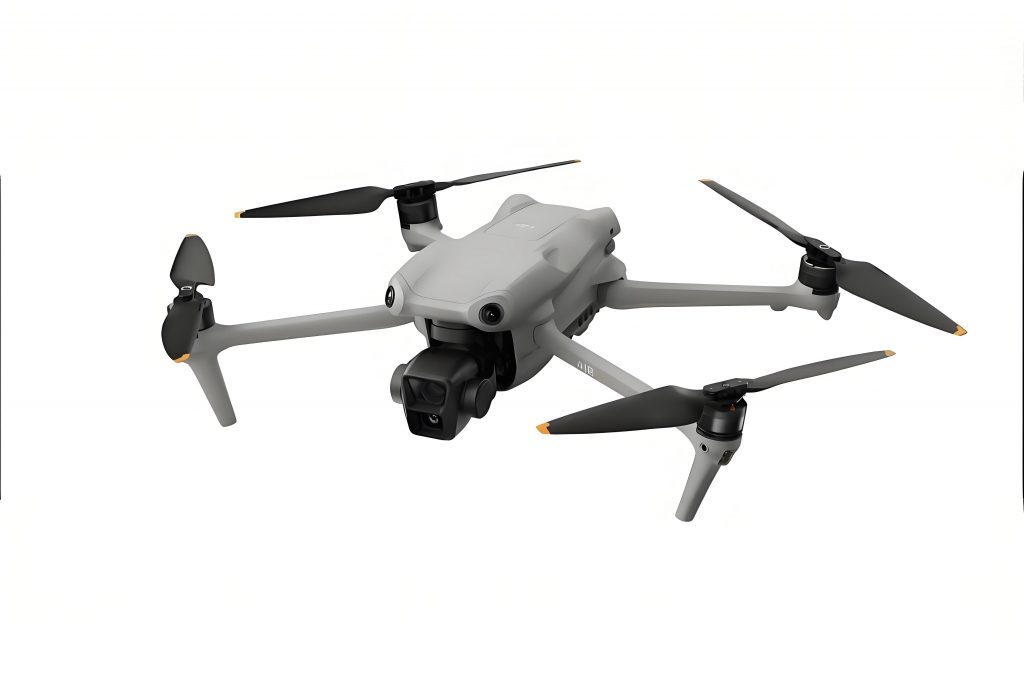
To achieve optimal results with DJI UAV technology, the aerial photography phase must be carefully orchestrated. This involves partitioning the survey area into manageable sections, considering factors like topography and obstacles. For example, in a hilly terrain with elevation differences up to 20 meters, the DJI Phantom 4 Pro’s flight parameters are set to maintain a relative altitude of 100 meters, ensuring a ground resolution of 3.5 cm. The flight planning includes high overlap rates—80% forward and 70% side overlap—to facilitate robust image matching during processing. The DJI FPV drone, with its agile maneuverability, can be deployed in areas with intricate features, such as around high-voltage towers, to capture additional perspectives. The number of control points is determined based on the block triangulation method, with points distributed at the corners and center of each partition, as well as at convex and concave turns. These points are marked on the ground using durable materials like painted “L” shapes on hard surfaces or tiles on grass, ensuring they are visible in the aerial imagery. The mathematical foundation for this process relies on photogrammetric principles, where the relationship between image coordinates and ground coordinates is expressed using collinearity equations. For a point (X, Y, Z) on the ground, its image coordinates (x, y) can be derived as:
$$ x = -f \frac{a_{11}(X – X_0) + a_{12}(Y – Y_0) + a_{13}(Z – Z_0)}{a_{31}(X – X_0) + a_{32}(Y – Y_0) + a_{33}(Z – Z_0)} $$
$$ y = -f \frac{a_{21}(X – X_0) + a_{22}(Y – Y_0) + a_{23}(Z – Z_0)}{a_{31}(X – X_0) + a_{32}(Y – Y_0) + a_{33}(Z – Z_0)} $$
Here, (X₀, Y₀, Z₀) represents the projection center coordinates, f is the focal length, and aᵢⱼ are the elements of the rotation matrix derived from the drone’s orientation angles. This formulation allows for precise geo-referencing when combined with ground control points (GCPs). In practice, a DJI UAV flight might involve 7 sorties, capturing over 2,500 images, which are then processed to generate dense point clouds. The accuracy of these outputs is validated through independent checks, showing that planar errors remain within ±0.30 meters and vertical errors within ±0.20 meters, as per industry standards for 1:500 scale mapping.
The data processing stage leverages advanced software like Agisoft Metashape, which automates aerial triangulation and model generation without requiring initial camera calibration. By importing images and POS data, the software performs feature matching and bundle adjustment to produce high-density point clouds. These are then used to create digital surface models (DSM) and digital orthophoto maps (DOM). For reclaimed paddy fields, where vegetation is minimal, the DSM can often serve as a digital elevation model (DEM). The accuracy of these products is critical and is evaluated by comparing model-derived coordinates with field-measured values. For instance, the root mean square error (RMSE) for planar and vertical positions can be calculated using:
$$ RMSE_{planar} = \sqrt{\frac{\sum_{i=1}^{n} (\Delta X_i^2 + \Delta Y_i^2)}{n}} $$
$$ RMSE_{vertical} = \sqrt{\frac{\sum_{i=1}^{n} \Delta Z_i^2}{n}} $$
Where ΔX, ΔY, and ΔZ are the differences between model and field measurements for n points. In one validation exercise, 20 check points were used, resulting in an RMSE of 0.09 m for planar accuracy and 0.11 m for vertical accuracy, both within acceptable limits. The following table summarizes the error statistics for a subset of these points, illustrating the consistency of DJI drone-derived data:
| Point ID | Planar Error (m) | Vertical Error (m) |
|---|---|---|
| J01 | 0.094 | -0.040 |
| J02 | -0.079 | 0.090 |
| J03 | -0.079 | -0.086 |
| J04 | 0.098 | 0.078 |
| J05 | 0.116 | -0.187 |
| J06 | 0.150 | 0.122 |
| J07 | 0.121 | -0.023 |
| J08 | -0.134 | 0.035 |
| J09 | 0.053 | -0.079 |
| J10 | 0.055 | -0.071 |
Once the DSM and DOM are generated, they are imported into GIS platforms like EPS Geoinformation Workstation for 3D mapping. This involves digitizing features such as fields, channels, roads, and embankments in both 2D and 3D views. The interactive environment allows for efficient extraction of topographic elements, with elevation points annotated directly from the DSM. However, in areas with significant slopes, such as terraced sections, the projection-based distance measurements from the model may deviate from actual field measurements due to geometric distortions. For linear features like irrigation channels on steep gradients, the error can exceed 15%, necessitating supplemental field surveys. This highlights a limitation of relying solely on DJI UAV data for all parameters, but for most elements, the accuracy remains high. The table below compares planar accuracy between model-derived and field-measured coordinates for 90 points, demonstrating an overall RMSE of 0.15 m, which is well within the ±0.30 m tolerance:
| Point ID | Model X (m) | Model Y (m) | Field X (m) | Field Y (m) | ΔX (m) | ΔY (m) |
|---|---|---|---|---|---|---|
| 1 | 379.835 | 85.704 | 379.763 | 85.556 | 0.072 | 0.148 |
| 2 | 384.743 | 05.573 | 384.974 | 05.485 | -0.231 | 0.088 |
| 3 | 368.627 | 16.734 | 368.486 | 16.929 | 0.141 | -0.195 |
| 4 | 379.823 | 85.716 | 379.861 | 85.692 | -0.038 | 0.024 |
| 5 | 381.333 | 66.905 | 381.292 | 66.628 | 0.041 | 0.277 |
| 6 | 341.698 | 30.338 | 341.967 | 30.602 | -0.269 | -0.264 |
| 7 | 334.649 | 40.612 | 334.668 | 40.652 | -0.019 | -0.040 |
| … | … | … | … | … | … | … |
| 90 | 334.779 | 43.406 | 334.733 | 43.358 | 0.046 | 0.048 |
Similarly, vertical accuracy was assessed using 81 points, yielding an RMSE of 0.16 m, which complies with the ±0.20 m threshold. The error distribution for a sample of these points is shown in the table below, reinforcing the reliability of DJI drone-based elevation data:
| Point ID | Model H (m) | Field H (m) | ΔH (m) |
|---|---|---|---|
| 1 | 65.460 | 65.648 | -0.188 |
| 2 | 65.652 | 65.521 | 0.131 |
| 3 | 65.667 | 65.577 | 0.090 |
| 4 | 65.660 | 65.522 | 0.138 |
| 5 | 65.642 | 65.483 | 0.159 |
| 6 | 65.650 | 65.468 | 0.182 |
| 7 | 65.528 | 65.583 | -0.055 |
| … | … | … | … |
| 81 | 65.043 | 65.095 | -0.052 |
The practical application of DJI UAV technology in reclaimed paddy field projects extends beyond mere mapping to include quantitative assessments of constructed features. For example, in a completed project, the total reclaimed area was calculated as 0.709 km², with 10,144 meters of hardened field roads and 29,452 meters of various irrigation channels. These metrics were derived by integrating the digitized elements from the DSM and DOM, followed by field verification to correct for discrepancies in sloped areas. The efficiency gains are substantial; whereas traditional methods might require weeks of fieldwork, a DJI drone-based approach can condense this to a few days, with most of the effort shifted to office-based processing. Moreover, the high-resolution orthophotos serve as valuable records for monitoring land use changes over time. The integration of DJI FPV drones adds an extra layer of flexibility, allowing for dynamic flight paths in obstructed environments, though their use must be balanced with battery life constraints. Overall, the mathematical rigor of photogrammetry, combined with the operational ease of DJI UAV systems, creates a robust framework for land management projects.
In conclusion, the adoption of DJI UAVs, including the DJI Phantom series and DJI FPV models, has proven transformative for reclaimed paddy field completion acceptance projects. By automating data acquisition and processing, these systems deliver accurate topographic products that meet regulatory standards while minimizing human resource expenditure. The key to success lies in meticulous planning, from flight design to control point placement, and in validating outputs through ground truthing. Although challenges persist in highly sloped terrain, where projection errors can affect linear measurements, the overall accuracy is sufficient for most applications. As DJI drone technology continues to evolve, with improvements in battery life and sensor resolution, its role in geomatics will only expand, offering even greater precision and efficiency for future projects. This approach not only streamlines the竣工验收 process but also provides a scalable solution for other agricultural and environmental monitoring tasks, underscoring the versatility of DJI UAV platforms in modern surveying.