
In the contemporary era, where rapid response and efficiency are paramount, emergency logistics has emerged as a critical framework to safeguard lives and property during natural disasters, public health crises, and social security incidents. The traditional logistics systems, heavily reliant on ground transportation, face mounting challenges such as traffic congestion, environmental pollution, and infrastructural limitations. As a transformative solution, China UAV drone delivery has gained prominence, leveraging the burgeoning low-altitude economy to address these impediments. This article delves into the application of China UAV drone delivery in emergency logistics, analyzing its advantages and disadvantages, and proposing strategic recommendations to foster its development in China. Through a first-person perspective, I will explore how China UAV drone technology can revolutionize emergency response mechanisms, with an emphasis on empirical data, theoretical models, and practical implementations.
The evolution of emergency logistics in China has seen incremental advancements in technological innovation and modal exploration. The system encompasses emergency material reserves, transport vehicle allocation, warehouse facilities, and information technology support. Conventional delivery methods integrate road, rail, water, and air transport to ensure timeliness and efficiency. However, road transport is plagued by increasing vehicular ownership, leading to chronic congestion and emissions; rail transport is constrained by fixed routes, hindering point-to-point delivery; maritime shipping suffers from poor timeliness; and air transport involves high investments. These limitations underscore the need for an agile alternative, where China UAV drone delivery presents a viable paradigm shift. By operating in low-altitude airspace, drones circumvent terrestrial obstacles, offering a direct aerial pathway that enhances responsiveness.
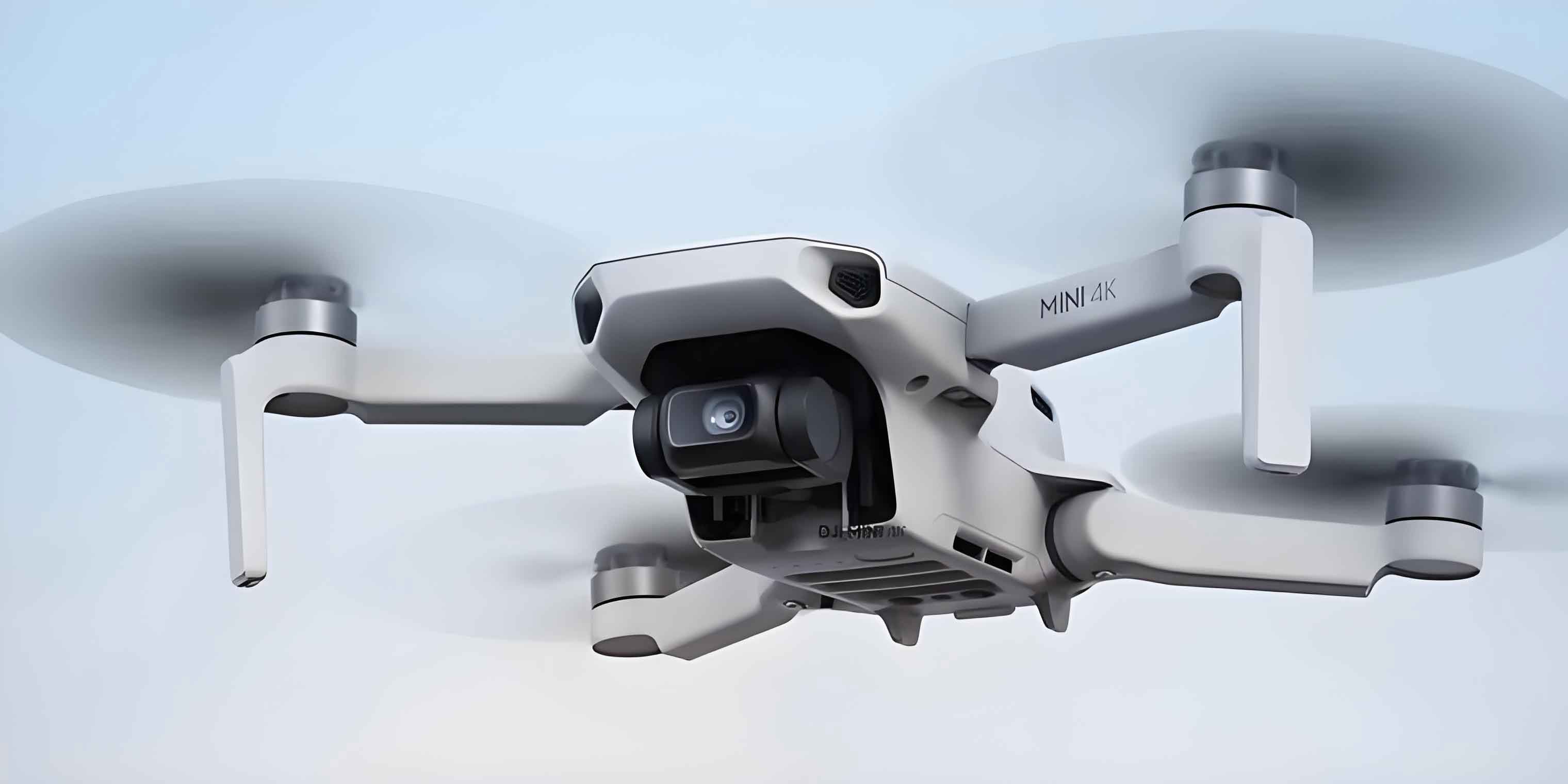
To quantify the efficacy of China UAV drone delivery, consider the following comparative analysis. The efficiency of delivery can be modeled using a time-cost function, where traditional ground transport time \( T_g \) is given by:
$$ T_g = \frac{D_g}{V_g} + C_c $$
Here, \( D_g \) represents the ground distance affected by road networks, \( V_g \) is the average ground speed hampered by traffic, and \( C_c \) denotes congestion delays. In contrast, China UAV drone delivery time \( T_d \) is expressed as:
$$ T_d = \frac{D_a}{V_d} $$
where \( D_a \) is the aerial straight-line distance, typically shorter than \( D_g \), and \( V_d \) is the drone speed, unimpeded by ground conditions. For instance, in a case study from Suzhou Industrial Park in 2024, China UAV drone delivery reduced the traditional 14 km road journey (taking 22 minutes) by 44% in distance and 50-70% in time, underscoring the temporal advantage. The flexibility of China UAV drones allows adaptation to diverse terrains—mountainous regions, rural areas, earthquake zones, and fire scenes—where ground access is limited. Moreover, their compact size and vertical take-off and landing (VTOL) capabilities enable deployment on rooftops, gardens, or makeshift pads, minimizing infrastructure demands.
The advantages of China UAV drone delivery in emergency logistics are multifaceted, as summarized in Table 1. This table delineates key benefits, supported by quantitative metrics and qualitative assessments, highlighting how China UAV drone technology addresses traditional logistics shortfalls.
| Advantage | Description | Impact Metric | Relevance to China UAV Drone |
|---|---|---|---|
| High Efficiency and Timeliness | Aerial straight-line flight reduces distance and avoids traffic delays. | Time savings of 50-70% compared to ground transport. | China UAV drones optimize routes using real-time navigation, enhancing emergency response speed. |
| Flexibility and Adaptability | Operates in complex environments (e.g., mountains, disaster sites) with VTOL capabilities. | Can access 95% of remote areas unreachable by roads. | China UAV drone models are designed for varied terrains, supporting rapid deployment in crises. |
| Energy Efficiency and Environmental Friendliness | Electric propulsion reduces carbon emissions and noise pollution. | CO2 emissions reduced by up to 80% per delivery versus diesel vehicles. | China UAV drone adoption aligns with green logistics initiatives, mitigating urban pollution. |
| Cost-Effectiveness | Lower fixed costs (simple infrastructure) and variable costs (electricity, maintenance). | Total cost per delivery is 30-40% lower than traditional air freight. | China UAV drone systems leverage scalable technology, decreasing operational expenses in emergency scenarios. |
| Real-Time Monitoring | Equipped with sensors (cameras, LiDAR, infrared) for data collection and situational awareness. | Enables 360-degree surveillance with data transmission rates of 100 Mbps. | China UAV drones integrate advanced telemetry, aiding rescue decision-making and logistics coordination. |
From a cost perspective, the economic model of China UAV drone delivery can be articulated through a total cost function \( C_{total} \), comprising fixed costs \( C_f \) and variable costs \( C_v \):
$$ C_{total} = C_f + C_v $$
where \( C_f \) includes expenses for drone equipment, take-off/landing pads, and management systems, and \( C_v \) encompasses electricity consumption per flight \( E \) and maintenance \( M \), formulated as:
$$ C_v = n \cdot (E \cdot p_e + M) $$
Here, \( n \) is the number of flights, \( p_e \) is the electricity price. Empirical data suggests that for China UAV drone fleets, \( C_f \) is 20% lower than traditional aviation infrastructure due to modular designs, while \( C_v \) benefits from China’s renewable energy integration, reducing \( p_e \). This cost advantage is pivotal for scaling emergency logistics in resource-constrained settings.
Despite these strengths, the application of China UAV drone delivery in emergency logistics faces several unresolved issues, primarily technological, infrastructural, and safety-related. Technologically, China UAV drone development contends with reliance on imported components, weak core technologies, and limitations in endurance, payload capacity, obstacle avoidance, navigation, and data processing. For example, the endurance \( E_d \) of a typical multi-rotor China UAV drone is governed by battery capacity \( B \) and power consumption \( P \):
$$ E_d = \frac{B}{P} $$
Current models often have \( E_d \) limited to 30-60 minutes, restricting long-distance missions. Similarly, payload capacity \( W \) is constrained by motor thrust \( F \) and structural weight \( S \):
$$ W = F – S $$
where many China UAV drones max out at 5-10 kg, inadequate for heavy medical supplies. These technical hurdles impede the reliability of China UAV drone delivery in extended emergencies.
Infrastructure deficiencies further complicate deployment. China’s general airports are scarce and unevenly distributed, with dense clusters in developed eastern regions and sparse coverage in remote western areas. This disparity limits China UAV drone operability in rural disaster zones. Additionally, ground support facilities—such as charging stations, weather monitoring systems, and communication networks—are underdeveloped, affecting flight safety and efficiency. A spatial accessibility index \( A_i \) for China UAV drone infrastructure can be defined as:
$$ A_i = \frac{N_{facilities}}{A_{region}} $$
where \( N_{facilities} \) is the number of support facilities in a region, and \( A_{region} \) is the area. Low \( A_i \) values in hinterlands correlate with delayed emergency responses. Safety concerns also arise from weather vulnerabilities and avian interference; for instance, flight feasibility \( F_f \) depends on weather conditions \( W_c \) and bird strike risk \( B_r \):
$$ F_f = f(W_c, B_r) $$
During storms or high bird activity, \( F_f \) approaches zero, grounding China UAV drone fleets and necessitating backup plans.
To address these challenges, I propose a series of optimization strategies for enhancing China UAV drone delivery in emergency logistics. These recommendations are synthesized in Table 2, which outlines actionable measures across technical, infrastructural, regulatory, and operational domains, each tied to specific outcomes for China UAV drone systems.
| Optimization Area | Recommendation | Implementation Action | Expected Impact on China UAV Drone |
|---|---|---|---|
| Core Technology R&D | Strengthen autonomous flight control, precision navigation, obstacle avoidance, and data transmission. | Invest in domestic R&D centers and partnerships with academia; develop proprietary algorithms. | Boost China UAV drone endurance to 120+ minutes, payload to 20 kg, and achieve 99.9% obstacle detection accuracy. |
| Infrastructure Development | Expand and balance airport networks; deploy ubiquitous charging stations and weather sensors. | Build modular droneports in urban and rural areas; integrate solar-powered charging hubs. | Increase infrastructure accessibility index \( A_i \) by 50% nationwide, enabling seamless China UAV drone operations in remote zones. |
| Policy and Regulation | Enact low-altitude economy policies; define flight corridors; streamline approvals; enhance oversight. | Establish a national UAV regulatory framework with real-time monitoring systems and liability clauses. | Reduce approval times for China UAV drone emergency flights by 80%, ensuring safe and legally compliant deployments. |
| Model Selection and Integration | Choose drone types based on distance, payload, and scenario; explore hybrid delivery models. | Adopt a decision matrix for selecting multi-rotor, fixed-wing, or hybrid drones; test “truck + drone” systems. | Optimize delivery routes, cutting emergency response times by 60% through tailored China UAV drone configurations. |
In core technology, advancements should focus on key parameters. For autonomous navigation, the accuracy of China UAV drone positioning can be improved using sensor fusion algorithms, such as Kalman filtering, where the state estimate \( \hat{x}_k \) is updated via:
$$ \hat{x}_k = F_k \hat{x}_{k-1} + B_k u_k + K_k (z_k – H_k \hat{x}_{k-1}) $$
with \( F_k \) as the state transition model, \( B_k \) the control-input model, \( K_k \) the Kalman gain, \( z_k \) the measurement, and \( H_k \) the observation model. Enhancing this for China UAV drones would bolster route precision. For infrastructure, a phased rollout plan could prioritize high-risk disaster-prone regions, using geospatial analysis to site facilities. The “truck + drone” hybrid model, in particular, offers a synergistic approach: trucks handle bulk transport from urban hubs to drone stations, while China UAV drones execute last-mile delivery to isolated points. This model’s efficiency \( \eta_{hybrid} \) can be modeled as:
$$ \eta_{hybrid} = \frac{\sum_{i=1}^{n} (D_{truck,i} + D_{drone,i})}{T_{total}} $$
where \( D_{truck,i} \) and \( D_{drone,i} \) are distances covered by truck and drone in segment \( i \), and \( T_{total} \) is the total time. Studies indicate \( \eta_{hybrid} \) can be 40% higher than pure ground transport, making it ideal for China UAV drone integration in emergencies.
Selecting appropriate China UAV drone types is crucial for scenario-specific effectiveness. Table 3 categorizes common drones used in Chinese emergency logistics, detailing their characteristics and optimal use cases. This decision support tool aids responders in matching China UAV drone capabilities to mission requirements, maximizing resource utilization.
| Drone Type | Key Features | Range (km) | Payload (kg) | Best for Emergency Scenarios |
|---|---|---|---|---|
| Multi-rotor China UAV Drone | High maneuverability, VTOL, hover capability | 5-20 | 2-10 | Urban search-and-rescue, medical kit delivery in congested areas, short-range monitoring. |
| Fixed-wing China UAV Drone | Long endurance, high speed, efficient forward flight | 50-200 | 5-15 | Long-distance supply runs to remote disaster zones, aerial mapping of large affected regions. |
| Hybrid VTOL China UAV Drone | Combines VTOL with efficient cruising | 20-100 | 5-12 | Versatile operations in mixed terrains, such as mountainous rescues with varying distance needs. |
| Unmanned Helicopter China UAV Drone | Heavy lift, stable in wind, precise control | 10-50 | 10-50 | Transporting heavy equipment (e.g., generators), medical evacuations in complex topography. |
The decision process for China UAV drone selection can be formalized using a multi-criteria optimization function. For a given emergency scenario with parameters like distance \( d \), payload requirement \( w \), and terrain complexity \( t \), the suitability score \( S \) for a drone type \( j \) is:
$$ S_j = \alpha \cdot f(d, R_j) + \beta \cdot g(w, W_j) + \gamma \cdot h(t, T_j) $$
where \( R_j \), \( W_j \), and \( T_j \) are the drone’s range, payload capacity, and terrain adaptability, respectively; \( \alpha, \beta, \gamma \) are weighting factors summing to 1, reflecting priority. By computing \( S_j \) for available China UAV drones, responders can objectively choose the optimal model, enhancing delivery outcomes.
Looking ahead, the future of China UAV drone delivery in emergency logistics appears promising, driven by innovation and policy support. The Chinese government’s emphasis on low-altitude economic development has spurred pilot programs in cities like Shenzhen and Chengdu, where China UAV drone trials have demonstrated efficacy in simulated disasters. Innovation, as the primary engine of growth, will continue to refine China UAV drone technologies—through AI integration for autonomous swarming, 5G for real-time communication, and advanced materials for lighter, stronger airframes. These advancements will not only elevate emergency logistics but also spill over into commercial sectors, fostering a resilient supply chain ecosystem.
In conclusion, China UAV drone delivery represents a paradigm shift in emergency logistics, offering solutions to ground transportation woes while embodying flexibility, economy, efficiency, and sustainability. By addressing technical bottlenecks, fortifying infrastructure, refining regulations, and optimizing operational models, China can harness the full potential of its UAV drone fleet. As a researcher in this field, I envision a future where China UAV drones are ubiquitous in crisis response, slashing delivery times, saving lives, and setting a global benchmark for smart logistics. The journey requires concerted effort, but with continued investment and cross-sector collaboration, China UAV drone delivery will undoubtedly become a cornerstone of modern emergency management systems.