
Sugarcane, a vital global crop for sugar and biofuel production, faces persistent threats from a variety of insect pests throughout its growth cycle. Traditional pest control methods, primarily reliant on manual or ground-based machine spraying, present significant challenges. Effectively targeting pesticide applications to the lower stalks of mature sugarcane plants is notoriously difficult, often leading to suboptimal control and consequent yield losses. Furthermore, manual fieldwork in dense, tall sugarcane stands is laborious, physically demanding, and inefficient. The over-application of chemicals, a common compensatory practice, results in substantial wastage, escalates production costs, poses severe health risks to operators, and contributes to environmental pollution. Therefore, the development and adoption of precise, efficient, and safe pest management technologies are imperative. In recent years, the rapid advancement of agricultural drone technology, or Unmanned Aerial Vehicles (UAVs) for plant protection, has emerged as a transformative solution. This article delves into the application of agricultural drone systems in sugarcane pest control, analyzing their operational principles, practical efficacy, and the broader implications for modern, sustainable agriculture.
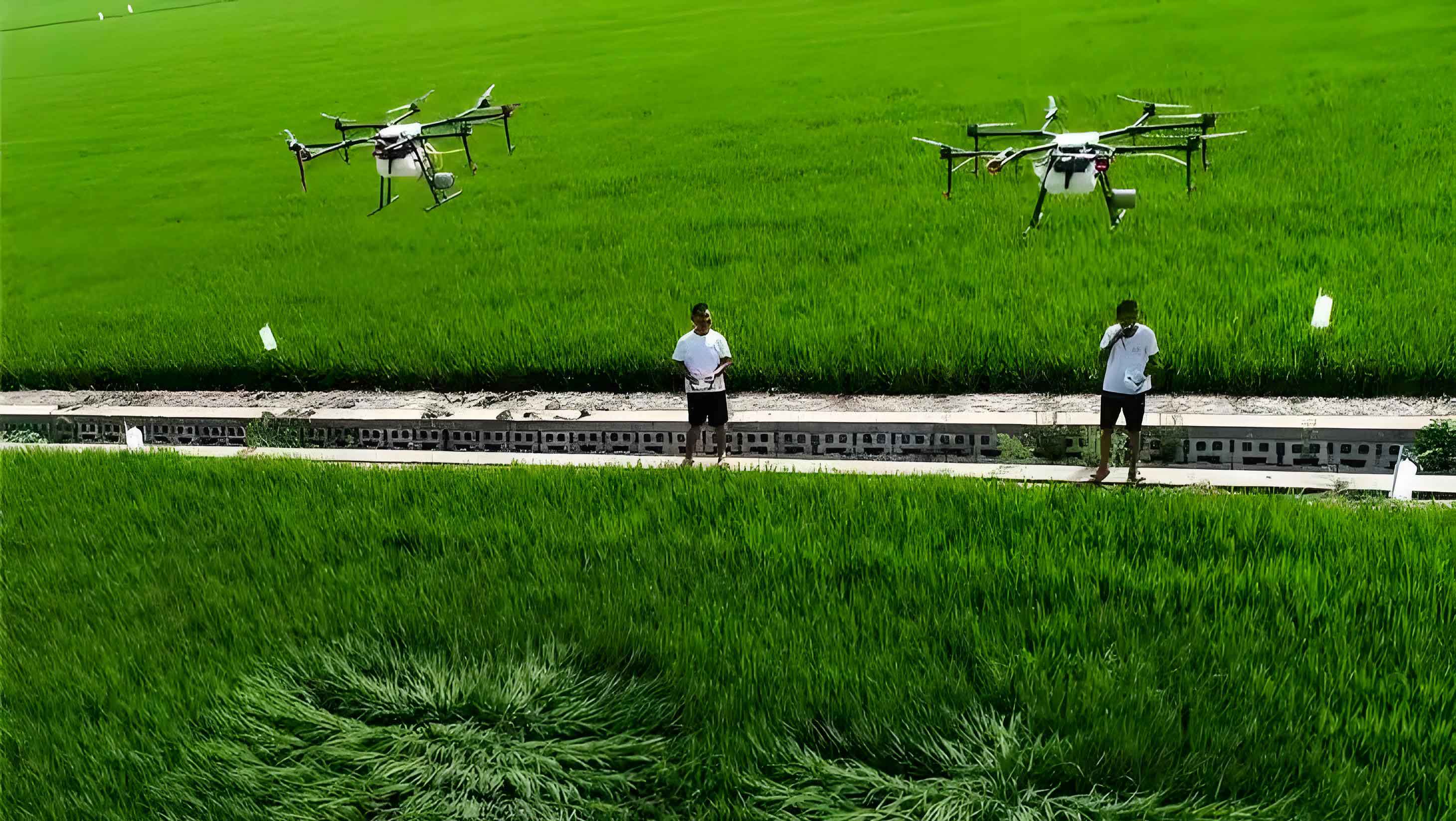
The traditional paradigm of pest control is being fundamentally reshaped by smart technologies. Agricultural drone systems represent a convergence of robotics, navigation, and precision agriculture. Essentially, a plant protection agricultural drone is an unmanned aerial system specifically designed for agricultural spraying operations. Its core components include the flight platform (frame, motors, propellers), a sophisticated navigation and flight control system (often integrating GPS and RTK for centimeter-level accuracy), and a specialized spraying system comprising tanks, pumps, and nozzles. Operated via ground control stations or pre-programmed flight paths, these drones can autonomously execute tasks such as spraying liquids, dispersing granules, or even sowing seeds.
The advantages of employing an agricultural drone for crop protection are multifaceted and compelling:
| Feature | Agricultural Drone | Traditional Methods (Manual/Ground Rig) |
|---|---|---|
| Application Precision | High. Uses low-altitude flight and precise GPS guidance for uniform coverage, minimizing missed and overlapping zones. | Low. Highly variable, especially for lower plant canopy; prone to inconsistency. |
| Labor Efficiency | Very High. One operator can manage multiple drones, drastically reducing field labor requirements. | Low. Requires significant manual labor for operation and traversal through fields. |
| Terrain & Crop Adaptability | Excellent. Unaffected by muddy fields, rough terrain, or crop height and density. | Poor. Limited by soil conditions, terrain, and crop growth stage (e.g., cannot enter tall crops). |
| Operational Speed | Fast. Can cover 3-4 times the area per hour compared to conventional machinery. | Slow. Progress is limited by human walking pace or tractor speed. |
| Resource Efficiency | High. Ultra-low volume (ULV) spraying reduces pesticide and water usage by 30-50%. | Low. High-volume spraying often leads to runoff and wastage. |
| Operator Safety | High. Remote operation eliminates direct exposure to chemicals. | Low. High risk of dermal and inhalation exposure to pesticides. |
| Crop/Soil Impact | None. No physical contact with plants or soil compaction. | Potential damage from trampling or machinery traffic. |
However, the technology is not without its limitations. Key constraints include limited payload capacity (typically 5-25 kg), leading to short flight durations (8-20 minutes per battery) and frequent refill/return cycles. It often requires specific formulations of pesticides suitable for ultra-low-volume (ULV) application. Achieving optimal droplet penetration into dense canopies like sugarcane remains a technical focus. There are also operational risks such as crashes due to technical failure or pilot error, and the initial investment cost can be prohibitive for small-scale farmers.
The application of agricultural drone technology in sugarcane pest management addresses the critical shortcomings of established methods. In regions with extensive sugarcane cultivation, soil-applied systemic pesticides during earthing-up have been a common practice against borers. However, increasing pest resistance has diminished the efficacy of this approach, raising costs and environmental loads. Controlling pests in the later growth stages, when plants can exceed 3 meters in height, is particularly problematic for ground-based methods. The agricultural drone offers a viable solution here. By leveraging Geographic Information System (GIS) maps of fields, the agricultural drone can be programmed for fully autonomous, precise flight paths over the cane, irrespective of its height. This enables timely foliar application of insecticides during pest outbreak windows, such as for mid-season borers or late-season sucking pests like thrips.
A practical field study was conducted to evaluate the effectiveness of agricultural drone applications against key sugarcane pests. The trial focused on sugarcane thrips and borers.
| Pest Target | Trial Sites | Drone Application Treatment | Control Treatment (No Drone Spray) | Key Assessment Metrics |
|---|---|---|---|---|
| Sugarcane Thrips | Multiple field blocks | Soil application + Foliar spray via drone (30% Chlorfluazuron·Imidacloprid SC @ 240 ml/ha). | Soil application only (70% Thiamethoxam ZF @ 225 g/ha). | Mean number of thrips per plant; Control Efficacy (%) |
| Sugarcane Borer | Two distinct field blocks | Block 1: Soil App. + Drone spray (40% Chlorantraniliprole·Thiamethoxam WG @ 240 g/ha). Block 2: Different Soil App. + Same Drone spray. |
Block 1: Soil application only. Block 2: Different Soil application only. |
Borer-infested plant rate (%); Borer-infested internode rate (%); Control Efficacy (%) |
The agricultural drone used was a model with a maximum take-off weight of 20 kg and a liquid tank capacity of 8 liters. Critical flight parameters for the hilly terrain were set as follows: flight altitude of approximately 3 meters, speed of 2-3 m/s, swath width of 3 meters, and a flow rate calibrated to 9000 ml per hectare. The droplet size (Volume Median Diameter, VMD) was maintained at around 120 μm to balance canopy penetration and drift control.
The efficacy of pest control can be modeled as a function of application quality and timing. A simplified representation of control efficacy ($E$) can be expressed as:
$$E = \left(1 – \frac{P_t}{P_c}\right) \times 100\%$$
Where $P_t$ is the pest incidence (e.g., insects per plant, infestation rate) in the treated plot (with agricultural drone spray), and $P_c$ is the pest incidence in the control plot. However, a more comprehensive model factors in application parameters. The actual dose deposited on the target ($D_d$) is a critical determinant of efficacy and is influenced by drone parameters:
$$D_d = \frac{Q \times \eta}{v \times w}$$
Here, $Q$ is the flow rate from the spray system (ml/min), $\eta$ is the deposition efficiency factor (accounting for drift and off-target loss), $v$ is the飞行速度 of the agricultural drone (m/min), and $w$ is the effective swath width (m). The deposition efficiency $\eta$ itself is highly dependent on droplet size (VMD) and environmental conditions like wind speed.
The results from the field trial were highly promising. For sugarcane thrips control during a peak infestation period, the plots receiving the supplemental foliar application via the agricultural drone showed a mean of 9.9 thrips per plant, compared to 30 thrips per plant in the control plots that received only the soil treatment. This translates to a control efficacy of 67%. Individual site efficacies ranged from 57% to 68%, demonstrating consistent performance.
The results for borer control were even more striking, particularly when comparing different underlying soil-applied regimes:
| Comparison Group | Metric | Control Plot (Soil App. Only) | Drone-Treated Plot (Soil + Drone App.) | Control Efficacy (%) |
|---|---|---|---|---|
| Block 1 | Infested Plant Rate | 83% | 7% | 91.6% |
| Infested Internode Rate | 15% | 0.6% | 96.0% | |
| Block 2 | Infested Plant Rate | 15% | 7.3% | 51.3% |
| Infested Internode Rate | 1.3% | 0.6% | 53.8% |
The data clearly indicates that the agricultural drone application of 40% Chlorantraniliprole·Thiamethoxam WG provided exceptional supplemental control (over 90% efficacy) in Block 1, where the standalone soil treatment was failing completely (83% infestation). In Block 2, where the soil treatment alone was moderately effective (15% infestation), the drone spray still provided a significant additional 50%+ reduction in pest incidence. This demonstrates the role of the agricultural drone both as a rescue treatment and as an integral component of a robust Integrated Pest Management (IPM) strategy.
The operational efficiency gains are substantial. An agricultural drone operating at 3 m/s with a 3m swath can theoretically cover approximately 1.08 hectares in 10 minutes of effective spray time, excluding turnaround. This efficiency solves the critical timeliness issue in pest management. Furthermore, by using ULV technology, the agricultural drone achieves significant reductions in chemical and water volume. The environmental impact quotient (EIQ) can be substantially lowered through targeted application, minimizing non-target exposure.
Looking forward, the evolution of agricultural drone technology is geared towards overcoming current limitations. Future developments include:
- Increased Payload and Endurance: Advancements in battery energy density and hybrid power systems will extend flight times and payload capacity, reducing the refill/refuel frequency.
- Advanced Sensing and AI: Integration of multispectral and hyperspectral cameras will enable the agricultural drone to not just apply chemicals, but to scout for pests and diseases. AI algorithms can analyze this data to generate prescription maps for variable-rate application, treating only infested areas (spot spraying), which maximizes resource efficiency. The spraying decision could be modeled as:
$$ \text{Spray Command} = f(I(x,y), T) $$
where $I(x,y)$ is a pest infestation index derived from sensor data at coordinates $(x,y)$, and $T$ is an economic/biological threshold. - Swarm Technology: Coordinated fleets of agricultural drone units managed by a single operator will dramatically increase the area covered per operational hour, making the technology scalable for large plantations.
- Improved Formulations: Co-development of pesticide formulations specifically optimized for agricultural drone ULV application, with adjuvants that enhance adhesion, penetration, and rainfastness.
In conclusion, the integration of agricultural drone systems into sugarcane pest management protocols represents a significant leap forward in precision agriculture. This technology effectively addresses the agronomic, economic, and environmental challenges posed by traditional methods. By enabling precise, timely, and efficient application of control agents, even in topographically challenging or physically inaccessible fields of tall sugarcane, the agricultural drone enhances pest control efficacy, safeguards operator health, conserves resources, and promotes environmental stewardship. As the technology continues to mature, with improvements in autonomy, sensing, and data analytics, the agricultural drone is poised to become an indispensable tool for sustainable and productive sugarcane cultivation worldwide, solidifying its role as the cornerstone of modern, intelligent crop protection strategies.