
The evolution of modern warfare has been fundamentally reshaped by the proliferation of Unmanned Aerial Vehicles (UAVs). As a critical component of this transformation, the military drone has transitioned from a niche reconnaissance asset to a central pillar of integrated battle networks, capable of performing a wide spectrum of missions from intelligence gathering to stand-off strikes. The operational effectiveness, survivability, and mission flexibility of any military drone are inextricably linked to the performance and sophistication of its propulsion system. The engine acts not merely as a power source but as a key determinant of the platform’s flight envelope, stealth signature, endurance, and overall system reliability. This analysis delves into the defining characteristics and critical requirements of propulsion systems for modern military drones, with a particular focus on turbofan engines, and explores the intricate relationship between aircraft mission profiles and engine design parameters.
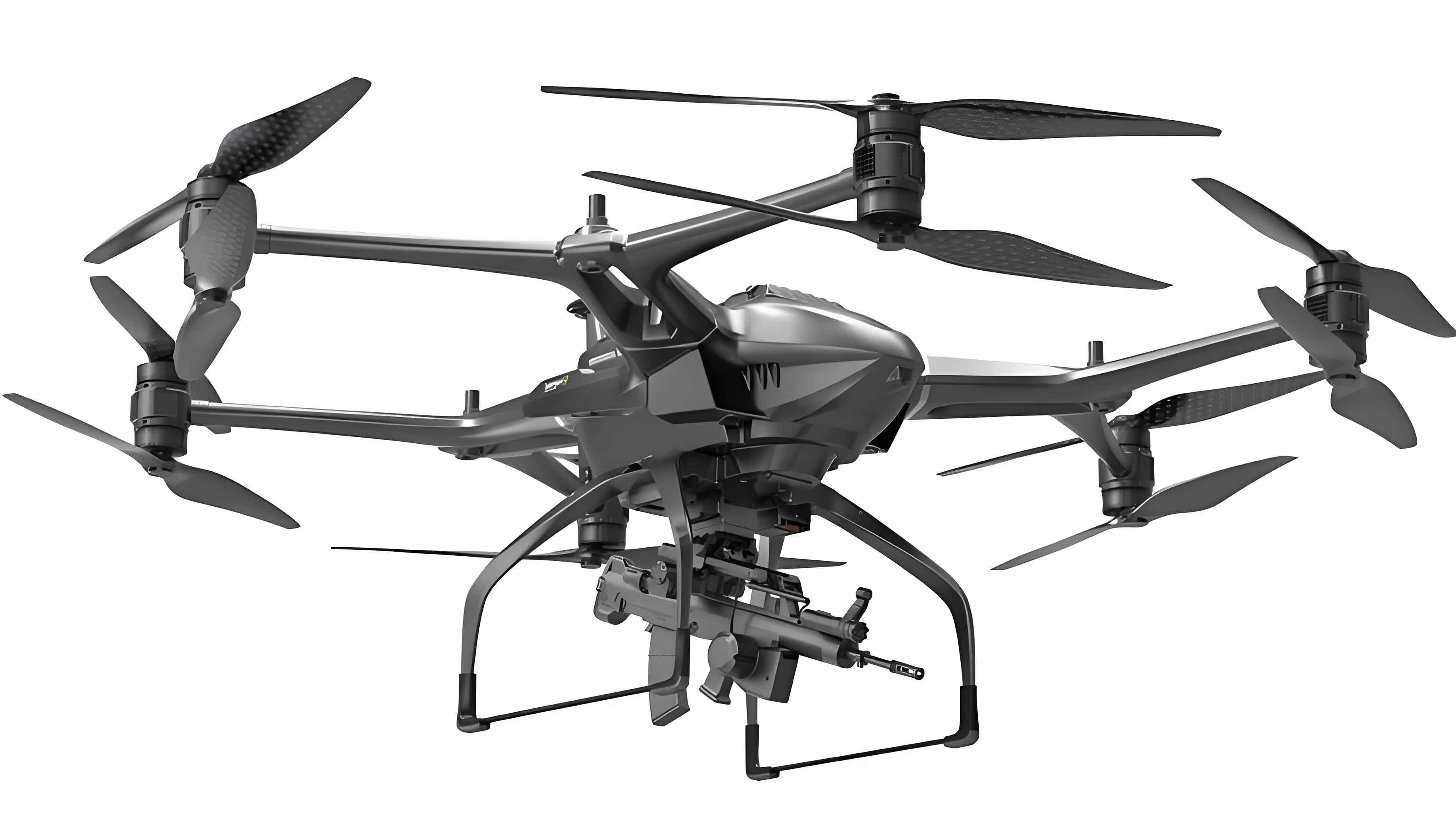
The propulsion system for a military drone is not designed in isolation; it is a response to a complex set of operational imperatives. Unlike their manned counterparts, drones are freed from the physiological and safety constraints of an onboard pilot. This allows the air vehicle design to be ruthlessly optimized for the mission, pushing boundaries in areas such as endurance, altitude, maneuverability, and low observability. Consequently, the engine must be adapted or specifically designed to meet these often extreme and conflicting demands. The choice and design of the propulsion system involve careful trade-offs between performance metrics like thrust-specific fuel consumption (SFC) and thrust-to-weight ratio, stringent signature reduction requirements for radar cross-section (RCS) and infrared (IR) emissions, and overarching goals of affordability, reliability, and maintainability.
1. Propulsion System Characteristics for Different Military Drone Types
Military drones can be broadly categorized based on their primary role, with each role imposing a distinct set of requirements on the propulsion system. The three predominant categories are Unmanned Combat Aerial Vehicles (UCAVs), Unmanned Reconnaissance/ISR platforms, and Unmanned Tankers. The propulsion solutions for these categories exhibit clear patterns in their technological origins and design features.
1.1 Unmanned Combat Aerial Vehicles (UCAVs)
UCAVs are designed for high-threat environments, tasked with missions like strike, suppression of enemy air defenses (SEAD), and air combat. Stealth is often a paramount requirement, which profoundly influences engine selection and installation. Analysis of prominent UCAV programs reveals a strong preference for derived military turbofan engines.
Key propulsion characteristics for UCAVs include:
- Engine Heritage: Primarily based on mature military fighter or trainer engines (e.g., F404, F100, AL-31, M88). This leverages proven reliability, high performance, and existing supply chains while adapting for unmanned use.
- Low Bypass Ratio: UCAVs typically utilize engines with low to medium bypass ratios ($BPR < 1.5$). While a higher BPR improves subsonic SFC, a lower BPR results in a smaller engine frontal area, which is crucial for low RCS, and provides better high-$T_1$ (inlet total temperature) capability for dash speeds.
- Stealth-Centric Modifications: Extensive modifications are made to the baseline engine and its installation to reduce signatures:
- Inlet Design: Use of dorsal, serpentine (S-duct) inlets to shield the compressor face from radar waves.
- Exhaust System: Elimination of the afterburner (common in UCAV adaptations) to drastically reduce IR signature. Integration of specially shaped, low-observable exhaust nozzles, often with significant bending (e.g., “beavertail” or S-shaped nozzles) to mask the hot turbine stages.
- Structural Changes: Removal of the afterburner and associated components leads to a shorter, lighter engine. Structural upgrades (e.g., higher-strength bearings) may be incorporated to handle carrier landing loads or high-g maneuvers.
1.2 Unmanned Reconnaissance/ISR Drones
These military drones prioritize persistence, altitude, and sensor payload capacity. Missions include Intelligence, Surveillance, and Reconnaissance (ISR), signals intelligence (SIGINT), and communications relay. Their propulsion requirements differ significantly from UCAVs.
Key propulsion characteristics include:
- Engine Heritage: Predominantly derived from commercial regional jet, business jet, or older military transport engines (e.g., AE 3007, CF34, PW545, TF34). These engines offer excellent fuel efficiency and high reliability over long durations.
- High Bypass Ratio: Engines with high bypass ratios ($BPR > 4$) are standard. The high propulsive efficiency at subsonic speeds minimizes SFC, which is the primary driver for achieving long endurance and range, as shown in the fundamental range equation (Breguet):
$$ R = \frac{V}{SFC} \cdot \frac{L}{D} \cdot \ln \left( \frac{W_{initial}}{W_{final}} \right) $$
where optimizing SFC directly extends range $R$.
- Stealth as an Evolving Requirement: While early high-altitude long-endurance (HALE) drones like the RQ-4 had minimal stealth, newer generations (RQ-170, RQ-180) incorporate low-observable features. This involves similar inlet and exhaust treatments as UCAVs, but often applied to commercial engine cores.
- Focus on Support Systems: These platforms require significant power extraction for sensors and communications suites, demanding robust engine-driven generators.
1.3 Unmanned Tanker Drones
Exemplified by the MQ-25 Stingray, this category focuses on delivering fuel to extend the reach of other aircraft. Its propulsion needs blend elements from both reconnaissance and combat drones.
- Engine Heritage: Based on highly reliable, fuel-efficient commercial engines (e.g., AE 3007N), chosen for the same endurance and SFC reasons as ISR drones.
- High Bypass Ratio & Carrier Compatibility: A high BPR engine is essential for mission efficiency. Unique challenges include integration with aircraft carrier operations (catapult launch, arrested recovery) which may require structural adaptations to the commercial engine core.
- Moderate Stealth Requirements: While not as stringent as a penetrating UCAV, a reduced signature is still valuable for survivability in contested environments, influencing inlet and nozzle design.
The table below summarizes the typical engine parameters and origins for these military drone categories.
| Drone Type | Example Drone | Example Engine | Thrust (kN) | Bypass Ratio | Engine Heritage | Development Approach |
|---|---|---|---|---|---|---|
| UCAV | X-47B | F100-PW-220U | 74.0 | ~0.6 | Fighter (F-16) | Military Engine Adaptation |
| UCAV | nEUROn | M88 (Adour MK951) | 40.0 | ~0.75 | Trainer/Fighter | Military Engine Adaptation |
| ISR | RQ-4 Global Hawk | AE 3007H | 42.0 | ~4.9 | Regional Jet | Commercial Engine Adaptation |
| ISR (Stealth) | RQ-180 | CF34 (derivative) | ~89.0 | ~5.3 | Regional Jet | Commercial Engine Adaptation |
| Tanker | MQ-25 Stingray | AE 3007N | 40.0 | ~5.0 | Regional Jet | Commercial Engine Adaptation |
2. Critical Aircraft Requirements and Their Translation to Propulsion Parameters
The design or selection of a propulsion system for a military drone begins with a clear articulation of the aircraft’s key requirements. These requirements can be grouped into several overarching categories, each carrying a different weight depending on the drone’s mission.
2.1 Categorization of Key Requirements
The following table assesses the relative importance (High-H, Medium-M, Low-L) of various requirements for the three primary types of military drones.
| Requirement Category | Specific Requirement | UCAV | ISR Drone | Tanker Drone |
|---|---|---|---|---|
| Performance | Low SFC (Subsonic Cruise) | M | H | H |
| High Thrust-to-Weight Ratio | M | L | L | |
| High $T_1$ / Supersonic Capability | H | L | M | |
| High Power Extraction | M | H | M | |
| High Altitude Operation | M | H | M | |
| High Maneuver Tolerance | M | L | L | |
| Environmental | Low Noise | L | L | L |
| Low Emissions (e.g., NOx) | L | M | L | |
| Stealth (Signature) | Low Radar Cross-Section (RCS) | H | M | L |
| Low Infrared (IR) Signature | H | M | M | |
| Reliability & Support | Long Life / Time Between Overhaul | L | H | M |
| High Cycle Durability (Throttle Robustness) | M | L | M | |
| High Maintainability | M | H | H | |
| Cost | Low Procurement Cost | M | M | M |
| Low Development Cost/Risk | H | H | H | |
| Low Maintenance Cost | L | M | M |
Key observations from this analysis are:
- Common High-Priority Demands: All categories place a High priority on low development cost/risk, justifying the prevalent strategy of adapting mature engines. High maintainability is also critical for ISR and Tanker drones due to their endurance-focused, potentially continuous operations.
- UCAV Drivers: Stealth requirements (Low RCS, Low IR) and High $T_1$ capability (for dash/penetration) are paramount. Performance parameters like SFC and thrust-to-weight ratio are often secondary to achieving survivability.
- ISR Drone Drivers: Low SFC is the single most critical performance parameter, directly enabling long endurance. High altitude operation, high power extraction for sensors, and long life are also essential.
- Tanker Drone Drivers: Shares the ISR drone’s critical need for low SFC and high maintainability, with added considerations for carrier suitability and moderate stealth.
2.2 Mapping Requirements to Engine Design Parameters
The aircraft-level requirements must be translated into specific propulsion system characteristics. This involves a complex web of trade-offs, where improving one parameter often degrades another. The following matrix illustrates the correlation between key engine design parameters and the critical aircraft requirements. The symbols indicate the nature of the relationship: ** (Parameter is crucial for the requirement), * (Parameter is important), o (Parameter has minor or conditional influence), – (Opposite of the parameter is desired), — (Opposite parameter is crucial).
| Engine Design Parameter | Correlation with Key Aircraft Requirements | |||||
|---|---|---|---|---|---|---|
| Low SFC | High T/W | High $T_1$ | Low RCS | Low IR | Low Cost | |
| Thermodynamic Cycle | ||||||
| Low Specific Thrust / Low Fan Pressure Ratio (FPR) | ** | – | – | – | o | * |
| High Overall Pressure Ratio (OPR) | * | – | – | o | o | o |
| High Turbine Entry Temperature (SOT) | * | ** | o | o | – | o (Trade-off) |
| Engine Design Features | ||||||
| High Compressor Stall Margin | o | o | * | * | o | o |
| Tight Tip Clearance Control | ** | – | o | o | o | – |
| Modular/Unit Design | o | – | o | o | o | ** |
| Installation Features | ||||||
| Serpentine/Shielded Inlet | – | – | – | ** | * | – |
| Cooled, Low-Observable Nozzle | — | – | o | ** | ** | — |
| Radar-Absorbent/IR Suppression Materials | o | – | o | ** | * | — |
The matrix reveals fundamental design conflicts inherent in military drone propulsion:
- The Stealth vs. Efficiency Trade-off: A Low Specific Thrust (high BPR) cycle is optimal for low SFC but requires a large fan diameter, increasing frontal area and RCS. This directly conflicts with the Low RCS requirement, explaining why UCAVs favor lower BPR engines despite the SFC penalty. The relationship for ideal turbojet/fan thrust is:
$$ F = \dot{m}_a \cdot [(1 + f) \cdot V_{e, core} – V_0] + \dot{m}_a \cdot BPR \cdot (V_{e, fan} – V_0) $$
Where a higher $BPR$ ($\dot{m}_{fan}/\dot{m}_{core}$) at a given thrust $F$ reduces jet velocity $V_e$, improving propulsive efficiency but increasing engine size. - The Performance vs. Signature Trade-off: A High SOT enables a smaller, lighter core for high thrust-to-weight, but increases exhaust gas temperature, worsening the Low IR signature. This is partially mitigated by removing the afterburner in UCAV adaptations.
- The Stealth vs. Cost/Performance Trade-off: Features essential for stealth, like serpentine inlets and cooled low-observable nozzles, introduce aerodynamic losses (reducing pressure recovery, increasing SFC) and add significant complexity, weight, and cost. Their use is a deliberate compromise for survivability.
3. Synthesis: Propulsion Parameter Selection by Military Drone Type
Based on the critical requirements and trade-off analysis, the propulsion system design for each military drone type emphasizes a distinct set of parameters. The following table summarizes the selection tendency for key design parameters, where + denotes a strong positive selection, o denotes neutral or situational, and – denotes avoidance or negative selection.
| Key Design Parameter | UCAV | ISR Drone | Tanker Drone |
|---|---|---|---|
| Low Specific Thrust / High BPR | – | + | + |
| High OPR | – | + | o |
| Modular / Unit Design | + | ** | ** |
| Full Authority Digital Engine Control (FADEC) | + | ** | ** |
| Engine Health Monitoring (EHM) | + | ** | ** |
| Serpentine / Shielded Inlet | ** | o | o |
| Cooled, Low-Observable Nozzle | ** | o | – |
3.1 UCAV Propulsion Focus
The design is dominated by signature reduction. The most critical parameters are installation features: the serpentine inlet and the cooled, low-observable nozzle. The thermodynamic cycle is biased away from maximum subsonic efficiency (avoiding high BPR) to accommodate these stealth features and retain good high-$T_1$ performance. Reliability and control features (FADEC, EHM) are important but are often inherited from the adapted military engine core.
3.2 ISR Drone Propulsion Focus
The design is dominated by the imperative for low SFC and high reliability/maintainability. The most critical parameters are the high BPR cycle and high OPR for thermodynamic efficiency, coupled with modular design, advanced FADEC, and comprehensive EHM to ensure dispatch reliability and ease of maintenance over long, remote operations. Stealth features may be incorporated but are often secondary to efficiency.
3.3 Tanker Drone Propulsion Focus
This category mirrors the ISR focus on low SFC (hence high BPR) and exceptional maintainability (hence modular design, FADEC, EHM). The need for carrier compatibility may impose specific structural demands. Stealth considerations are present but typically less invasive than for a UCAV; a balance is struck between signature reduction and preserving aerodynamic and propulsive efficiency.
4. Conclusion: Strategic Implications for Military Drone Propulsion
The propulsion system is a defining element in the capability matrix of any military drone. This analysis underscores that there is no universal solution; the optimal engine is a highly tailored system whose characteristics are dictated by the primary mission profile. The prevailing and strategically sound trend across all categories is the adaptation of mature, proven engines—military cores for UCAVs and commercial cores for endurance-focused platforms. This approach directly addresses the universal high-priority requirement for low development cost and risk.
The fundamental trade-offs are clear and consequential. For the military drone designed for contested airspace, the relentless pursuit of stealth (low RCS/IR) forces critical compromises on propulsive efficiency (SFC) and often on cost. The propulsion system becomes an integrated survivability component, with its installation architecture (inlet/nozzle) as vital as its internal thermodynamics. Conversely, for the military drone designed for persistence, the paramount need for fuel efficiency shapes a propulsion system that prioritizes high bypass ratios and operational reliability above all else, with stealth being an additive, rather than formative, requirement.
Future advancements in military drone propulsion will likely focus on mitigating these core trade-offs. Technologies such as adaptive cycle engines, which can vary bypass ratio in flight, offer potential pathways to blend the efficiency needed for cruise with the low-signature, high-specific thrust performance needed for dash or combat. Similarly, advancements in heat-resistant materials and cooling techniques for exhaust systems may reduce the IR penalty of high-performance cycles. Regardless of the technological path, the interplay between aircraft requirement and propulsion characteristic will remain the central calculus in developing effective and survivable military drone platforms for the future battlespace.