
In the rapidly evolving domain of unmanned aerial vehicles (UAVs), path planning stands as a critical function that directly determines mission success, operational efficiency, and flight safety. For China UAV systems operating in complex three-dimensional environments, the path planning problem is inherently challenging due to strong nonlinear objective functions, numerous feasibility constraints, and the presence of multiple threat zones and terrain obstacles. Traditional metaheuristic algorithms, while effective in many scenarios, often suffer from premature convergence and insufficient search stability when applied to such high-dimensional, multi-constrained problems. To address these challenges, we propose an improved H5N1 optimization algorithm integrating a state-aware search mechanism, designated as IH5N1-SASM. This algorithm is specifically designed to enhance the global search capability and convergence precision of China UAV path planning. The proposed framework incorporates three synergistic strategies: a state-aware search mechanism for real-time detection and adaptive regulation of population search states, an information-guided self-decomposition strategy to focus computational resources on critical decision dimensions, and a multi-time-scale dynamic search mechanism to trigger structural perturbations during stagnation phases. Through extensive numerical experiments on CEC2017 benchmark functions and realistic three-dimensional terrain simulations, we demonstrate that IH5N1-SASM significantly outperforms existing algorithms in terms of optimization accuracy, convergence speed, and result stability. This work provides a robust and efficient solution for autonomous path planning in China UAV applications, contributing to the advancement of intelligent flight control systems.
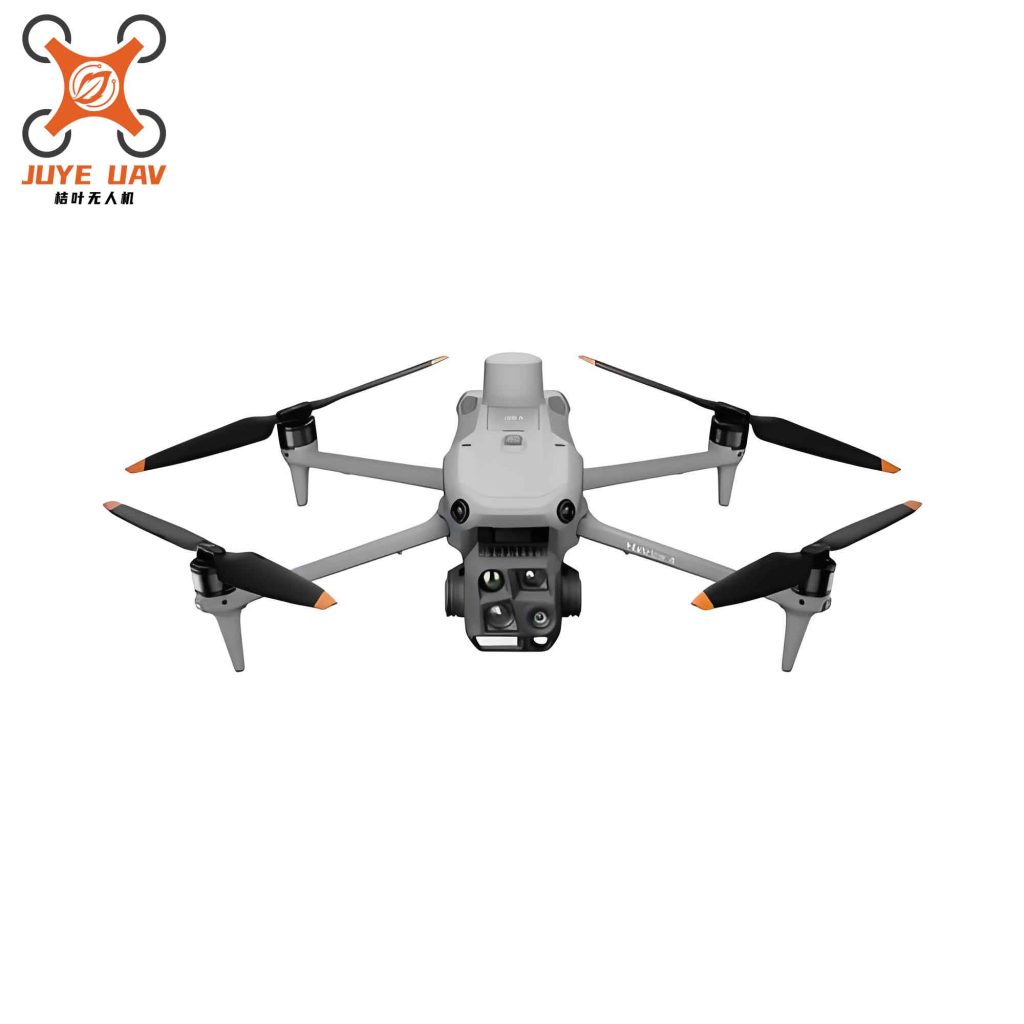
1. Problem Formulation for China UAV Path Planning
The path planning problem for a China UAV operating in a three-dimensional environment is modeled as a constrained multi-objective optimization task. The UAV must navigate from a designated starting point to a target location while avoiding terrain obstacles and threat zones, and satisfying flight altitude and maneuverability constraints. The environment is represented using a digital elevation model, where the ground height at a horizontal position (𝑥, 𝑦) is denoted as 𝐻(𝑥, 𝑦). The relative flight altitude of the UAV at the i-th waypoint is given by 𝑧ᵢ.
The complete flight path is represented as a sequence of waypoints:
$$ P = \{p_0, p_1, \ldots, p_n, p_{n+1}\} $$
where 𝑝ᵢ = (𝑥ᵢ, 𝑦ᵢ, 𝑧ᵢ) are intermediate waypoints, 𝑝₀ is the start point, and 𝑝_{n+1} is the target point. Each waypoint must satisfy spatial boundary constraints:
$$ x_{min} \le x_i \le x_{max}, \quad y_{min} \le y_i \le y_{max} $$
$$ z_{min} \le z_i \le z_{max} $$
Threat zones are modeled as three-dimensional cylindrical obstacles with a horizontal circular projection:
$$ T_j = (x_j, y_j, z_j, R_j) $$
where (𝑥ⱼ, 𝑦ⱼ) is the threat center, 𝑧ⱼ is the elevation, and 𝑅ⱼ is the threat radius. A collision is detected if any path segment intersects the threat volume.
The overall path cost function integrates multiple objectives with weighted penalties:
$$ J = w_1 F_1 + w_2 F_2 + w_3 F_3 + w_4 F_4 $$
The component cost definitions are detailed in Table 1.
| Cost Component | Symbol | Definition | Weight |
|---|---|---|---|
| Path Length | 𝐹₁ | Sum of Euclidean distances between consecutive waypoints | 30 |
| Threat Avoidance | 𝐹₂ | Cumulative penalty for entering threat influence zones | 100 |
| Altitude Constraint | 𝐹₃ | Penalty for exceeding allowable relative altitude range | 10 |
| Path Smoothness | 𝐹₄ | Penalty from cumulative heading and pitch angle changes | 50 |
The simulation environment incorporates realistic terrain undulations, elevation constraints, and multiple cylinder-shaped threat zones. This setup comprehensively models the operational conditions for China UAV missions, enabling a rigorous evaluation of path planning algorithms.
2. IH5N1-SASM: An Improved Viral-Inspired Optimization Algorithm
2.1 Foundation: The H5N1 Algorithm
The original H5N1 algorithm is a metaheuristic inspired by viral propagation and host adaptation mechanisms. Its core search equation involves a random reassignment of individual positions combined with attraction towards the global best solution:
$$ x_i^{t+1} = p_{mp}^t + \mathbf{r}_i \odot (x_{best}^t – x_i^t) $$
where \(p_{mp}^t\) is a randomly permuted position, \(\mathbf{r}_i \in (0,1)^d\) is a random vector, and \(x_{best}^t\) is the current global optimum. The adaptation phase incorporates a weighted mutation mechanism:
$$ x_i^{t+1} = \frac{c}{2}(x_i^t + x_{best}^t) $$
with \(c\) being a decreasing control factor. While effective in basic scenarios, the original algorithm lacks adaptive perception of population search states, motivating the improvements proposed in this work for China UAV path planning applications.
2\\.2 Algorithmic Framework and Multi-Strategy Synergy
The IH5N1-SASM algorithm integrates three complementary strategies: the state-aware search mechanism (SASM), the information-guided self-decomposition strategy (IGSD), and the multi-time-scale dynamic search mechanism (MTDS). The overall workflow proceeds as follows: population initialization, search state perception via SASM, fast-scale search execution using H5N1 and IGSD, condition-triggered slow-scale perturbation via MTDS, fitness evaluation, and individual and global best updates. This framework enables “state-perception → guided search → structural reconstruction” collaborative evolution throughout the optimization process.
2.3 State-Aware Search Mechanism (SASM)
The SASM mechanism evaluates the population search state in real time using three metrics. Population diversity quantifies the dispersion of individuals in the search space:
$$ D(t) = \frac{1}{d} \sum_{j=1}^d \frac{\text{std}(\mathbf{x}_j(t))}{u_j – l_j} $$
where \(d\) is the problem dimension, and \(u_j\) and \(l_j\) are the upper and lower bounds of the j-th dimension. The relative improvement rate of the global best solution is:
$$ R_{imp}(t) = \frac{|f_{best}(t) – f_{best}(t-1)|}{|f_{best}(t-1)| + \varepsilon} $$
Fitness dispersion aids in detecting excessive convergence:
$$ D_f(t) = \frac{\text{std}(f_i(t))}{|\text{mean}(f_i(t))| + \varepsilon} $$
Based on these indicators, three search states are identified: diffusion state when \(D(t) \ge \tau_{div}^{high}\), aggregation state when \(D(t) < \tau_{div}^{high}\) and the global best exhibits sustained improvement, and stagnation state when \(R_{imp}(t) < \tau_{imp}\) for consecutive generations. Table 2 summarizes these states and their corresponding triggers.
| Search State | Trigger Condition | Characteristics | Recommended Action |
|---|---|---|---|
| Diffusion | D(t) ≥ τ_div^{high} | High population diversity; global exploration phase | Maintain current search intensity |
| Aggregation | D(t) < τ_div^{high} and R_imp(t) ≥ τ_imp | Converging to promising regions; exploitation phase | Enhance local search refinement |
| Stagnation | R_imp(t) < τ_imp over consecutive generations | Premature convergence; stuck in local optima | Trigger structural perturbation |
2.4 Information-Guided Self-Decomposition Strategy (IGSD)
The IGSD strategy adaptively partitions the population into explorers and exploiters based on individual historical performance. Individuals are sorted by their best fitness values:
$$ f_{best,1}(t) \le f_{best,2}(t) \le \cdots \le f_{best,N}(t) $$
A proportion \(\rho\) of the worst-performing individuals are designated as explorers, while the remainder serve as exploiters. Additionally, the strategy identifies key decision dimensions by computing the standard deviation of each dimension across the population:
$$ \sigma_j(t) = \text{std}(\mathbf{x}_j(t)), \quad j = 1, 2, \ldots, d $$
The top \(K = \lceil \alpha d \rceil\) dimensions with highest \(\sigma_j\) form the key dimension set \(\mathcal{D}_K\). This targeted approach focuses computational resources on dimensions with the highest uncertainty, improving search efficiency for China UAV path planning problems.
2.5 Multi-Time-Scale Dynamic Search Mechanism (MTDS)
The MTDS mechanism distinguishes between fast and slow time scales. Fast-scale search occurs every generation through the H5N1 attack-adaptation mechanisms and IGSD strategy. Slow-scale search is triggered conditionally:
$$ \text{Trigger}_{MTDS}(t) = \begin{cases} 1, & \text{if } \bmod(t, T_s) = 0 \\ 1, & \text{if stagnation state is detected} \\ 0, & \text{otherwise} \end{cases} $$
When triggered, a proportion \(\rho_s\) of individuals are selected for perturbation within the key dimension subspace. Two complementary perturbation strategies are employed. The Cauchy-based heavy-tailed jump applies:
$$ x_{i,\mathcal{D}_K}^{(t+1)} = x_{best,\mathcal{D}_K}^{(t)} + \beta_t \cdot \mathbf{c} $$
where \(\mathbf{c}\) is a standard Cauchy random vector with components \(c_j = \tan[\pi(u_j – 0.5)]\), and \(\beta_t\) is a dynamic perturbation strength. The elite-based regression uses historical elite solutions:
$$ x_{i,\mathcal{D}_K}^{(t+1)} = x_{i,\mathcal{D}_K}^{(t)} + \beta_t (x_{elite,\mathcal{D}_K} – x_{i,\mathcal{D}_K}^{(t)}) + \eta \varepsilon $$
where \(\varepsilon\) is Gaussian noise and \(\eta\) is a weight factor. This dual-strategy approach enhances the algorithm’s ability to escape local optima while preserving search directionality.
3. Experimental Validation on Benchmark Functions
3.1 Experimental Setup
All experiments were conducted on a Windows 11 64-bit system with 32 GB RAM and an AMD Ryzen 9-9850HX CPU. Six representative CEC2017 benchmark functions were selected: F5 (multimodal), F8 (multimodal), F13 (hybrid), F18 (composition), F28 (high-dimensional composition), and F30 (high-dimensional composition). The theoretical optimal values are 500, 800, 1300, 1800, 2800, and 3000, respectively.
Seven state-of-the-art algorithms were selected for comparison: H5N1, PSO, GWO, WOA, HHO, DBO, and SSA. Table 3 presents the parameter settings for all algorithms.
| Algorithm | Parameter Configuration |
|---|---|
| IH5N1-SASM | P1=0.8; P2=0.85; P_slow=0.25; τ_div^{high}=0.2 |
| H5N1 | P1=0.8; P2=0.85 |
| PSO | C1=2; C2=2 |
| GWO | a decreased from 2 to 0 |
| WOA | a2∈[-2,-1]; b=1 |
| HHO | E1=2(1-t/T) |
| DBO | prol=pegg=pbab=pstc=0.25 |
| SSA | PL=0.5; V0=0 |
All algorithms used a population size of 50, maximum iterations of 500, and dimension of 30. Each algorithm was independently run 20 times, and results were evaluated based on mean best fitness and standard deviation.
3.2 Convergence and Accuracy Analysis
Table 4 presents the statistical results on the six CEC2017 functions. IH5N1-SASM consistently achieved lower mean values and competitive standard deviations across all test functions.
| Function | Metric | IH5N1-SASM | H5N1 | PSO | GWO | WOA | HHO | DBO | SSA |
|---|---|---|---|---|---|---|---|---|---|
| F5 | Mean | 508.60 | 517.04 | 515.41 | 515.78 | 554.99 | 547.17 | 538.52 | 529.16 |
| Std | 2.60 | 3.18 | 6.83 | 10.13 | 19.90 | 13.34 | 12.48 | 10.52 | |
| F8 | Mean | 809.51 | 817.82 | 813.18 | 815.39 | 846.34 | 830.87 | 832.20 | 829.43 |
| Std | 3.69 | 3.38 | 5.34 | 6.97 | 19.33 | 8.24 | 12.15 | 8.47 | |
| F13 | Mean | 2140.39 | 3542.35 | 6595.15 | 10725.32 | 20377.78 | 17034.37 | 12973.61 | 11034.34 |
| Std | 1730.27 | 2585.47 | 5859.46 | 6565.50 | 18291.07 | 15225.11 | 13636.25 | 10535.74 | |
| F18 | Mean | 3160.03 | 9916.40 | 15502.48 | 26643.18 | 14973.39 | 15582.65 | 25397.22 | 7954.50 |
| Std | 1718.54 | 5569.11 | 15448.61 | 14365.75 | 8962.75 | 11645.66 | 16074.08 | 6842.73 | |
| F28 | Mean | 3146.46 | 3236.82 | 3286.20 | 3376.29 | 3430.87 | 3359.78 | 3330.41 | 3274.87 |
| Std | 100.69 | 145.65 | 144.23 | 83.31 | 201.19 | 122.70 | 128.31 | 136.49 | |
| F30 | Mean | 20610.69 | 42988.24 | 212431.34 | 1014025.81 | 675599.00 | 1731754.76 | 587172.86 | 444309.16 |
| Std | 17016.39 | 26620.96 | 400867.62 | 1726182.52 | 914037.51 | 2192840.63 | 525325.56 | 561693.62 |
The results demonstrate that IH5N1-SASM significantly outperforms all competing algorithms on complex hybrid (F13, F18) and high-dimensional composition functions (F28, F30). On F30, our proposed algorithm achieves a mean value improvement of 52.05% over the original H5N1. On F13 and F18, the improvements are even more dramatic, with mean values an order of magnitude better than most competitors. These results validate the effectiveness of the SASM, IGSD, and MTDS mechanisms in enhancing both global exploration and local exploitation capabilities for complex optimization problems relevant to China UAV path planning.
4. Application to China UAV Path Planning
4.1 Simulation Parameters
To evaluate IH5N1-SASM for China UAV path planning, we designed a comprehensive simulation environment. The parameters used are listed in Table 5.
| Parameter | Value |
|---|---|
| Population size | 100 |
| Number of waypoints | 15 |
| Maximum iterations | 1000 |
| Start point coordinates | [200, 100, 100] |
| Target point coordinates | [800, 800, 150] |
| Flight altitude constraint | [100, 200] |
| Pitch angle range | [-π/4, π/4] |
| Azimuth angle range | ±π/4 |
| Threat zone radius | 30-50 m |
4.2 Strategy Contribution Analysis
To quantify the contribution of each improvement strategy, we compared the basic H5N1 algorithm against three single-strategy variants (H5N1-SASM, H5N1-IGSD, H5N1-MTDS) and the full IH5N1-SASM. Table 6 presents the statistical results over 20 independent runs on the China UAV path planning test scenario.
| Algorithm | Mean Cost | Best Cost | Std Deviation |
|---|---|---|---|
| IH5N1-SASM | 28417.28 | 28302.19 | 118.02 |
| H5N1 (Baseline) | 32342.35 | 29927.57 | 2075.12 |
| H5N1-IGSD | 32717.85 | 28889.82 | 1381.39 |
| H5N1-SASM | 29706.53 | 28555.96 | 2213.04 |
| H5N1-MTDS | 31798.05 | 28957.61 | 2019.35 |
The results clearly demonstrate that each individual strategy contributes positively to the overall performance, but the synergistic combination of all three strategies in IH5N1-SASM yields the most significant improvements. The full algorithm achieves an 11.4% reduction in mean path cost compared to the original H5N1, and an 86.9% reduction in standard deviation, indicating substantially enhanced stability and reliability for China UAV path planning.
4.3 Comparative Performance Evaluation
We compared IH5N1-SASM against seven state-of-the-art algorithms in the same China UAV path planning environment. Table 7 summarizes the comprehensive performance metrics.
| Algorithm | Mean Cost | Best Cost | Std Deviation |
|---|---|---|---|
| IH5N1-SASM | 28411 | 28241 | 158.48 |
| H5N1 | 31501 | 28316 | 1210.1 |
| PSO | 32637 | 29720 | 2114.5 |
| GWO | 29633 | 28306 | 1307.4 |
| WOA | 31408 | 28396 | 2355.7 |
| HHO | 31069 | 31044 | 38.333 |
| DBO | 34150 | 31005 | 2029.2 |
| SSA | 32230 | 29035 | 1209.9 |
IH5N1-SASM achieves the lowest mean path cost of 28411, representing improvements of 9.81% over H5N1, 12.95% over PSO, and 16.80% over DBO. The standard deviation of 158.48 is substantially lower than all other algorithms except HHO, demonstrating exceptional stability. The best cost of 28241 is the minimum across all algorithms, indicating superior extreme value search capability.
The convergence characteristics of IH5N1-SASM are particularly noteworthy. The algorithm maintains steady improvement throughout the iterative process, avoiding the premature stagnation observed in algorithms such as PSO, GWO, and SSA. The state-aware mechanism enables dynamic adjustment of search behavior, while the multi-time-scale perturbations prevent entrapment in local optima. These properties make IH5N1-SASM particularly well-suited for complex China UAV path planning tasks where both solution quality and reliability are critical.
5. Conclusion
In this work, we proposed IH5N1-SASM, an improved viral-inspired optimization algorithm integrating a state-aware search mechanism, an information-guided self-decomposition strategy, and a multi-time-scale dynamic search mechanism. The algorithm addresses key limitations of traditional metaheuristics, particularly premature convergence and insufficient search stability, which are critical concerns for China UAV path planning in complex three-dimensional environments.
Through comprehensive experimental validation on CEC2017 benchmark functions and realistic China UAV path planning simulations, we demonstrated that IH5N1-SASM consistently outperforms seven state-of-the-art algorithms in terms of optimization accuracy, convergence speed, and result stability. The synergistic combination of the three improvement strategies yields a 9.81% reduction in mean path cost and an 86.9% reduction in standard deviation compared to the original H5N1 algorithm. The convergence behavior shows sustained improvement throughout the iterative process without premature stagnation.
The proposed algorithm provides a robust and efficient solution for autonomous path planning in China UAV applications. Future research directions include extending the framework to dynamic environments, integrating energy consumption models, and addressing multi-UAV collaborative planning scenarios. These extensions will further enhance the applicability and impact of IH5N1-SASM in real-world China UAV missions.