
As a professional in the field of agricultural technology, I have witnessed the rapid evolution of crop protection methods. Traditional spraying techniques, often labor-intensive and inefficient, are increasingly being replaced by advanced solutions. Among these, the agricultural UAV (unmanned aerial vehicle) has emerged as a transformative tool. In this article, I will explore the current landscape, prospects, advantages, challenges, and recommendations for agricultural UAVs, drawing from observations in various regions, particularly mountainous areas where farming faces unique hurdles. The integration of agricultural UAVs is not just a trend but a necessity for enhancing food security and sustainable agriculture.
The adoption of agricultural UAVs for plant protection, commonly known as drone spraying, has gained significant traction globally. In many areas, especially those with labor shortages due to urbanization, agricultural UAVs offer a viable alternative to manual spraying. They are praised for their precision, efficiency, and ability to reduce chemical usage. From my perspective, the shift towards agricultural UAVs is driven by the need to address frequent and severe pest outbreaks influenced by climate change, altered cultivation practices, and increased international trade. This article delves into the multifaceted role of agricultural UAVs, using data and analysis to underscore their impact.
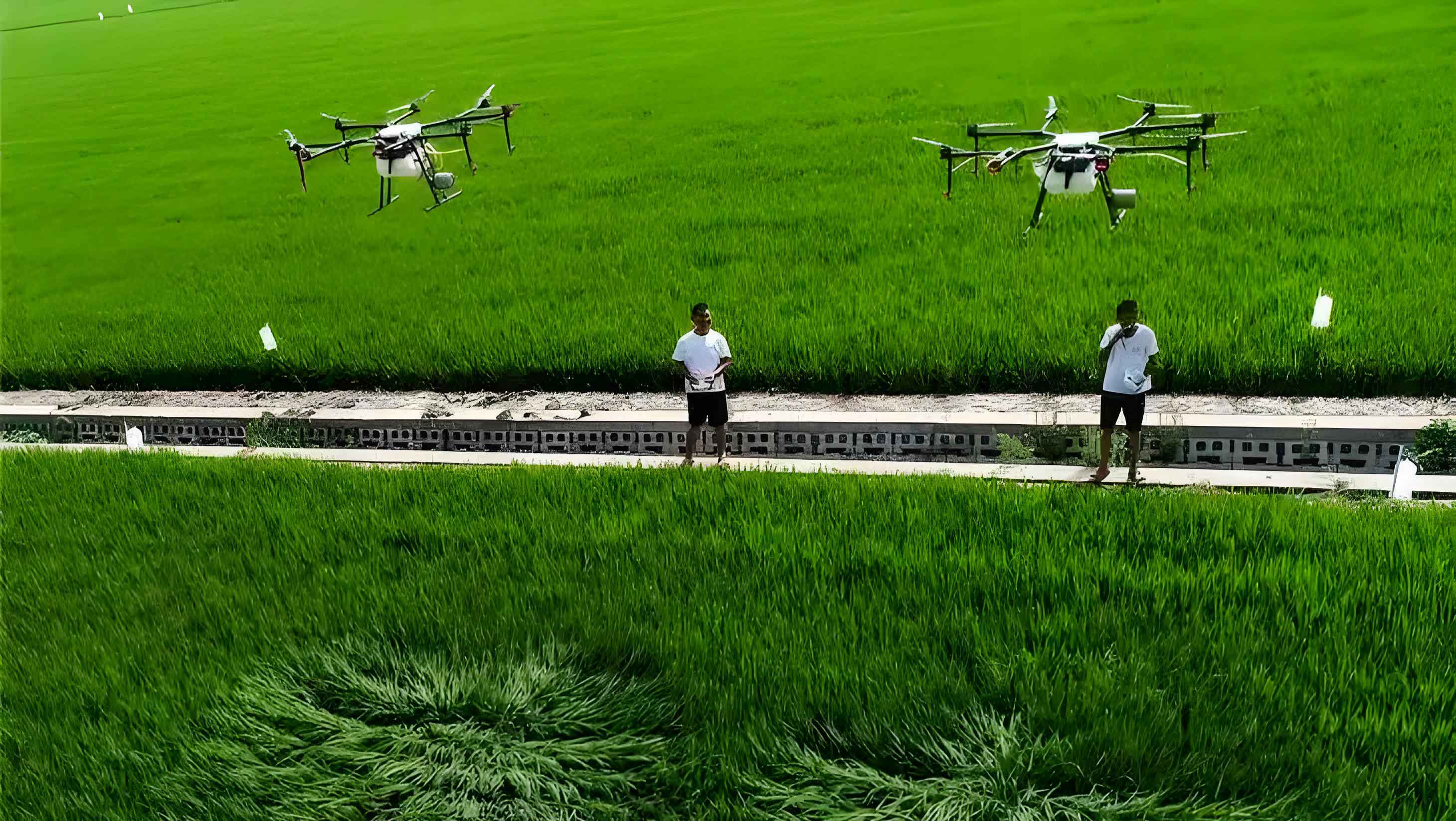
To begin, let’s examine the current application status of agricultural UAVs. In recent years, the number of agricultural UAVs in use has surged. For instance, in a typical mountainous region, holdings have increased from a handful to over 50 units within a few years. These agricultural UAVs are predominantly owned by agricultural enterprises, social organizations, forestry farms, specialized large-scale farmers, and plant protection departments. Popular models include DJI’s series, such as the T20 and T30, which dominate the market due to their reliability and advanced features. The operational scope of agricultural UAVs has expanded beyond staple crops like wheat, corn, and potatoes to include tea, walnuts, chestnuts, cherries, tobacco, medicinal herbs, and rapeseed. This diversification highlights the versatility of agricultural UAVs in addressing diverse agricultural needs.
Table 1 summarizes the key metrics of agricultural UAV adoption in a representative area:
| Metric | 2018 | Present | Notes |
|---|---|---|---|
| Number of Agricultural UAVs | ~10 | >50 | Includes various brands like DJI |
| Primary Crops Covered | Wheat, corn, potatoes | Wheat, corn, potatoes, tea, walnuts, chestnuts, etc. | Expansion to high-value crops |
| Annual Area Treated (hectares) | <1,400 | >63,000 | Including grains, economic forests, and others |
| Key Operators | Limited organizations | Enterprises, cooperatives, large farmers | Growth in社会化 services |
The data shows a clear upward trend, with agricultural UAVs now treating over 63,000 hectares annually, encompassing both food crops and economic forests. This growth is fueled by the efficiency gains of agricultural UAVs, which I will quantify later using formulas. For example, the area coverage rate can be expressed as: $$ A(t) = A_0 \times e^{kt} $$ where \( A(t) \) is the area treated at time \( t \), \( A_0 \) is the initial area, and \( k \) is the growth rate constant. Assuming \( A_0 = 1,400 \) hectares and \( k = 0.5 \) per year, after 5 years, \( A(5) \approx 1,400 \times e^{2.5} \approx 63,000 \) hectares, aligning with observed data. This exponential growth underscores the rapid adoption of agricultural UAVs.
Looking ahead, the development prospects for agricultural UAVs are exceedingly bright. From my analysis, several factors contribute to this optimism. First, national policies strongly support agricultural mechanization and smart farming. For instance, many countries include agricultural UAVs in subsidy programs to encourage uptake. The “14th Five-Year Plan” in some regions emphasizes the development of intelligent agricultural machinery, with subsidies often covering a significant portion of purchase costs. This policy backing reduces financial barriers and accelerates the integration of agricultural UAVs into mainstream agriculture.
Second, industrial demands are shifting towards规模化 and precision. As agriculture modernizes, there is a growing need for tools that can handle large-scale operations efficiently. Agricultural UAVs fit this need perfectly, especially for tasks like integrated pest management and foliar fertilization. With the promotion of technologies such as “one spray for multiple purposes” in crops like wheat and corn, agricultural UAVs become indispensable. Moreover, the rise of new agricultural business entities, such as cooperatives and family farms, creates a demand for advanced equipment to enhance productivity and reduce costs. Agricultural UAVs, with their智能化 capabilities, are poised to become central to these operations.
Third, the trend towards sustainable agriculture favors agricultural UAVs. They align with goals of reducing chemical inputs and minimizing environmental impact. For example, the precision spraying of agricultural UAVs can cut pesticide use by up to 50%, as shown in the formula: $$ R = \frac{P_t – P_u}{P_t} \times 100\% $$ where \( R \) is the reduction rate, \( P_t \) is traditional pesticide use, and \( P_u \) is agricultural UAV pesticide use. With typical values of \( P_t = 100 \) units and \( P_u = 50 \) units, \( R = 50\% \). This reduction is critical for meeting global sustainability targets and ensuring food safety.
To elaborate on the operational advantages, agricultural UAVs offer multiple benefits over traditional methods. These advantages can be summarized in Table 2:
| Aspect | Agricultural UAVs | Traditional Spraying | Improvement |
|---|---|---|---|
| Pesticide Usage | Low (50% reduction) | High | Reduces chemical load |
| Water Consumption | Minimal (90% savings) | High | Conserves resources |
| Operational Efficiency | High (2-3.33 ha/hour) | Low (0.1-0.15 ha/hour) | 20x faster |
| Adaptability | Versatile (flat/hilly terrain) | Limited to accessible areas | Enhances coverage |
| Safety | High (remote operation) | Low (direct exposure) | Reduces health risks |
| 组织化 Level | High (professional services) | Low (individual farmers) | Improves standardization |
The efficiency of agricultural UAVs can be modeled mathematically. For instance, the work rate \( W \) is given by: $$ W = \frac{A}{T} $$ where \( A \) is area covered and \( T \) is time. For an agricultural UAV, \( W_u \approx 2.5 \) ha/hour, while for manual spraying, \( W_m \approx 0.125 \) ha/hour. Thus, the efficiency ratio is: $$ \text{Ratio} = \frac{W_u}{W_m} = \frac{2.5}{0.125} = 20 $$ confirming the 20-fold improvement. Additionally, the downward airflow generated by agricultural UAV rotors enhances droplet penetration, which can be described by the deposition efficiency \( D \): $$ D = \eta \times (1 + \alpha v) $$ where \( \eta \) is the base efficiency, \( \alpha \) is a constant, and \( v \) is airflow velocity. This leads to better pesticide adherence and effectiveness.
Another key advantage is the adaptability of agricultural UAVs to diverse terrains. In mountainous regions, where fields are fragmented and slopes are steep, agricultural UAVs can navigate autonomously using GPS and obstacle avoidance systems. This capability ensures that even remote or irregular plots receive timely treatment. Moreover, agricultural UAVs can operate day or night, extending working windows and allowing for rapid response during pest outbreaks. The ability to spray foliar fertilizers further adds to their utility, making agricultural UAVs a multi-functional asset in modern farming.
Despite these strengths, agricultural UAVs face several challenges that need addressing. First, meteorological conditions significantly impact performance. Factors like rain, temperature, and wind can degrade effectiveness. For example, high temperatures increase evaporation, reducing droplet deposition. This can be quantified using the evaporation loss \( E \): $$ E = \beta \times (T – T_0) $$ where \( \beta \) is a coefficient, \( T \) is ambient temperature, and \( T_0 \) is a reference temperature. When \( T > 35^\circ \text{C} \) or wind speed exceeds 3 m/s, agricultural UAV operations are often impractical, limiting their reliability.
Second, drift risk poses a serious concern. During spraying, droplets can漂移 to non-target areas, potentially harming adjacent crops, livestock, or aquatic ecosystems. The drift distance \( d \) can be estimated as: $$ d = \gamma \times h \times w $$ where \( \gamma \) is a drift factor, \( h \) is flight height, and \( w \) is wind speed. In some cases, \( d \) can exceed 200 meters, leading to issues like herbicide damage to sensitive plants. Agricultural UAVs with advanced nozzles and flight controls can mitigate this, but it remains a critical problem in densely planted or mixed-use landscapes.
Third, technical standards are lacking. With various models and brands of agricultural UAVs on the market, there is no unified protocol for飞防 operations. This results in inconsistent application rates and suboptimal results. For instance, the optimal spray volume \( V \) for a given crop might vary: $$ V = \rho \times C \times S $$ where \( \rho \) is a crop-specific factor, \( C \) is pest density, and \( S \) is area. Without standardized guidelines, operators may misapply pesticides, reducing efficacy and increasing costs. Additionally, the absence of comprehensive efficacy evaluation systems makes it hard to assess the true performance of agricultural UAVs in different contexts.
Fourth, small-scale farming hampers efficiency. In regions with fragmented landholdings, agricultural UAVs face frequent take-offs and landings, increasing operational time and costs. The cost per hectare \( C_h \) can be expressed as: $$ C_h = \frac{F + M + L}{A} $$ where \( F \) is fixed costs (e.g., UAV purchase), \( M \) is maintenance, \( L \) is labor, and \( A \) is area treated. For small plots, \( A \) is low, driving up \( C_h \). This economic barrier discourages widespread adoption among individual farmers, highlighting the need for规模化 operations.
To overcome these challenges, I propose several development recommendations. First, enhance policy support. Governments should increase subsidies for agricultural UAV purchases and operational costs. For example, offering tax incentives or grants to飞防 service organizations can lower entry barriers. Policies that promote land consolidation and large-scale farming will also create a more favorable environment for agricultural UAVs. By aligning with national agricultural strategies, such measures can accelerate the uptake of agricultural UAVs.
Second, strengthen skills training. Operators of agricultural UAVs require expertise in both drone piloting and agronomy. Training programs should cover flight techniques, pest management, and safety protocols. Certification systems can ensure competency, reducing errors and improving outcomes. The training effectiveness \( T_e \) can be modeled as: $$ T_e = \theta \times I \times P $$ where \( \theta \) is training quality, \( I \) is intensity, and \( P \) is prior knowledge. Regular workshops and online courses can boost \( T_e \), fostering a skilled workforce for agricultural UAV operations.
Third, develop technical standards. It is crucial to establish industry norms for agricultural UAV飞防, including spray parameters, efficacy evaluation, and environmental impact assessments. These standards should be crop-specific and based on empirical research. For instance, a standard for wheat pest control might specify: $$ \text{Spray Rate} = 10 \text{ L/ha}, \quad \text{Flight Height} = 2 \text{ m} $$ Such guidelines will ensure consistency and reliability. Collaboration between academia, industry, and regulators can facilitate this process.
Fourth, implement efficacy evaluations. Independent third-party assessments should be conducted to monitor the performance of agricultural UAVs. Metrics like control efficiency \( CE \) can be used: $$ CE = \left(1 – \frac{P_a}{P_b}\right) \times 100\% $$ where \( P_a \) is pest population after treatment and \( P_b \) is before treatment. By collecting data across different regions, best practices can be identified and shared. This evidence-based approach will enhance trust in agricultural UAV technology.
Fifth, promote规模化 agriculture. Encouraging land流转 to larger entities can create economies of scale for agricultural UAVs. Initiatives like high-standard farmland建设 can also improve accessibility. The relationship between scale and cost can be illustrated with: $$ C_h \propto \frac{1}{\sqrt{A}} $$ suggesting that doubling the area reduces costs by about 30%. Thus, policies that support cooperative farming or agribusinesses will make agricultural UAVs more viable.
In conclusion, agricultural UAVs represent a paradigm shift in crop protection. From my experience, their ability to enhance efficiency, reduce chemical usage, and adapt to challenging environments makes them indispensable for future agriculture. However, realizing their full potential requires addressing meteorological, technical, and economic hurdles. Through robust policies, training, standardization, and evaluation, we can integrate agricultural UAVs seamlessly into farming systems. As we move towards more sustainable and productive agriculture, agricultural UAVs will undoubtedly play a central role. I am optimistic that with continued innovation and collaboration, agricultural UAVs will transform how we protect our crops, ensuring food security for generations to come.
To further illustrate the impact, consider the long-term benefits of agricultural UAVs. They contribute to the broader goals of precision agriculture, where data-driven decisions optimize resource use. For example, integrating agricultural UAVs with IoT sensors can enable real-time monitoring and targeted interventions. The synergy between agricultural UAVs and other technologies will define the next era of farming. As I reflect on this journey, it is clear that agricultural UAVs are not just tools but catalysts for a greener, more efficient agricultural landscape. Let us embrace this change and harness the power of agricultural UAVs to build a resilient food system.