
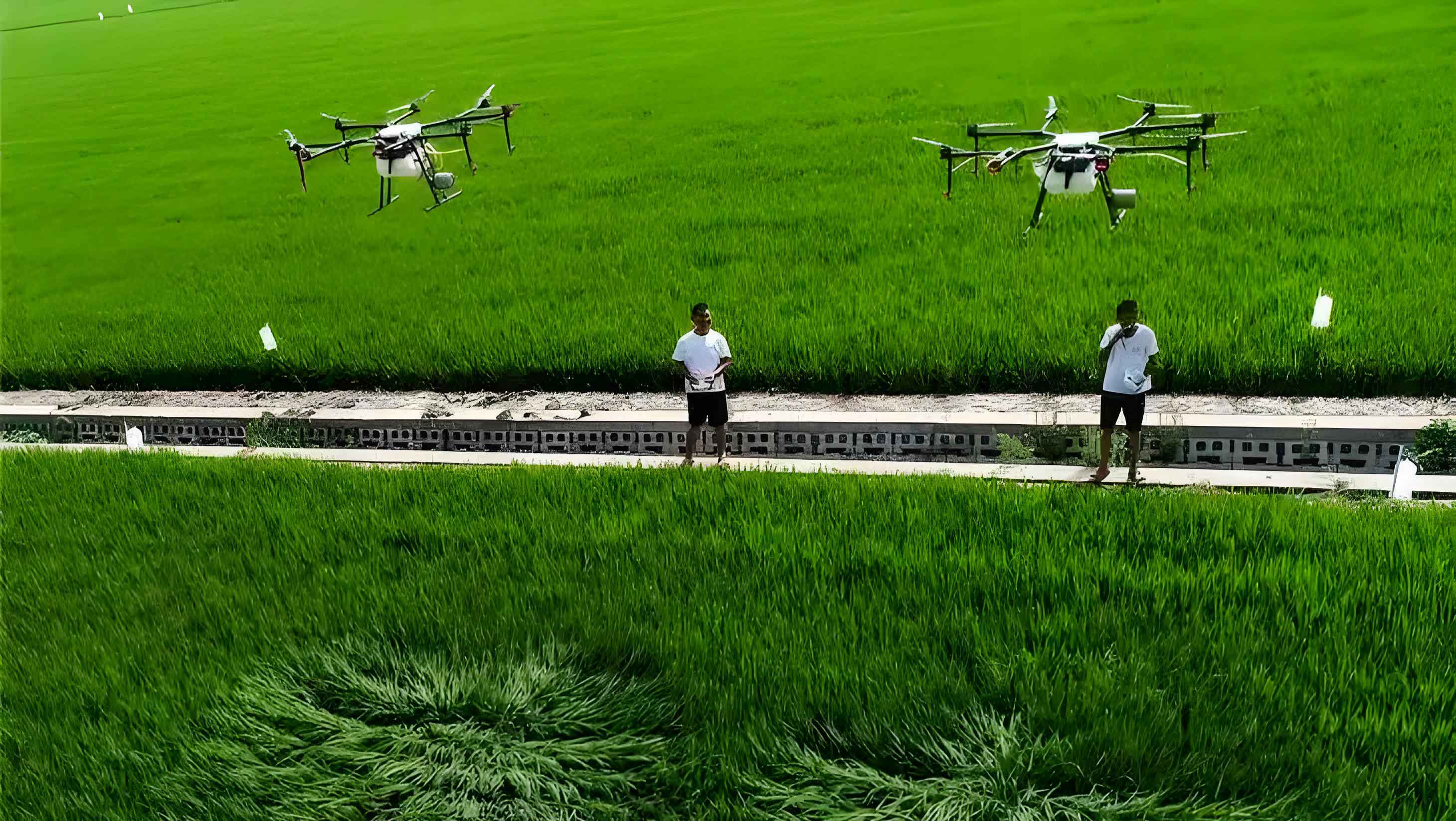
The quest for sustainable, efficient, and productive agriculture is a cornerstone of global food security. Among the myriad challenges confronting modern farming, the effective management of crop pests and diseases remains paramount. Traditional methods, heavily reliant on manual or tractor-mounted spraying, are increasingly seen as inadequate. They are labor-intensive, inefficient, pose significant health risks to operators, and often lead to environmental pollution due to excessive and non-uniform chemical application. In this context, the integration of agricultural UAV technology, or unmanned aerial vehicles, has emerged as a transformative force. From my professional perspective, working closely with crop protection systems, the adoption of intelligent agricultural UAV platforms represents not merely an incremental improvement but a fundamental shift towards precision agriculture. This article delves into the operational value, technical methodologies, and strategic frameworks for deploying agricultural UAV systems, with a particular focus on cereal crops like wheat, illustrating their role in building a more resilient and intelligent agro-ecosystem.
The core value proposition of agricultural UAV technology lies in its ability to translate precision agronomy into scalable field operations. The advantages are multifaceted and significant, as summarized in the following comparative analysis.
| Aspect | Traditional Manual/Tractor Spraying | Intelligent Agricultural UAV Spraying |
|---|---|---|
| Operational Efficiency | Low (covers 1-2 hectares per hour). Highly dependent on human stamina and terrain accessibility. | Extremely High (covers 10-20 hectares per hour). Unaffected by terrain, operates over wet or uneven fields. |
| Application Precision | Poor. Prone to over-application, under-application, and significant drift due to boom height variance and wind. | Excellent. GPS-guided flight paths, variable rate technology (VRT), and downward-facing airflow ensure uniform droplet deposition on target canopy. |
| Labor & Safety | High labor requirement. Direct operator exposure to chemicals, leading to acute and chronic health risks. | Minimal labor. Remote operation eliminates direct chemical exposure, enhancing operator safety. |
| Chemical Utilization | Low (typically 30-40% of sprayed volume reaches target). High waste and environmental runoff. | High (can achieve 70-90% target deposition). Ultra-low volume (ULV) spraying reduces chemical use by 30-50%. |
| Water Resource Use | High. Requires large volumes of water as carrier (100-200 L/hectare). | Very Low. Uses concentrated formulations with minimal water (5-15 L/hectare), crucial for arid regions. |
| Crop Damage | Likely from tractor wheel compaction and mechanical contact with boom. | Negligible. No physical contact with crops, preserving soil structure and plant integrity. |
This table starkly illustrates the paradigm shift. The efficiency gain is not linear but exponential. For instance, the area coverage rate (A) for an agricultural UAV can be modeled as a function of its swath width (W), flight speed (V), and operational efficiency factor (η), accounting for turn-around and refill time:
$$A = W \times V \times \eta$$
Where a typical agricultural UAV might have W = 4-6 meters, V = 4-6 m/s, and η ≈ 0.7, yielding an effective coverage of 1.0-1.5 hectares per 10-minute battery cycle. When scaled with multiple batteries and automated charging stations, daily coverage can exceed 100 hectares with a single unit, a task requiring dozens of laborers using traditional methods.
Furthermore, the precision of an agricultural UAV directly translates to economic and environmental benefits. The reduction in pesticide usage (ΔP) is a critical metric, often expressed as:
$$\Delta P = P_{traditional} – P_{UAV}$$
Empirical data consistently shows ΔP is positive, ranging from 30% to 50%. This reduction is achieved through precise droplet generation and placement. The volume median diameter (VMD) of droplets is a key parameter controlled by the UAV’s nozzle type and pressure. For optimal adhesion and coverage, VMD should be tailored to the target pest and crop morphology. The relationship between droplet density (D_d, droplets/cm²), application rate (Q, L/ha), and VMD (in microns, μm) can be approximated by:
$$D_d \propto \frac{Q}{VMD^3}$$
This formula highlights that for a fixed application rate (Q), using finer droplets (smaller VMD) dramatically increases the number of droplets, improving coverage of hidden pests like aphids on the underside of leaves. However, excessively fine droplets are prone to drift. Intelligent agricultural UAV systems dynamically adjust these parameters based on real-time wind and canopy data.
Systematic Workflow for UAV-Integrated Pest Management
The successful deployment of an agricultural UAV is not a standalone activity but a systematic process integrated into a broader Integrated Pest Management (IPM) strategy. The workflow can be broken down into sequential, interdependent phases.
1. Pre-Operation Mission Planning and Scouting
Before any agricultural UAV takes flight, comprehensive planning is essential. This begins with advanced scouting. Remote sensing data from satellites or previous UAV flights can identify zones of stress (hotspots). This must be ground-truthed. I conduct field walks to confirm pest/disease type, infestation severity, and growth stage of the crop. This data feeds into a decision matrix for action thresholds.
Simultaneously, a detailed digital mission plan is created using specialized flight planning software. The field boundary is mapped via GPS or imported from GIS databases. Key parameters are set:
- Flight Altitude (H): Typically 1.5-3.0 meters above crop canopy. Lower for dense canopy penetration, higher for wider swath and drift mitigation.
- Flight Speed (V): 3-6 m/s. Optimized for battery life and desired droplet deposition.
- Swath Width (W): Determined by spray boom width and nozzle configuration.
- Overlap Rate (OL): Critical for uniform coverage. A lateral overlap of 30-50% is standard to prevent missed strips. The effective swath width (Weff) is: $$W_{eff} = W \times (1 – O_L)$$
Environmental constraints are programmed: no-fly zones around sensitive areas (water bodies, residential zones, apiaries), automatic return-to-home (RTH) triggers for low battery or signal loss, and geofencing.
2. Phytosanitary Product Selection and Tank Mix Preparation
The choice and formulation of the control agent are crucial. The intelligence of the agricultural UAV system is complemented by the science of the chemistry. I prioritize selective, low-toxicity, and systemic products compatible with ULV application. Tank mixing multiple products (fungicides, insecticides, adjuvants, nutrients) is common for broad-spectrum control (“one spray, multiple targets”). However, compatibility must be verified to avoid precipitation or reduced efficacy.
The preparation process is meticulous. The “double dilution” method is mandatory: first, the concentrate is mixed in a small volume of water to form a master batch, which is then added to the main tank. This ensures homogeneous dispersion. Filtration through a 100-mesh screen before loading into the agricultural UAV tank prevents nozzle clogging. The total chemical load (Ctotal) for a mission is calculated based on the pre-mapped treatment area (Atreat) and the prescribed dosage (D):
$$C_{total} = A_{treat} \times D$$
Given the concentrated nature of ULV sprays, accuracy in this calculation is vital to prevent phytotoxicity or under-dosing.
3> Pre-Flight Checks and System Calibration
No intelligent system operates reliably without rigorous validation. Every operational session begins with a systematic pre-flight checklist for the agricultural UAV:
| Subsystem | Check Items | Acceptance Criteria |
|---|---|---|
| Airframe & Propulsion | Arm integrity, propeller condition, motor rotation. | No cracks, tight fasteners, smooth operation. |
| Power System | Battery voltage, capacity, connector integrity. | Voltage > nominal cutoff; cells balanced; connectors clean. |
| Navigation & Control | GPS/RTK signal strength, IMU calibration, compass. | +10 satellite locks; stable HDOP; successful calibration. |
| Spray System | Tank, pump, lines, nozzles, flow sensor. | Leak-free; pump primes; nozzles clear; flow rate matches preset. |
| Communication | Radio link between remote controller and UAV. | Strong signal at planned operational distance. |
Following the physical checks, a calibration flight is conducted in a safe area. This includes testing manual control response, verifying autonomous flight path accuracy, and calibrating the spray system flow rate. The actual flow rate (FRactual) must match the software setting (FRset). Discrepancy is corrected by adjusting pump PWM values.
4. Execution of the Spray Mission and Real-Time Monitoring
With planning and calibration complete, the agricultural UAV executes the mission. I monitor the operation from the field edge via the controller’s live telemetry feed: battery status, flight path adherence, spray system status, and real-time wind speed. Modern intelligent systems feature wind-adaptive algorithms that adjust flight lines dynamically to compensate for crosswinds, ensuring consistent swath alignment.
The key operational parameters interact to determine the application volume per unit area (Qv, in L/ha):
$$Q_v = \frac{FR}{W \times V} \times 600$$
where FR is the flow rate in L/min, W is the effective swath width in meters, V is the flight speed in m/s, and 600 is the conversion constant. The intelligence of the system lies in holding Qv constant by automatically adjusting FR if V changes due to wind or terrain following.
5. Post-Operation Assessment, Data Logging, and Maintenance
The role of the agricultural UAV extends beyond spraying. After landing, detailed flight logs—including path, application maps, and sensor data—are downloaded and archived. This creates a georeferenced history for each field, invaluable for tracking intervention efficacy, proving compliance, and refining future plans.
Immediate maintenance is performed: the spray system is flushed with clean water, the airframe is cleaned of chemical residue, batteries are placed in storage charge mode, and all components are inspected for wear. This disciplined post-op routine is critical for the longevity and reliability of the agricultural UAV.
Strategic Pathways for Enhancing UAV-Centric IPM Systems
To fully unlock the potential of agricultural UAV technology, a multi-pronged strategic approach is required, focusing on hardware, software, agrochemistry, and socio-economic frameworks.
1. Convergence with AI and Multispectral Sensing
The future lies in moving from scheduled spraying to demand-driven, prescriptive spraying. This requires integrating the agricultural UAV with advanced sensors (multispectral, hyperspectral, thermal) and artificial intelligence. AI models, such as convolutional neural networks (CNNs), can be trained to detect and quantify specific pest or disease symptoms from aerial imagery before they are visible to the human eye. The agricultural UAV then transitions from a mere sprayer to a diagnostic and precision intervention platform. A decision-support algorithm can prescribe the exact type and quantity of control agent needed for each micro-zone within a field, calculated using a prescription map function f(x,y):
$$\text{Treatment}(x,y) = f(I(x,y), S(x,y), H(x,y))$$
where I is the infestation index from imagery, S is soil data, and H is historical yield data for that location.
2. Development of Next-Generation Formulations
The efficacy of ULV spraying is intrinsically linked to the physico-chemical properties of the formulation. Dedicated R&D is needed for “UAV-optimized” products: higher concentration suspensions (SC), oil-based dispersions (OD), and nano-formulations that enhance foliar adhesion, rainfastness, and systemic movement. Furthermore, integrating biopesticides (entomopathogenic fungi, bacteria, plant extracts) into agricultural UAV delivery systems is crucial for sustainable IPM. The challenge is formulating these often-living agents to survive the shear forces in UAV nozzles and remain viable upon deposition.
3. Robust Policy Support and Ecosystem Development
Widespread adoption faces barriers, primarily high initial investment and regulatory hurdles. Strategic public policy is essential. This includes:
- Financial Incentives: Capital cost subsidies, preferential loans, and operational cost-sharing programs to lower the entry barrier for farmers and service providers.
- Regulatory Harmonization: Clear, science-based regulations for UAV operations in agriculture, including licensing, airspace access, and chemical application standards specific to aerial micro-dosing.
- Extension and Training: Establishing certified training programs for agricultural UAV pilots, focusing not only on flight skills but also on agronomy, IPM principles, and environmental safety.
The table below outlines a potential framework for measuring the impact of such supportive policies.
| Policy Lever | Short-Term (1-2 Year) Impact Metric | Long-Term (5 Year) Impact Goal |
|---|---|---|
| Subsidy for UAV Purchase | Number of new agricultural UAV units registered per region. | Percentage of staple crop area routinely serviced by UAV-based IPM. |
| Support for Service Centers | Establishment of certified UAV-spray service cooperatives. | Reduction in average cost per hectare for UAV application services. |
| Integrated Data Platform | Development of open-access pest alert maps using UAV scouting data. | Regional reduction in total pesticide load (kg/ha) while maintaining yield. |
| Training & Certification | Number of licensed agricultural UAV operator-agronomists. | Measurable decrease in pesticide-related incident reports. |
4. Fostering a Data-Driven Feedback Loop
The ultimate power of intelligent agricultural UAV systems is their capacity to generate data. Each flight produces geotagged data on crop health, application details, and environmental conditions. Aggregating this data across seasons and farms can build powerful predictive models for pest and disease epidemiology. For example, a model could predict the risk of Fusarium head blight in wheat based on UAV-captured canopy humidity, temperature, and flowering stage data, coupled with weather forecasts. The system would then prescribe a pre-emptive fungicide application at the optimal time, executed by the agricultural UAV, maximizing efficacy and minimizing unnecessary sprays. This closed-loop, data-driven approach represents the pinnacle of smart crop protection.
Conclusion
The integration of intelligent agricultural UAV technology into crop pest and disease management is a definitive leap forward. It transcends simple mechanization, embodying the principles of precision agriculture: applying the right treatment, at the right time, in the right place, and at the right dose. The benefits—dramatic gains in operational efficiency, profound reductions in chemical input and environmental impact, enhanced operator safety, and improved crop health—are compelling. From my vantage point, the path forward is clear. It requires continued technological innovation in UAV autonomy and sensing, synergistic development of advanced agrochemical formulations, and the establishment of supportive policy and training infrastructures. By embracing this holistic approach, agricultural UAV systems will cease to be novel tools and become the central nervous system of proactive, sustainable, and intelligent crop protection strategies, safeguarding yield and ecosystem health for future generations.