
In recent years, the rapid evolution of unmanned aerial vehicle (UAV) technology has revolutionized outdoor program production. Camera drones now dominate aerial cinematography for documentaries and feature films, capturing breathtaking natural landscapes with unprecedented efficiency. Compared to traditional filming methods, camera UAVs offer superior operational flexibility, unique perspectives, and significant cost reductions. These advantages stem from their agile maneuverability combined with stable hovering capabilities, enabling cinematic shots previously impossible to achieve. While post-production editing remains common, the integration of camera drone technology into live news gathering and real-time broadcasting represents a groundbreaking advancement in media production.
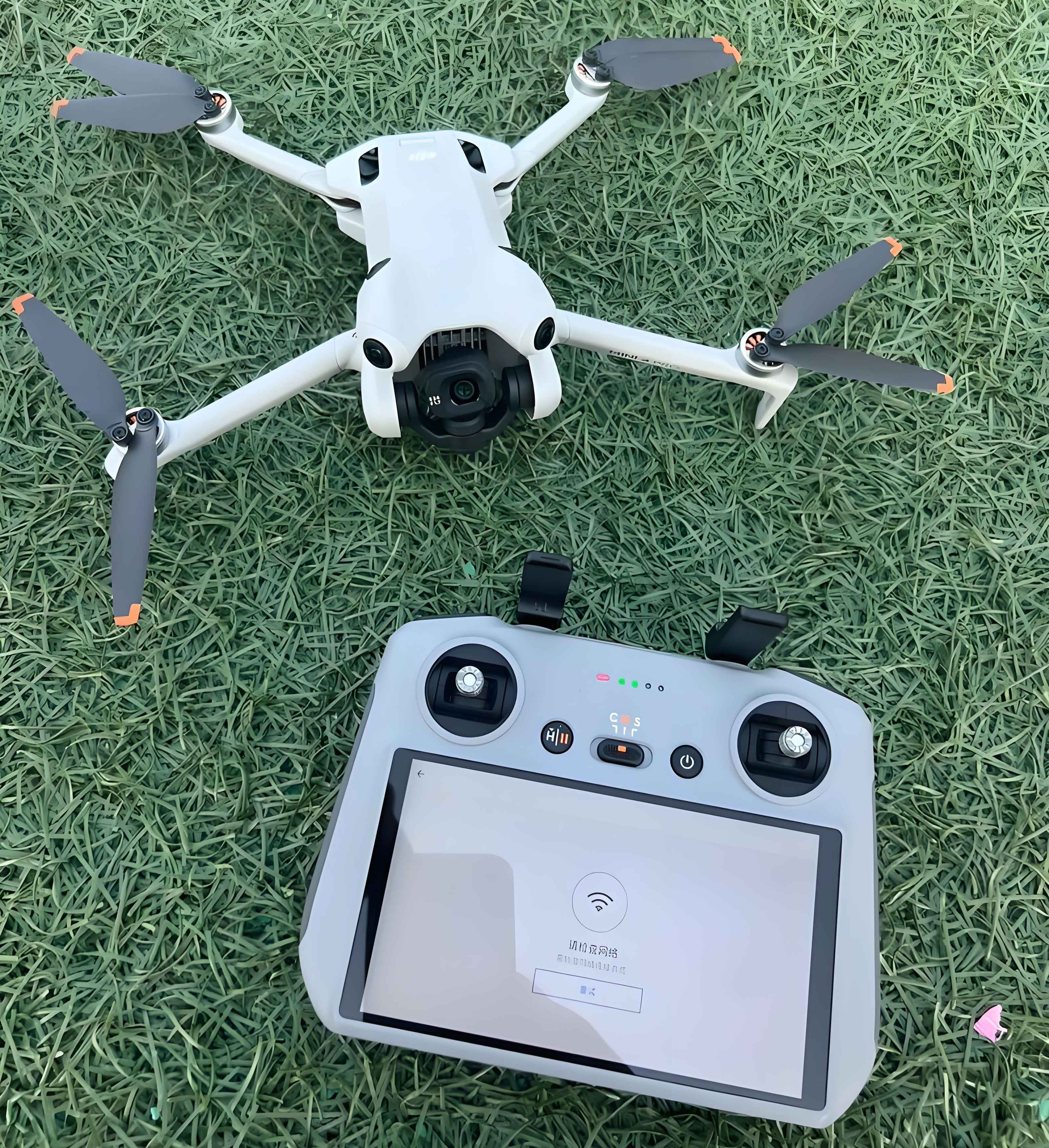
Camera Drone Selection Methodology
Selecting appropriate camera UAV equipment requires careful consideration of technical specifications, operational requirements, and team expertise. The exponential growth in available models necessitates systematic evaluation:
| Parameter | Standard Requirements | Broadcast-Grade Requirements |
|---|---|---|
| Flight Stability (Wind Resistance) | Level 5 winds (8-10 m/s) | Level 7 winds (14-17 m/s) |
| Payload Capacity | ≥500g | ≥1.2kg (for broadcast lenses) |
| Video Transmission Latency | <200ms | <50ms |
| Operating Frequency Band | 2.4/5.8 GHz | Dual-band with DFS channels |
| Maximum Transmission Distance | 5km | 8km (LOS) |
The payload-stability relationship follows the aerodynamic principle:
$$ \tau = \frac{1}{2} \rho v^2 C_L A $$
where \( \tau \) represents thrust (N), \( \rho \) is air density (kg/m³), \( v \) denotes velocity (m/s), \( C_L \) is the lift coefficient, and \( A \) is propeller area (m²). Higher payload capacity necessitates greater thrust while maintaining stability through advanced gimbal systems and flight controllers.
Operational Team Configuration
Effective camera drone deployment demands specialized roles with defined responsibilities:
- Pilots: Maintain visual line-of-sight (VLOS) control and execute flight maneuvers
- Technical Operators: Monitor transmission integrity and manage camera parameters
- Flight Parameter Managers: Analyze real-time telemetry including altitude \( (h) \), velocity \( (v) \), and battery status \( (B) \):
$$ B_{remaining} = B_{initial} – \int_{0}^{t} P(\omega) dt $$
where \( P(\omega) \) represents power consumption as a function of motor angular velocity. Parameter managers coordinate with pilots to prevent signal loss scenarios defined by the Friis transmission equation:
$$ P_r = P_t G_t G_r \left( \frac{\lambda}{4\pi d} \right)^2 $$
Here, \( P_r \) and \( P_t \) denote received and transmitted power, \( G \) represents antenna gains, \( \lambda \) is wavelength, and \( d \) is transmission distance.
Broadcast-Specific Technical Requirements
Television production imposes rigorous standards on camera UAV performance. The minimum resolution requirement follows industry standards:
$$ \text{Resolution} \geq \frac{\text{Screen Width} \times \text{Screen Height}}{\text{Viewing Distance} \times \text{Visual Acuity}} $$
For 4K broadcasting, this typically requires 3840×2160 pixel resolution at 60fps. Key technical considerations include:
- Transmission Integrity: Maintaining QPSK or 16QAM modulation schemes with forward error correction
- Dynamic Range: >14 stops for HDR compatibility
- Color Sampling: 4:2:2 chroma subsampling minimum
Low-latency transmission systems must compensate for propagation delay \( (\Delta t) \):
$$ \Delta t = \frac{\sqrt{h^2 + d^2}}{c} + p_{proc} $$
where \( c \) is signal velocity and \( p_{proc} \) represents processing delay. Modern camera drones achieve <50ms latency through hardware-accelerated encoding.
Live Broadcasting System Architecture
Camera drone live transmission systems employ either file-based or real-time signal workflows:
| Transmission Mode | Latency | Typical Applications | Data Rate Requirements |
|---|---|---|---|
| File-Based (Non-Real-Time) | >30 minutes | Documentaries, Post-Production | Variable (Offline Processing) |
| Real-Time Signal | <1 second | Live Events, News Broadcasts | 20-100 Mbps (Compressed) |
The video data rate \( R \) follows:
$$ R = f_r \times w \times h \times b_{depth} \times c_s \div c_r $$
where \( f_r \) = frame rate, \( w \times h \) = resolution, \( b_{depth} \) = bit depth, \( c_s \) = color sampling factor, and \( c_r \) = compression ratio.
Multi-Drone Coordination Systems
Large-scale productions deploy camera drone fleets with synchronized operations. The coordination algorithm minimizes interference through frequency and spatial separation:
$$ \min \sum_{i=1}^{n} \sum_{j\neq i} \left( \frac{P_i G_i G_j}{|f_i – f_j| \cdot d_{ij}^2} \right) $$
where \( n \) = number of camera UAVs, \( f \) = transmission frequency, and \( d_{ij} \) = distance between drones i and j. This optimization prevents the “mosaic effect” caused by packet loss \( (L_p) \):
$$ L_p = 1 – \prod_{k=1}^{m} (1 – p_k) $$
where \( p_k \) represents packet error probability across \( m \) transmission paths. On-site processing units employ edge computing for real-time error correction using Reed-Solomon codes:
$$ c(x) = m(x) \cdot x^{2t} \mod g(x) $$
where \( t \) is the error-correction capacity and \( g(x) \) is the generator polynomial.
Signal Transmission and Ground Infrastructure
Robust transmission systems for camera UAV broadcasting incorporate triple-redundant pathways:
- Direct RF Link: 5.8GHz with MIMO-OFDM modulation
- Cellular Backup: 5G NR with network slicing
- Satellite Relay: LEO satellite constellations
The total system reliability \( (R_s) \) follows parallel redundancy principles:
$$ R_s = 1 – \prod_{i=1}^{3} (1 – R_i) $$
where \( R_i \) represents individual subsystem reliability. Ground stations feature multi-interface receivers compatible with SDI (3G-SDI/12G-SDI), HDMI 2.1, and IP (SMPTE ST 2110) standards. The video processing pipeline includes:
- Temporal noise reduction filters
- Adaptive sharpening algorithms
- Dynamic range optimization
The sharpening algorithm enhances perceived resolution \( (R_p) \):
$$ R_p = R_s + k \cdot \sigma_e \cdot \log(\text{MTF}_{mid}) $$
where \( R_s \) = sensor resolution, \( \sigma_e \) = edge contrast, and \( \text{MTF}_{mid} \) = mid-frequency modulation transfer function.
Operational Challenges and Solutions
Camera drone broadcasting faces significant technical hurdles:
| Challenge | Technical Impact | Mitigation Strategy |
|---|---|---|
| Electromagnetic Interference | Signal degradation in urban areas | DFS channel hopping with AI prediction |
| Multipath Fading | Signal cancellation | MIMO spatial diversity techniques |
| Battery Limitations | Flight time constraints | Hybrid fuel cell systems (30+ min) |
| Regulatory Compliance | Transmission power limits | Beamforming with phased arrays |
The multipath fading margin \( (M_f) \) calculation demonstrates environmental challenges:
$$ M_f = 20 \log \left( \frac{\lambda}{4\pi d} \right) + 10 \log \left( \sum_{k=1}^{N} \alpha_k e^{j\phi_k} \right) $$
where \( \alpha_k \) and \( \phi_k \) represent the amplitude and phase of each signal path. Modern camera UAVs overcome this through adaptive modulation and coding schemes that adjust based on channel state information (CSI).
Future Development Trajectory
Camera drone broadcasting technology continues evolving toward:
- AI-Enhanced Operations: Neural networks for automated framing and obstacle avoidance
- Swarm Intelligence: Collaborative multi-camera UAV cinematography
- Holographic Displays: Light field capture for 3D broadcast applications
The swarm coordination problem can be modeled as a multi-agent reinforcement learning system:
$$ Q(s,a) \leftarrow (1-\alpha) Q(s,a) + \alpha \left[ r + \gamma \max_{a’} Q(s’,a’) \right] $$
where agents (camera drones) learn optimal positioning policies through state-action rewards. As computational capabilities increase, we anticipate real-time implementation of such algorithms for dynamic event coverage.
Conclusion
Camera drone technology has fundamentally transformed live broadcasting capabilities, providing unprecedented perspectives with operational efficiency. The successful implementation requires meticulous attention to equipment selection, team coordination, and signal management. Through continued innovation in transmission systems, multi-drone coordination, and AI integration, camera UAVs will increasingly dominate live event coverage while expanding creative possibilities for content creators worldwide.