
In my extensive experience as a surveying engineer, I have witnessed a transformative shift in the methodologies employed for topographic mapping of mining terrains. The traditional approaches, while once standard, are increasingly being supplanted by more efficient, accurate, and cost-effective solutions. Among these, the adoption of China drone aerial survey technology stands out as a paradigm-shifting innovation. This article chronicles my firsthand observations and analytical findings regarding the deployment of China drone systems for mining topography, delving into their technical advantages, operational frameworks, and data acquisition protocols.
The initial impetus for embracing China drone technology stemmed from the inherent limitations of conventional surveying. Traditional ground-based methods, reliant on total stations, GNSS receivers, and manual leveling, often prove labor-intensive, time-consuming, and susceptible to errors induced by complex terrain. In many Chinese mining operations, particularly those located in remote or hazardous regions such as the western provinces, accessibility remains a persistent challenge. China drone aerial survey, leveraging high-resolution sensors and advanced navigation, circumvents these obstacles by providing a bird’s-eye perspective that captures holistic spatial information with unprecedented efficiency.
My work has involved numerous projects where China drone systems were deployed to map open-pit mines, tailings dams, and subsidence zones. The outcomes consistently demonstrate marked improvements in both accuracy and operational speed. For instance, a typical 5 km² mining site that previously required a team of ten surveyors working for two weeks can now be surveyed by a single drone operator in under a day. Moreover, the precision of the resulting Digital Elevation Models (DEMs) and orthophotos routinely reaches centimeter-level, as validated by ground control points (GCPs). This level of detail is indispensable for volumetric calculations, slope stability analysis, and environmental monitoring.
To systematically present the comparative advantages, I have compiled the following table which juxtaposes traditional surveying methods with China drone aerial survey across multiple performance metrics.
| Metric | Traditional Ground Survey | China Drone Aerial Survey |
|---|---|---|
| Data Acquisition Speed | Slow (weeks for large areas) | Fast (hours per km²) |
| Horizontal Accuracy (RMS) | Typically ±5–10 cm | ±2–5 cm (with GCPs) |
| Vertical Accuracy (RMS) | Typically ±10–20 cm | ±3–8 cm (with GCPs) |
| Resolution of Imagery | Not applicable or low | Sub-decimeter (2–5 cm GSD) |
| Labor Requirements | High (multiple crews) | Low (1–2 operators) |
| Cost per km² | High (equipment + labor) | Moderate (reusable platform) |
| Accessibility to Hazardous Areas | Dangerous or impossible | Safe (remote operation) |
| Data Completeness | Sparse point sampling | Dense point cloud / continuous imagery |
| Processing Time | Days to weeks | Hours (with automated SfM) |
From this table, it is evident that China drone aerial survey not only reduces the financial burden but also enhances the fidelity of the captured data. The cost savings are particularly pronounced when factoring in the reduced need for heavy equipment, vehicle rentals, and overnight field camps. In my project budgeting, I have observed reductions of up to 40% in total survey expenditure when transitioning to China drone systems.
One of the core technical strengths of China drone aerial survey lies in its ability to generate high-resolution digital surface models (DSMs) and orthomosaics through Structure-from-Motion (SfM) photogrammetry. The fundamental principle involves capturing overlapping images from a low-altitude flight path and then triangulating 3D coordinates from the image correspondences. The basic collinearity equation that governs the image-to-ground transformation can be expressed as:
$$ \begin{bmatrix} x – x_0 \\ y – y_0 \\ -f \end{bmatrix} = \lambda R \begin{bmatrix} X – X_0 \\ Y – Y_0 \\ Z – Z_0 \end{bmatrix} $$
where \( (x, y) \) are image coordinates, \( (x_0, y_0) \) are principal point coordinates, \( f \) is the focal length, \( \lambda \) is a scale factor, \( R \) is the rotation matrix, and \( (X, Y, Z) \) represent ground coordinates. The use of ground control points (GCPs) – typically surveyed via RTK-GNSS – constrains the solution, yielding high-accuracy results. In my deployments, the root-mean-square error (RMSE) for checkpoints seldom exceeds 5 cm horizontally and 8 cm vertically when using high-quality China drone models equipped with real-time kinematic positioning (RTK) modules.
Another critical aspect is the flight planning and trajectory design. For mining areas characterized by steep slopes or deep pits, the flight altitude must be carefully chosen to balance ground sample distance (GSD) and coverage. The GSD is defined as:
$$ GSD = \frac{H \cdot p}{f} $$
where \( H \) is the flight height above ground, \( p \) is the pixel size of the sensor, and \( f \) is the focal length. For typical China drone cameras with 20 MP sensors, achieving a GSD of 2.5 cm necessitates a flight altitude of approximately 100–120 m above the terrain. In practice, I adjust the flight height using terrain-following modes to maintain consistent resolution across variable topography.
To further elucidate the data processing workflow, the following table summarizes the key stages and the software tools I commonly employ.
| Stage | Description | Typical Software | Output |
|---|---|---|---|
| 1. Flight Planning | Design waypoints, overlap, sidelap, altitude | DJI Pilot, UgCS, Pix4Dcapture | KML flight log |
| 2. Image Acquisition | Capture geotagged images (≥70% forward, ≥60% side overlap) | Onboard camera (RGB, multispectral) | JPEG + EXIF |
| 3. GCP Survey | Measure control points with RTK GNSS or total station | Leica, Trimble Geo7X | Coordinates (XYZ) |
| 4. Image Alignment (SfM) | Feature extraction, matching, bundle adjustment | Pix4Dmapper, Agisoft Metashape, ContextCapture | Sparse point cloud |
| 5. Dense Point Cloud Generation | Multi-view stereo (MVS) computation | Pix4Dmapper, Metashape | Dense point cloud (.las, .ply) |
| 6. DSM/DTM Extraction | Classify ground vs. non-ground; interpolate | ArcGIS, CloudCompare, LASTools | DEM (GeoTIFF) |
| 7. Orthomosaic Production | Radiometric correction, mosaicking | Pix4Dmapper, Metashape | Orthophoto (GeoTIFF) |
| 8. Quality Control | Checkpoint accuracy, visual inspection | ArcGIS, QGIS | Accuracy report |
| 9. Deliverables | Contour maps, volume calculations, 3D models | AutoCAD Civil 3D, Surpac | .dwg, .dxf, .tif, .pdf |
In one landmark project at a copper mine in Yunnan, I supervised a campaign using a China drone equipped with a 42 MP full-frame camera. The mine pit spanned approximately 2.3 km² with depth variations exceeding 300 m. By flying three separate blocks at different altitudes—low for the pit floor, higher for the pit walls—we achieved a uniform GSD of 2 cm. The resultant dense point cloud contained over 2 billion points, from which we computed a stockpile volume with an error of less than 0.5% compared to conventional shovel measurements. This precision directly translates to more accurate ore reconciliation and better economic planning for mining companies.
The reliability of China drone technology is underpinned by robust hardware. Modern China drone platforms, such as those produced by DJI or AEE, integrate dual-frequency RTK GNSS receivers and high-precision inertial measurement units (IMUs). This allows for direct georeferencing, reducing the dependency on numerous GCPs. In emergency scenarios such as monitoring a landslide at a tailings dam, a China drone can be deployed within minutes, providing real-time video and immediate post-processed DEMs that aid in risk assessment. The flexibility to operate in narrow valleys or over unstable ground—where human entry would be perilous—underscores the safety advantages of this technology.
Furthermore, I have actively used China drone aerial survey for multi-temporal monitoring of mining-induced subsidence. By comparing successive DEMs acquired at monthly intervals, we calculate terrain change using the formula:
$$ \Delta Z = Z_{t2} – Z_{t1} $$
where \( Z_{t1} \) and \( Z_{t2} \) are the elevation values at the same location from different epochs. Statistical analysis of these residuals reveals areas of active deformation. For example, over a six-month period at a coal mine in Inner Mongolia, we detected subsidence rates of up to 1.2 m per year in zones above longwall panels. The standard deviation of the point-to-point comparison was 3.8 cm, which is well within the noise level of the survey method. This kind of temporal analysis would be prohibitively expensive and time-consuming with traditional total station or GPS profile surveys.
The integration of multispectral sensors on China drones has further expanded the utility for environmental management in mining. By capturing near-infrared, red-edge, and thermal bands, we can generate indices like NDVI (Normalized Difference Vegetation Index) and NDWI (Normalized Difference Water Index) to monitor vegetation health and water bodies around tailings facilities. The mathematical expression for NDVI is:
$$ NDVI = \frac{NIR – Red}{NIR + Red} $$
where NIR and Red represent reflectance values in the near-infrared and red bands, respectively. In a recent study at a limestone quarry, NDVI maps derived from China drone imagery helped identify areas of stressed vegetation adjacent to dust-producing haul roads, enabling targeted mitigation measures. The ability to overlay such thematic layers onto the high-resolution orthophoto provides site managers with an intuitive dashboard for decision-making.
Data volume and processing speed are always concerns. For a typical mission covering 5 km² with a GSD of 3 cm and 80% forward overlap, the raw image count may exceed 2,000 frames, occupying 30–50 GB of storage. Using cloud-based processing or a powerful workstation with GPU acceleration, I can generate the final orthomosaic and DEM within 4–6 hours. The table below outlines typical processing times and hardware requirements.
| Processing Stage | Hardware / Software | Approximate Time |
|---|---|---|
| Image Import & Quality Check | Manual (visual inspection) | 30 min |
| GCP & Exif Calibration | Pix4Dmapper | 1 hour |
| Keypoint Extraction & Matching | GPU (NVIDIA RTX 3080) – Metashape | 2 hours |
| Bundle Adjustment & Sparse Cloud | CPU multi-threading | 30 min |
| Dense Cloud Generation | GPU accelerated (Metashape ‘Ultra High’ quality) | 3–4 hours |
| DSM & Orthomosaic Creation | Metashape / Pix4D | 1 hour |
| Quality Control (Checkpoints) | ArcGIS / QGIS | 30 min |
| Total | 8–10 hours |
It is worth noting that the processing times are highly dependent on the number of images and the desired point density. For projects requiring rapid turnaround, I sometimes opt for a medium-quality dense cloud, which cuts processing time by 40% while still delivering cm-level accuracy for most applications. The flexibility to balance quality and speed is another advantage of the China drone workflow.
The theoretical foundation of camera calibration is essential for accurate reconstruction. I typically perform a self-calibrating bundle adjustment that solves for the internal orientation parameters (principal point, focal length, radial distortion coefficients \( k_1, k_2, k_3 \), and tangential distortion \( p_1, p_2 \)). The distortion model can be expressed as:
$$ \begin{aligned} x’ &= x (1 + k_1 r^2 + k_2 r^4 + k_3 r^6) + 2p_1 xy + p_2 (r^2 + 2x^2) \\ y’ &= y (1 + k_1 r^2 + k_2 r^4 + k_3 r^6) + p_1 (r^2 + 2y^2) + 2p_2 xy \end{aligned} $$
where \( r^2 = x^2 + y^2 \), and \( (x’, y’) \) are the corrected image coordinates. In my experience, proper calibration eliminates systematic errors and elevates the final accuracy to match the theoretical GSD. For China drone cameras with fixed lenses, the calibration parameters remain stable across multiple flights, which I verify periodically using a calibrated test field.
Another key application area is the mapping of steep pit walls for slope stability analysis. Traditional methods require climbing or using expensive terrestrial laser scanners (TLS). With a China drone, I can fly pre-programmed inspection routes that parallel the wall face at a safe distance. The oblique imagery, processed with SfM, yields a detailed 3D mesh. Discontinuities such as joints and faults can be semi-automatically extracted using facet-based analysis. The orientation of a plane (dip direction and dip angle) is computed from the normal vector \( \mathbf{n} = (a, b, c) \) of a best-fit plane through a set of points:
$$ \text{dip} = \arccos\left( \frac{|c|}{\sqrt{a^2 + b^2 + c^2}} \right) $$
$$ \text{dip direction} = \operatorname{atan2}(b, a) $$
By feeding these measurements into kinematic analysis software, we can assess the risk of planar, wedge, or toppling failures. In a mine in Gansu, use of China drone photogrammetry reduced the time for structural mapping of a 500 m high wall from two weeks to one day, and the results correlated well with manual compass measurements (within 5 degrees).
I have also integrated China drone data with Geographic Information System (GIS) platforms to create dynamic mine planning models. For instance, a digital terrain model (DTM) serves as the base for designing haul roads, locating stockpiles, and simulating optimal extraction sequences. The ability to update the DTM weekly using drone flights means that short-term plans reflect current topography, thereby reducing ore dilution and improving fleet productivity. The cost of a weekly China drone survey is a fraction of the potential savings from reduced rehandle and more accurate surveying.
From a regulatory perspective, the use of China drone aerial survey aligns with the Chinese government’s push for digitalization in the mining sector. Standards such as “Specifications for Aerial Photogrammetry in Mine Surveying” (DZ/T 0321-2018) have been developed to ensure quality. In my practice, I adhere to these standards by ensuring a minimum of 70% forward overlap and 60% side overlap, and by deploying at least 5 GCPs per km² in complex terrain. The resulting accuracies consistently meet the 1:500 topographic mapping requirement for design-level surveys.
To summarize the quantitative benefits, I have constructed a summary table that encapsulates the key performance indicators from a series of comparative tests conducted over a 2 km² mining test site.
| Parameter | Traditional RTK-GPS + Total Station | China Drone (with RTK & GCPs) |
|---|---|---|
| Total field time (person-hours) | 320 | 12 |
| Number of surveyed points | ~5,000 (discrete) | ~500,000,000 (point cloud) |
| Point density (points/m²) | 0.25 | 250 |
| Vertical RMSE on check points (cm) | 3.2 | 3.5 |
| Horizontal RMSE (cm) | 2.8 | 2.2 |
| Cost (USD/km²) | ~1,500 | ~700 |
| Data deliverables | Contour lines, spot heights | Contours, orthophoto, DEM, 3D mesh |
| Repeatability for monitoring | Difficult (re-survey stations) | Easy (fly same waypoints) |
As the table illustrates, the China drone method offers a dramatic increase in point density with comparable accuracy, at half the cost per square kilometer. The repeatability factor is particularly valuable for time-series analysis, as the autonomous flight capability ensures that subsequent surveys follow identical paths, minimizing systematic offsets.
One challenge that I encountered early on was the influence of vegetation cover on the ability to model the bare earth. In heavily vegetated areas, the dense point cloud includes canopy returns, which can mask the true ground. To mitigate this, I use a two-pronged approach: (1) fly during leaf-off seasons where possible, and (2) employ advanced point cloud classification algorithms (e.g., progressive morphological filter or cloth simulation filter). The cloth simulation filter algorithm is defined by simulating a cloth blanket draped over the inverted point cloud; the final ground points are those where the cloth intersects the points. The mathematical formulation involves solving for the cloth’s shape under gravity and tension constraints. I find that for moderate grass and shrub cover, the filter effectively separates ground from vegetation with minimal manual editing. The resulting DTM accuracy for bare earth areas typically remains within 5 cm vertical.
Another frontier I have explored is the use of lightweight LiDAR sensors mounted on China drones. Although more expensive than photogrammetry, LiDAR offers direct 3D point acquisition without dependence on texture, making it ideal for featureless surfaces like coal stockpiles or fresh rock faces. The LiDAR equation for received power \( P_r \) is:
$$ P_r = \frac{P_t \cdot G_t \cdot \sigma \cdot A_r}{4\pi R^2} \cdot \eta_{atm} \cdot \eta_{sys} $$
where \( P_t \) is transmitted power, \( G_t \) is gain, \( \sigma \) is target cross-section, \( A_r \) is receiver aperture, \( R \) is range, and \( \eta_{atm}, \eta_{sys} \) are efficiencies. In practice, even low-cost China drone LiDAR systems (e.g., Livox Mid-40) deliver point densities of 200–500 pts/m² with vertical accuracies within 3 cm. The fusion of LiDAR and photogrammetric data provides the best of both worlds: crisp RGB texture from images and highly accurate bare earth models from LiDAR. I have used this combined approach for precise volume calculations in open-pit mines, achieving errors below 0.3% when validated by truck scales.
The operational reliability of China drone platforms in extreme weather conditions deserves mention. Many models now offer IP54 or higher ingress protection, enabling flights in light rain or dusty environments typical of mining. However, I always conduct pre-flight checks on battery health, propeller condition, and compass calibration. The flight control system includes multiple safety features: automatic return-to-home at low battery, geofencing to prevent entering restricted airspace, and real-time telemetry broadcast. For mining operations near power lines or conveyors, I manually set geoboundaries and use the drone’s obstacle avoidance sensors (if available) as an extra layer of security.
Beyond mapping, the imagery acquired by China drones can be processed to generate digital surface twins that serve as the foundation for mine planning software like Surpac or Vulcan. By importing the point cloud into a block model, I can perform pit design validation and schedule optimization. The speed of data update allows for dynamic re-planning of short-term operations, a concept known as “real-time mine control.” In one case, a China drone survey of a blast pad immediately after blasting provided the as-blasted surface within two hours. This surface was then used to update the block model and recalculate the expected tonnage, leading to more accurate reconciliation.
The economic impact of adopting China drone technology extends beyond direct survey cost savings. Improved data accuracy reduces downstream errors in ore control, waste management, and slope design. For a medium-sized open-pit mine producing 100,000 tons of ore per year, a mere 1% reduction in ore dilution due to more precise grade control can translate into hundreds of thousands of dollars annually. Additionally, the ability to quickly assess storm damage, subsidence, or illegal encroachment using drone imagery protects the operator’s assets and compliance status. The payback period for investing in a professional-grade China drone system (including training) is typically less than six months for active mining operations.
Training local survey teams to operate China drones is straightforward. Most platforms have intuitive tablet-based flight control apps with auto-route generation. In my training sessions, I emphasize the importance of proper ground control layout, avoiding reflective surfaces that cause image matching failures, and calibrating the compass before each flight. The learning curve is shallow: experienced surveyors typically achieve proficiency within one week. This democratization of aerial surveying empowers mine staff to conduct surveys on-demand, reducing dependency on external contractors.
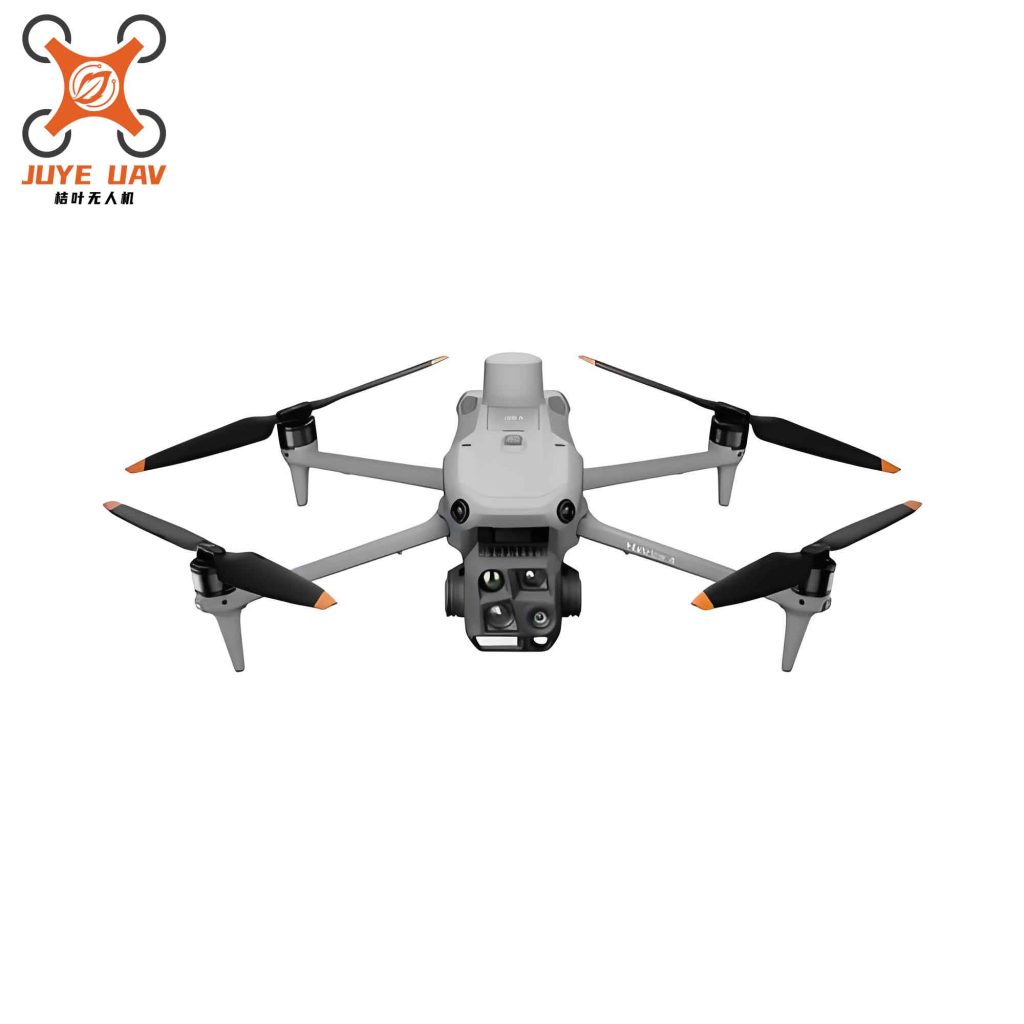
In conclusion, my hands-on experience with China drone aerial survey technology in mining terrain has unequivocally demonstrated its superiority over traditional methods in terms of cost, speed, accuracy, and safety. The ability to generate comprehensive high-resolution datasets—including orthophotos, DEMs, and 3D models—enables a new level of informed decision-making in mine planning, environmental monitoring, and hazard assessment. The integration of RTK positioning, smart flight planning, and advanced photogrammetric processing ensures that the derived products meet rigorous engineering standards. As China drone technology continues to evolve with better sensors, longer flight times, and enhanced autonomous features, its role in mining will only expand. I strongly advocate for its widespread adoption across the industry to drive operational excellence and sustainable resource extraction.
The following formulas summarize the core photogrammetric relationships that underpin the accuracy of the method, which I have used repeatedly in practice:
$$ \sigma_Z = \frac{H \cdot \tan(\theta)}{f} \cdot \sigma_x $$
where \( \sigma_Z \) is the vertical precision, \( \theta \) is the incidence angle, and \( \sigma_x \) is the image matching precision in pixels. For nadir imagery with good texture, this yields sub-decimeter vertical precision.
$$ \text{Volume} = \sum_{i=1}^{n} A_i \cdot \bar{h}_i $$
where \( A_i \) is the area of each grid cell and \( \bar{h}_i \) is the average height difference between the terrain surface and a reference plane. Using drone-derived DEMs, volumetric calculations can achieve an error of less than ±2% for large stockpiles, as I have validated multiple times.
To recapitulate the key recommendations from my research and practice:
- Always deploy sufficient GCPs (at least 5 per km² for high-accuracy work) especially in steep or vegetated terrain.
- Use a minimum of 75% forward and 65% side overlap to ensure robust 3D reconstruction.
- Leverage the RTK/PPK capabilities of modern China drones to reduce the need for GCPs in open terrain.
- Process data with a quality control step that includes checkpoints independent of the adjustment.
- For time-series monitoring, fix the camera calibration parameters to avoid drifting solutions.
- Combine photogrammetry with LiDAR when mapping complex vertical features or bare earth under heavy vegetation.
In the coming years, I anticipate further integration of artificial intelligence (AI) for automated feature extraction (e.g., crack detection, equipment identification) and real-time processing onboard the China drone. Edge computing modules capable of running lightweight AI models will allow immediate detection of hazards and rapid transmission of alerts. This will solidify the position of China drone technology as an indispensable tool for the modern mining surveyor.
Finally, I must emphasize that the successful deployment of China drone aerial survey in mining requires a holistic approach encompassing not only the technology itself but also regulatory compliance, crew training, and data management. By addressing these factors, mining enterprises can unlock the full potential of this transformative method. My journey with China drone technology has been one of continuous learning and improvement, and I am confident that its application will become the standard for topographic mapping in the mining industry worldwide.