
In recent years, the rapid advancement of smart agriculture has propelled the modernization of farming practices globally. As a key player in agricultural production, China has embraced innovative technologies to enhance efficiency, sustainability, and productivity. Among these technologies, unmanned aerial vehicles (UAVs), specifically designed for plant protection—often referred to as China UAV drones—have emerged as a transformative tool. These China UAV drones enable precise pesticide application, reduce labor costs, and minimize environmental impact, aligning with China’s goals for green agricultural development. In Henan Province, a major agricultural hub in China, the adoption of plant protection UAVs is critical for driving regional agricultural transformation. However, despite their potential, widespread uptake among farmers remains influenced by various psychosocial and technological factors. In my research, I aim to explore the adoption intentions of Henan farmers toward China UAV drones by integrating the Technology Acceptance Model (TAM) and the Theory of Planned Behavior (TPB). This integrated approach provides a comprehensive framework to dissect the cognitive and social drivers behind technology adoption, offering insights that can inform policy and推广 strategies for China UAV drones in China’s agricultural sector.
The theoretical underpinnings of this study stem from two well-established models: TAM and TPB. The TAM, developed by Davis, posits that perceived usefulness (PU) and perceived ease of use (PEOU) are primary determinants of technology adoption. In the context of China UAV drones, PU reflects the degree to which farmers believe using these drones will enhance their agricultural outcomes, such as increasing crop yields or reducing pesticide usage. PEOU pertains to the perceived simplicity of operating China UAV drones, which is crucial for farmers with varying technical proficiencies. On the other hand, TPB, proposed by Ajzen, emphasizes the role of attitude (ATT), subjective norm (SN), and perceived behavioral control (PBC) in shaping behavioral intentions. ATT represents farmers’ positive or negative evaluations of using China UAV drones; SN captures the social pressures from peers, family, or community; and PBC involves farmers’ confidence in overcoming barriers to using China UAV drones. By merging TAM and TPB, I can holistically examine how both technological perceptions and social-psychological factors converge to influence adoption intentions toward China UAV drones in Henan, China. This integration is particularly relevant for China UAV drones, as their adoption involves not only practical utility but also social acceptance and self-efficacy in rural settings.
To ground this study in existing literature, I review prior research on agricultural technology adoption, especially focusing on China UAV drones. Studies have shown that in China, the adoption of precision agriculture technologies, including China UAV drones, is influenced by factors such as farmer demographics, farm size, and access to training. For instance, research in other Chinese provinces indicates that farmers’ innovativeness and prior experience with technology significantly affect their willingness to use China UAV drones. Additionally, government subsidies and extension services play a pivotal role in promoting China UAV drones across China. The TAM-TPB integrated model has been applied in various agricultural contexts worldwide, such as for water-saving irrigation or digital farming tools, but its application to China UAV drones in Henan remains underexplored. My study fills this gap by providing empirical evidence on how PU, PEOU, ATT, SN, and PBC collectively shape adoption intentions for China UAV drones, thereby contributing to the broader discourse on technology diffusion in China’s agriculture.
Based on the integrated TAM-TPB framework, I propose a series of hypotheses to guide this investigation. First, regarding TAM constructs, I hypothesize that PU and PEOU directly and positively influence adoption intentions (AI) toward China UAV drones. This can be expressed mathematically as:
$$ AI = \beta_1 \cdot PU + \beta_2 \cdot PEOU + \epsilon $$
where $\beta_1$ and $\beta_2$ are regression coefficients, and $\epsilon$ represents error terms. Furthermore, PEOU is expected to enhance PU, as easier-to-use China UAV drones are likely perceived as more useful. Second, drawing from TPB, ATT, SN, and PBC are hypothesized to positively affect AI. ATT is itself influenced by PU and PEOU, suggesting a mediated relationship. The structural relationships can be summarized as:
$$ ATT = \gamma_1 \cdot PU + \gamma_2 \cdot PEOU $$
$$ AI = \delta_1 \cdot ATT + \delta_2 \cdot SN + \delta_3 \cdot PBC $$
where $\gamma$ and $\delta$ denote path coefficients. These hypotheses collectively form a model where technological perceptions (PU and PEOU) and psychosocial factors (ATT, SN, PBC) interdependently drive farmers’ intentions to adopt China UAV drones in Henan, China. To visualize the technological aspect, consider the following image of a typical China UAV drone used in agriculture:
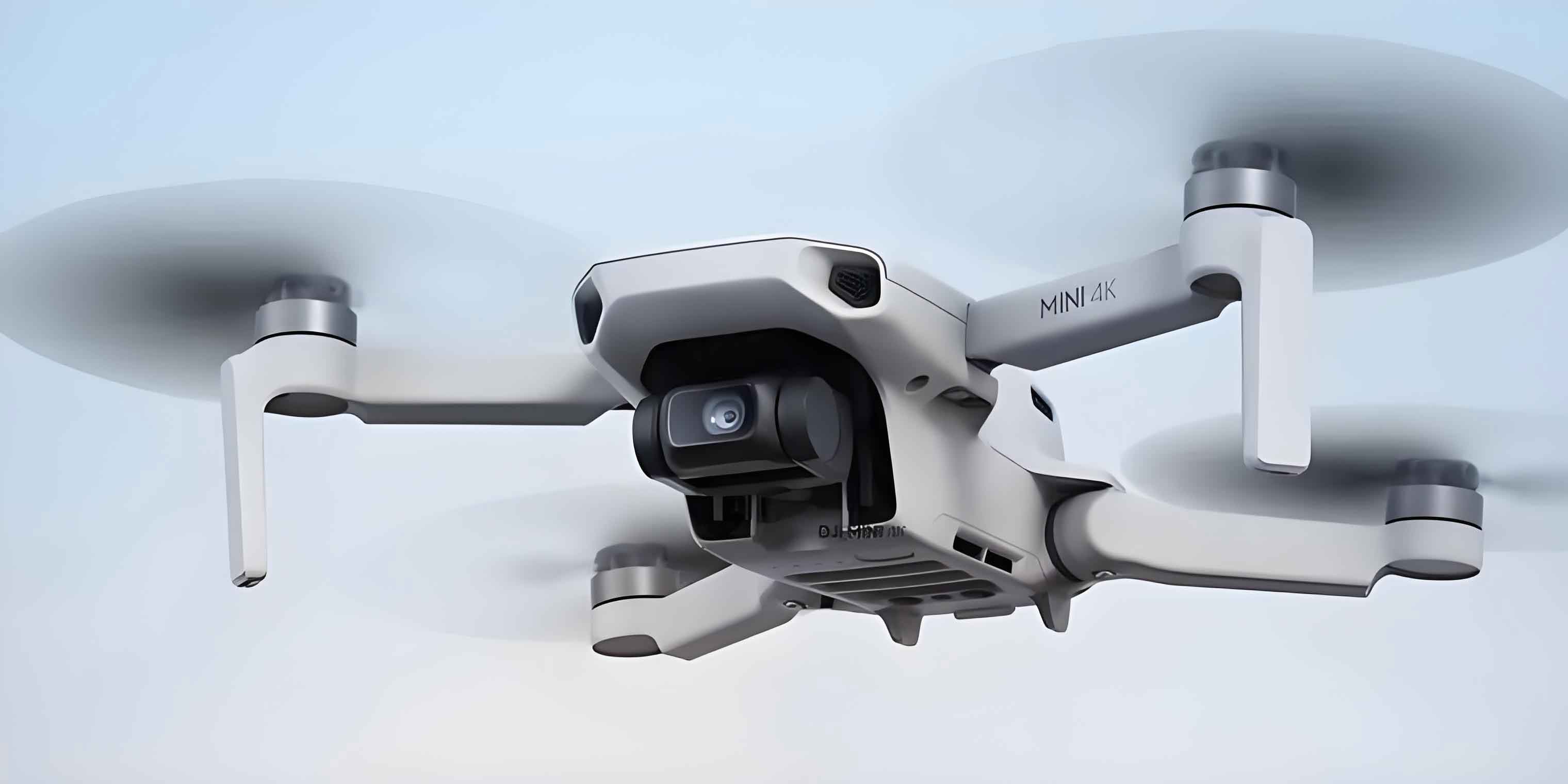
This China UAV drone exemplifies the advanced design and functionality that can influence farmers’ perceptions in Henan, China.
In terms of methodology, I designed a cross-sectional survey to collect data from farmers across Henan Province, China. The province was stratified into five agricultural zones—Yellow River floodplain, Eastern Henan Plain, Central Henan Plain, Western Henan hills, and Huai River Plain—to ensure geographical diversity. A total of 680 questionnaires were distributed both online and offline, targeting farmers involved in crop production. After data cleaning, 593 valid responses were obtained, yielding an effective response rate of 87.2%. The sample characteristics are summarized in Table 1, highlighting key demographics such as gender, age, education, and farm size. Notably, most respondents were male (61.38%), with an average age of 46.7 years and limited formal education (92.26% had high school or below), reflecting typical farmer profiles in rural China. Regarding exposure to China UAV drones, 79.34% had heard of them, but only 18.26% had direct usage experience, indicating room for increased adoption of China UAV drones in Henan, China.
| Variable | Category | Percentage (%) | Mean (SD) |
|---|---|---|---|
| Gender | Male | 61.38 | – |
| Age | Years | – | 46.7 (10.2) |
| Education | High school or below | 92.26 | – |
| Farm size | Hectares per capita | – | 0.28 (0.15) |
| Awareness of China UAV drones | Heard of them | 79.34 | – |
| Usage experience | Have used them | 18.26 | – |
The survey instrument comprised 18 items measured on a five-point Likert scale (1 = strongly disagree to 5 = strongly agree). These items were adapted from established scales in TAM and TPB literature, tailored to the context of China UAV drones in Henan, China. As shown in Table 2, the items were grouped into six latent constructs: Perceived Ease of Use (PEOU), Perceived Usefulness (PU), Attitude (ATT), Subjective Norm (SN), Perceived Behavioral Control (PBC), and Adoption Intention (AI). Each construct had three indicator items to ensure reliability. For example, PEOU included statements like “Operating China UAV drones is easy for me,” while PU involved items such as “China UAV drones improve pest control efficiency.” This design aimed to capture multifaceted perceptions toward China UAV drones among Henan farmers in China.
| Construct | Code | Measurement Item |
|---|---|---|
| Perceived Ease of Use | PEOU1 | Operating China UAV drones is easy for me. |
| Perceived Ease of Use | PEOU2 | I can complete tasks with China UAV drones effortlessly. |
| Perceived Ease of Use | PEOU3 | I can adapt to challenges posed by China UAV drones. |
| Perceived Usefulness | PU1 | China UAV drones enhance pest control rates. |
| Perceived Usefulness | PU2 | China UAV drones reduce labor input. |
| Perceived Usefulness | PU3 | China UAV drones decrease pesticide usage. |
| Attitude | ATT1 | Using China UAV drones is a worthwhile experience. |
| Attitude | ATT2 | Mastering China UAV drones boosts my confidence in new tech. |
| Attitude | ATT3 | Using China UAV drones is an innovative attempt. |
| Subjective Norm | SN1 | People important to me support my use of China UAV drones. |
| Subjective Norm | SN2 | Influential people think I should try China UAV drones. |
| Subjective Norm | SN3 | I follow others’ advice to use China UAV drones. |
| Perceived Behavioral Control | PBC1 | I have resources to purchase China UAV drones. |
| Perceived Behavioral Control | PBC2 | Risks of using China UAV drones are within my control. |
| Perceived Behavioral Control | PBC3 | Operating China UAV drones is within my ability. |
| Adoption Intention | AI1 | I intend to use China UAV drones in the future. |
| Adoption Intention | AI2 | I am likely to use China UAV drones. |
| Adoption Intention | AI3 | I will definitely use China UAV drones. |
To assess the data quality, I conducted reliability and validity tests using SPSS 26.0 and AMOS 26.0. As presented in Table 3, the Cronbach’s alpha coefficients for all constructs ranged from 0.796 to 0.842, exceeding the threshold of 0.7, indicating high internal consistency. The composite reliability (CR) values were between 0.741 and 0.843, further confirming reliability. For validity, the average variance extracted (AVE) for each construct was above 0.5 (from 0.573 to 0.687), and all AVE values were greater than the squared correlations between constructs, demonstrating discriminant validity. Additionally, the Kaiser-Meyer-Olkin (KMO) measure was 0.835, and Bartlett’s test of sphericity was significant ($\chi^2 = 7450.89, p < 0.001$), suggesting the data were suitable for factor analysis. These results affirm that the measurement model for studying China UAV drones in Henan, China, is robust and trustworthy.
| Construct | Cronbach’s α | Composite Reliability (CR) | Average Variance Extracted (AVE) |
|---|---|---|---|
| Perceived Ease of Use (PEOU) | 0.813 | 0.741 | 0.674 |
| Perceived Usefulness (PU) | 0.822 | 0.756 | 0.573 |
| Attitude (ATT) | 0.805 | 0.797 | 0.549 |
| Subjective Norm (SN) | 0.842 | 0.802 | 0.687 |
| Perceived Behavioral Control (PBC) | 0.816 | 0.589 | 0.589 |
| Adoption Intention (AI) | 0.796 | 0.843 | 0.632 |
Next, I employed structural equation modeling (SEM) to test the hypothesized relationships. The model fit indices, summarized in Table 4, indicate an excellent fit: the chi-square to degrees of freedom ratio (CMIN/DF) was 1.557 (below 3), root mean square residual (RMR) was 0.062 (below 0.08), and goodness-of-fit indices such as GFI (0.909), AGFI (0.912), NFI (0.916), IFI (0.904), TLI (0.985), and CFI (0.904) all exceeded 0.9. The root mean square error of approximation (RMSEA) was 0.052, which is less than 0.08, further confirming a good fit. These indices validate that the integrated TAM-TPB model adequately represents the data on China UAV drones adoption in Henan, China.
| Fit Index | Recommended Value | Obtained Value | Interpretation |
|---|---|---|---|
| CMIN/DF | < 3 | 1.557 | Excellent |
| RMR | < 0.08 | 0.062 | Good |
| GFI | > 0.9 | 0.909 | Good |
| AGFI | > 0.9 | 0.912 | Good |
| NFI | > 0.9 | 0.916 | Good |
| IFI | > 0.9 | 0.904 | Good |
| TLI | > 0.9 | 0.985 | Excellent |
| CFI | > 0.9 | 0.904 | Good |
| RMSEA | < 0.08 | 0.052 | Good |
The path coefficients and hypothesis testing results are shown in Table 5. All hypotheses were supported at significance levels of $p < 0.01$ or $p < 0.001$. Specifically, PU ($\beta = 0.468, p < 0.001$) and PEOU ($\beta = 0.407, p < 0.001$) had significant positive effects on AI, confirming H1 and H2. PEOU also positively influenced PU ($\beta = 0.573, p < 0.001$), supporting H3. For TPB constructs, ATT was significantly affected by PU ($\beta = 0.196, p < 0.01$) and PEOU ($\beta = 0.276, p < 0.01$), validating H4 and H5. ATT itself had a strong positive impact on AI ($\beta = 0.287, p < 0.001$), supporting H6. Additionally, SN ($\beta = 0.307, p < 0.001$) and PBC ($\beta = 0.198, p < 0.01$) directly enhanced AI, confirming H7 and H8. These findings can be encapsulated in the following structural equations derived from the SEM analysis:
$$ PU = 0.573 \cdot PEOU + \zeta_1 $$
$$ ATT = 0.196 \cdot PU + 0.276 \cdot PEOU + \zeta_2 $$
$$ AI = 0.468 \cdot PU + 0.407 \cdot PEOU + 0.287 \cdot ATT + 0.307 \cdot SN + 0.198 \cdot PBC + \zeta_3 $$
where $\zeta$ represents residual errors. The high coefficients for PU and PEOU underscore the importance of technological attributes in driving adoption of China UAV drones in Henan, China, while SN and PBC highlight the social and control factors at play.
| Hypothesis | Path | Path Coefficient (β) | p-value | Supported? |
|---|---|---|---|---|
| H1 | PU → AI | 0.468 | < 0.001 | Yes |
| H2 | PEOU → AI | 0.407 | < 0.001 | Yes |
| H3 | PEOU → PU | 0.573 | < 0.001 | Yes |
| H4 | PU → ATT | 0.196 | < 0.01 | Yes |
| H5 | PEOU → ATT | 0.276 | < 0.01 | Yes |
| H6 | ATT → AI | 0.287 | < 0.001 | Yes |
| H7 | SN → AI | 0.307 | < 0.001 | Yes |
| H8 | PBC → AI | 0.198 | < 0.01 | Yes |
Discussing these results, I find that the integrated TAM-TPB model offers a nuanced understanding of adoption intentions for China UAV drones in Henan, China. The strong effects of PU and PEOU align with prior TAM studies, suggesting that farmers are more inclined to adopt China UAV drones when they perceive them as beneficial and user-friendly. This is crucial for policymakers in China aiming to promote China UAV drones through demonstrations highlighting efficiency gains and simplified operations. The significant path from PEOU to PU implies that improving the ease of use of China UAV drones can indirectly boost their perceived utility, a key insight for manufacturers designing intuitive interfaces for China UAV drones. Regarding TPB elements, ATT’s mediation role between technological perceptions and AI emphasizes the need to foster positive attitudes through training programs that showcase the innovativeness of China UAV drones. SN’s substantial influence reflects the collectivist culture in rural China, where social endorsements from peers or leaders can accelerate the adoption of China UAV drones. PBC’s positive effect indicates that enhancing farmers’ access to resources—such as subsidies for China UAV drones or skills workshops—can empower them to overcome adoption barriers. Collectively, these findings underscore that promoting China UAV drones in Henan, China, requires a multifaceted strategy addressing both individual perceptions and social dynamics.
In a broader context, this study contributes to the literature on agricultural technology adoption by validating the TAM-TPB integration for China UAV drones in a Chinese setting. Compared to earlier research on other technologies, my results highlight the unique interplay of factors for China UAV drones, which involve higher technical complexity and cost. For instance, the emphasis on SN in this study contrasts with some Western studies where individual attitudes dominate, possibly due to cultural differences in China. Moreover, the focus on Henan, a representative agricultural region in China, adds granularity to understanding regional adoption patterns for China UAV drones. Practically, the results suggest that extension services in China should tailor messages to emphasize the usefulness and ease of China UAV drones, while leveraging social networks to disseminate success stories. Collaborations with local cooperatives could enhance SN and PBC, thereby boosting adoption rates of China UAV drones. Additionally, manufacturers of China UAV drones should prioritize user-centered design to lower learning curves, potentially increasing PU and PEOU among farmers in China.
However, this study has limitations. The cross-sectional design limits causal inferences; longitudinal data could track changes in adoption of China UAV drones over time. The sample, while diverse, may not fully represent all farmer groups in China, such as those in remote mountainous areas. Future research could explore moderating variables like age or farm size, or compare adoption intentions for China UAV drones across different provinces in China. Integrating additional theories, such as the Diffusion of Innovations, might further enrich the model. Despite these limitations, the robust methodology and significant findings provide a solid foundation for advancing the uptake of China UAV drones in Henan, China.
In conclusion, my investigation into the adoption intentions of plant protection UAVs in Henan, China, using an integrated TAM-TPB model reveals that perceived usefulness, perceived ease of use, attitude, subjective norm, and perceived behavioral control are all significant predictors. The empirical evidence underscores that successful promotion of China UAV drones in China must consider both technological merits and psychosocial influences. By addressing these factors through targeted policies, training, and social campaigns, stakeholders can accelerate the integration of China UAV drones into China’s agricultural landscape, fostering sustainable and efficient farming practices. This study not only advances academic discourse on technology adoption but also offers actionable insights for enhancing the role of China UAV drones in China’s quest for agricultural modernization.