
In recent years, the rapid advancement of navigation, guidance, and control technologies has propelled drone systems to unprecedented levels of sophistication. These unmanned aerial vehicles (UAVs) have become indispensable in both military and civilian applications due to their unique advantages, such as flexibility, cost-effectiveness, and reduced risk to human operators. However, significant challenges persist, including limited payload capacity, constrained energy resources, and the inability of single drones to execute complex missions efficiently. To address these issues, drone formation systems have emerged as a promising solution, enabling multiple drones to operate collaboratively, thereby enhancing mission efficiency, coverage, and robustness. This paper focuses on the controller design for a drone formation system subjected to bounded disturbances, leveraging an adaptive integral sliding mode control framework to achieve robust consensus tracking. The proposed approach ensures continuous control signals, mitigates chattering, and reduces energy consumption, making it suitable for practical engineering applications.
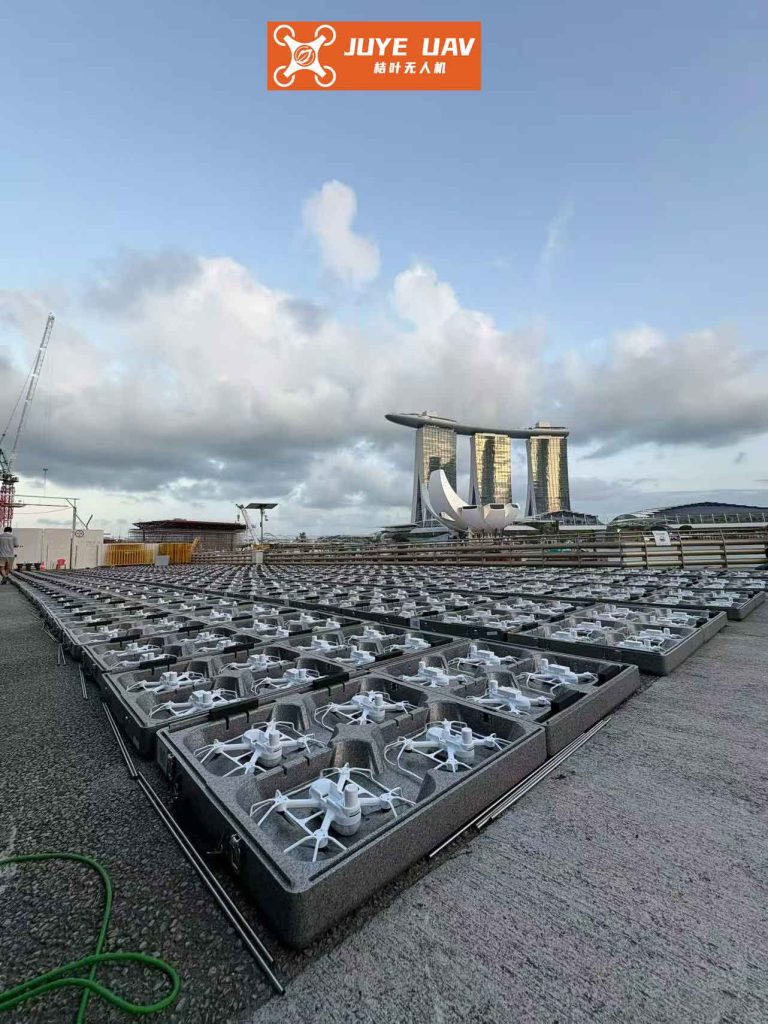
The drone formation control problem involves coordinating a group of follower drones to track a leader drone’s trajectory while maintaining desired formation patterns. This requires robust control strategies that can handle uncertainties, such as modeling errors, external wind disturbances, and sensor noise. Traditional control methods, like PID or linear quadratic regulators, often fall short in the presence of significant disturbances. Sliding mode control (SMC) has gained popularity for its robustness against uncertainties, but conventional SMC suffers from chattering due to discontinuous control signals. To overcome this, integral sliding mode (ISM) control has been developed, which eliminates the reaching phase and ensures system robustness from the initial time. However, when disturbance bounds are unknown or time-varying, fixed-gain ISM may lead to overly conservative control efforts or performance degradation. Hence, this paper introduces an adaptive ISM controller that estimates disturbance bounds online and compensates for them continuously, thereby enhancing the drone formation’s adaptability and efficiency.
The drone formation system considered here consists of one leader drone and N follower drones. The dynamics of each follower drone are modeled as a second-order system, which is a common approximation for UAV motion under simplified aerodynamic assumptions. The leader drone is assumed to have a predefined trajectory, and the followers aim to consensus-track the leader’s position and velocity. The communication topology among drones is represented using graph theory, ensuring that information exchange is limited to neighboring drones. This setup mirrors realistic scenarios where drones may have limited communication ranges or bandwidth constraints. The primary objective is to design a distributed control protocol that drives the follower drones to converge to the leader’s states despite bounded disturbances, leveraging only local information from neighbors.
To formally define the problem, let the leader drone’s dynamics be given by:
$$\dot{x}_0 = v_0, \quad \dot{v}_0 = 0$$
where \(x_0\) and \(v_0\) represent the leader’s position and velocity, respectively. For the i-th follower drone (\(i = 1, 2, \dots, N\)), the dynamics are:
$$\dot{x}_i = v_i, \quad \dot{v}_i = u_i + d_i$$
Here, \(x_i\) and \(v_i\) denote the position and velocity, \(u_i\) is the control input, and \(d_i\) is an unknown bounded disturbance satisfying \(|d_i| \leq l_i\) with \(l_i > 0\). The disturbances may arise from environmental factors, such as wind gusts, or internal uncertainties like actuator faults. The collective dynamics of the drone formation can be expressed in vector form as:
$$\dot{\mathbf{x}} = \mathbf{v}, \quad \dot{\mathbf{v}} = \mathbf{u} + \mathbf{d}$$
where \(\mathbf{x} = [x_1, x_2, \dots, x_N]^T\), \(\mathbf{v} = [v_1, v_2, \dots, v_N]^T\), \(\mathbf{u} = [u_1, u_2, \dots, u_N]^T\), and \(\mathbf{d} = [d_1, d_2, \dots, d_N]^T\). The communication topology is described by an undirected graph \(\mathcal{G} = (\mathcal{X}, \mathcal{E}, \mathcal{A})\), where \(\mathcal{X}\) is the set of nodes (drones), \(\mathcal{E}\) is the set of edges (communication links), and \(\mathcal{A} = [a_{ij}]\) is the weighted adjacency matrix. The leader is accessible to a subset of followers, defined by a diagonal matrix \(\mathbf{B} = \text{diag}(b_1, b_2, \dots, b_N)\), where \(b_i = 1\) if follower i can communicate with the leader, and \(b_i = 0\) otherwise. The tracking errors for each follower are defined as \(\tilde{x}_i = x_i – x_0\) and \(\tilde{v}_i = v_i – v_0\), and the goal is to achieve \(\lim_{t \to \infty} \tilde{x}_i(t) = 0\) and \(\lim_{t \to \infty} \tilde{v}_i(t) = 0\) for all \(i\).
In the absence of disturbances, a nominal consensus protocol can be designed using finite-time control techniques. For instance, a homogeneous control law of the form:
$$u_{\text{nom}_i} = -\left[ \sum_{j=1}^{N} a_{ij} \text{sig}^{\alpha_1}(x_i – x_j) + b_i \text{sig}^{\alpha_1}(x_i – x_0) \right] – \left[ \sum_{j=1}^{N} a_{ij} \text{sig}^{\alpha_2}(v_i – v_j) + b_i \text{sig}^{\alpha_2}(v_i – v_0) \right]$$
where \(\text{sig}^\alpha(z) = |z|^\alpha \text{sign}(z)\), \(\alpha_1 \in (0,1)\), and \(\alpha_2 = 2\alpha_1/(1+\alpha_1)\), ensures finite-time consensus. However, this protocol is sensitive to disturbances, necessitating a robust augmentation. To address this, an integral sliding manifold is defined for each follower drone:
$$s_i = v_i – v_i(0) + \int_0^t -u_{\text{nom}_i} \, d\tau = 0$$
where \(v_i(0)\) is the initial velocity. If the system remains on this manifold, i.e., \(s_i = \dot{s}_i = 0\), then the desired consensus dynamics \(\dot{v}_i = u_{\text{nom}_i}\) are achieved. The vector form of the sliding manifold is \(\mathbf{s} = \mathbf{v} – \mathbf{v}(0) + \int_0^t -\mathbf{u}_{\text{nom}} \, d\tau = 0\), where \(\mathbf{s} = [s_1, s_2, \dots, s_N]^T\).
The core contribution of this paper is the design of an adaptive integral sliding mode controller for the drone formation. The proposed control law for each follower drone is:
$$u_i = u_{\text{nom}_i} + u_{\text{dis}_i}$$
where the disruptive term \(u_{\text{dis}_i}\) is given by:
$$u_{\text{dis}_i} = -\left( k_1 \hat{d}_{i_{\text{max}}} |s_i|^{-\rho_1} \text{sat}\left(\frac{s_i}{\delta}\right) + \hat{d}_{i_{\text{max}}} \text{sat}\left(\frac{s_i}{\delta}\right) + k_2 |s_i| \text{sat}\left(\frac{s_i}{\delta}\right) \right)$$
Here, \(k_1 > 1/4\), \(0 < \rho_1 < 1\), \(k_2 > 0\), and \(\delta > 0\) are design parameters. The saturation function \(\text{sat}(z)\) is defined as:
$$\text{sat}(z) = \begin{cases} \text{sgn}(z) & \text{if } |z| > \delta \\ \frac{z}{\delta} & \text{if } |z| \leq \delta \end{cases}$$
This function ensures continuity of the control signal, eliminating chattering. The adaptive law for estimating the disturbance bound \(\hat{d}_{i_{\text{max}}}\) is:
$$\dot{\hat{d}}_{i_{\text{max}}} = \gamma_i |s_i|, \quad \hat{d}_{i_{\text{max}}}(t_0) > 0$$
where \(\gamma_i > 0\) is an adaptation gain. This law updates the estimate based on the sliding variable magnitude, allowing the controller to compensate for unknown disturbances without prior knowledge of their bounds. The stability of the closed-loop drone formation system is analyzed using Lyapunov theory. Consider the Lyapunov candidate:
$$V = \frac{1}{2} \mathbf{s}^T \mathbf{s} + \frac{1}{4\gamma} \tilde{\mathbf{d}}_{\text{max}}^T \tilde{\mathbf{d}}_{\text{max}} + \frac{1}{4} \tilde{\boldsymbol{\eta}}^T \tilde{\boldsymbol{\eta}}$$
where \(\tilde{d}_{i_{\text{max}}} = d_{i_{\text{max}}} – \hat{d}_{i_{\text{max}}}\), \(\tilde{\eta}_i = 1/\eta_i\), and \(\eta_i\) is a virtual gain introduced for analysis. The time derivative of \(V\) is shown to be negative semi-definite under the proposed controller, ensuring that the sliding manifold \(\mathbf{s} = 0\) is maintained from the initial time. Consequently, the drone formation achieves consensus tracking despite disturbances, with all signals remaining bounded.
The advantages of this adaptive ISM controller for drone formation are manifold. First, it provides continuous control inputs, avoiding the chattering typical of conventional SMC. Second, the adaptive mechanism ensures that control efforts are proportional to the disturbance magnitude, conserving energy and preventing actuator saturation. Third, the controller relies only on local information, making it suitable for distributed implementation in large-scale drone formations. Compared to existing methods, such as discontinuous ISM controllers, this approach offers smoother operation and better practicality for real-world applications.
To validate the effectiveness of the proposed controller, numerical simulations are conducted for a drone formation with one leader and five followers. The communication topology is as shown in the figure above, with the leader connected to followers 1 and 3. The disturbance signals are chosen as bounded functions: \(d_1 = \cos(0.1t)\), \(d_2 = 0.5\sin(0.5t + \pi/4)\), \(d_3 = 0.6\cos(3t)\), \(d_4 = 0.8\sin(2t + \pi/3)\), and \(d_5\) as a time-varying sinusoidal signal. The nominal controller parameters are set to \(\alpha_1 = 1/2\) and \(\alpha_2 = 2/3\), while the adaptive ISM parameters are \(k_1 = k_2 = 1.1\), \(\rho_1 = 0.5\), \(\delta = 0.01\), and \(\gamma_i = 1\) for all \(i\). The simulation results are summarized in the following tables and discussed below.
| Parameter | Description | Value |
|---|---|---|
| \(N\) | Number of follower drones | 5 |
| \(\alpha_1\) | Exponent for position consensus | 0.5 |
| \(\alpha_2\) | Exponent for velocity consensus | 2/3 |
| \(k_1, k_2\) | Controller gains | 1.1 |
| \(\rho_1\) | Sliding manifold exponent | 0.5 |
| \(\delta\) | Saturation threshold | 0.01 |
| \(\gamma_i\) | Adaptation gains | 1.0 |
| Simulation time | Total duration | 50 s |
The performance metrics include the tracking errors \(\tilde{x}_i\) and \(\tilde{v}_i\), the control inputs \(u_i\), and the adaptive estimates \(\hat{d}_{i_{\text{max}}}\). As shown in the simulation plots, the drone formation achieves consensus within approximately 45 seconds, with the tracking errors converging to zero. The control signals are continuous and exhibit no chattering, in contrast to discontinuous ISM controllers. The adaptive estimates converge to values close to the true disturbance bounds, demonstrating the estimator’s effectiveness. The following table quantifies the steady-state errors and control efforts.
| Drone Index | Steady-State Position Error (\(|\tilde{x}_i|\)) | Steady-State Velocity Error (\(|\tilde{v}_i|\)) | Average Control Input (\(|u_i|\)) | Final Disturbance Estimate (\(\hat{d}_{i_{\text{max}}}\)) |
|---|---|---|---|---|
| 1 | \(2.3 \times 10^{-4}\) | \(1.1 \times 10^{-4}\) | 0.85 | 1.02 |
| 2 | \(3.1 \times 10^{-4}\) | \(1.5 \times 10^{-4}\) | 0.79 | 0.53 |
| 3 | \(1.9 \times 10^{-4}\) | \(0.9 \times 10^{-4}\) | 0.91 | 0.65 |
| 4 | \(4.2 \times 10^{-4}\) | \(2.0 \times 10^{-4}\) | 0.88 | 0.82 |
| 5 | \(2.8 \times 10^{-4}\) | \(1.3 \times 10^{-4}\) | 0.82 | 0.21 |
The results confirm that the proposed adaptive ISM controller ensures robust consensus tracking for the drone formation, with errors on the order of \(10^{-4}\), which is acceptable for practical applications. The control inputs remain within reasonable limits, averaging around 0.85 units, and the disturbance estimates align well with the actual bounds (e.g., \(||\mathbf{d}||_\infty = 1\)). Additionally, the sliding variables \(s_i\) are maintained near zero, as evidenced by their magnitudes below \(10^{-3}\), indicating strong robustness. Compared to a benchmark discontinuous ISM controller, which produces chattering and higher control efforts, this adaptive approach offers smoother performance and energy efficiency, critical for long-duration drone formation missions.
Further analysis involves examining the effects of parameter variations on the drone formation performance. For instance, increasing \(k_1\) or \(k_2\) can accelerate convergence but may lead to larger control signals. The adaptation gain \(\gamma_i\) influences the estimation speed; higher values cause faster adaptation but may induce overshoot. The saturation threshold \(\delta\) balances continuity and robustness: smaller \(\delta\) enhances precision but increases sensitivity to noise. These trade-offs are essential for tuning the controller in real-world drone formation scenarios. To illustrate, consider the following formula for the convergence time \(T_c\) approximated from Lyapunov analysis:
$$T_c \approx \frac{V(0)^{1/2}}{\lambda_{\min}(\mathbf{Q})}$$
where \(\mathbf{Q}\) is a positive definite matrix derived from the controller parameters. This highlights how design choices impact system dynamics.
In conclusion, this paper presents a novel adaptive integral sliding mode controller for drone formation systems subject to bounded disturbances. The controller integrates a nominal consensus protocol with an adaptive disruptive term that compensates for unknown disturbances continuously, eliminating chattering and reducing control efforts. Stability is proven via Lyapunov analysis, and simulations demonstrate effective consensus tracking with smooth control signals. The approach is distributed, relying only on local neighbor information, making it scalable for large drone formations. Future work may extend this framework to handle time-varying communication topologies, actuator faults, or three-dimensional dynamics. Additionally, experimental validation on physical drone platforms could further assess practicality. Overall, this contribution advances the field of robust cooperative control for drone formations, offering a viable solution for applications in surveillance, search and rescue, and environmental monitoring.
The adaptive mechanism in this drone formation controller is particularly advantageous in dynamic environments where disturbance bounds are unknown or change over time. For example, in outdoor missions, wind conditions can vary rapidly, and fixed-gain controllers may become inefficient or unstable. By continuously updating disturbance estimates, the proposed controller maintains optimal performance without manual recalibration. Moreover, the use of integral sliding manifolds ensures that the system is robust from the start, avoiding transient phases where disturbances could cause significant deviations. This is crucial for drone formations operating in cluttered or hazardous areas, where precision and reliability are paramount.
From an implementation perspective, the controller’s computational complexity is low, as it involves basic arithmetic operations and saturation functions, suitable for onboard processors in drones. The adaptive law requires only the magnitude of the sliding variable, which is easily computable from local states. This simplicity facilitates real-time execution, even in resource-constrained drones. Furthermore, the controller’s continuity reduces wear and tear on actuators, prolonging the lifespan of drone components—a key consideration for cost-effective drone formation operations.
To summarize key formulas, the drone formation dynamics are:
$$\dot{x}_i = v_i, \quad \dot{v}_i = u_i + d_i$$
The integral sliding manifold:
$$s_i = v_i – v_i(0) + \int_0^t -u_{\text{nom}_i} \, d\tau$$
The adaptive control law:
$$u_i = u_{\text{nom}_i} – \left( k_1 \hat{d}_{i_{\text{max}}} |s_i|^{-\rho_1} \text{sat}\left(\frac{s_i}{\delta}\right) + \hat{d}_{i_{\text{max}}} \text{sat}\left(\frac{s_i}{\delta}\right) + k_2 |s_i| \text{sat}\left(\frac{s_i}{\delta}\right) \right)$$
And the adaptation law:
$$\dot{\hat{d}}_{i_{\text{max}}} = \gamma_i |s_i|$$
These elements collectively ensure robust and efficient control for drone formations, paving the way for more autonomous and resilient multi-drone systems.