
The rapid proliferation of Unmanned Aerial Vehicles (UAV drones) has catalyzed significant advancements in aerial surveillance, precision agriculture, environmental monitoring, and emergency response. The capability of a UAV drone to capture high-altitude, wide-area imagery presents unique opportunities for automated ground target detection and tracking. However, this capability is fundamentally constrained by the limited computational resources available on typical UAV drone platforms. High-precision convolutional neural network (CNN)-based detection models, while accurate, are often characterized by substantial parameter counts and floating-point operations, rendering them unsuitable for deployment on resource-constrained UAV drone hardware. This creates a critical need for lightweight yet accurate target detection algorithms that can operate efficiently on UAV drone systems without compromising performance.
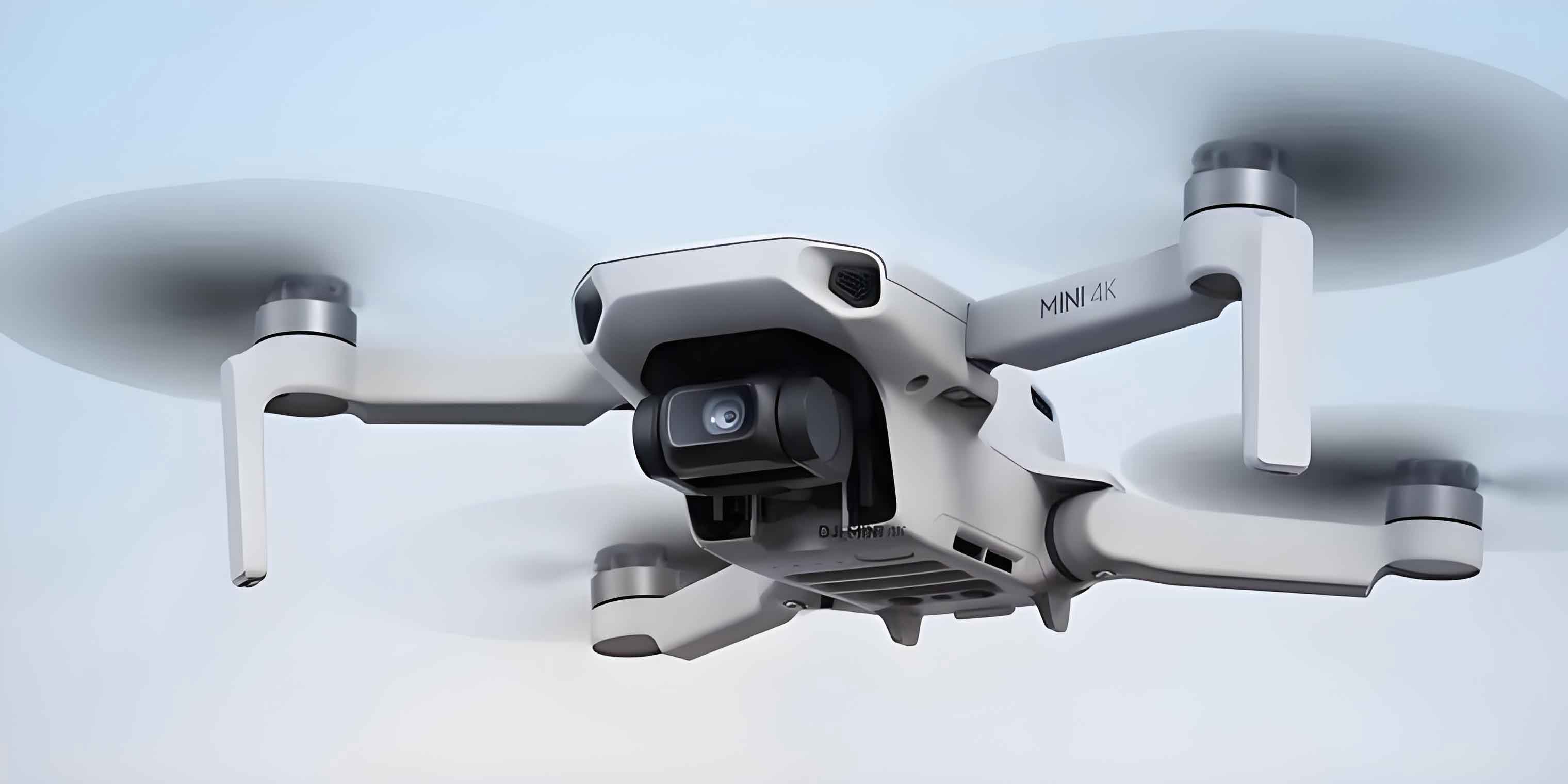
Current approaches to UAV drone-based vision can be broadly categorized into traditional image processing methods and deep learning-based techniques. Traditional methods often rely on feature engineering and algorithms like Kalman filters or optical flow. While sometimes effective, these methods typically suffer from slow processing speeds, poor robustness in complex environments, and an inability to leverage the rich, hierarchical features present in visual data. Deep learning, particularly single-stage detectors like the YOLO (You Only Look Once) family, has emerged as the dominant paradigm due to its favorable balance between speed and accuracy. Researchers have attempted to adapt these networks for UAV drone applications by incorporating various lightweight backbones such as GhostNet or ShuffleNetV2. Although these integrations reduce model complexity, they often lead to a non-negligible drop in detection accuracy, especially for the small and densely packed ground targets typical in UAV drone imagery.
The primary challenges in designing an effective UAV drone detection algorithm stem from the nature of the aerial data. Targets, such as vehicles or persons, often occupy very few pixels in the image (small objects). The scenes can be highly complex with cluttered backgrounds, significant scale variation, and challenging lighting conditions. Furthermore, the algorithm must perform extensive redundant convolutional computations and multi-scale feature fusions, which contribute to high computational overhead. Therefore, the core research problem is to architect a model that drastically reduces this computational burden—minimizing parameters, model size, and GFLOPs—while preserving or even enhancing the detection precision for small targets in UAV drone-captured scenes.
To address these challenges, this work proposes a novel lightweight target detection algorithm named MV2SF, built upon the YOLOv5s framework. The algorithm is designed explicitly for efficient execution on UAV drone platforms. The core contributions are threefold. First, we design a suite of lightweight feature extraction modules that fundamentally reduce redundant convolutional operations and model hyperparameters. Second, we introduce an enhanced loss function and embed an attention mechanism to improve localization accuracy and feature representation robustness. Third, we construct an adaptive multi-scale feature fusion network to mitigate information loss during the lightweighting process and improve feature utilization across different scales. The resulting model demonstrates superior performance on standard UAV drone datasets, achieving a significant reduction in computational metrics while maintaining competitive detection accuracy.
Methodology and Theoretical Framework
The overall architecture of the proposed MV2SF network is engineered to replace computationally heavy components in the standard YOLOv5s with efficient alternatives. The design philosophy centers on maintaining a strong feature extraction capability while aggressively pruning unnecessary operations. The network consists of a lightweight backbone built from novel modules, an adaptive feature fusion neck, and detection heads optimized with an improved loss function.
Lightweight Backbone Structure with Efficient Modules
The original CSPDarknet53 backbone in YOLOv5s, while effective, involves intensive channel dimension shuffling, up/down-sampling, and deep stacking of convolutions, leading to high parameter counts. For a UAV drone application, this is a significant bottleneck. Our approach draws inspiration from MobileNetV2’s inverted residual blocks and depthwise separable convolutions, combined with attention mechanisms, to construct a family of efficient building blocks termed Mobile modules.
The fundamental operation we rely on is Depthwise Separable Convolution (DSC). It factorizes a standard convolution into two steps: a depthwise convolution (applying a single filter per input channel) and a pointwise convolution (a 1×1 convolution to combine channel outputs). This factorization drastically reduces computation and parameters. The computational cost for a standard convolution and a depthwise separable convolution can be compared as follows:
Standard Convolution:
$$ Cost_{std} = K \cdot K \cdot C_{in} \cdot C_{out} \cdot H \cdot W $$
Depthwise Separable Convolution:
$$ Cost_{dsc} = (K \cdot K \cdot C_{in} \cdot H \cdot W) + (C_{in} \cdot C_{out} \cdot H \cdot W) $$
The ratio of costs is:
$$ \frac{Cost_{dsc}}{Cost_{std}} = \frac{1}{C_{out}} + \frac{1}{K^2} $$
Where \( K \) is the kernel size, \( C_{in} \) is the number of input channels, \( C_{out} \) is the number of output channels, and \( H, W \) are the spatial dimensions. For typical values (e.g., \( K=3, C_{out}=256 \)), this represents an approximate 8-9x reduction in computation.
We design several Mobile modules using this principle:
1. MobileConv: This block splits its computation. Half of the output feature maps are generated via a standard 3×3 convolution. The other half are produced by applying a 3×3 depthwise convolution to the output of that initial standard convolution. This hybrid approach balances efficiency with the retention of representational capacity.
2. MobileBottleneck with Stride 1: This module stacks two 1×1 MobileConv layers with a residual connection, effectively creating a lightweight bottleneck that reduces the cost of using 3×3 operations.
3. MobileBottleneck with Stride 2: Designed for downsampling, this variant includes a depthwise convolution with stride 2 between two pointwise (1×1) convolutions to reduce spatial dimensions efficiently.
4. MC3 Module: To replace the standard C3 module in YOLOv5s, we design the MC3 module. Its main branch uses a 1×1 convolution for channel reduction, followed by a stride-1 MobileBottleneck layer for feature extraction. Crucially, we integrate an Efficient Channel Attention (ECA) module after the bottleneck. The ECA module uses a fast one-dimensional convolution to model channel-wise dependencies without dimensionality reduction, capturing cross-channel information at nearly zero computational cost. The adaptive kernel size \( k \) for the 1D conv is determined by:
$$ k = \psi(C) = \bigg| \frac{\log_2(C)}{\gamma} + \frac{b}{\gamma} \bigg|_{odd} $$
where \( C \) is the channel dimension, \( \gamma \) and \( b \) are constants, and \( |\cdot|_{odd} \) denotes the nearest odd number.
Furthermore, to counteract the feature information loss inherent in aggressive lightweighting, we embed a modified Squeeze-and-Excitation (SE) attention mechanism. The original SENet performs global average pooling (squeeze) followed by two fully-connected layers (excitation). We adapt this into a dual-branch structure inspired by ResNeXt, allowing the module to capture higher-order feature interactions and enhance the interdependencies between channels more effectively, thus mitigating the risk of underfitting caused by sparse parameters.
Enhanced Loss Function: FECIoU
Accurate bounding box regression is paramount for UAV drone detection, where targets are small. The default Complete Intersection over Union (CIoU) loss in YOLOv5s has limitations in optimizing non-overlapping boxes and can be insensitive to small positional deviations for tiny objects. We propose the Focal-Enhanced CIoU (FECIoU) loss, which combines the advantages of Focal Loss for hard example mining and Enhanced CIoU (ECIoU) for geometric precision.
The ECIoU loss decomposes the localization metric into three parts: overlap loss, center distance loss, and width-height loss. It is defined as:
$$ L_{ECIoU} = 1 – IoU + \frac{\rho^2(\mathbf{b}, \mathbf{b}^{gt})}{c^2} + \frac{\rho^2(w, w^{gt})}{C_w^2} + \frac{\rho^2(h, h^{gt})}{C_h^2} $$
where \( \mathbf{b} \) and \( \mathbf{b}^{gt} \) are the centers of the predicted and ground truth boxes, \( \rho(\cdot) \) is the Euclidean distance, \( c \) is the diagonal length of the smallest enclosing box covering both boxes, \( w, h \) are the width and height, and \( C_w, C_h \) are the width and height of that smallest enclosing box. The separate terms for width and height help the model converge faster and more accurately.
We then incorporate a Focal Loss-style weighting term to focus regression on higher-quality anchors and mitigate the imbalance between easy and hard examples. The final FECIoU loss is:
$$ L_{FECIoU} = I^{\lambda}_{IoU} \cdot L_{ECIoU} $$
Here, \( I_{IoU} \) is the intersection-over-union between the predicted and target boxes, and \( \lambda \) is a modulating factor. When \( \lambda > 0 \), the loss for well-regressed boxes (high IoU) is down-weighted, allowing the model to focus more on poorly regressed boxes (low IoU). Experimental tuning determined \( \lambda = 1.5 \) to be optimal for our UAV drone datasets, providing a good balance between convergence speed and final accuracy.
Adaptive Multi-Scale Feature Fusion Network (NASFF)
The Path Aggregation Network (PANet) in YOLOv5s performs a fixed, pre-defined fusion of features from different scales. While effective, this static architecture may not be optimal for the highly variable target scales found in UAV drone imagery. To address this, we propose the NASFF (Neural Architecture Search-inspired Adaptive Feature Fusion) neck.
NASFF integrates two key ideas. First, it leverages the concept of a searchable network cell from Neural Architecture Search (NAS). Instead of a fixed topology, we utilize efficient, repeated convolutional cells (NASNet-cells) built primarily around depthwise convolutions. This search-inspired design avoids redundant computations inherent in hand-crafted structures. Second, we incorporate an Adaptive Spatial Feature Fusion (ASFF) mechanism. ASFF allows features from different pyramid levels (e.g., P3, P4, P5 corresponding to fine-to-coarse scales) to be adaptively weighted and combined. For a feature at level \( l \), the fused feature \( \mathbf{x}^l \) is computed as:
$$ \mathbf{x}^l = \alpha^l \cdot \mathbf{x}^{l \rightarrow l} + \beta^l \cdot \mathbf{x}^{(l+1) \rightarrow l} + \gamma^l \cdot \mathbf{x}^{(l+2) \rightarrow l} $$
where \( \mathbf{x}^{i \rightarrow l} \) denotes the feature from level \( i \) resized to level \( l \), and \( \alpha^l, \beta^l, \gamma^l \) are adaptive spatial weight maps that sum to one at each spatial location (\( \alpha^l + \beta^l + \gamma^l = 1 \)). These weights are learned by the network, enabling it to dynamically select the most useful features from each scale at every spatial position. This is particularly beneficial for a UAV drone detecting small cars, where the model might rely more on finer-grained features (P3) for the small target body and coarser features (P5) for contextual information.
Experimental Analysis and Results
Dataset and Evaluation Metrics
To validate the proposed MV2SF algorithm for UAV drone applications, we conduct experiments on three public UAV drone benchmark datasets: UAVDT, UAV123, and DTB70. These datasets contain video sequences captured from UAV drones, featuring challenges like small objects, occlusion, viewpoint changes, and varying illumination. The UAVDT dataset is emphasized as it contains a large number of ‘car’ instances under diverse conditions. For each dataset, we split the sequences into training, validation, and test sets with a ratio of 7:2:1.
The evaluation employs standard object detection metrics: mean Average Precision at IoU threshold 0.5 (mAP50), mean Average Precision averaged over IoU thresholds from 0.5 to 0.95 (mAP50-95), Precision (P), and Recall (R). To assess the lightweight efficiency critical for UAV drone deployment, we measure the number of parameters, Giga Floating-Point Operations (GFLOPs) for a 640×640 input, model size in Megabytes (MiB), and inference speed in Frames Per Second (FPS).
Module Performance Validation
1. Mobile Module Configuration: We first ablate the design choices within our MobileBottleneck layers. The stride configuration impacts both downsampling and computational cost. As shown in the table below, using a mix of stride-1 and stride-2 MobileBottleneck layers (Group 2) offers the best trade-off, providing a good balance between parameter reduction and maintained accuracy, making it suitable for a UAV drone’s resource constraints.
| Group | Stride Composition | mAP50 (%) | Parameters |
|---|---|---|---|
| 1 | All Stride=1 | 29.45 | 2,623,146 |
| 2 | Mixed Stride (1 & 2) | 29.50 | 2,743,281 |
| 3 | All Stride=2 | 25.51 | 2,805,632 |
2. Comparison with Other Lightweight Backbones: We replace the YOLOv5s backbone with our proposed Mobile module-based backbone and other popular lightweight backbones. The results on the UAVDT dataset confirm the superiority of our design for UAV drone target detection. While ShuffleNetV2 and GhostNet reduce computation, they incur a significant drop in mAP50. Our backbone achieves a much higher mAP50 while having the lowest GFLOPs and a very competitive parameter count.
| Backbone Network | mAP50 (%) | Parameters | GFLOPs |
|---|---|---|---|
| YOLOv5s (CSPDarknet53) | 29.80 | 7,063,542 | 17.0 |
| ShuffleNetV2 | 21.33 | 4,197,523 | 8.3 |
| GhostNet | 23.12 | 11,804,572 | 7.2 |
| Our Mobile Backbone | 29.50 | 2,743,281 | 7.0 |
3. Loss Function Ablation: The selection of the modulating factor \( \lambda \) in the FECIoU loss is crucial. We experimented with different values and observed the trend: as \( \lambda \) increases, the regression loss decreases faster, but an excessively high value (e.g., 2.0) degrades mAP50. \( \lambda = 1.5 \) was found to provide optimal convergence and final accuracy for our UAV drone detection task. A comparison with other regression losses shows the consistent advantage of FECIoU.
| Loss Function | mAP50 (%) |
|---|---|
| GIoU | 29.80 |
| CIoU | 29.84 |
| EIoU | 29.89 |
| FECIoU (λ=1.5) | 30.00 |
Ablation Study on Full Model Components
A comprehensive ablation study on the UAVDT dataset demonstrates the contribution of each proposed component to the final MV2SF model designed for UAV drone deployment. The baseline is the standard YOLOv5s.
| Components | mAP50 (%) | mAP50-95 (%) | Parameters | Model Size (MiB) |
|---|---|---|---|---|
| Baseline (YOLOv5s) | 29.8 | 15.9 | 7,063,542 | 14.40 |
| + Mobile Modules (M) | 29.5 | 15.5 | 2,743,281 | 5.60 |
| + M + SE Attention (S) | 30.2 | 16.0 | 2,858,212 | 5.73 |
| + FECIoU Loss (F) | 30.0 | 16.0 | 7,094,413 | 14.60 |
| + NASFF Neck (N) | 31.2 | 16.5 | 7,452,418 | 15.10 |
| MV2SF (M+F+S+N) | 31.3 | 17.5 | 2,917,406 | 5.85 |
The results clearly show the trajectory of our design:
- Introducing only the lightweight Mobile modules (M) reduces parameters by 61.2% but causes a slight mAP50 drop due to reduced capacity.
- Adding the SE attention (S) recovers and slightly surpasses the baseline accuracy, proving its effectiveness in compensating for lightweighting losses.
- The FECIoU loss (F) alone improves the baseline’s mAP50, highlighting its better optimization for UAV drone targets.
- The NASFF neck (N) alone provides a substantial boost in mAP50, demonstrating the power of adaptive multi-scale fusion.
- The complete MV2SF model integrates all advantages: it surpasses the baseline YOLOv5s in both mAP50 (+1.5%) and mAP50-95 (+1.6%), while simultaneously reducing parameters by 58.7% and model size by 59.4%. This is the hallmark of a successful UAV drone-oriented model: higher accuracy with significantly lower resource demands.
Comparison with State-of-the-Art Models
We compare our MV2SF model against a range of classic and state-of-the-art object detection models on the UAVDT dataset. The comparison focuses on the critical balance between accuracy and efficiency for UAV drone deployment.
| Model | mAP50 (%) | mAP50-95 (%) | Parameters | GFLOPs | FPS |
|---|---|---|---|---|---|
| Faster R-CNN | 17.4 | 3.8 | – | – | 7.0 |
| SSD | 21.4 | 7.1 | – | – | 22.0 |
| YOLOv5s | 29.8 | 15.9 | 7.06M | 17.0 | 67.0 |
| YOLOv5m | 30.4 | 16.2 | 21.05M | 50.6 | 58.0 |
| YOLOv6n | 30.2 | 16.7 | 4.68M | 11.8 | 46.8 |
| YOLOv7 | 31.5 | 17.1 | 3.64M | 102.6 | 70.4 |
| YOLOv8n | 31.4 | 16.9 | 3.01M | 8.3 | 55.7 |
| YOLOv10n | 36.0 | 18.4 | 2.70M | 8.4 | 71.0 |
| GCL-YOLO | 31.6 | – | 1.64M | 10.7 | 54.0 |
| MV2SF (Ours) | 31.3 | 17.5 | 2.90M | 7.0 | 74.2 |
The analysis reveals several key points:
- Our MV2SF model achieves a competitive mAP50, on par with models like YOLOv7, YOLOv8n, and GCL-YOLO, and significantly higher than the baseline YOLOv5s.
- In terms of lightweight efficiency, which is paramount for UAV drone use, MV2SF excels. It has the lowest GFLOPs (7.0) among all compared YOLO variants and a very low parameter count (2.90M). Only the recent YOLOv10n has a slightly smaller model size, but our model achieves a higher FPS.
- Most importantly, MV2SF achieves the highest inference speed (74.2 FPS) in this comparison. High FPS is critical for real-time tracking applications on a UAV drone, allowing for smoother and more responsive tracking loops.
- Compared directly to the YOLOv5s baseline, MV2SF reduces parameters by 58.9%, GFLOPs by 58.8%, and model size by 59.4%, while improving mAP50 by 1.5% and FPS by 10.7%. This demonstrates a successful lightweighting operation without sacrificing performance.
Tracking Performance Integration
To validate the practicality of our detection algorithm for a full UAV drone perception stack, we integrate the MV2SF detector with the DeepSORT multi-object tracking algorithm. We test this pipeline on sequences from the UAV123 and DTB70 datasets and compare it against a pipeline using the original YOLOv5s detector with DeepSORT. The improved detector leads to more robust tracking. Specifically, the MV2SF-based tracker exhibits fewer identity switches and missed tracks, particularly for small and fast-moving objects. The enhanced feature representation from the lightweight backbone and the superior localization from the FECIoU loss contribute to generating more stable and reliable detections, which form a better foundation for the tracking algorithm. This confirms that the proposed MV2SF model is not only an efficient detector but also a superior component for real-time UAV drone-based tracking systems.
Conclusion
This work presents MV2SF, a lightweight and efficient target detection algorithm specifically designed for deployment on resource-constrained UAV drone platforms. The algorithm addresses the core problem of redundant computation in standard CNNs through three key innovations: a family of efficient Mobile modules based on depthwise separable convolution and inverted residuals for drastic parameter reduction; an enhanced FECIoU loss function for improved small-target localization; and an adaptive multi-scale feature fusion network (NASFF) that dynamically integrates contextual information. Extensive experiments on standard UAV drone datasets demonstrate that MV2SF achieves a superior balance between accuracy and efficiency. It outperforms the baseline YOLOv5s in detection accuracy while simultaneously reducing computational metrics (parameters, GFLOPs, model size) by approximately 59% and achieving a higher inference frame rate. When integrated into a tracking pipeline, it provides more stable and reliable performance. Therefore, the MV2SF algorithm represents a significant step towards enabling high-performance, real-time visual perception for autonomous UAV drones, facilitating their application in diverse fields such as surveillance, inspection, and disaster response. Future work will focus on further optimizing the architecture for specific low-power AI accelerators commonly found on UAV drone platforms and exploring temporal consistency models to enhance tracking robustness under severe occlusion.