
In this comprehensive analysis, I explore the historical evolution of the United States military unmanned aerial vehicle (UAV) system, focusing on the driving forces and evolutionary models that have shaped its trajectory. The development of U.S. military UAVs is a complex process influenced by a interplay of factors, including innovation foresight, external dynamics, and internal motivations. Through this first-person perspective, I aim to delve into how these elements have collectively propelled the advancement of military UAV technology, leading to its current mature state. The significance of military UAVs in modern warfare cannot be overstated; they have transformed battlefield operations, reduced risks to personnel, and expanded capabilities in intelligence, surveillance, reconnaissance, and strike missions. This essay will systematically examine the driving factors, present evolutionary path models, and offer insights based on historical trends.
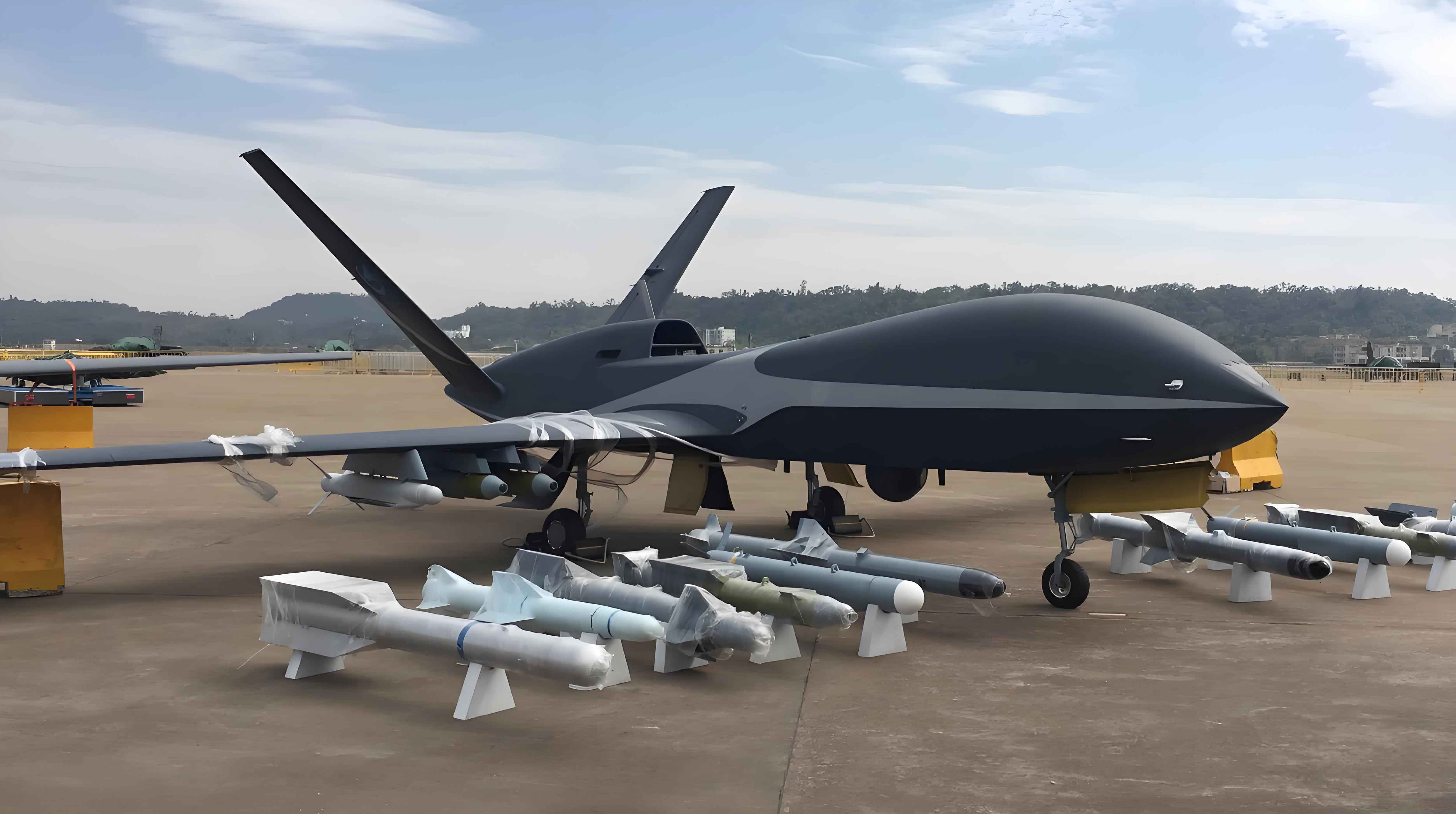
The journey of U.S. military UAVs dates back to the early 20th century, with initial experiments often hampered by limitations in propulsion, control, navigation, and communication technologies. Early iterations were rudimentary, serving primarily as targets or simple reconnaissance tools. However, over the decades, spurred by military conflicts and technological breakthroughs, military UAVs evolved from mere derivatives of manned aircraft into indispensable assets in the defense arsenal. Today, the United States leads the world in military UAV development, deployment, and innovation, a position driven by a synergistic combination of factors. In my analysis, I identify six key drivers: military demand, technological level, cultural concepts, industrial economy, government decisions, and social environment. These drivers interact in dynamic ways, as illustrated in the following conceptual framework, which can be represented mathematically to underscore their relationships.
Let me define the development of military UAVs as a function \( D(t) \), where \( t \) represents time. This function is influenced by variables such as military demand \( M \), technological level \( T \), cultural concepts \( C \), industrial economy \( E \), government decisions \( G \), and social environment \( S \). A simplified model can be expressed as:
$$ D(t) = \alpha M(t) + \beta T(t) + \gamma C(t) + \delta E(t) + \epsilon G(t) + \zeta S(t) + \eta I(M, T, C, E, G, S) $$
Here, \( \alpha, \beta, \gamma, \delta, \epsilon, \zeta \) are weighting coefficients that reflect the relative importance of each factor over time, and \( I \) represents interaction terms accounting for synergies among drivers. This equation highlights that military UAV development is not linear but results from compounded effects. To elaborate, I will dissect each driver in detail, supported by historical examples and data tables.
Driving Factors in U.S. Military UAV Development
The progression of military UAVs is driven by a triad of forces: innovation foresight (primarily military demand), external dynamics (government decisions and social environment), and internal motivations (technological level, cultural concepts, and industrial economy). Below, I analyze each factor, emphasizing their roles and interconnections.
1. Military Demand as Innovation Foresight
Military demand serves as the foundational driver, pulling military UAV development toward specific goals. It operates at three levels: strategic, wartime, and operational. Strategic demand involves long-term planning based on national security assessments, guiding the overall spectrum and utilization of military UAVs. Wartime demand adapts to immediate conflict needs, directing UAV missions in real-time scenarios. Operational demand emerges from feedback after deployment, leading to refinements and new requirements. For instance, during the Vietnam War, the adaptation of the Firebee-147 UAV for reconnaissance missions stemmed from wartime demand to reduce pilot risk. Similarly, in recent conflicts like Afghanistan and Iraq, the need for persistent surveillance and precision strikes fueled advancements in military UAV capabilities. This demand-driven approach ensures that military UAVs evolve in alignment with battlefield realities, making them versatile tools for modern warfare.
2. Technological Level as Internal Catalyst
Technological advancements are the engine behind military UAV innovation. The complexity of UAV systems—encompassing aerodynamics, materials science, sensors, data links, and artificial intelligence—requires continuous research and development. U.S. defense contractors, research institutions, and universities have pioneered breakthroughs in areas such as stealth technology, autonomous navigation, and sensor fusion. For example, the integration of lightweight composite materials has enhanced UAV durability and range, while improvements in satellite communication have enabled real-time data transmission. The technological push can be quantified through R&D investment trends. Consider the following table summarizing key technological milestones in U.S. military UAV history:
| Time Period | Technological Advancement | Impact on Military UAV |
|---|---|---|
| 1910s-1930s | Basic radio control systems | Enabled remote piloting for target drones |
| 1960s-1970s | Improved sensors and cameras | Facilitated reconnaissance missions in Vietnam |
| 1990s-2000s | GPS navigation and stealth features | Enhanced precision and survivability in conflicts |
| 2010s-Present | AI-driven autonomy and swarm technology | Enabled complex, collaborative operations |
The relationship between technological investment and military UAV capability can be modeled as \( T(t) = k \cdot R(t) \), where \( R(t) \) denotes R&D funding and \( k \) is a productivity constant. Historically, increased funding has correlated with accelerated innovation, underscoring technology’s pivotal role.
3. Cultural Concepts as Behavioral Guide
Cultural values in the U.S. defense sector, particularly pragmatism and a “frontier spirit,” foster an environment conducive to innovation. This cultural mindset encourages risk-taking, experimentation, and rapid iteration. Organizations like the Defense Advanced Research Projects Agency (DARPA) embody this ethos by promoting collaborative forums and direct engagement with warfighters. For instance, DARPA’s “combat liaison” program bridges developers and users, ensuring that military UAV designs meet practical needs. Such cultural norms reduce bureaucratic inertia and accelerate the transition from concept to deployment. In essence, cultural concepts act as a soft power that aligns human capital with strategic objectives, driving continuous improvement in military UAV systems.
4. Industrial Economy as Growth Multiplier
The industrial economy surrounding military UAVs has evolved from niche manufacturing to a global market, creating a self-sustaining cycle of innovation and expansion. As UAV technologies matured, economies of scale reduced costs, while commercial applications spurred further investment. U.S. firms have leveraged their technological edge to dominate international markets, generating revenue that funds next-generation developments. The industrial ecosystem includes suppliers, integrators, and service providers, all contributing to a robust value chain. The economic impact can be expressed as \( E(t) = \sum (P \cdot Q) \), where \( P \) is the price per UAV unit and \( Q \) is the quantity produced. Over time, declining costs and rising demand have amplified the proliferation of military UAVs. This economic dynamic ensures that advancements are not solely reliant on government funding but are also driven by market forces.
5. Government Decisions as Policy Enabler
Government actions, through defense policies, budgeting, and regulations, provide the framework for military UAV development. Since the 1980s, successive U.S. administrations have prioritized UAV procurement, allocating substantial funds even during periods of military downsizing. For example, post-9/11, counterterrorism initiatives led to a surge in UAV investments. Government policies also encourage public-private partnerships, tax incentives, and intellectual property protections, creating a favorable innovation climate. The budgetary influence is evident in the following table, which outlines UAV-related defense expenditures over recent decades:
| Decade | Key Policy Initiatives | Approximate UAV Investment (USD) |
|---|---|---|
| 1980s | First dedicated UAV procurement budgets | ~$500 million |
| 1990s | Post-Cold War restructuring, focus on ISR | ~$3 billion |
| 2000s | War on Terror, surge in funding | ~$20 billion |
| 2010s-Present | Pivot to great-power competition, AI integration | ~$30 billion and growing |
Mathematically, government influence can be represented as \( G(t) = \int B(t) \, dt \), where \( B(t) \) is the budget allocation over time, integrating financial support into cumulative development gains.
6. Social Environment as Contextual Shaper
The social environment, encompassing domestic security concerns and international geopolitical trends, shapes the direction of military UAV applications. Threats such as terrorism, regional conflicts, and great-power rivalry drive the adaptation of UAVs for specific roles. For instance, after 9/11, the need for persistent surveillance over Afghanistan prompted the deployment of long-endurance UAVs like the Global Hawk. Similarly, public aversion to casualties has made unmanned systems politically attractive, accelerating their adoption. Social pressures also influence ethical debates around UAV use, leading to guidelines for lawful engagement. This environmental factor ensures that military UAV development remains responsive to societal values and global security dynamics.
Evolutionary Path Models of U.S. Military UAVs
Based on historical analysis, I identify three distinct evolutionary models that characterize the development of U.S. military UAVs. These models reflect shifting balances among the driving factors over time.
Model 1: Military Demand-Oriented (Early to Mid-20th Century)
In this initial phase, military UAV development was predominantly steered by direct military needs, with other factors playing minimal roles. Early experiments, such as the converted aircraft projects in World War I, focused on basic functions like aerial targeting. The success of British target drones in the 1930s inspired U.S. efforts, leading to the production of drones for training purposes. During the Vietnam War, the repurposing of the Firebee-147 for reconnaissance demonstrated how wartime demand could spur ad-hoc innovations. However, technological limitations and lack of sustained government support kept progress slow. The relationship in this model can be simplified as:
$$ D_1(t) \approx \alpha M(t) $$
where other coefficients are negligible. This linear approach resulted in incremental advances but lacked the synergy needed for transformative growth.
Model 2: Multi-Factor Combined (Late 20th Century)
From the 1970s onward, military UAV development entered a more interactive phase, where military demand, technological progress, government policies, and industrial factors began to converge. The influence of Israeli UAV tactics during the Middle East wars alerted the U.S. military to the broader potential of unmanned systems. Subsequent conflicts, such as the Gulf War and Kosovo, saw extensive UAV use for reconnaissance, electronic warfare, and battle damage assessment. Government budgets increased, and defense policies explicitly incorporated UAVs into long-term planning. Technological innovations in sensors and communications enhanced capabilities, while cultural shifts within the military embraced unmanned solutions. This model can be expressed as:
$$ D_2(t) = \alpha M(t) + \beta T(t) + \epsilon G(t) + \delta E(t) $$
with growing interactions among terms. The table below contrasts this model with the previous one:
| Aspect | Military Demand-Oriented Model | Multi-Factor Combined Model |
|---|---|---|
| Primary Drivers | Military demand alone | Military demand, technology, government, industry |
| Typical Era | 1910s-1960s | 1970s-1990s |
| Example UAV | Target drones (e.g., early Radioplanes) | Reconnaissance UAVs (e.g., Predator prototype) |
| Innovation Pace | Slow, incremental | Moderate, with periodic leaps |
This phase marked the transition of military UAVs from auxiliary tools to integral components of military operations.
Model 3: Comprehensive Integrated Development (21st Century to Present)
The current era is characterized by a holistic integration of all six drivers, resulting in rapid, sustained advancement of military UAV systems. Military demand has expanded to include strike missions, counterterrorism, and great-power competition, pushing for higher autonomy and resilience. Technological breakthroughs in AI, networking, and miniaturization have enabled swarms, stealthy designs, and multi-role platforms. Government policies now feature detailed UAV roadmaps and cross-service coordination, while industrial ecosystems thrive on global exports and public-private collaborations. Cultural norms prioritize innovation agility, and social environments demand ethical and effective responses to asymmetric threats. The mathematical representation becomes complex:
$$ D_3(t) = \sum_{i} w_i F_i(t) + \sum_{i \neq j} \lambda_{ij} F_i(t) F_j(t) $$
where \( F_i \) represents factors \( M, T, C, E, G, S \), \( w_i \) are dynamic weights, and \( \lambda_{ij} \) capture interaction strengths. This model yields exponential growth in capabilities, as seen in UAVs like the MQ-9 Reaper, which combine ISR and strike functions. The evolution toward this model signifies the maturity of U.S. military UAV development, where synergistic effects dominate.
Synthesis and Implications
Reflecting on these models, I observe that the development of U.S. military UAVs has progressed from a simple, demand-driven approach to a sophisticated, system-of-systems paradigm. The comprehensive integrated development model exemplifies how intertwined factors can create a virtuous cycle of innovation. For instance, military UAVs now influence doctrinal changes, such as the concept of distributed warfare, while also driving economic growth through technology spin-offs. The historical trajectory underscores the importance of balancing drivers: neglecting any one factor—say, cultural adaptability or social acceptance—can hinder progress.
To illustrate the cumulative impact, consider a performance metric \( P(t) \) for military UAVs, defined as a composite of range, payload, autonomy, and survivability. Historical data suggests an exponential rise, akin to Moore’s Law in computing, which can be approximated as:
$$ P(t) = P_0 \cdot e^{rt} $$
where \( P_0 \) is initial performance, \( r \) is a growth rate fueled by the six drivers, and \( t \) is time in decades. This trend highlights the accelerating pace of military UAV advancement.
In conclusion, the U.S. military UAV system’s evolution offers valuable lessons for defense innovation globally. Key takeaways include the need for sustained R&D investment, flexible policies that adapt to changing threats, and a culture that embraces experimentation. As military UAVs continue to evolve, integrating emerging technologies like quantum sensing and bio-inspired designs, their role in national security will only expand. This analysis, from my perspective, reaffirms that the future of military UAVs lies in further deepening the synergies among demand, technology, economy, culture, policy, and society—a blueprint for continued leadership in unmanned aerial systems.
Throughout this discussion, I have emphasized the term “military UAV” to maintain focus on the core subject. The historical journey of these systems demonstrates that their development is not merely a technical endeavor but a multifaceted phenomenon shaped by human, institutional, and environmental forces. By understanding these dynamics, stakeholders can better navigate the complexities of modern defense innovation.